2.4 - Inheritance & Domesday: Primogeniture & Feudal Incidents
Key facts and dates
The Norman Conquest introduced structured systems for inheritance and land management in England, emphasising royal authority through practices like primogeniture and feudal incidents. The Domesday Book provided a comprehensive record that supported these systems. Key aspects include the mechanisms of property transfer and the survey's lasting historical value.
Key facts to remember
- Primogeniture – Eldest son inherits all land and titles, promoting stability and royal oversight.
- Relief – Payment made by heirs to lords upon inheriting land, ensuring feudal loyalty.
- Wardship – Lord's guardianship of minor heirs, including control over their estates and upbringing.
- Marriage – Lord's right to arrange marriages for wards or heiresses, often for political gain.
- Escheat – Land reverts to the lord if no heir exists or due to treason, strengthening crown control.
- Domesday Book (1086) – William I's nationwide survey of landholdings, resources, and obligations.
- Domesday purposes – Aided taxation, dispute resolution, and assertion of royal rights over barons.
- Historical value – Offers detailed 11th-century snapshot, though interpretations vary among scholars.
Primogeniture in Norman inheritance
Under the Normans, the transfer of property and power became more formalised to maintain stability and royal influence. Primogeniture emerged as the dominant method, ensuring that estates remained intact rather than being divided among multiple heirs.
How primogeniture shaped Norman inheritance
- Definition and practice - Primogeniture meant the eldest son inherited the entire estate, including land, titles, and responsibilities, preventing fragmentation that could weaken noble families or dilute royal control.
- Increasing importance under Normans - William I and his successors promoted this system to avoid disputes among siblings and to keep large landholdings under single, manageable owners who owed direct allegiance to the crown.
- Benefits for royal control - By limiting inheritance to one heir, kings could more easily monitor and influence powerful barons, reducing the risk of divided loyalties or rebellions from multiple claimants.
Feudal incidents and their definitions
Feudal incidents were rights exercised by lords, particularly the king, over their vassals' estates during key life events. These mechanisms reinforced the hierarchical structure of feudal society and provided financial and political advantages to the crown.
Key types of feudal incidents
| Type of incident | Definition |
|---|---|
| Relief | A payment required from an heir to take possession of inherited land, acting as a form of inheritance tax that confirmed the new vassal's loyalty and obligations to the lord. |
| Wardship | When an heir was a minor, the lord assumed guardianship, managing the estate's income and the ward's education until adulthood, which could generate revenue for the lord. |
| Marriage | Lords held the right to approve or arrange marriages for wards and heiresses, often using these unions to forge alliances or secure additional lands and influence. |
| Escheat | If a vassal died without heirs or committed treason, the land reverted to the lord, allowing the crown to redistribute or retain property and prevent uncontrolled inheritance. |
Purposes and achievements of the Domesday Book
Image 1 of 2: William ordered the survey at his court at Gloucester
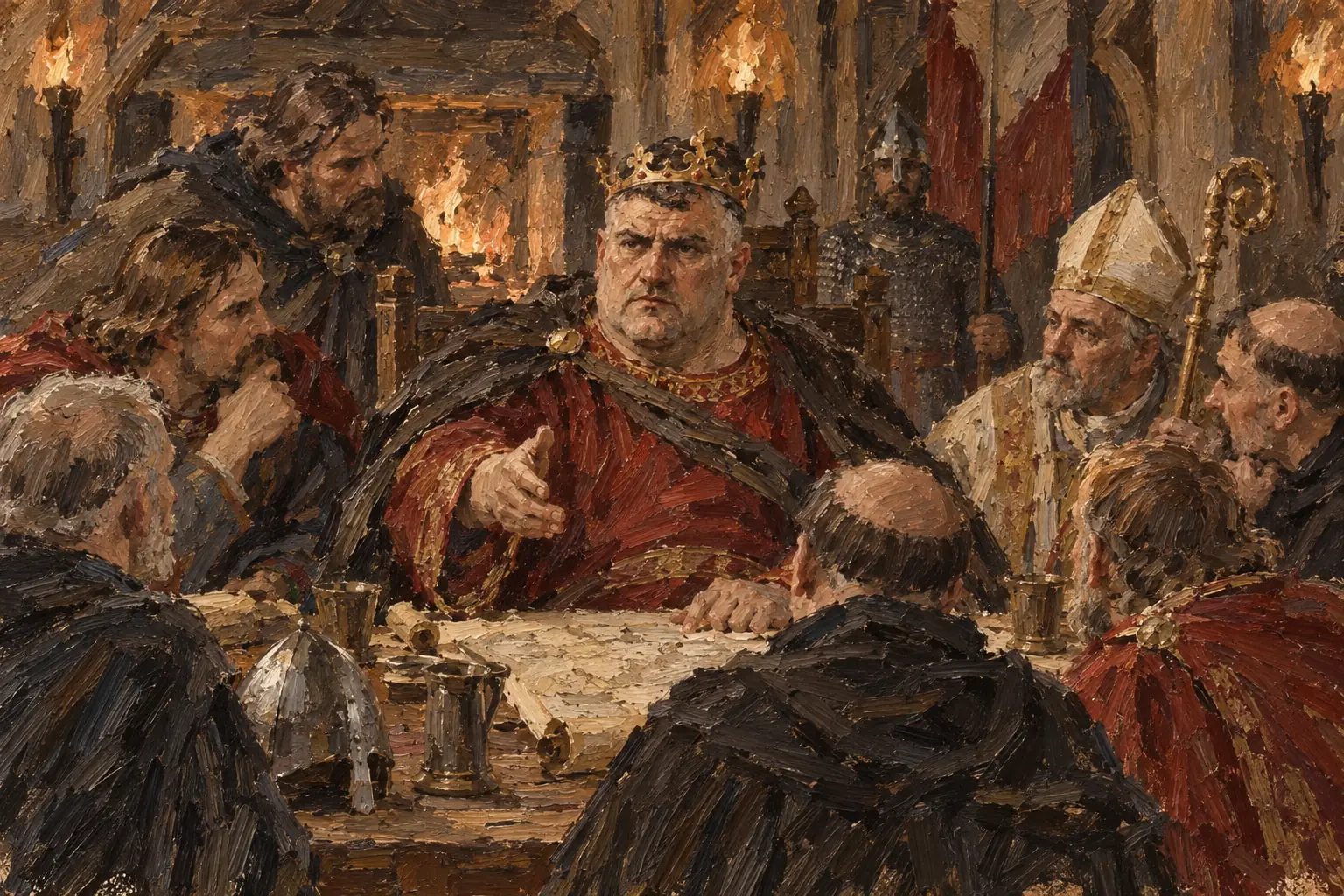
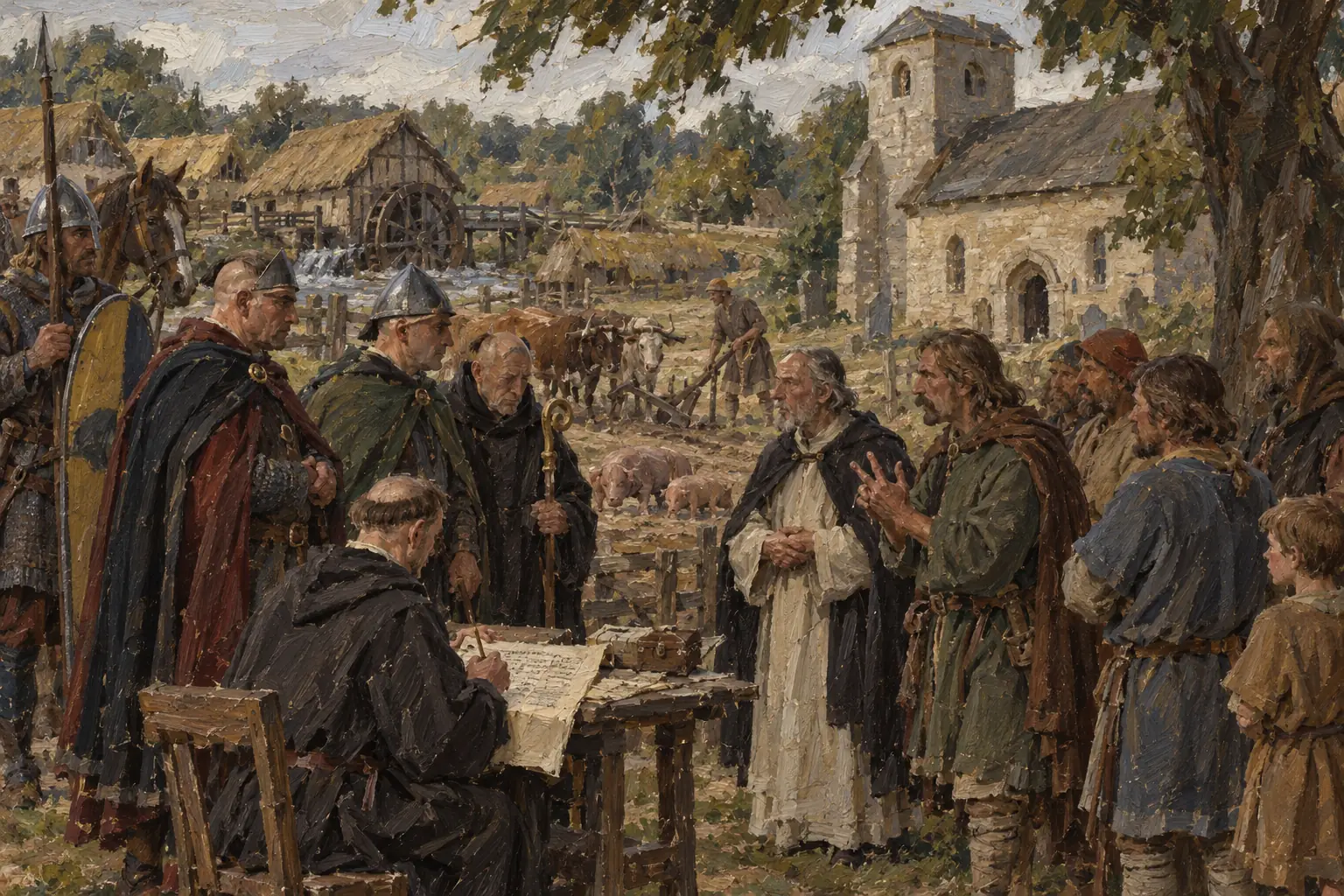
Commissioned by William I in 1086, the Domesday Book was a massive survey covering most of England. It documented land ownership and resources in unprecedented detail, serving multiple administrative functions.
Main purposes of the Domesday survey
- Taxation - The book assessed the value of lands and their potential for generating revenue, enabling more accurate and efficient collection of taxes like the geld.
- Resolving land disputes - It provided a definitive record to settle conflicts over ownership, especially those arising from the Norman Conquest's redistribution of estates.
- Asserting royal rights - By cataloguing obligations and holdings, William reinforced his authority over barons, ensuring they recognised the king's overarching control.
Achievements of the Domesday Book
- Detailed snapshot - The survey captured information on landholdings, population, livestock, mills, and manorial obligations, creating a comprehensive picture of 11th-century England's economy and society.
- Administrative impact - It facilitated better governance by standardising records, which helped in planning military levies and economic policies.
Historical interpretations of Domesday evidence
The Domesday Book remains a vital source for understanding Norman England, but historians approach its data with varying perspectives due to its complexities and potential biases.
Different ways historians interpret Domesday
- As a taxation tool - Some view it primarily as a fiscal document, highlighting its role in maximising royal income through detailed valuations.
- Evidence of social change - Others analyse it to trace shifts in land distribution post-Conquest, showing how Norman lords displaced Anglo-Saxon elites.
- Limitations and biases - Interpretations note inconsistencies, such as underreporting in northern regions or a focus on taxable assets, which may skew perceptions of wealth and population.
Why Domesday remains invaluable
- Unique historical record - Despite debates, it offers unparalleled insights into medieval life, from agricultural practices to feudal relationships, aiding modern reconstructions of the era.
- Ongoing scholarly value - Its depth allows for diverse analyses, such as economic studies or demographic estimates, making it essential for research on Norman governance.