2.3 - Vietnam: From French War to U.S. Escalation
Key facts and dates
The Vietnam conflict evolved from French colonial rule to a major Cold War confrontation, involving the defeat of colonial forces and escalating superpower involvement. This timeline captures the pivotal events that transitioned Vietnam from a colonial struggle to a proxy battleground between communism and capitalism.
Timeline of key events
- 1946 – Outbreak of the First Indochina War between French colonial forces and the Viet Minh independence movement.
- 1950 – United States begins providing military aid to France to combat communist expansion in Indochina.
- 1954 – Viet Minh achieves decisive victory over French forces at the Battle of Dien Bien Phu.
- July 1954 – Geneva Accords signed, temporarily dividing Vietnam at the 17th parallel with planned national elections.
- 1955 – South Vietnam's leader Ngo Dinh Diem refuses to hold unification elections, fearing communist victory.
- 1957 – Formation of the Viet Cong (National Liberation Front) in South Vietnam to oppose Diem's regime.
- 1960 – US increases military advisors in South Vietnam to counter growing Viet Cong insurgency.
- 1963 – US supports coup against Diem, escalating direct involvement in South Vietnamese politics.
The First Indochina War and Viet Minh victory
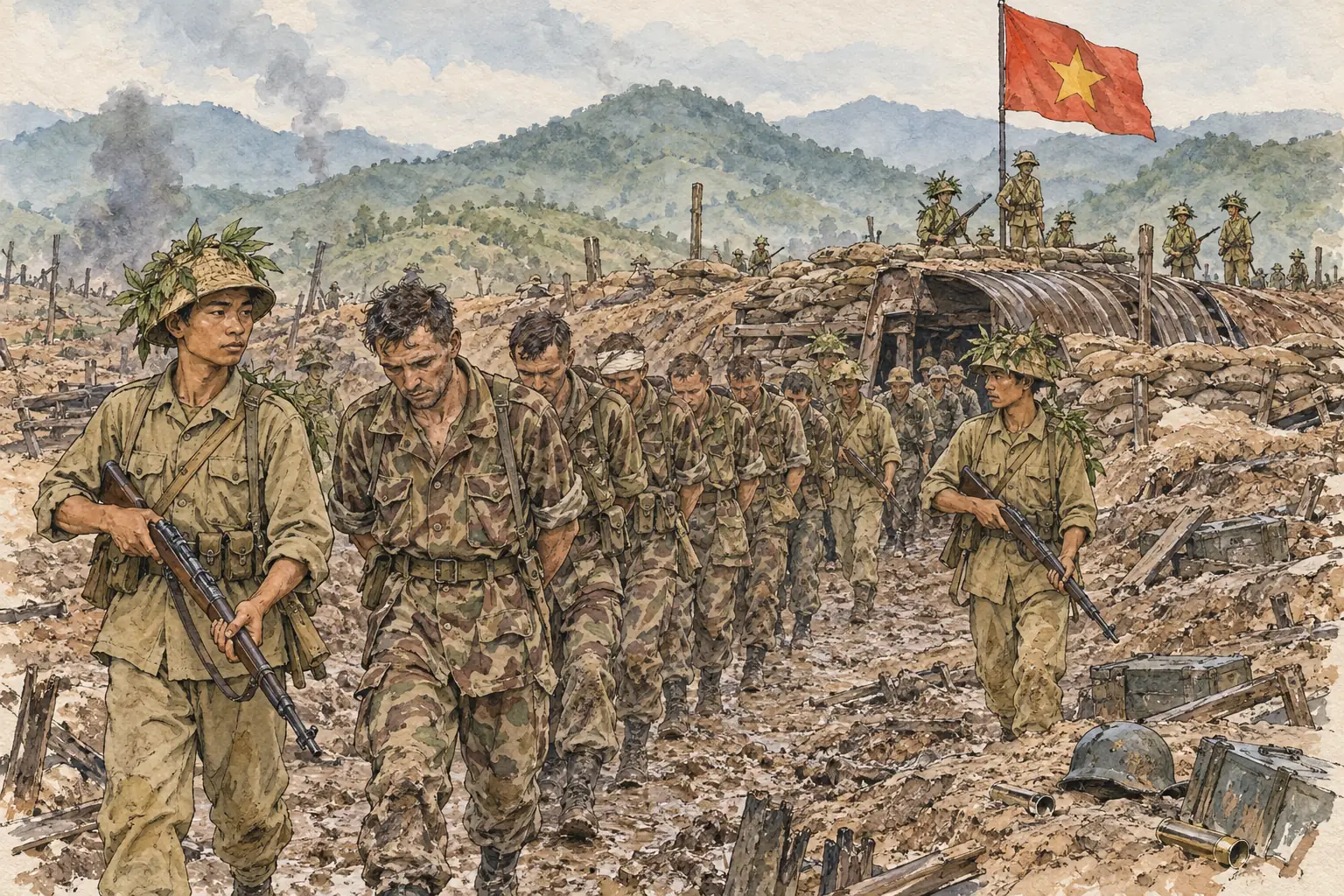
The First Indochina War marked a significant anti-colonial struggle in Southeast Asia, pitting Vietnamese nationalists against French colonial rule. Lasting from 1946 to 1954, it highlighted the determination of independence movements during the post-World War II era.
Main features of the First Indochina War
- Origins and participants - The conflict began when French forces attempted to reassert control over Vietnam after Japanese occupation ended in 1945, facing resistance from the Viet Minh, a communist-led nationalist group under Ho Chi Minh.
- Guerrilla warfare tactics - Viet Minh fighters employed hit-and-run strategies, using knowledge of local terrain to wear down French troops and supply lines.
- International involvement - France received financial and military support from the United States, which viewed the war as part of containing communism, while the Viet Minh gained aid from China and the Soviet Union.
The Battle of Dien Bien Phu
- Strategic context - In 1954, French forces established a fortified base at Dien Bien Phu to cut off Viet Minh supply routes, but it became a trap due to its isolated location in northern Vietnam.
- Viet Minh tactics - Led by General Vo Nguyen Giap, Viet Minh troops surrounded the base, using artillery hauled through jungles to bombard French positions relentlessly.
- Outcome and significance - The French surrender after a 56-day siege marked a humiliating defeat, forcing France to negotiate peace and signalling the end of colonial rule in Indochina.
The Geneva Accords and division of Vietnam
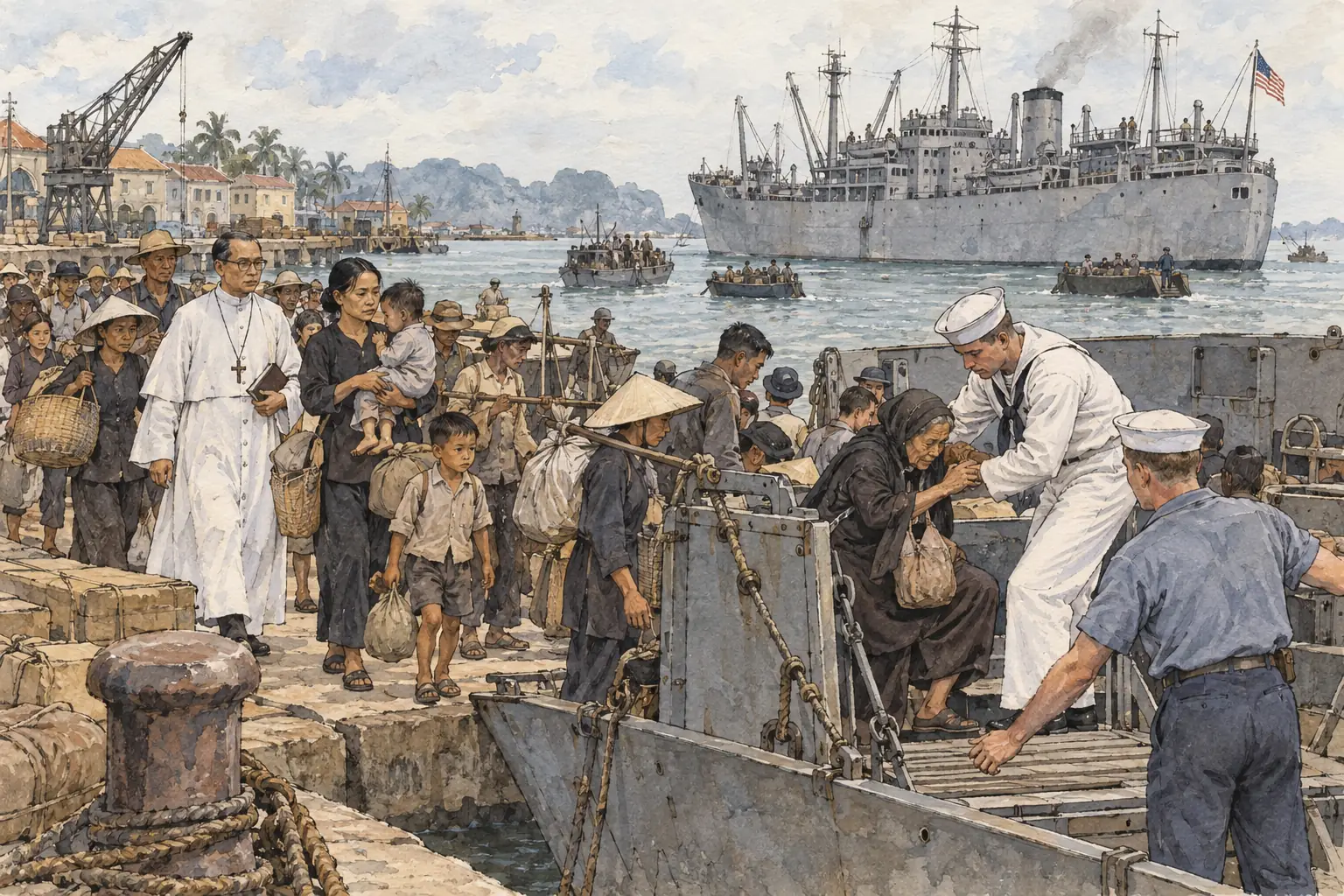
Following the French defeat, international negotiations aimed to resolve the Indochina conflict. The Geneva Conference in 1954 produced agreements that reshaped Vietnam's political landscape, though they failed to achieve lasting unity.
Key provisions of the Geneva Accords
- Temporary division - Vietnam was split at the 17th parallel into a communist-led North under Ho Chi Minh and a non-communist South supported by the West, intended as a short-term measure.
- Planned elections - Nationwide elections were scheduled for 1956 to reunify the country, with the expectation of free voting under international supervision.
- Military arrangements - Both sides agreed to withdraw forces from the other's territory, and foreign troops were to leave, though this was not fully enforced.
Reasons for the failure of unification elections
- South Vietnamese opposition - Leader Ngo Dinh Diem, backed by the US, refused to hold the elections, claiming they could not be fair in the communist North and fearing a Viet Minh victory.
- US strategic concerns - American policymakers prioritised preventing communist expansion, viewing elections as a risk that could lead to a unified communist Vietnam.
- Consequences - The unheld elections deepened divisions, setting the stage for renewed conflict and increased foreign intervention.
Rise of the Viet Cong and growing US involvement
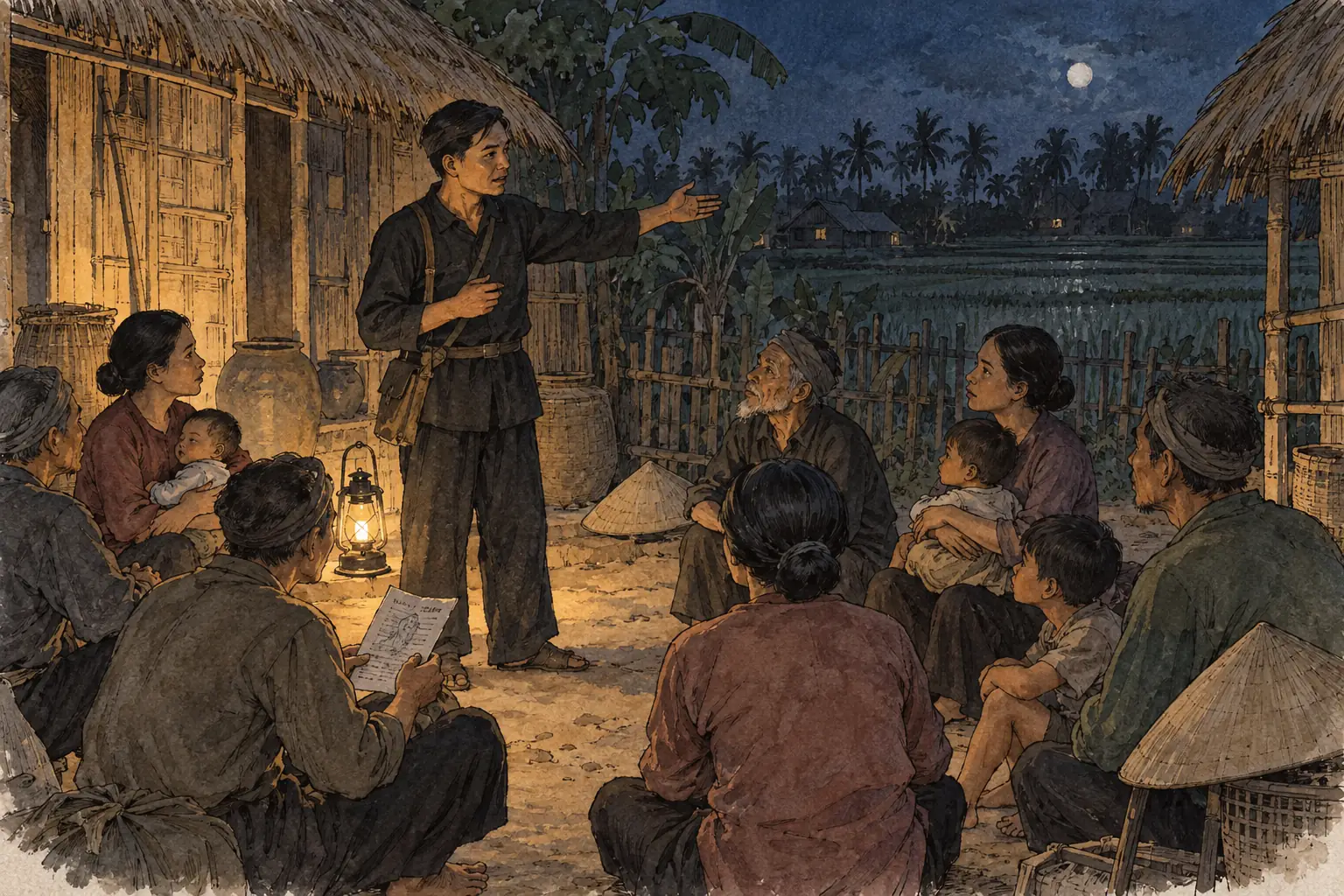
Image 1 of 2: Viet Cong cadres held night-time meetings in villages to win peasants over to their side
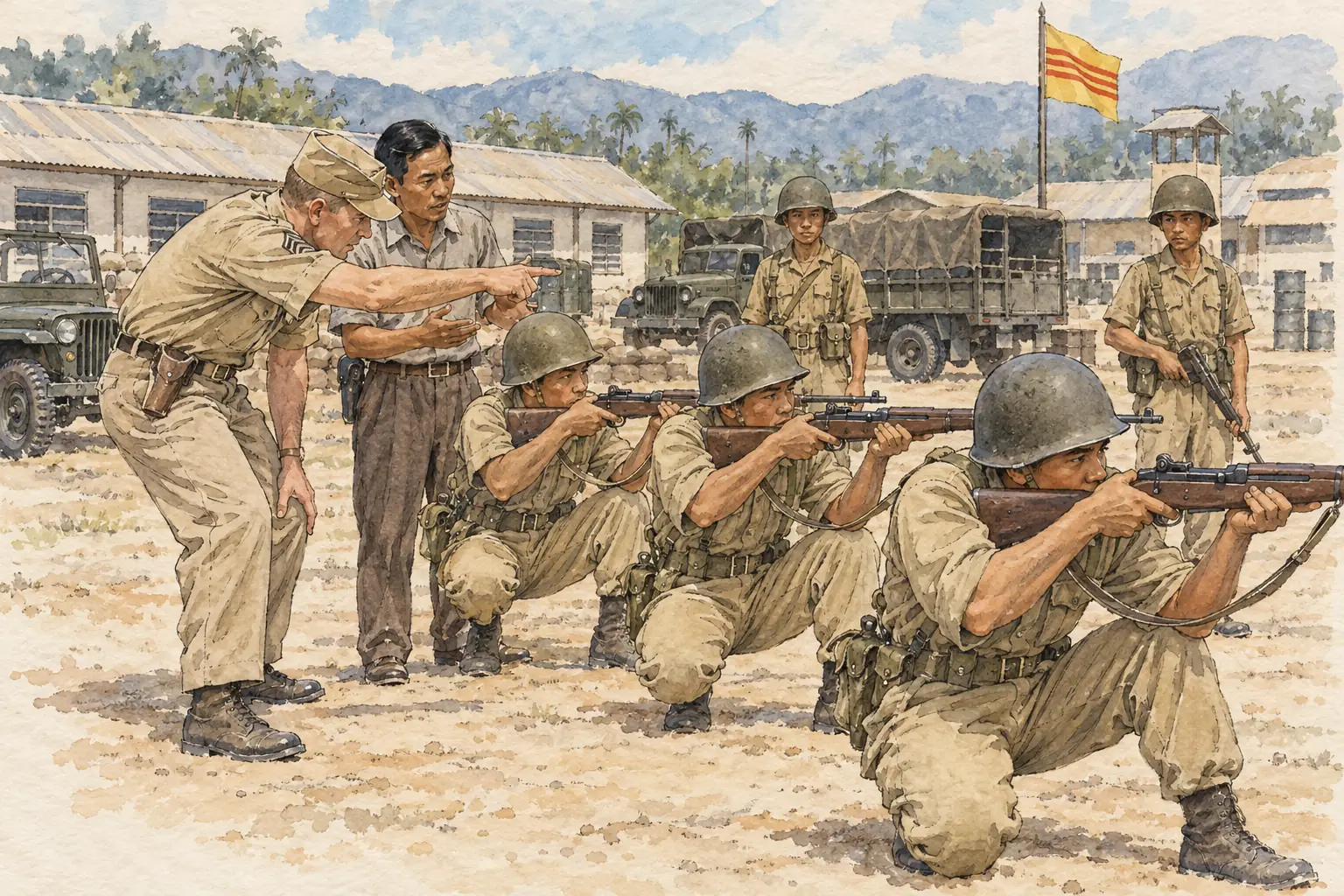
As divisions persisted, opposition to the South Vietnamese government grew, leading to the emergence of insurgent groups. The United States escalated its role to prevent a communist takeover, transforming Vietnam into a key arena of Cold War tension.
Formation and activities of the Viet Cong
- Origins - Established in 1957 as the National Liberation Front (NLF), the Viet Cong comprised South Vietnamese communists and nationalists opposing Diem's repressive regime.
- Guerrilla operations - They conducted ambushes, sabotage, and recruitment in rural areas, gaining support from peasants disillusioned with corruption and land inequalities in the South.
- Support from the North - North Vietnam provided supplies and fighters via the Ho Chi Minh Trail, coordinating efforts to undermine South Vietnam's stability.
Escalation of US involvement
- Initial support - From 1950, the US supplied aid to France, then shifted to backing South Vietnam with military advisors and economic assistance to build a stable anti-communist state.
- Deepening commitment - By the early 1960s, advisor numbers rose to over 16,000, and the US endorsed a 1963 coup against Diem to install more effective leadership.
- Rationale for intervention - Driven by domino theory fears that Vietnam's fall to communism would trigger similar shifts across Southeast Asia, prompting greater military engagement.
Vietnam's significance in Cold War relations
Image 1 of 4: The first US combat troops, Marines, came ashore at Da Nang on 8 March 1965
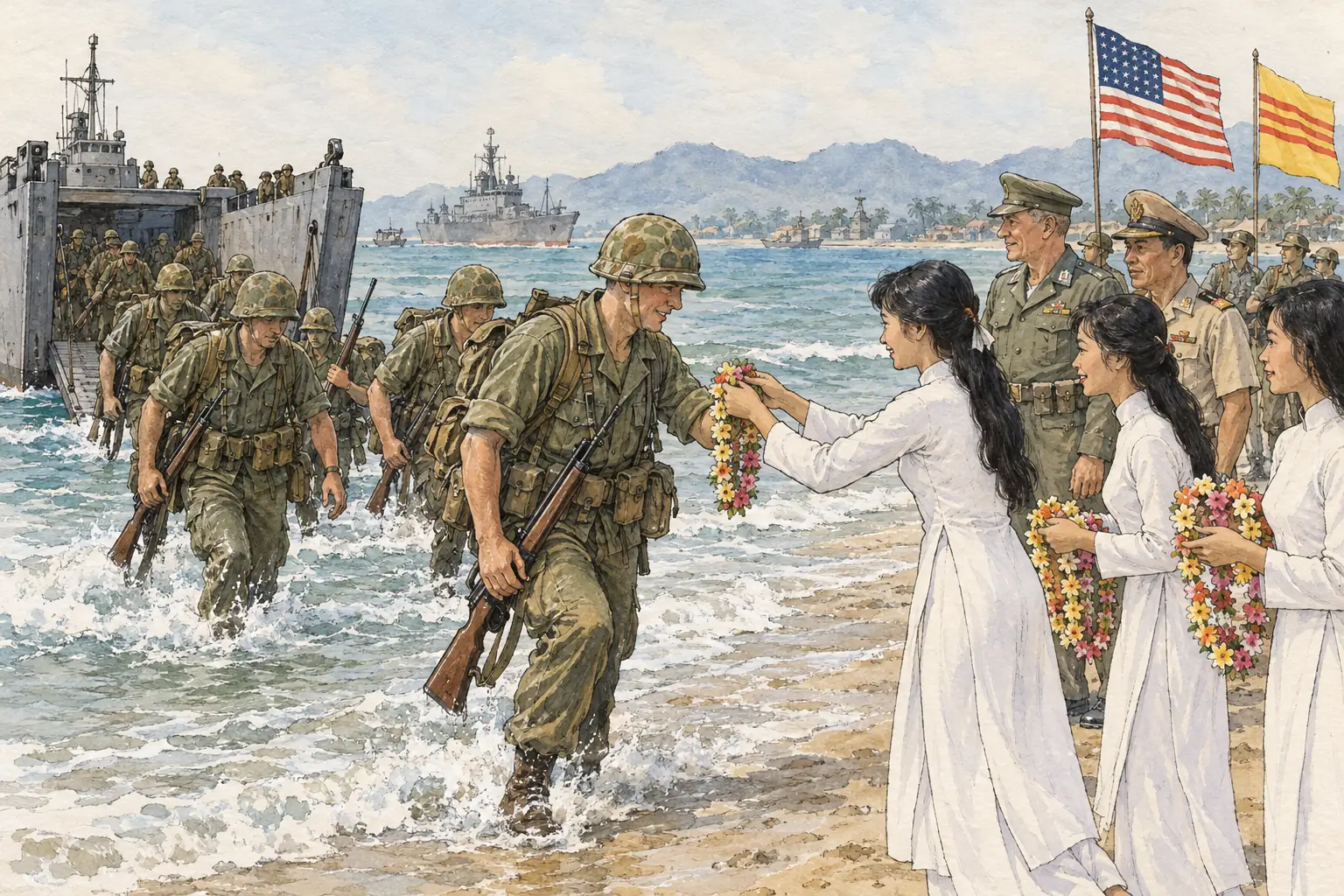
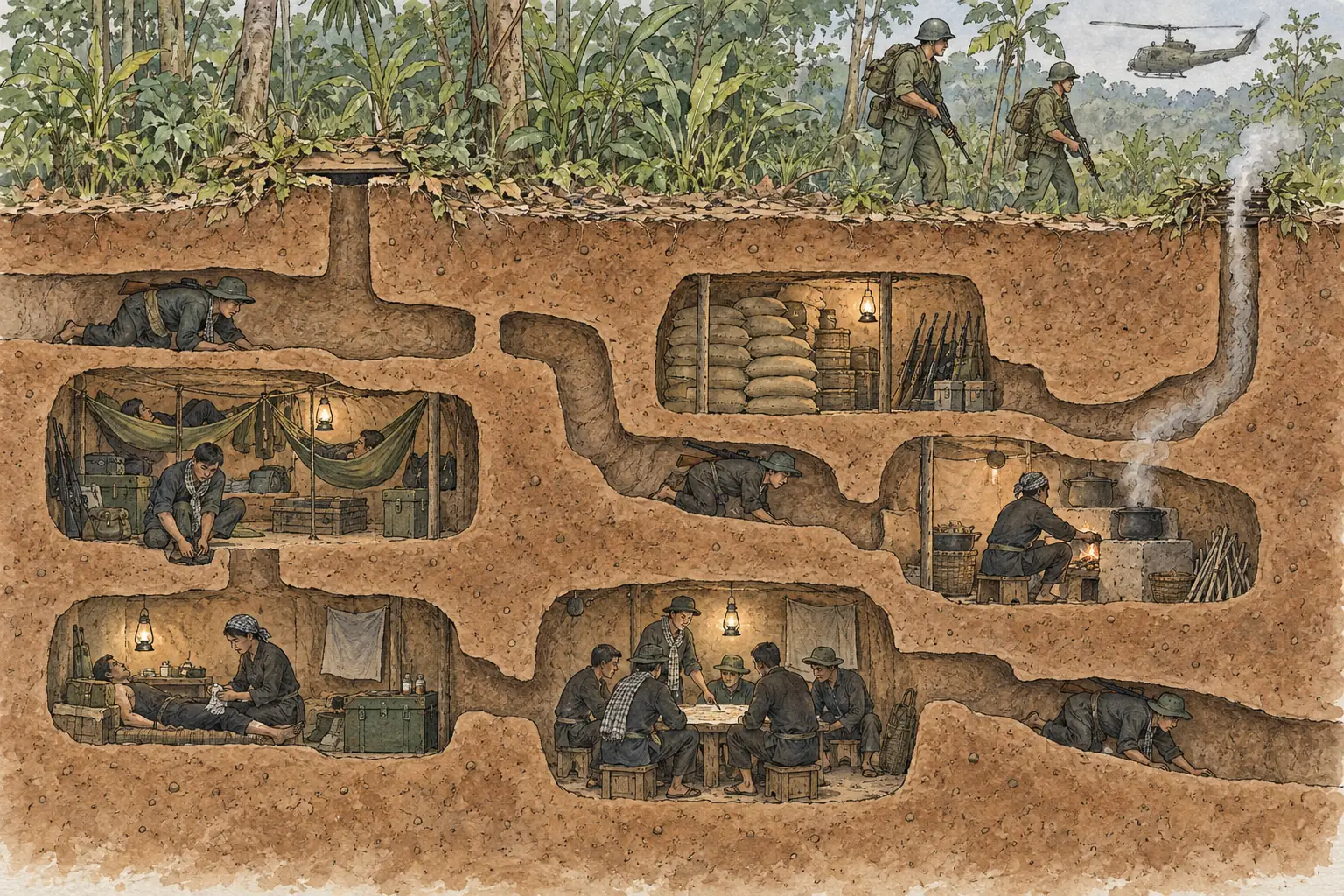
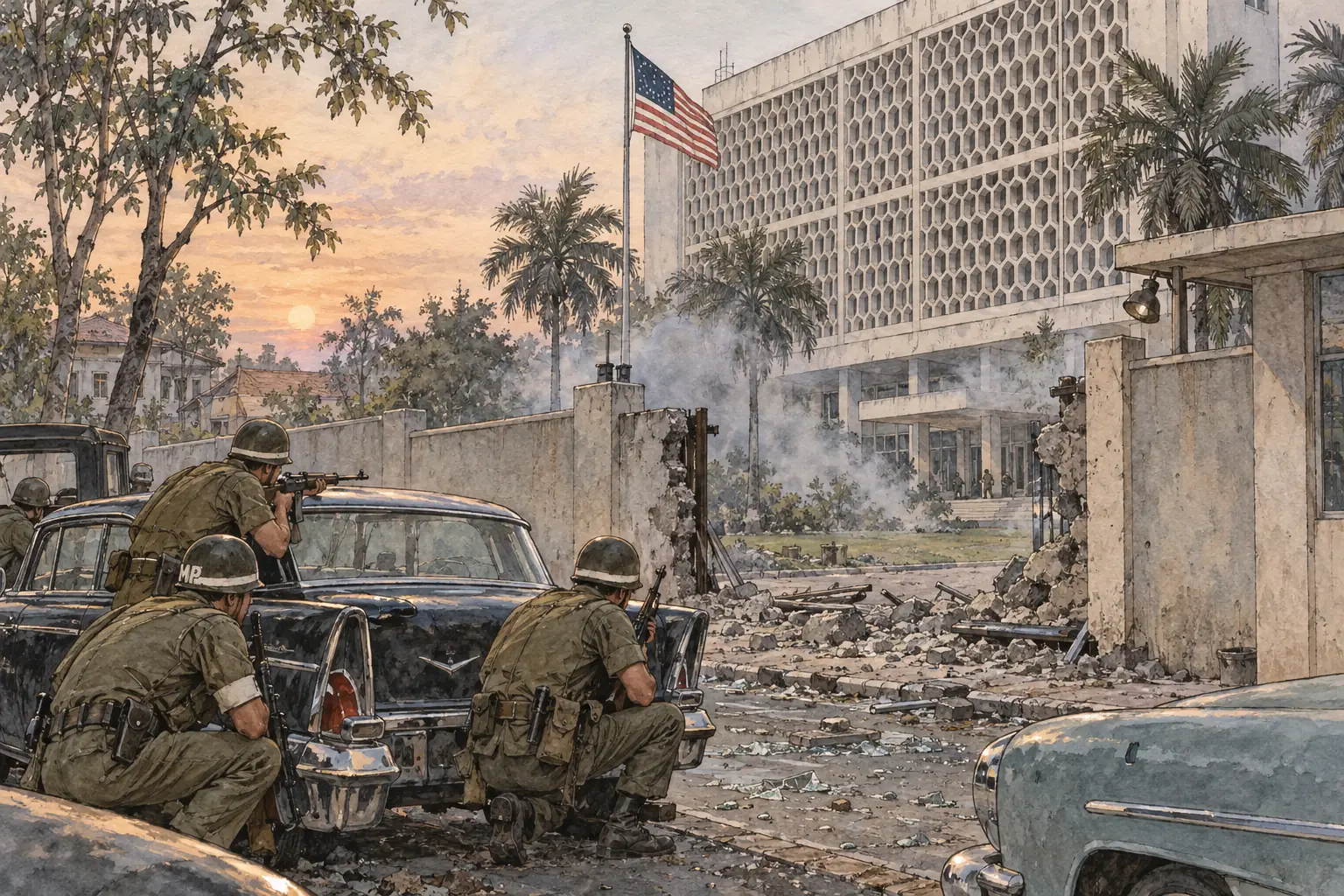
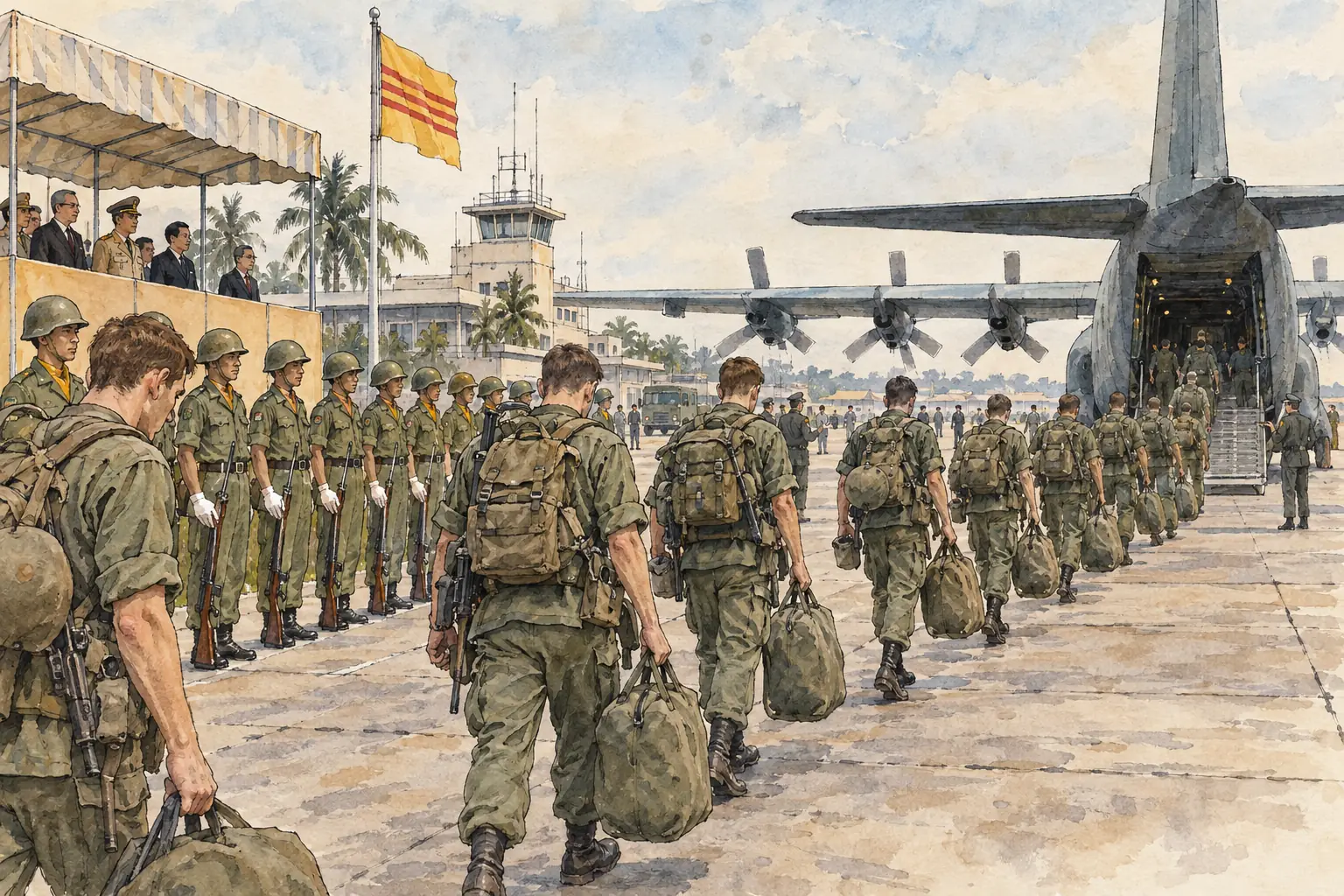
Vietnam became a critical flashpoint in the Cold War, illustrating the dynamics of indirect conflict between the United States and the Soviet Union. It exposed the challenges of superpower rivalry without direct confrontation.
Vietnam as a proxy war
- Indirect confrontation - The US supported South Vietnam to contain communism, while the Soviet Union and China backed the North and Viet Cong, allowing superpowers to compete through allies without risking nuclear war.
- Ideological battleground - The conflict represented a clash between capitalist democracy and communism, with each side viewing victory as essential to global influence.
Limits of military power and strain on US resources
- Challenges to US superiority - Despite technological advantages, the US struggled against guerrilla tactics and unfamiliar terrain, highlighting the limitations of conventional military might in asymmetric warfare.
- Resource drain - The war consumed vast financial and human resources, with escalating costs contributing to domestic economic pressures and anti-war sentiment in the US.
- Impact on prestige - Prolonged involvement damaged American credibility abroad, straining alliances and emboldening other communist movements, ultimately questioning the effectiveness of containment policy.