2.1 - Religion & Royal Authority: Break with Rome
Key facts and dates
Henry VIII's Reformation transformed England's religious landscape, driven by a mix of personal, political, and financial motives. This period marked a significant shift from papal authority to royal control, influencing government, economy, and society. The timeline below outlines the major events in this process.
Timeline of key events
- 1529 – Convocation of the Reformation Parliament, beginning legislative moves against the Church.
- 1532 – Submission of the Clergy forces English bishops to accept royal authority over Church matters.
- 1533 – Act in Restraint of Appeals prevents appeals to Rome, enabling Henry's marriage annulment.
- 1534 – Act of Supremacy declares Henry VIII Supreme Head of the Church of England.
- 1536 – Dissolution of smaller monasteries begins, with larger ones following in 1539.
- 1536–1537 – Pilgrimage of Grace uprising protests against religious changes and monastery closures.
- 1540 – Fall of Thomas Cromwell, executed for treason amid shifting royal policies.
Reasons for Henry VIII's break with Rome
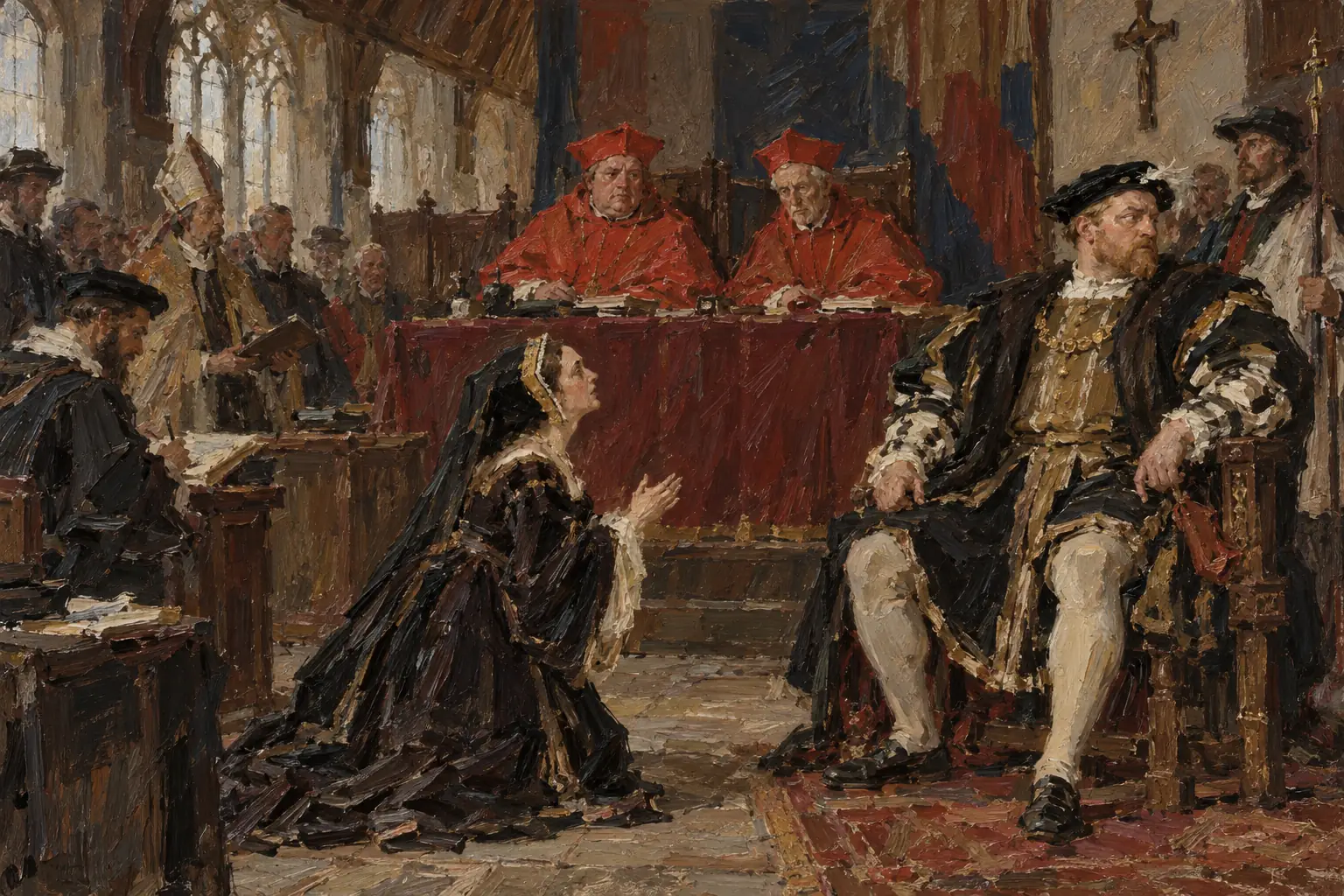
Henry VIII's decision to sever ties with the Roman Catholic Church stemmed from a combination of personal ambitions, political pressures, and broader ideological shifts. These motives intertwined theology, the assertion of royal power, economic needs, and emerging Protestant ideas, ultimately reshaping England's religious identity.
Overlapping motives for the break
- Personal and dynastic concerns - Henry's desire for a male heir led him to seek an annulment from Catherine of Aragon, which Pope Clement VII refused due to political alliances with her nephew, Emperor Charles V.
- Assertion of royal authority - Frustrated by papal interference, Henry aimed to establish himself as the ultimate authority in England, reducing the influence of foreign powers over domestic affairs.
- Financial incentives - The Church's vast wealth, including lands and treasures, presented an opportunity to bolster royal coffers, especially amid economic strains from wars and court expenses.
- Theological and ideological influences - Emerging Protestant ideas, such as those from Martin Luther, questioned papal supremacy and encouraged national churches, aligning with Henry's goals despite his initial defence of Catholicism.
- Political pragmatism - Support from key figures like Thomas Cromwell and parliamentary acts helped frame the break as a necessary reform to address corruption within the English Church.
Establishment of royal supremacy
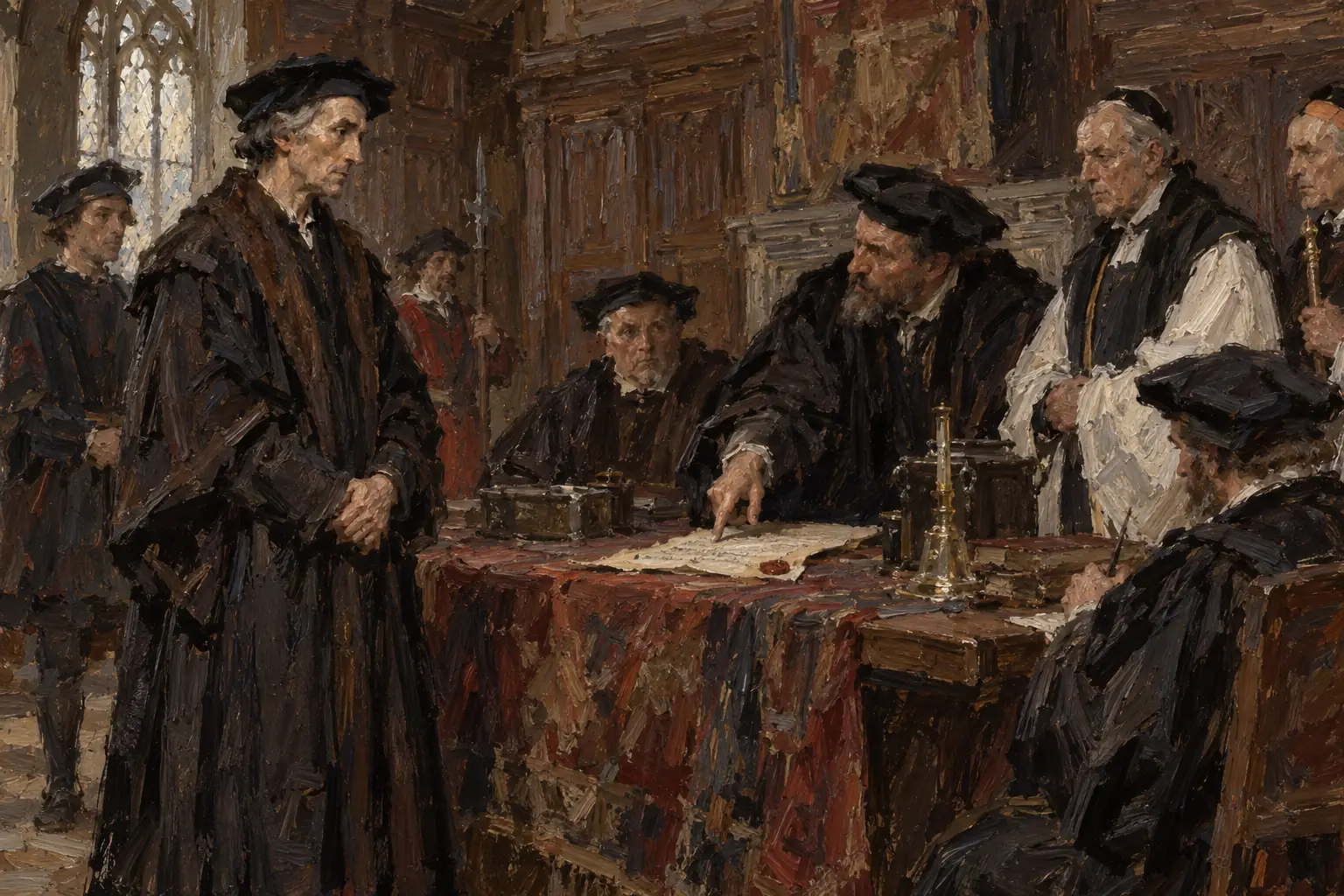
The establishment of royal supremacy marked a pivotal shift, transferring ultimate religious authority from the Pope to the English monarch. This was achieved through a series of parliamentary acts that legally entrenched Henry's control over the Church, blending government power with religious oversight.
Key steps in establishing royal supremacy
- Submission of the Clergy (1532) - English bishops were compelled to submit to royal laws, limiting their independence and preventing them from enacting canons without Henry's approval.
- Act in Restraint of Appeals (1533) - This legislation prohibited appeals to Rome in ecclesiastical cases, allowing English courts to handle matters like marriage annulments internally.
- Act of Supremacy (1534) - Formally declared Henry "Supreme Head" of the Church of England, granting him authority over doctrine, appointments, and Church finances.
- Treason Act (1534) - Made it a capital offence to deny royal supremacy, enforcing compliance through fear and suppressing dissent from figures like Thomas More.
- Broader implications - These measures integrated religious authority into the monarchy, promoting a national Church that served state interests while incorporating some Protestant reforms.
Dissolution of the monasteries
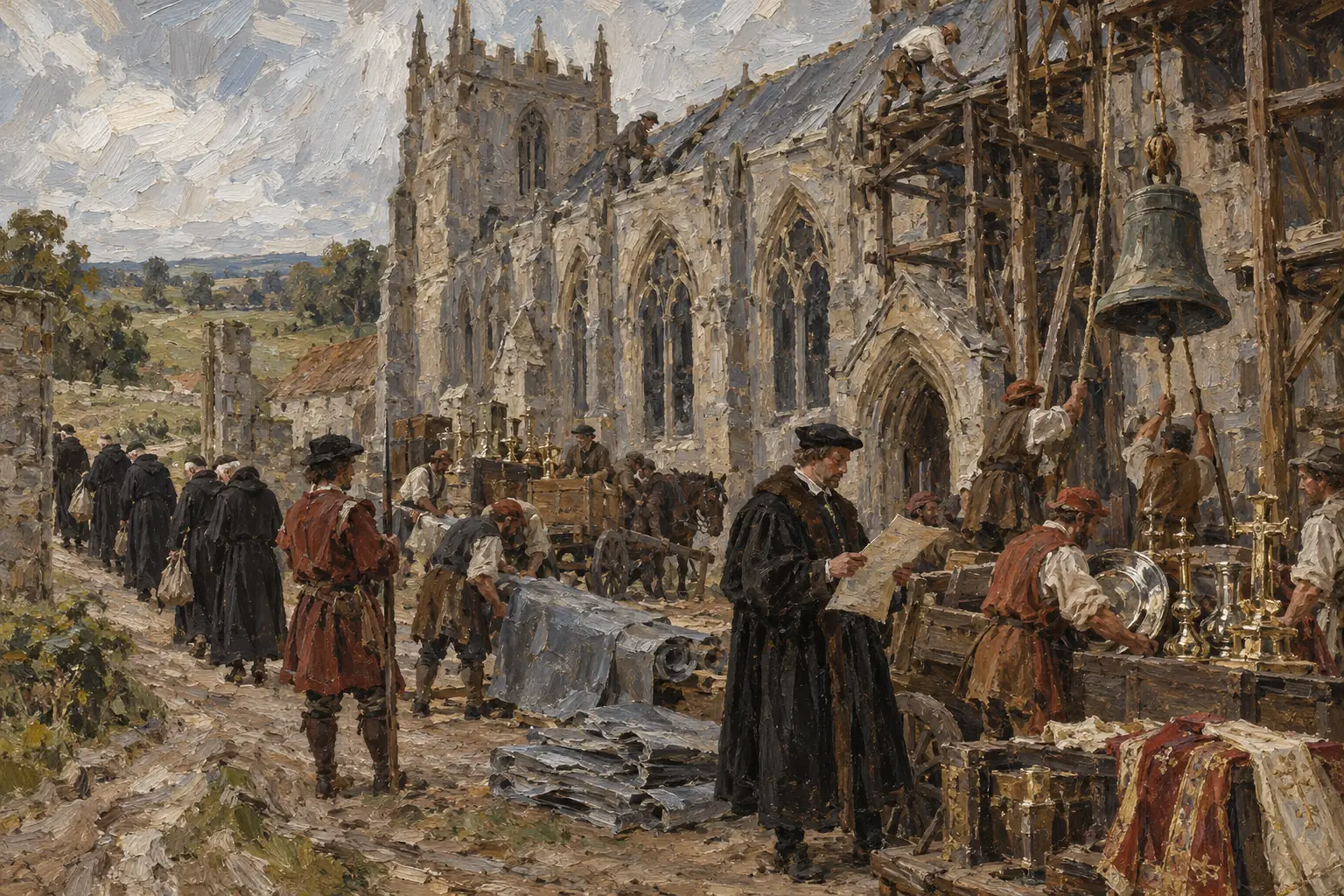
The dissolution of the monasteries involved the systematic closure and seizure of monastic houses across England, driven by financial gain and religious reform. This process redistributed Church wealth to the Crown and nobility, while eliminating institutions seen as loyal to Rome.
Process and motives for dissolution
- Initial phase (1536) - Smaller monasteries with annual incomes under £200 were targeted first, accused of moral corruption and inefficiency to justify their closure.
- Expansion to larger houses (1539) - Following inspections that highlighted alleged abuses, bigger monasteries were dissolved, with their lands and assets confiscated by the Crown.
- Economic benefits - The seizures generated significant revenue, estimated at around £1.5 million, which funded royal projects, wars, and rewards for loyal nobles.
- Religious rationale - Framed as a purge of superstitious practices, the dissolution aligned with Protestant ideas by suppressing monasticism and redirecting resources to parish churches.
- Resistance and aftermath - Uprisings like the Pilgrimage of Grace in northern England protested the closures, reflecting widespread discontent among those who valued monastic charity and spiritual roles.
Role of Thomas Cromwell in religious reforms
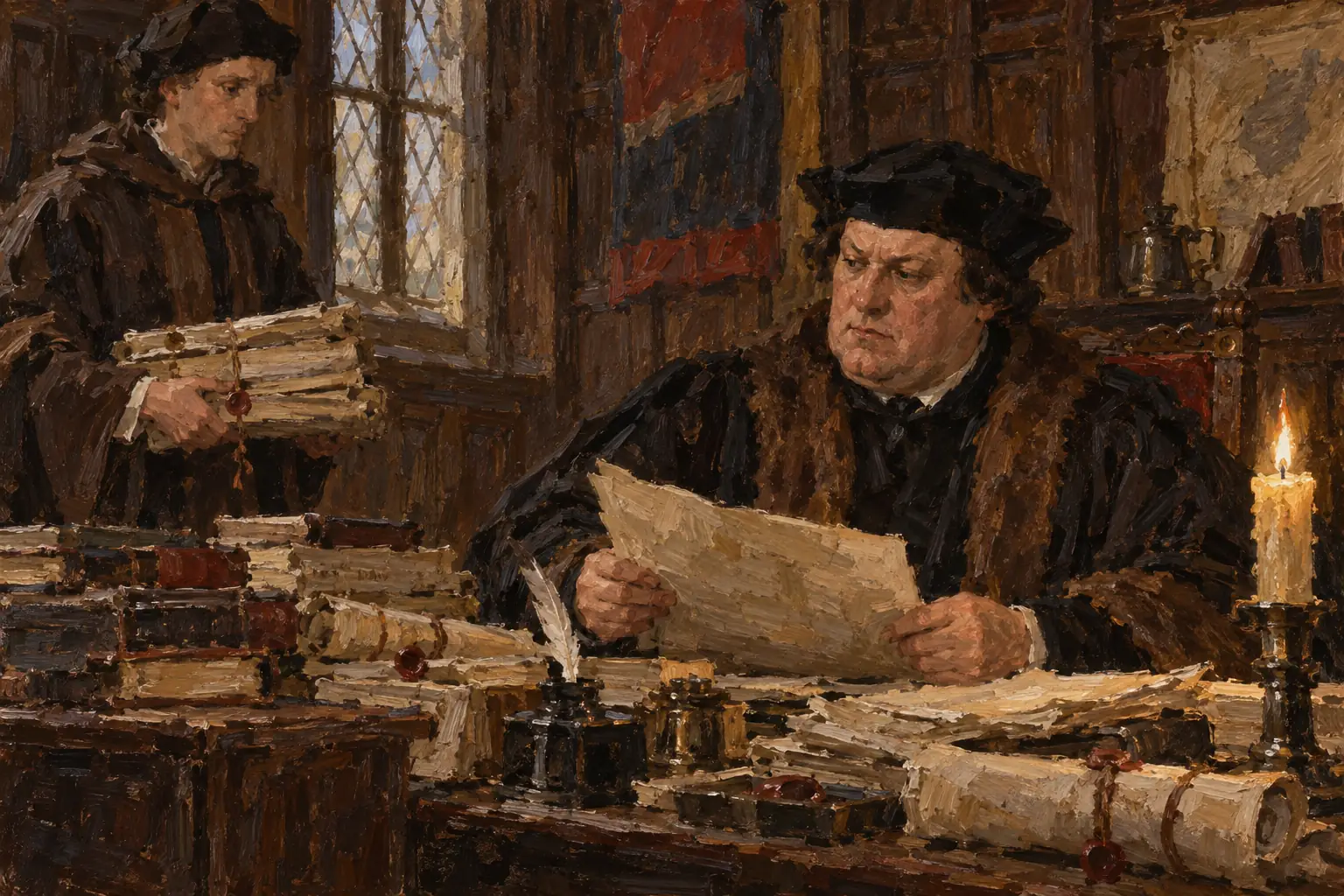
Thomas Cromwell served as Henry VIII's chief minister and played a central administrative role in orchestrating the Reformation. His efforts focused on implementing reforms that strengthened royal authority, often blending pragmatic governance with emerging religious ideas.
Cromwell's contributions to the Reformation
- Administrative oversight - As Vicegerent in Spirituals, Cromwell managed Church affairs, including the valuation of monastic properties through surveys like the Valor Ecclesiasticus.
- Legislative engineering - He drafted and pushed through key acts in Parliament, such as those enabling the break with Rome and the dissolution, using legal mechanisms to consolidate power.
- Promotion of Protestant ideas - Cromwell supported the translation and distribution of the Bible in English, influencing public access to scriptures and fostering reformist thought.
- Financial management - He oversaw the redistribution of monastic wealth, ensuring it benefited the Crown and suppressed opposition through strategic patronage.
- Downfall and legacy - Cromwell's fall in 1540, due to failed foreign alliances and Henry's shifting preferences, highlighted the precarious nature of reform; nonetheless, his structures endured, embedding royal supremacy in English governance.
Impacts of religious changes on social groups
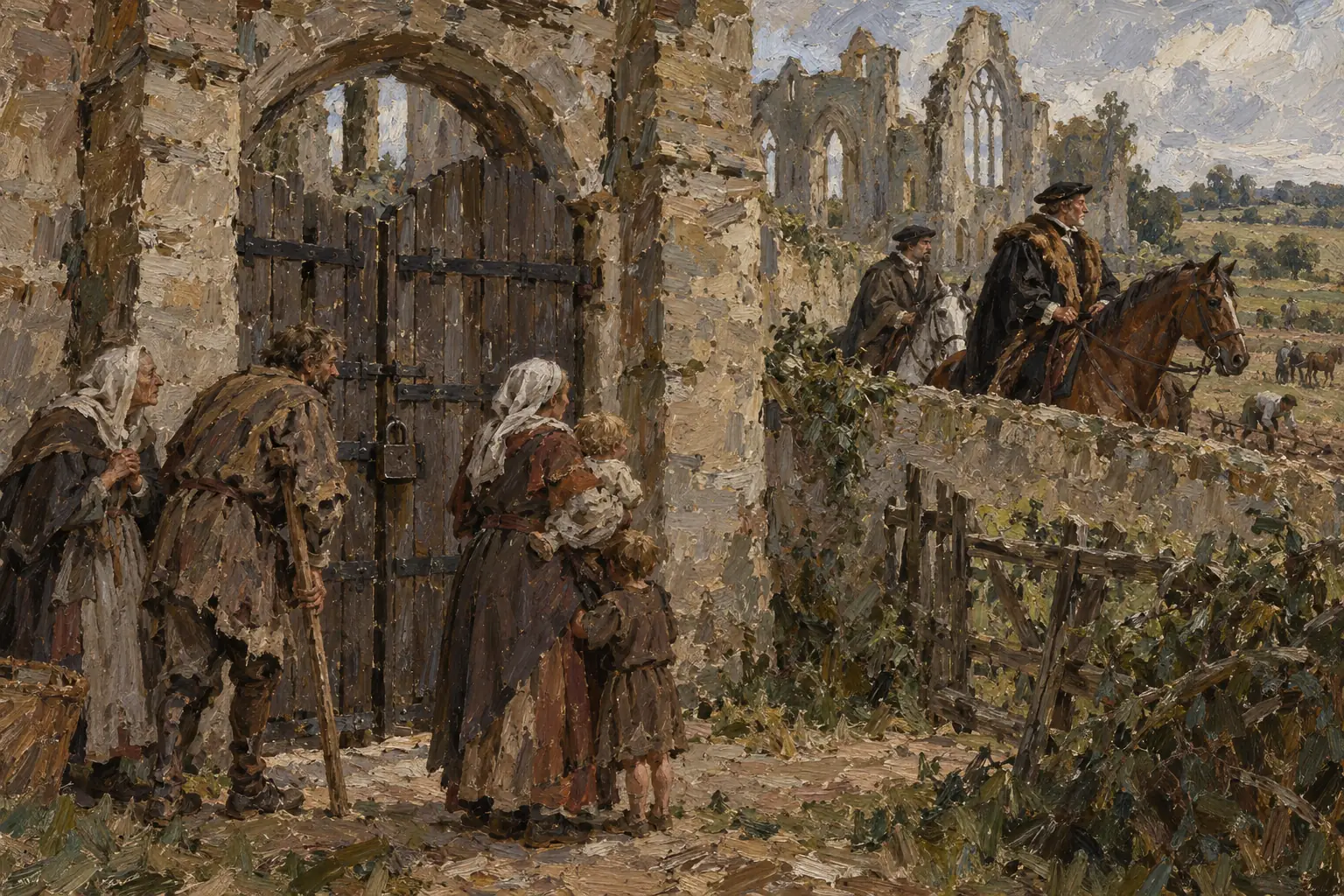
The religious reforms under Henry VIII affected social groups unevenly, with benefits and hardships distributed according to class, region, and religious affiliation. These changes influenced economic status, daily life, and political loyalties, often exacerbating divisions.
Effects on various social groups
- Nobility and gentry - Many gained from purchasing dissolved monastic lands at low prices, increasing their wealth and supporting the reforms to secure favour and property.
- Clergy and monks - Displaced religious orders faced poverty, with pensions often inadequate; reformist clergy benefited from new opportunities in a national Church.
- Common people - Rural communities lost monastic charity, hospitals, and schools, leading to hardship; northern regions, more traditionally Catholic, resisted changes, as seen in rebellions.
- Merchants and urban dwellers - Economic groups in southern England often welcomed reforms for their alignment with trade interests and Protestant ideas, gaining from redistributed wealth.
- Overall societal tensions - The changes heightened religious divisions, with some embracing Protestantism for its emphasis on individual faith, while others mourned the loss of Catholic traditions, contributing to long-term instability.