2.3 - The Globe Theatre: Site, Space & Spectacle
Key facts and dates
The Globe Theatre represented a pivotal development in Elizabethan entertainment, serving as a hub for Shakespeare's plays and reflecting the era's cultural dynamism. Built amid regulatory challenges and urban growth, it embodied the commercial spirit of Renaissance London while facing periodic closures and reconstructions.
Timeline of key events
- 1576 – Construction of The Theatre in Shoreditch, the first purpose-built playhouse in London, which later provided materials for the Globe.
- 1599 – The Globe opens in Bankside, Southwark, using recycled timbers from The Theatre after a lease dispute.
- 1613 – Original Globe burns down during a performance of Henry VIII due to a cannon misfire igniting the thatched roof.
- 1614 – Rebuilt Globe opens with a tiled roof for improved safety.
- 1642 – All theatres, including the Globe, closed by Puritan Parliament amid civil unrest.
- 1644 – Globe demolished, with the site repurposed for housing.
Location and origins of the Globe Theatre
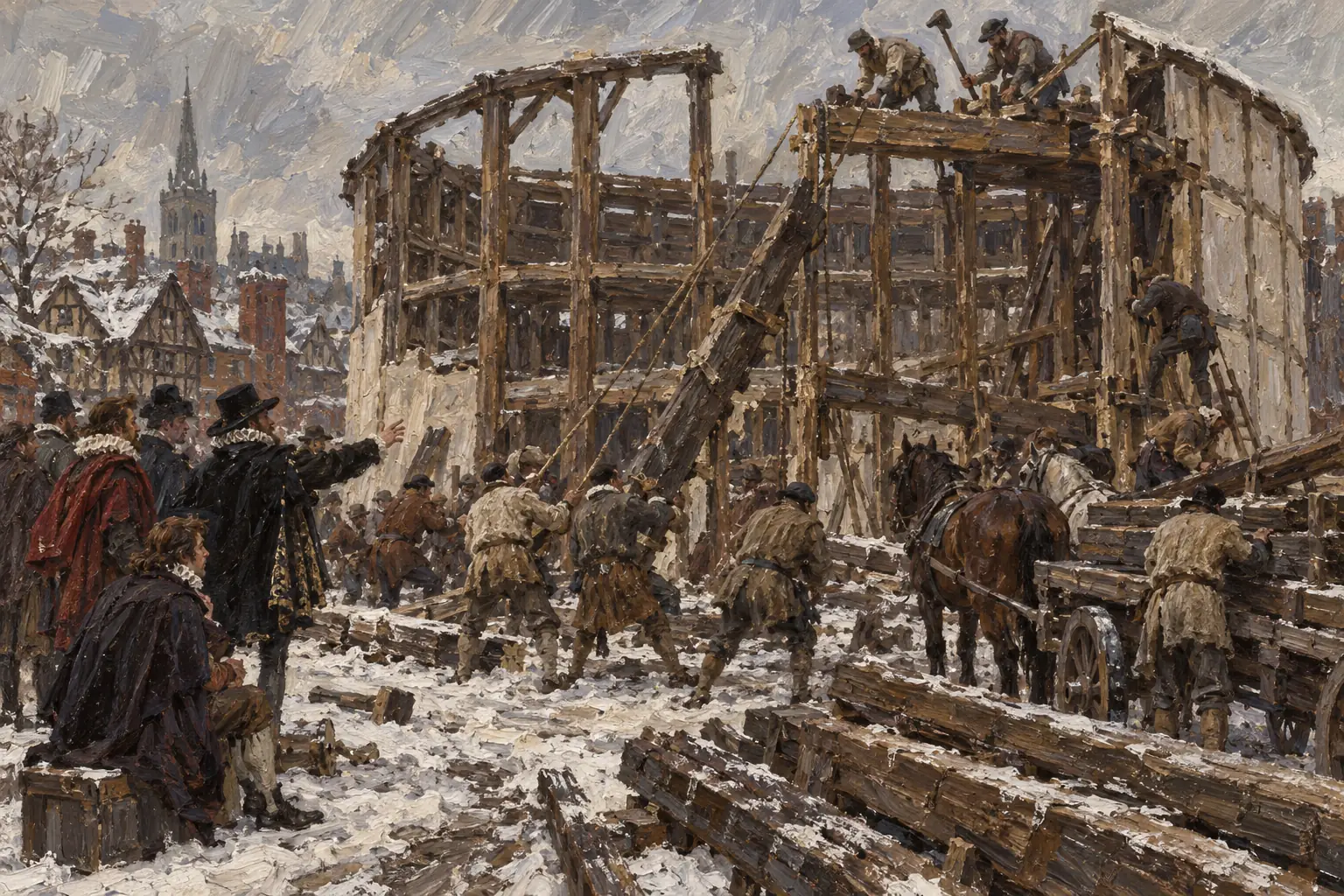
Image 1 of 2: In December 1598 the Lord Chamberlain's Men dismantled the Theatre in Shoreditch and kept its timbers
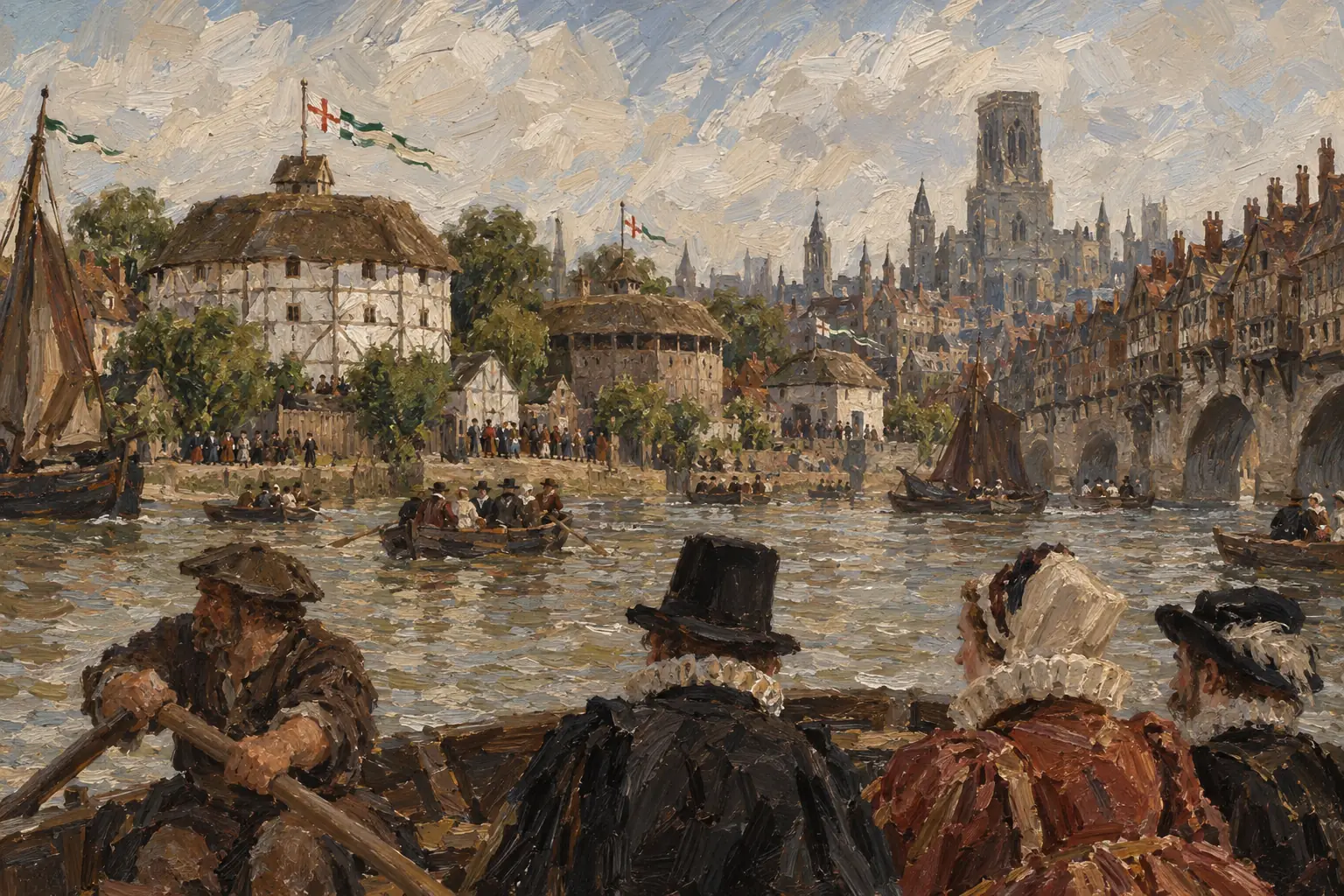
The Globe Theatre stood in Bankside, a district in Southwark on the south bank of the River Thames, outside the City of London's direct jurisdiction. This location allowed it to evade some of the strict controls imposed by city authorities, who often viewed theatres as morally dubious.
Factors leading to the Globe's establishment
- Relocation from Shoreditch - The Lord Chamberlain's Men, including William Shakespeare, faced a lease expiration at The Theatre in 1598. They dismantled the structure overnight and transported the timbers across the frozen Thames to Bankside.
- Construction in 1599 - Built by carpenter Peter Street, the new theatre reused these materials to create a polygonal wooden structure, funded partly by shareholders including Shakespeare.
- Strategic site choice - Bankside's position near the river facilitated access via boat, attracting audiences from across London while placing it among other entertainments like bear-baiting arenas.
Physical structure and audience experience
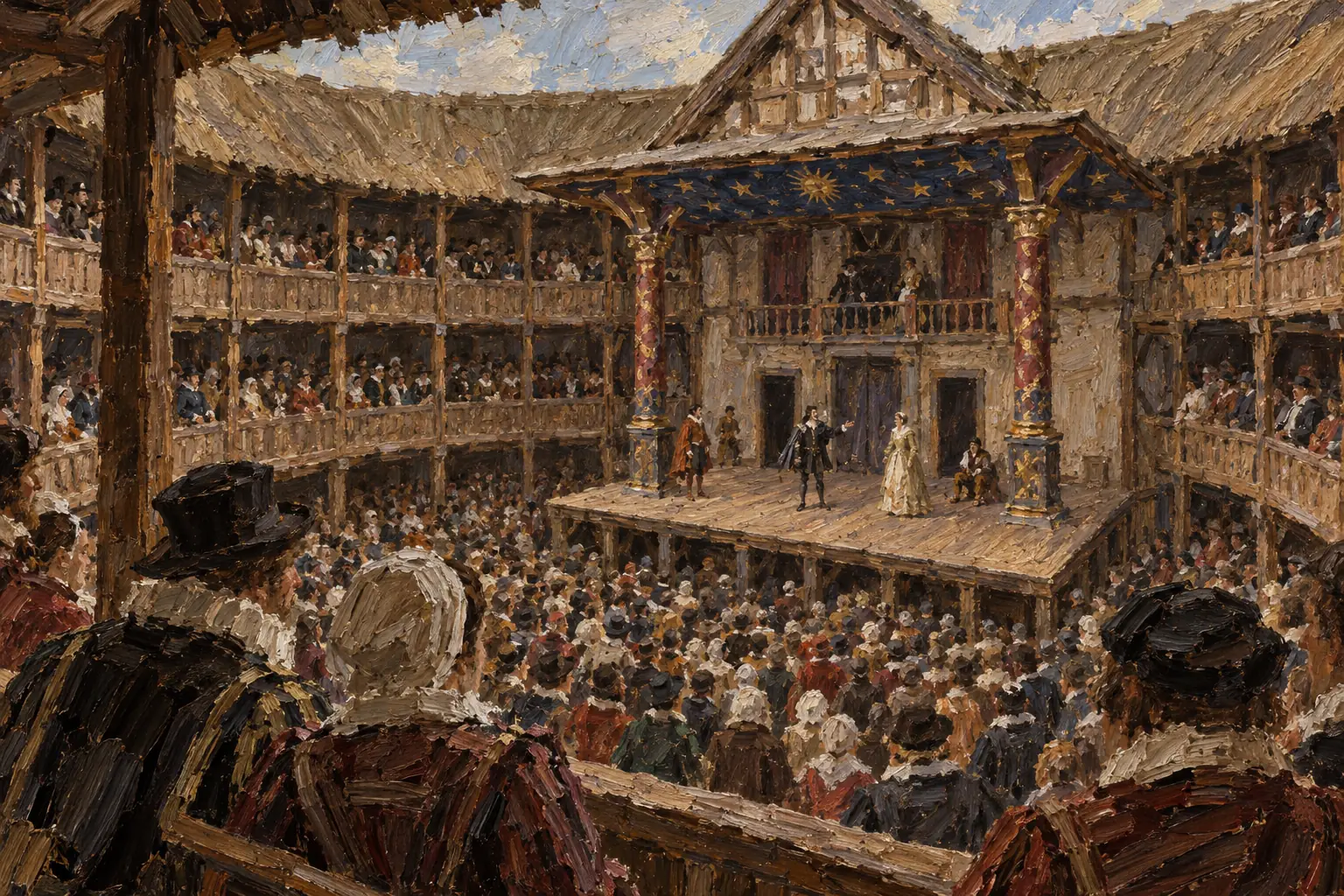
The Globe's design featured an open-air amphitheatre layout, accommodating up to 3,000 spectators in a socially stratified manner. Its architecture influenced how plays were performed and enjoyed, blending accessibility with spectacle.
Key elements of the Globe's structure
- Open yard for groundlings - The central pit, open to the sky, housed standing audience members who paid a penny for entry, exposing them to weather but offering an immersive, close-up view of the action.
- Three tiers of galleries - Raised seating areas surrounded the yard, providing covered benches for wealthier patrons at higher prices, creating a tiered social dynamic.
- The heavens and trapdoors - A canopy, painted with celestial motifs and called the 'heavens', sheltered the stage; trapdoors allowed for dramatic entrances from below, representing hell or graves.
Aspects of audience experience
- Signalling with flags - Coloured flags hoisted atop the theatre indicated the genre of the play: black for tragedy, white for comedy, and red for history, drawing crowds from afar.
- Ticketing and crowd management - Tokens collected at the door helped control entry; performances started in the afternoon to utilise natural light, with no intervals to maintain momentum amid noisy, interactive audiences.
- Social atmosphere - Spectators from all classes mingled, though galleries offered prestige; food vendors and pickpockets added to the lively, sometimes chaotic environment.
Staging practices influenced by the theatre's design
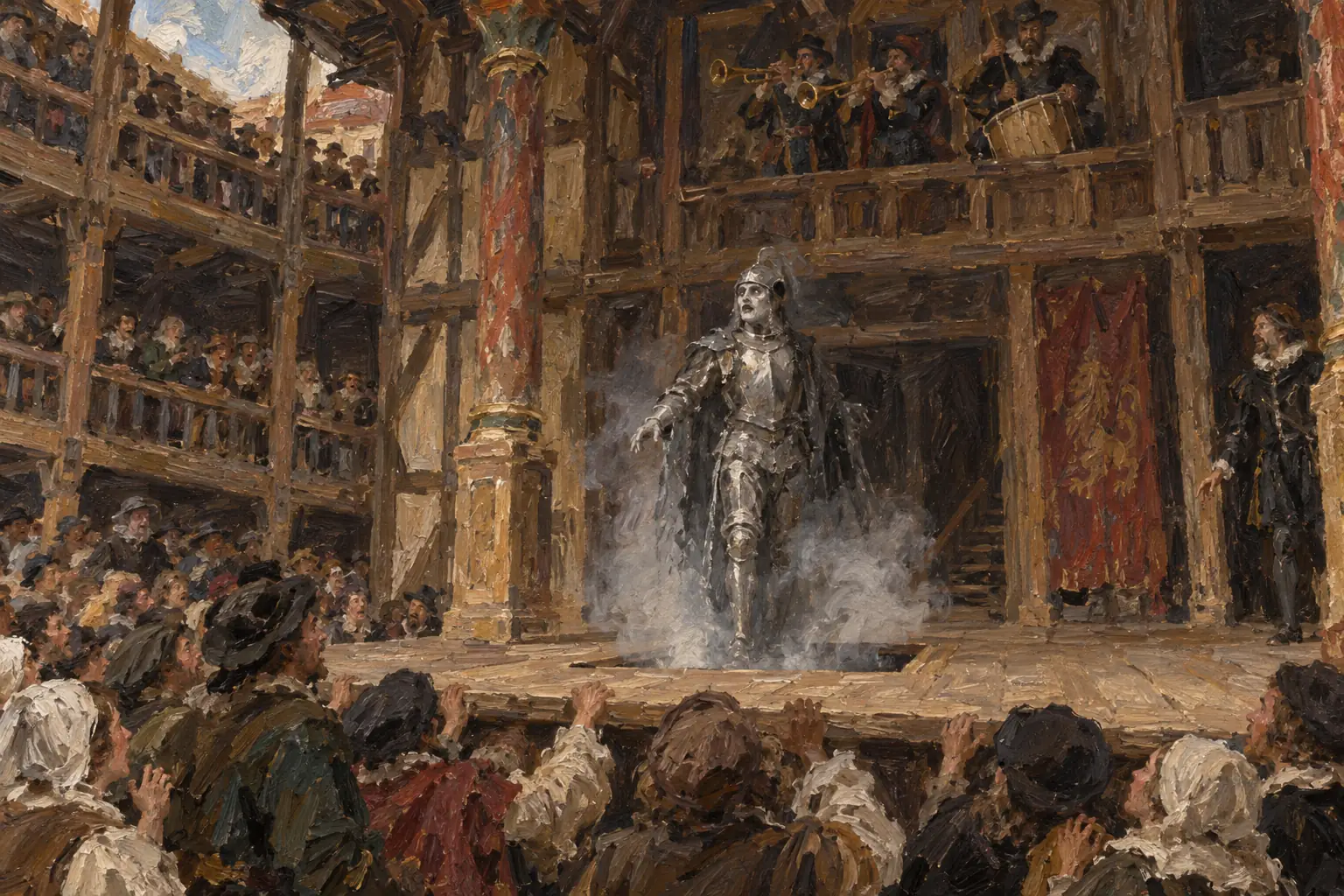
The Globe's physical layout necessitated creative staging techniques, relying on minimal scenery to emphasise actors' performances. This approach fostered imaginative engagement from the audience.
How design shaped performance elements
- Sound and music - Without amplification, actors projected voices across the open space; musicians in a gallery above the stage provided live accompaniment, enhancing mood through trumpets for battles or lutes for romantic scenes.
- Costumes and props - Elaborate, recycled garments denoted character status, as the bare stage lacked backdrops; simple props like swords or crowns were used symbolically to convey settings.
- Adaptations to space - The thrust stage, jutting into the yard, allowed intimate actor-audience interaction; effects like smoke or pyrotechnics utilised the open air, while the lack of lighting meant daytime shows with natural illumination.
Regulation and nearby entertainments
Theatres like the Globe operated under government oversight to ensure content aligned with moral and political standards. Bankside's vibrant entertainment scene complemented the theatre's appeal.
Regulatory framework
- Role of the Master of the Revels - This royal official censored scripts, approved performances, and licensed companies, preventing seditious or immoral material while collecting fees.
- Government controls - Plays required privy council approval; closures occurred during plague outbreaks or for content deemed offensive, balancing cultural expression with state interests.
Surrounding entertainments in Bankside
- Bear-baiting and cockfighting - Nearby arenas hosted animal fights, drawing similar crowds seeking thrilling spectacles.
- Brothels and taverns - The area's reputation for vice included licensed stew-houses and inns, creating a diverse leisure district that boosted the Globe's attendance.
- Competing theatres - Venues like the Rose and Swan offered rival productions, fostering a competitive environment that spurred innovation in plays.
Cultural significance of the Globe
Beyond entertainment, the Globe served as a multifaceted space that reflected and influenced Elizabethan society. It functioned as a commercial venture, a civic gathering point, and a subtle arena for political commentary.
Dimensions of the Globe's importance
- Commercial role - As a shareholder-owned enterprise, it generated profits through ticket sales and touring, popularising works by playwrights like Shakespeare and contributing to London's economy.
- Civic function - The theatre promoted social cohesion by attracting diverse audiences, serving as a public forum where shared experiences bridged class divides.
- Political space - Plays often alluded to contemporary issues, such as monarchy or rebellion, allowing indirect critique under the guise of fiction, though censorship limited overt dissent.