1.3 - Yalta, Potsdam & the Division of Germany
Key facts and dates
The conferences at Yalta and Potsdam in 1945 marked critical turning points in post-war Europe, shaping the division of Germany amid growing tensions between the Allies. These events set the stage for the Cold War, with disagreements over territories, reparations, and governance leading to the formal split of Germany.
Timeline of key events
- February 1945 – Yalta Conference agrees on dividing Germany and Berlin into four zones, establishing the United Nations, and holding free elections in Eastern Europe.
- July–August 1945 – Potsdam Conference sees hardened stances due to new leaders and US atomic capability, with disputes over Poland's borders and German reparations.
- 1945 – Allied Control Council established to oversee joint administration of occupied Germany.
- 1946 – Divergent occupation policies emerge, with Western zones focusing on economic recovery and Soviet zone on land reforms.
- January 1947 – Formation of Bizonia by merging US and British zones for unified economic management.
- 1948 – Inclusion of French zone creates Trizonia, paving the way for separate Western currency and state.
- 1949 – Permanent division formalised with creation of West Germany (Federal Republic) and East Germany (Democratic Republic).
Agreements made at the Yalta Conference
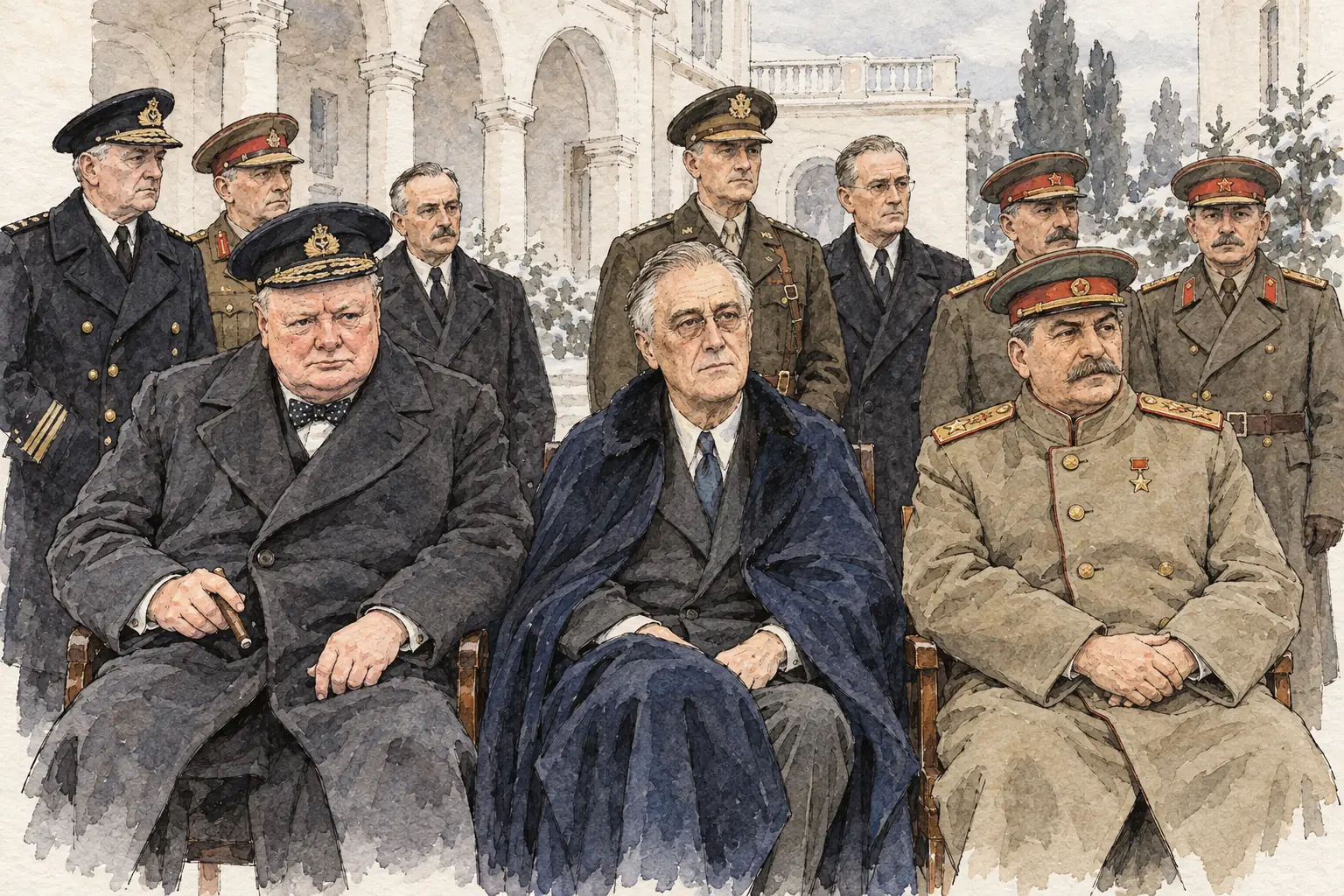
The Yalta Conference, held in February 1945, brought together Allied leaders Winston Churchill, Franklin D. Roosevelt, and Joseph Stalin to plan the post-war order in Europe. With Germany nearing defeat, the focus was on dividing territories, ensuring security, and promoting stability.
Key outcomes of the Yalta Conference
- Division of Germany and Berlin - Germany and its capital Berlin were to be split into four occupation zones controlled by the USA, USSR, Britain, and France, allowing each power to administer its area temporarily.
- Establishment of the United Nations - Agreement to create an international organisation to maintain peace, replacing the failed League of Nations, with its first meeting planned for April 1945.
- Free elections in Eastern Europe - Broad commitment to hold democratic elections in liberated countries, particularly in Poland and other Soviet-influenced areas, to ensure self-determination.
- Other provisions - Nazis were to be prosecuted, and Germany would pay reparations, with the USSR gaining territorial concessions in the east to compensate for wartime losses.
Changes and agreements at the Potsdam Conference
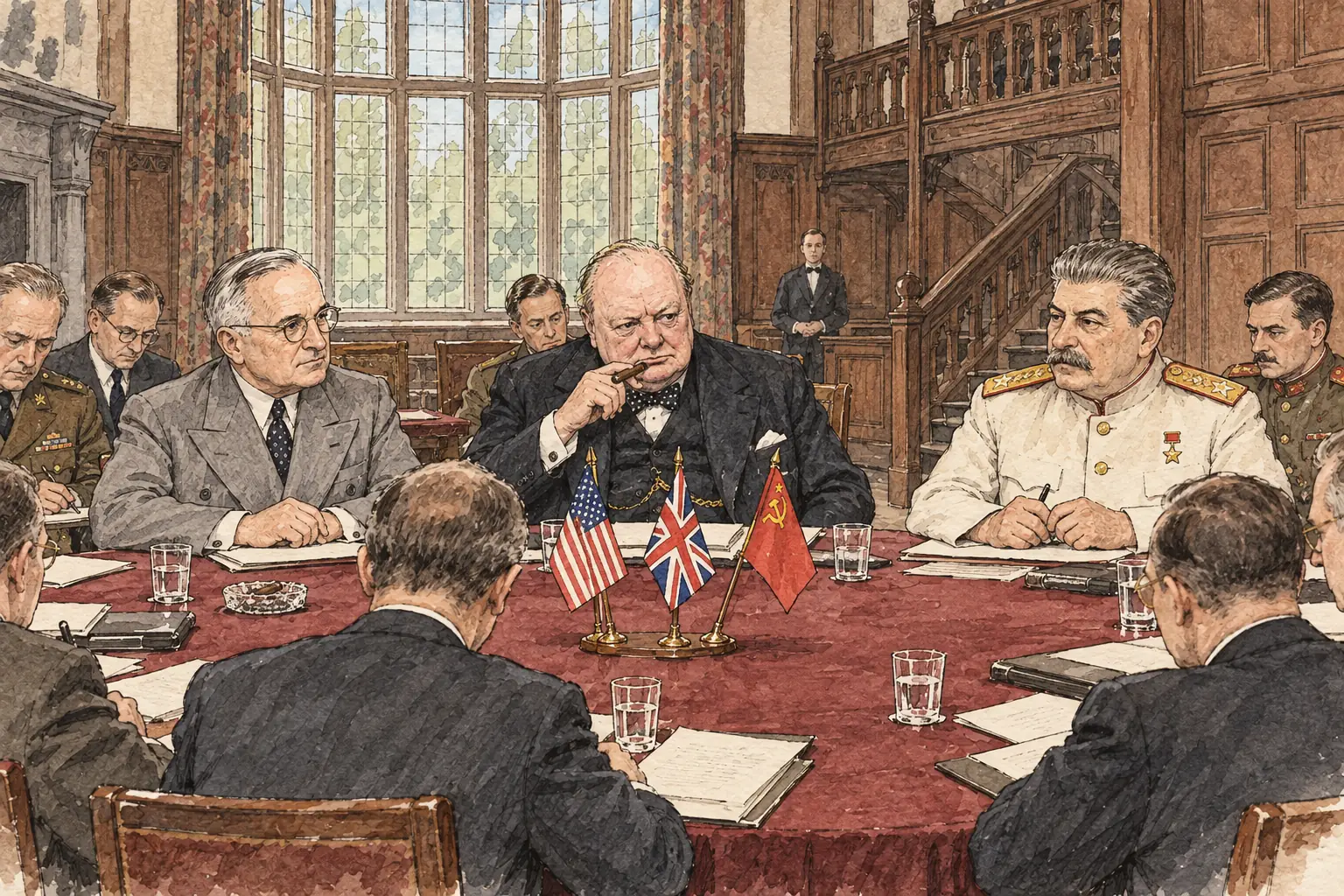
By the time of the Potsdam Conference in July–August 1945, the wartime alliance had begun to fracture. The death of Roosevelt and the defeat of Germany introduced new dynamics, leading to tougher negotiations and fewer compromises.
Shifts influencing the Potsdam Conference
- New leadership - US President Harry Truman and British Prime Minister Clement Attlee replaced Roosevelt and Churchill, bringing less personal rapport with Stalin and a more confrontational approach.
- US atomic advantage - The successful test of the atomic bomb during the conference strengthened Truman's position, reducing the need for Soviet help against Japan and heightening suspicions.
- Hardening positions - Disputes arose over Poland's western border, which Stalin pushed further into German territory, and over reparations, with the West wary of weakening Germany excessively.
Key agreements at Potsdam
- Reparations and demilitarisation - Germany would be disarmed and denazified, with reparations taken mainly from each Ally's own zone, though the USSR could claim additional industrial equipment from the West.
- Territorial adjustments - Confirmation of Poland's new borders and the expulsion of ethnic Germans from Eastern Europe, aiming to prevent future conflicts.
- Limited consensus - While some unity remained on prosecuting war criminals, the conference highlighted growing divisions, with no firm agreement on Germany's long-term unity.
The division of Germany and Berlin
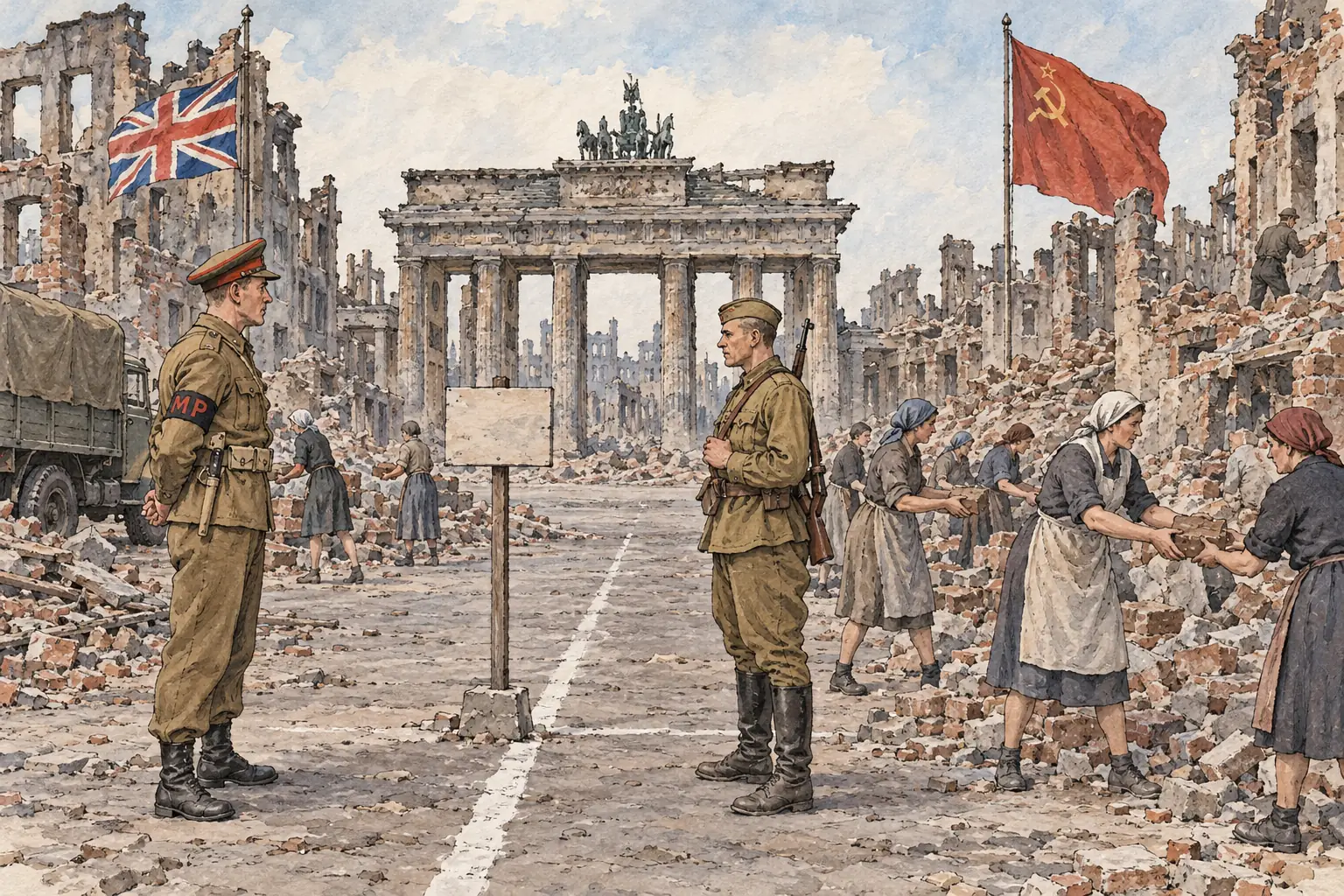
Following the conferences, Germany and Berlin were physically divided into four zones, reflecting the Allies' initial plan for joint control. However, ideological differences soon made reunification unlikely, setting the stage for a bifurcated nation.
Structure of the division
- Zonal boundaries - The USA, USSR, Britain, and France each controlled a sector of Germany; Berlin, deep in the Soviet zone, was similarly quartered, with access routes guaranteed for Western Allies.
- Berlin's unique status - As the former capital, Berlin's division symbolised broader tensions, with Western sectors forming an enclave within Soviet territory.
- Initial intentions - The split was meant as a temporary measure for reconstruction, but conflicting visions—democratic capitalism in the West versus communism in the East—entrenched the divide.
Role of the Allied Control Council
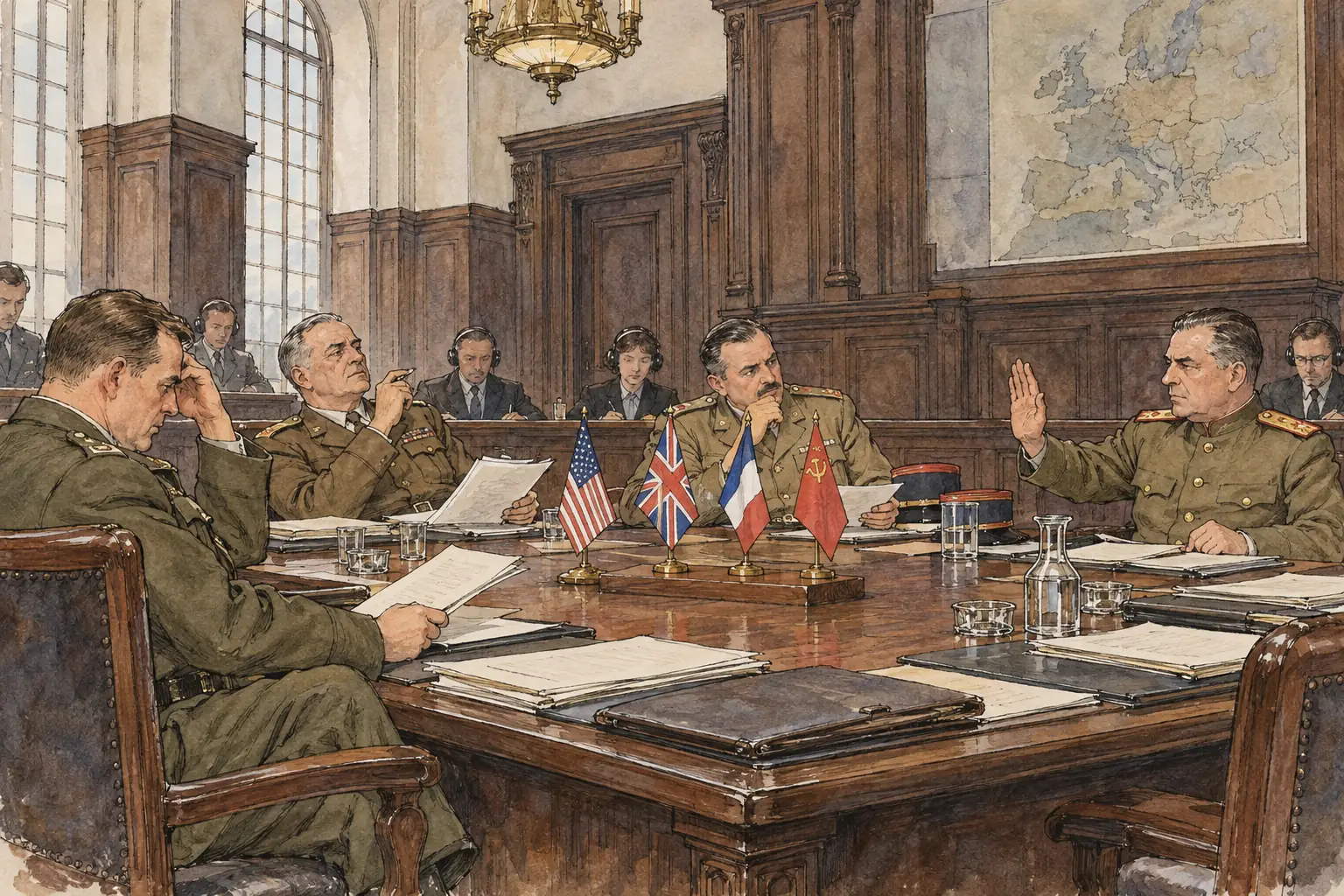
The Allied Control Council was formed in 1945 as the supreme governing body for occupied Germany, comprising representatives from the four powers. It aimed to coordinate policies across zones but struggled with diverging interests.
Functions of the Allied Control Council
- Joint administration - Oversaw nationwide issues like transport, communications, and currency, requiring unanimous decisions for implementation.
- Policy coordination - Handled denazification, demilitarisation, and economic controls, such as setting production levels to prevent rearmament.
- Challenges and limitations - Soviet vetoes often blocked Western initiatives, leading to deadlock; by 1948, the council effectively ceased functioning as zones pursued independent paths.
Bizonia, Trizonia and permanent division
As cooperation faltered, Western Allies merged their zones economically, creating stepping stones towards a separate West German state. This process highlighted the irreconcilable differences with the Soviet zone.
Steps towards economic separation
- Formation of Bizonia - In January 1947, the US and British zones combined into Bizonia to streamline administration and boost recovery through shared resources and planning.
- Expansion to Trizonia - By 1948, the French zone joined, forming Trizonia, which introduced a new currency (Deutsche Mark) to combat inflation and stimulate trade.
- Divergent occupation policies - Western zones emphasised market reforms and aid like the Marshall Plan, while the Soviet zone implemented land redistribution and nationalisation, widening the economic gulf.
- Path to permanent division - These mergers foreshadowed political split; Soviet responses, including the Berlin Blockade, accelerated the creation of two German states in 1949, solidifying the Iron Curtain.