3.3 - Cuban Missile Crisis: Decisions, Risks & Results
Key facts and dates
The Cuban Missile Crisis of October 1962 brought the USA and USSR to the brink of nuclear war, stemming from Soviet missile deployments in Cuba amid Cold War rivalries. The tense standoff highlighted the dangers of escalation but ultimately led to de-escalation measures that reshaped superpower relations.
Timeline of key events
- 14 October 1962 – US spy planes discover Soviet nuclear missiles being installed in Cuba.
- 16 October 1962 – President Kennedy forms ExComm to advise on responses to the missile threat.
- 22 October 1962 – Kennedy announces a naval quarantine of Cuba in a televised address.
- 24 October 1962 – Soviet ships approach the quarantine line, heightening risks of confrontation.
- 27 October 1962 – Peak of crisis with a US U-2 plane shot down over Cuba.
- 28 October 1962 – Khrushchev agrees to withdraw Soviet missiles; secret US pledge to remove Jupiter missiles from Turkey.
- June 1963 – Washington-Moscow hotline established to improve direct communication.
- August 1963 – Limited Test Ban Treaty signed, prohibiting nuclear tests in atmosphere, space, and underwater.
Discovery of Soviet missiles and US response
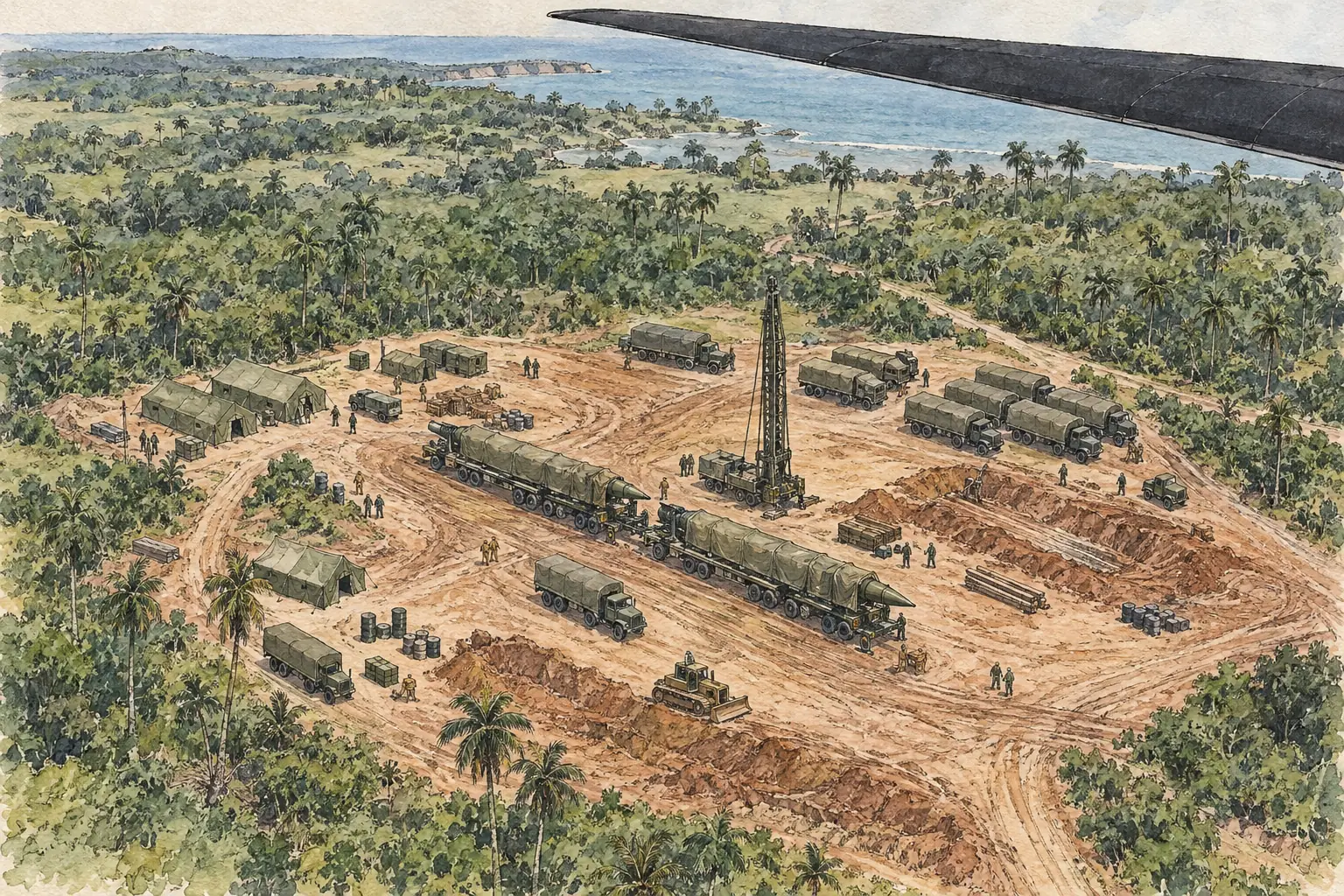
In October 1962, the USA uncovered evidence of Soviet nuclear missiles in Cuba, triggering a major international crisis. This revelation stemmed from Cold War tensions, including the failed Bay of Pigs invasion and US missile placements in Europe, prompting Soviet leader Nikita Khrushchev to bolster Cuba's defences.
Factors leading to the missile deployment
- Soviet motivations - Khrushchev aimed to protect Cuba from potential US invasion, balance nuclear capabilities against US missiles in Turkey and Italy, and demonstrate Soviet strength in the Western Hemisphere.
- Discovery by US intelligence - On 14 October, American U-2 reconnaissance flights captured photographs of medium-range ballistic missile sites under construction, capable of reaching major US cities.
- Initial US reactions - President John F. Kennedy viewed the missiles as an unacceptable threat, leading to urgent consultations and preparations for possible military action while seeking to avoid immediate escalation.
ExComm deliberations and the naval quarantine
Image 1 of 2: ExComm met in the White House day after day, weighing air strikes and an invasion against a blockade
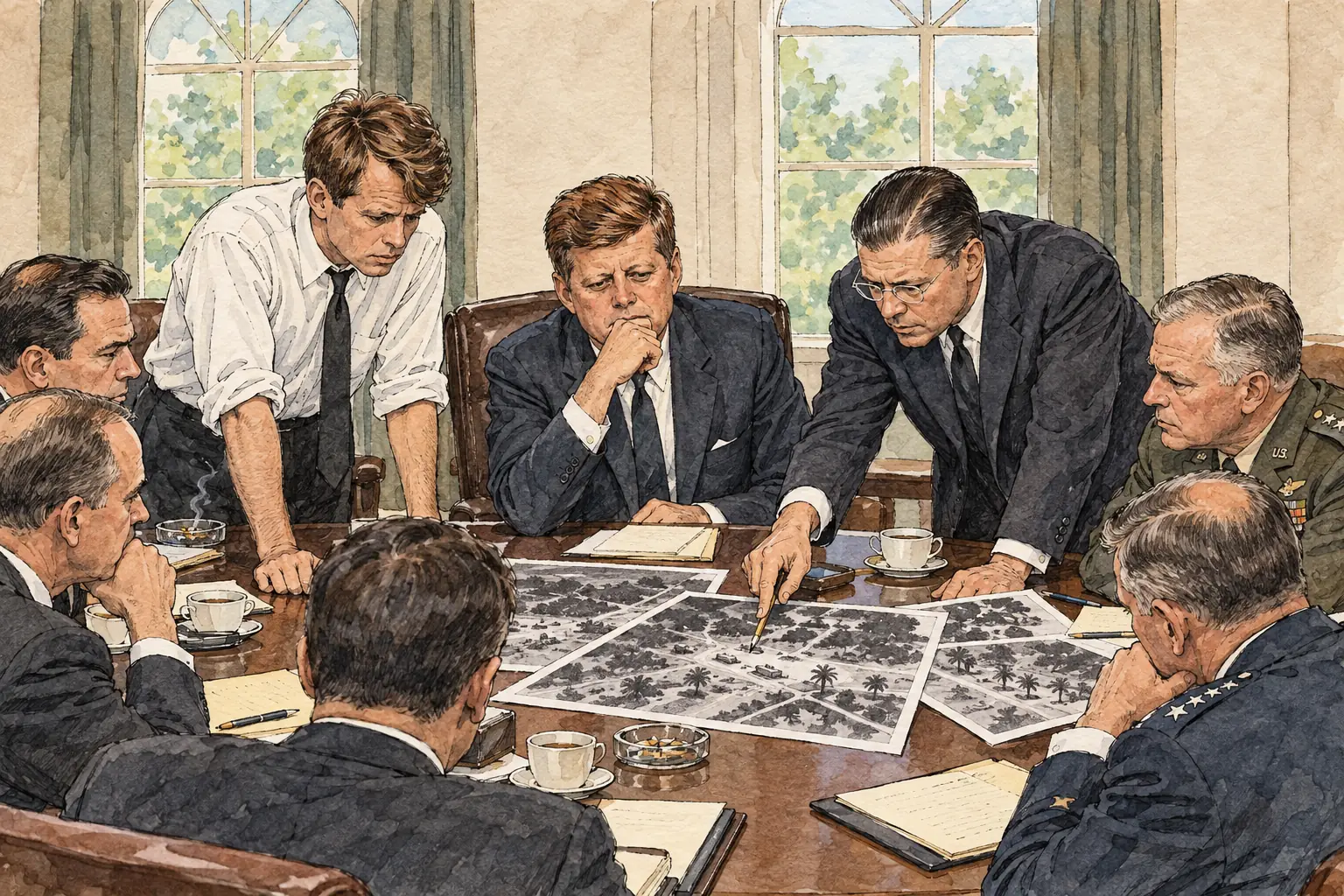
Kennedy assembled the Executive Committee of the National Security Council (ExComm) to debate options for addressing the missiles. This group of advisers weighed various strategies, balancing the need for firmness with the risk of provoking nuclear war.
Key options considered by ExComm
- Air strikes - Proposals for bombing the missile sites were discussed but rejected due to fears of incomplete destruction and inevitable Soviet retaliation.
- Invasion of Cuba - A full-scale ground assault was contemplated but dismissed as it could lead to prolonged conflict and direct confrontation with Soviet forces.
- Diplomatic approaches - Suggestions included negotiations through the United Nations or direct talks with Khrushchev, though these were seen as potentially too slow.
Choice of naval quarantine
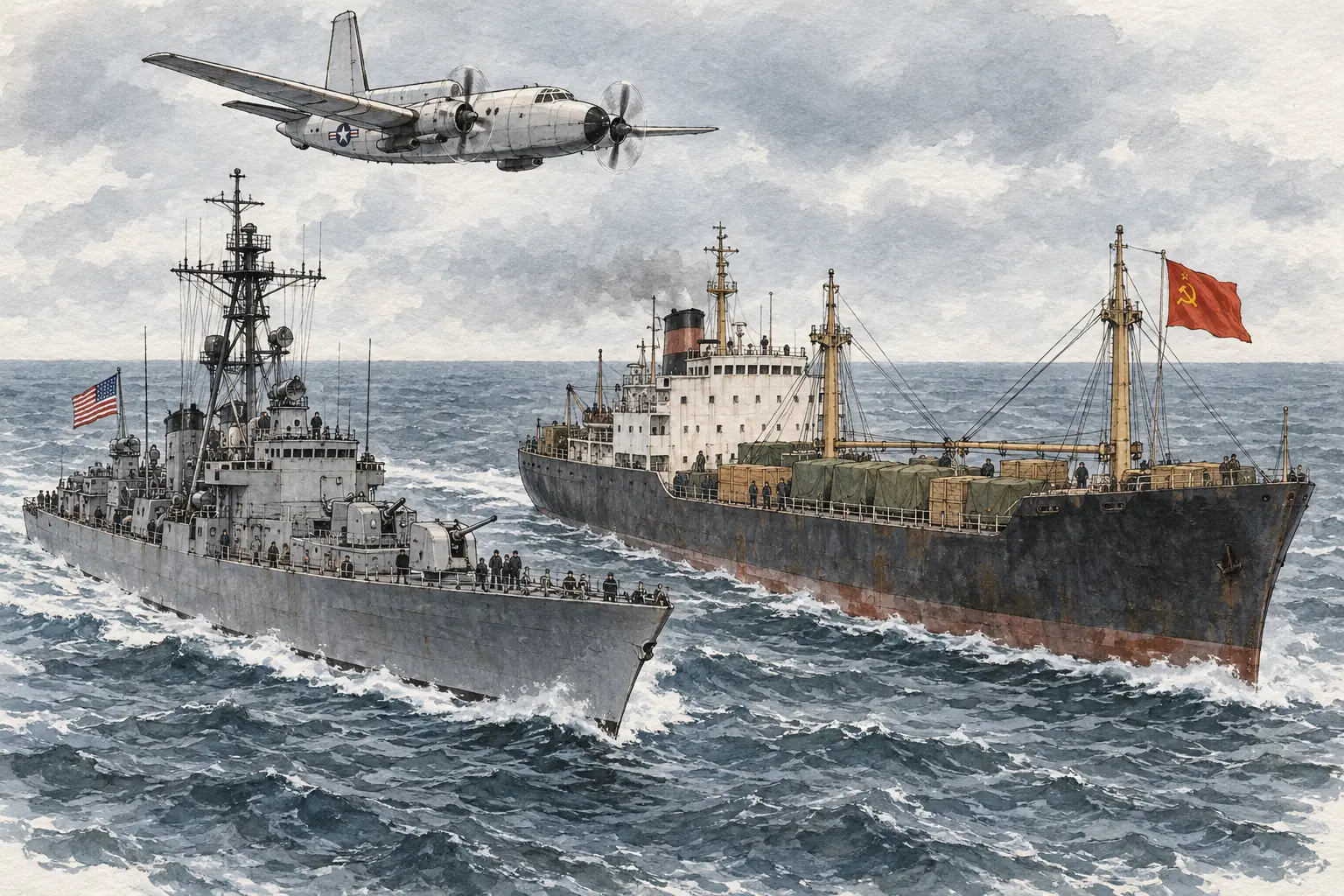
The decision was made for a naval blockade, termed a 'quarantine' to avoid the legal implications of a blockade under international law. Announced on 22 October, it involved US ships intercepting Soviet vessels suspected of carrying missiles, aiming to prevent further deployments without immediate violence.
Risks during the crisis and secret diplomacy
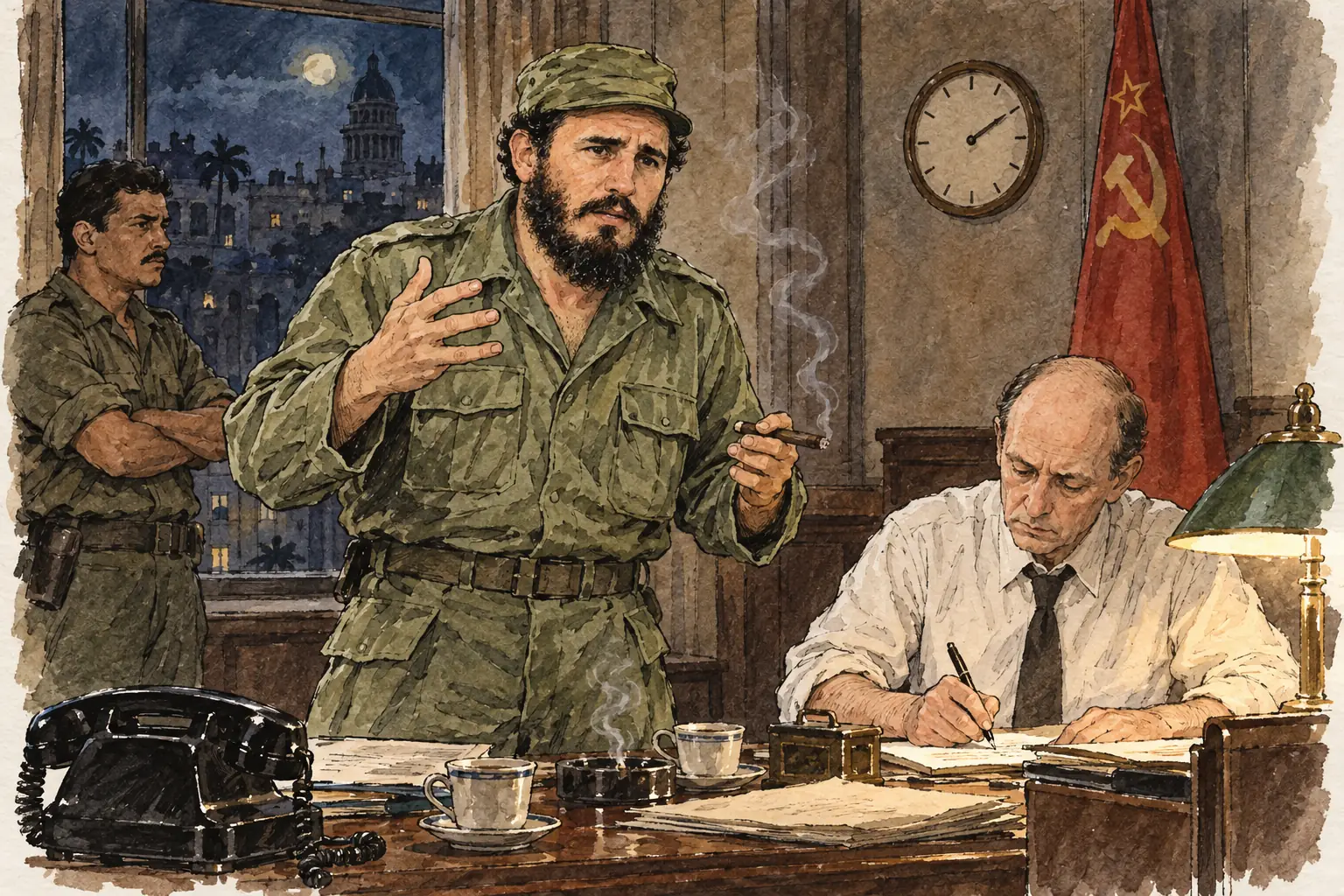
The crisis escalated rapidly, bringing the superpowers closer to nuclear conflict than at any other point in the Cold War. Miscommunications and unauthorised actions heightened dangers, but back-channel negotiations ultimately defused the situation.
Major risks encountered
- Confrontation at sea - On 24 October, Soviet ships neared the quarantine line, creating a standoff where a single misstep could spark war.
- Incidents increasing tension - A US U-2 spy plane was shot down over Cuba on 27 October by Soviet forces, and another strayed into Soviet airspace, raising fears of accidental escalation.
- Nuclear readiness - Both sides prepared for potential use of nuclear weapons, with US forces on high alert and Soviet commanders in Cuba authorised to launch tactical nukes if invaded.
Role of secret diplomacy
Resolution came through private communications, including letters between Kennedy and Khrushchev. On 28 October, the Soviets agreed to dismantle and remove the missiles in exchange for a US promise not to invade Cuba. Secretly, the USA pledged to withdraw its Jupiter missiles from Turkey within months, a concession not publicly announced to avoid appearing weak.
Claims of success by both superpowers
Both Kennedy and Khrushchev portrayed the crisis's outcome as a victory for their respective sides, bolstering their domestic and international standing. This mutual claim of success helped preserve face while averting disaster.
Reasons leaders declared victory
- US perspective - Kennedy emphasised the removal of Soviet missiles as a direct result of firm US resolve, enhancing his image as a strong leader who protected national security without war.
- Soviet perspective - Khrushchev highlighted the US non-invasion pledge as safeguarding Cuba's sovereignty and extracting a concession on US missiles in Turkey, framing it as a strategic gain.
- Broader implications - These claims allowed both to de-escalate without humiliation, demonstrating that pragmatic compromises could resolve even the most perilous standoffs.
Long-term impacts on the Cold War
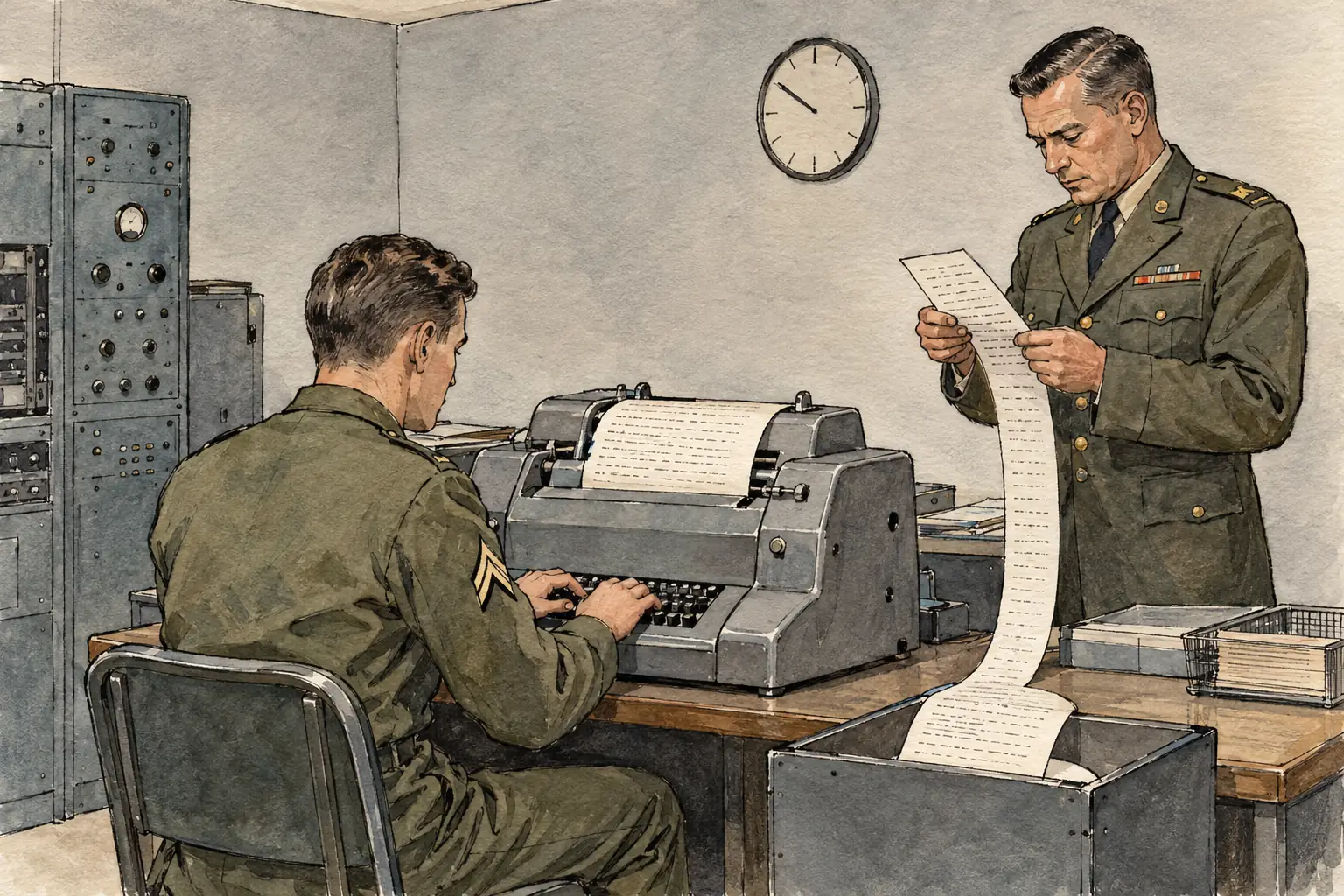
Image 1 of 2: The 1963 hotline linked Washington and Moscow by teleprinter, not by telephone
The Cuban Missile Crisis marked a pivotal shift in superpower relations, exposing the perils of nuclear brinkmanship and prompting measures to reduce future risks. It encouraged greater caution and communication, influencing Cold War dynamics for years.
Steps to manage tensions
- Washington-Moscow hotline - Established in June 1963, this direct teletype link enabled rapid communication between leaders to prevent misunderstandings during crises.
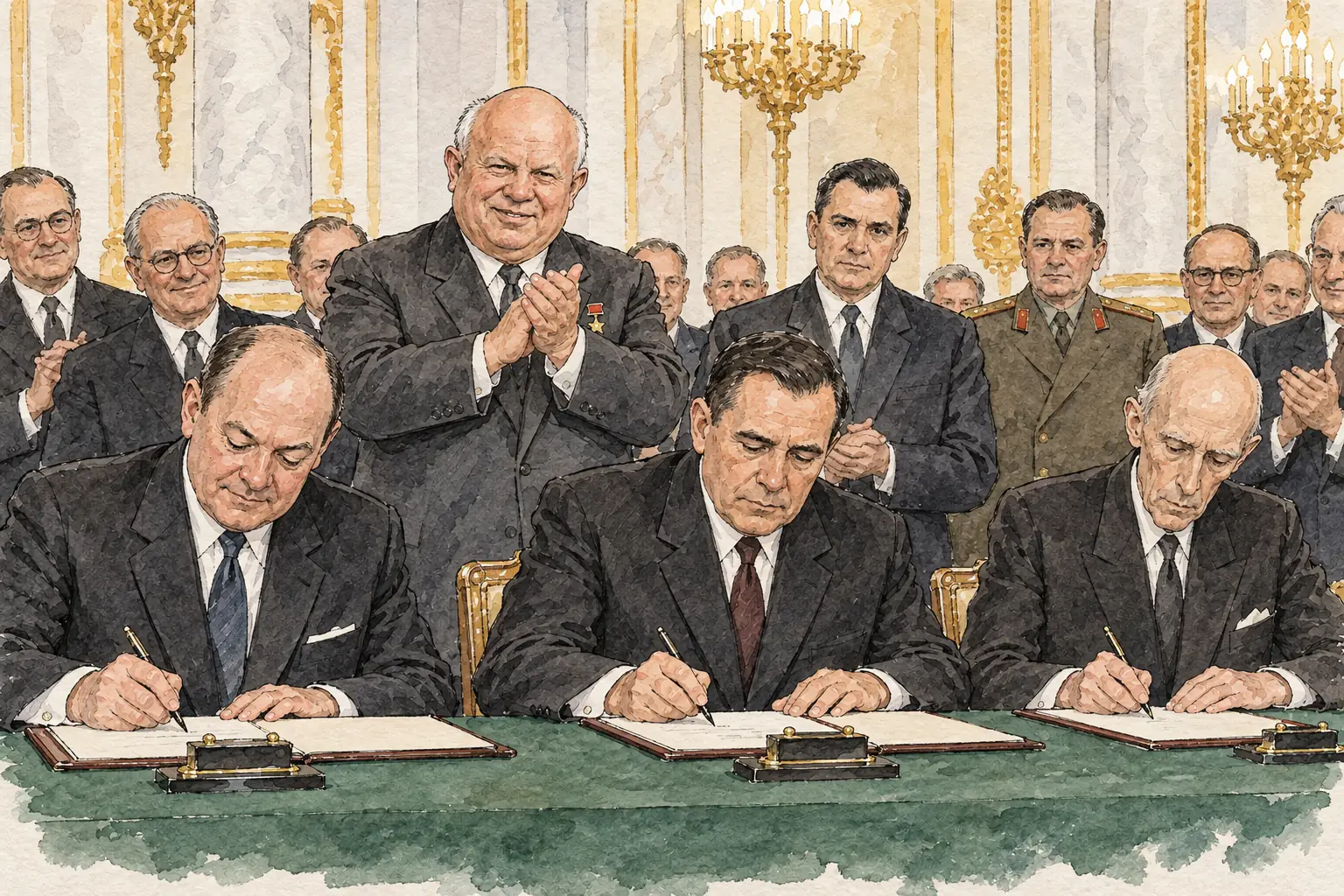
- Limited Test Ban Treaty - Signed in August 1963 by the USA, USSR, and UK, it banned nuclear tests in the atmosphere, outer space, and underwater, aiming to curb arms race escalation and environmental damage.
Assessment as a turning point
The crisis underscored the mutual vulnerability of nuclear powers, fostering a move towards détente. It discouraged reckless provocations, promoted arms control talks, and highlighted the need for diplomacy over confrontation in managing global tensions.