2.2 - Nazi Appeal, Propaganda & Role of the SA
Key facts and dates
The Nazi Party (NSDAP) experienced a dramatic surge in popularity between 1928 and 1932, fuelled by economic crisis, effective propaganda, and paramilitary activities. This period marked a transformation from fringe group to major political force in Weimar Germany, capitalising on widespread discontent.
Timeline of key events
- 1928 – NSDAP secures only 2.6% of the vote in Reichstag elections, reflecting limited appeal before the economic crash.
- 1929 – Wall Street Crash triggers global depression, creating opportunities for Nazi anti-system messaging.
- 1930 – NSDAP vote rises to 18.3% amid unemployment and instability, making it the second-largest party.
- July 1932 – Nazis win 37.3% in elections, becoming the largest party with promises of work and national revival.
- November 1932 – Vote dips to 33.1%, but ongoing chaos strengthens their image as restorers of order.
The NSDAP's electoral rise from 1928 to 1932
The National Socialist German Workers' Party (NSDAP), commonly known as the Nazi Party, transformed from a minor political entity to the dominant force in German politics during this period. This rise was closely tied to the economic turmoil following the 1929 Wall Street Crash, which led to mass unemployment and hyperinflation in Weimar Germany.
Factors driving the NSDAP's increasing popularity
- Economic crisis exploitation - With unemployment reaching six million by 1932, the Nazis capitalised on public desperation by positioning themselves as an alternative to the failing Weimar democracy.
- Broadening voter base - Support grew among diverse groups, including disillusioned workers, farmers facing debt, and middle-class professionals threatened by financial instability.
- Electoral gains - From just 12 seats in the Reichstag in 1928, the party expanded to 230 seats by July 1932, reflecting a shift from fringe status to mainstream appeal.
Hitler's leadership and key messaging
Adolf Hitler emerged as the central figure in the Nazi Party, cultivating a personality cult that portrayed him as Germany's saviour. His charismatic oratory and strategic promises resonated with voters seeking stability amid chaos.
Elements of Hitler's leadership cult
- Charismatic image - Hitler was presented as a strong, decisive leader who could unite the nation, with propaganda emphasising his wartime service and vision for revival.
- Simple, relatable slogans - Phrases like "Work and Bread" directly addressed unemployment and poverty, offering straightforward solutions to complex problems.
Core components of Nazi messaging
- Nationalist appeals - The party promoted extreme patriotism, blaming the Treaty of Versailles and foreign powers for Germany's woes, promising to restore national pride.
- Anti-communism stance - Nazis positioned themselves as defenders against the perceived threat of Bolshevik revolution, appealing to those fearing leftist uprisings.
- Promises of order - Amid street violence and political gridlock, they claimed to bring stability and end the Weimar Republic's perceived weakness.
Goebbels' propaganda and targeted appeals
Joseph Goebbels, as the Nazi propaganda chief, revolutionised political messaging by using modern media to create a pervasive and emotionally charged campaign. This approach was innovative for the time, blending technology with psychological manipulation.
Modern propaganda methods employed by Goebbels
- Visual and audio tools - Posters depicted heroic imagery of Hitler and Nazi ideals, while radio broadcasts reached millions with speeches and slogans.
- Film and mass events - Propaganda films glorified the party, and large-scale rallies, such as those in Nuremberg, created a sense of unity and spectacle.
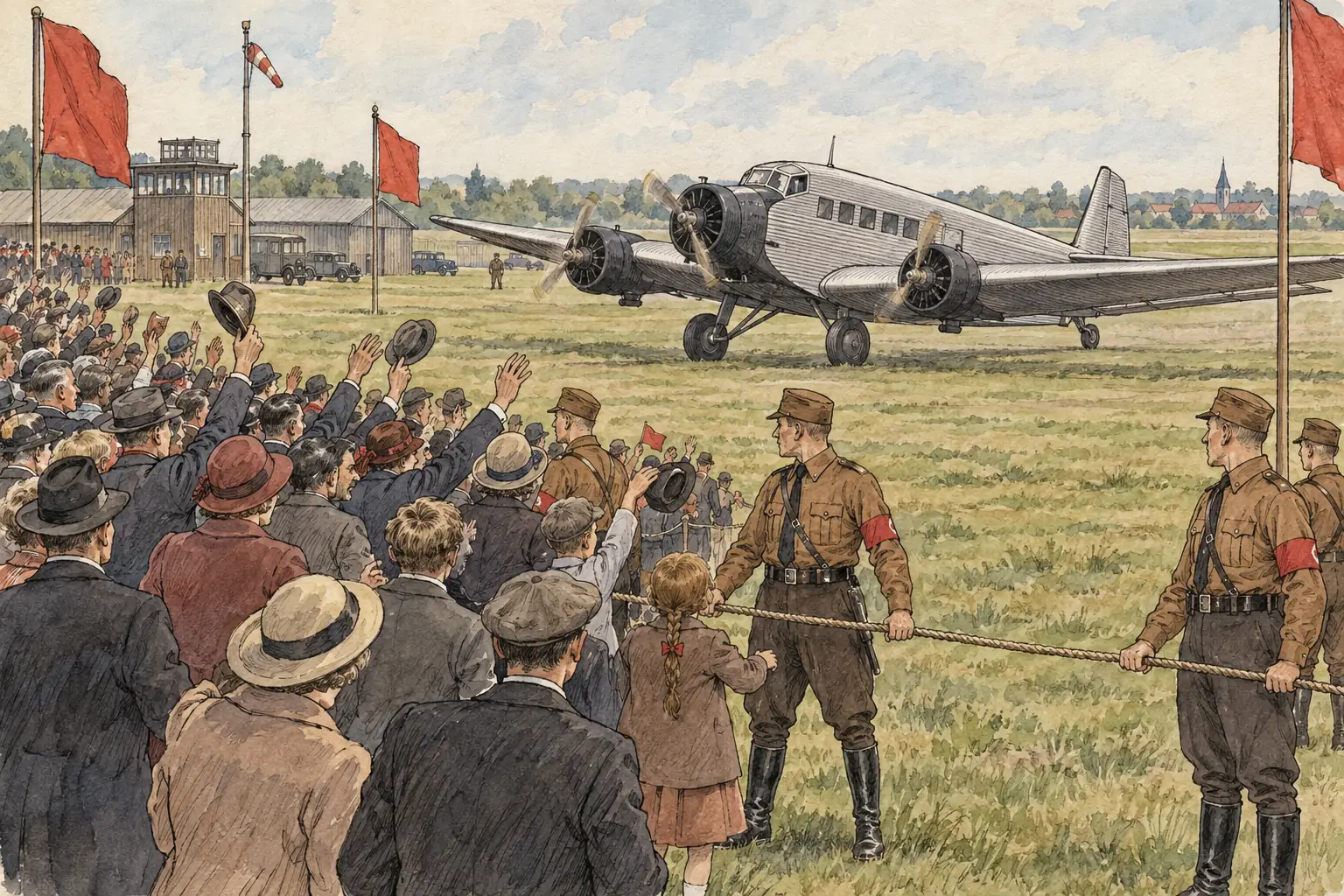
- Innovative campaigning - Hitler's use of aeroplanes for nationwide tours allowed him to appear dynamic and omnipresent, covering multiple cities in a day.
Targeted appeals to specific social groups
- Farmers - Promises of debt relief and protection from urban exploitation addressed rural hardships, such as falling crop prices.
- Middle classes - Anti-communist rhetoric and vows to stabilise the economy appealed to shopkeepers and professionals fearing social upheaval.
- Unemployed workers - Slogans offering jobs and economic recovery drew support from industrial areas hit hard by the depression.
The role and functions of the SA
Image 1 of 2: SA marches projected an image of discipline and strength
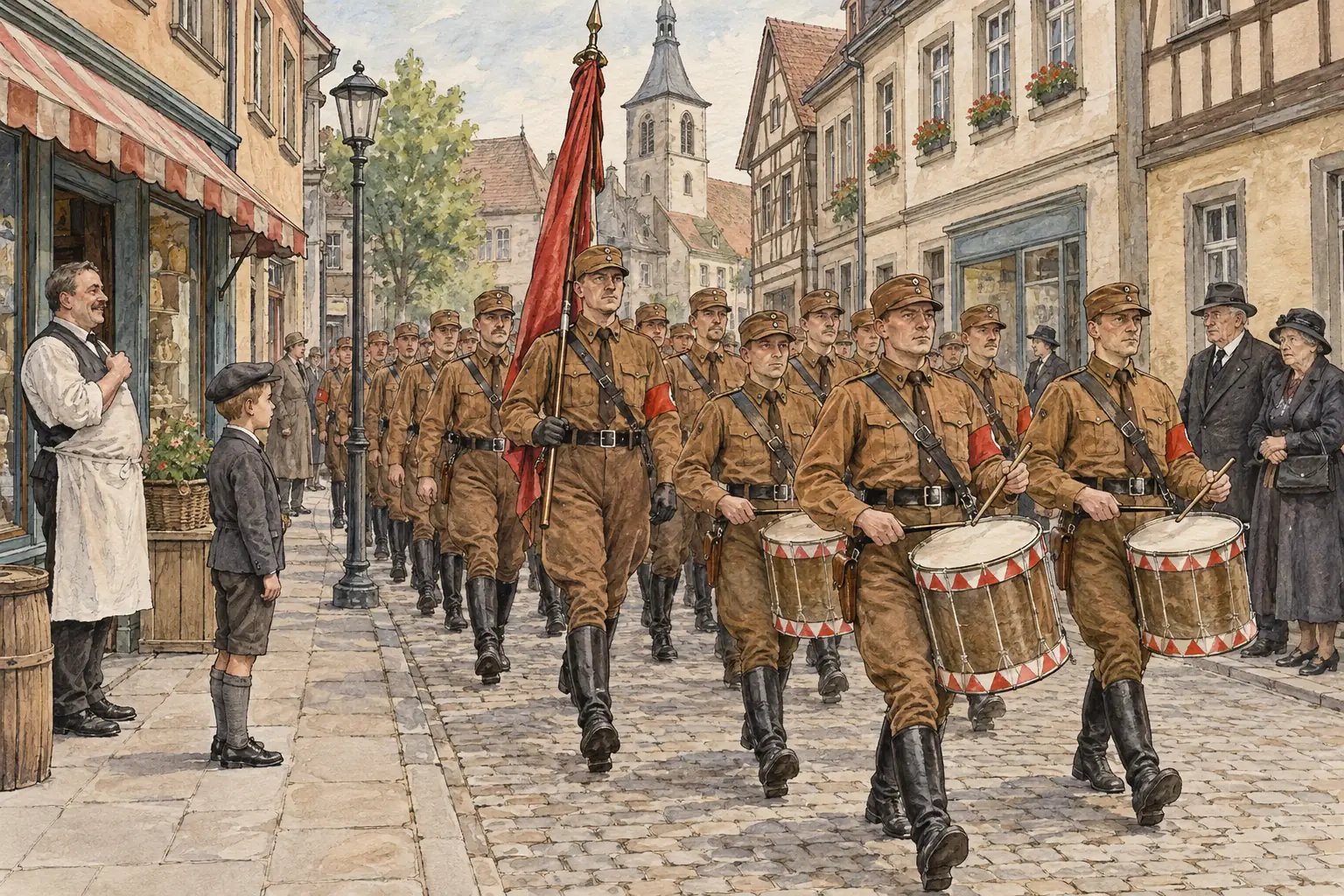
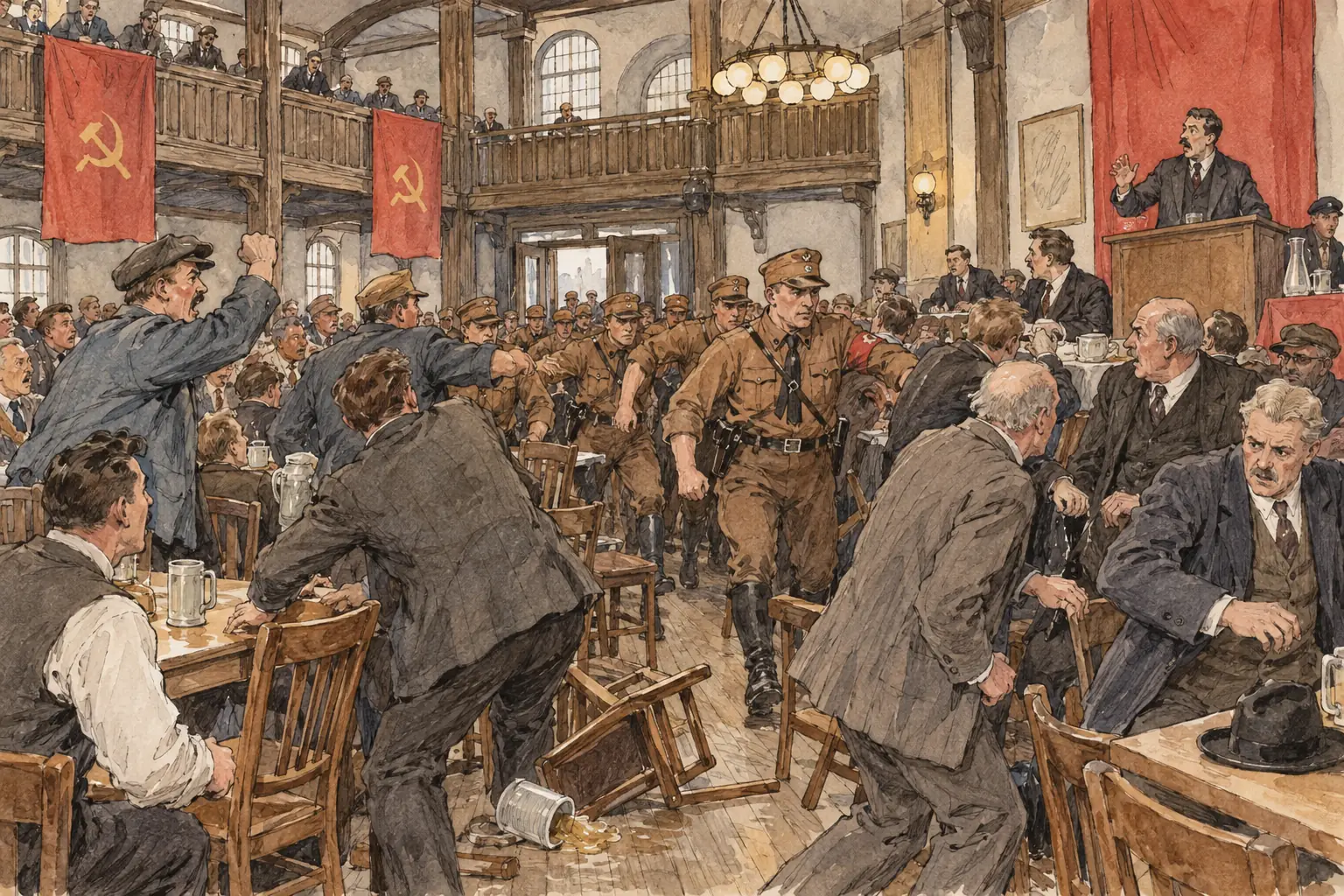
The Sturmabteilung (SA), or Stormtroopers, served as the Nazi Party's paramilitary wing, playing a crucial role in building visibility and intimidating opponents. Led by Ernst Röhm, it grew to over 400,000 members by 1932.
Primary functions of the SA
- Street presence and visibility - Uniformed marches and public displays projected an image of discipline and strength, attracting recruits and impressing voters.
- Intimidation of rivals - The SA disrupted communist and socialist meetings through violence and threats, weakening opposition parties.
- Projecting party strength - By providing security at Nazi events and engaging in brawls, they reinforced the party's tough, action-oriented reputation.
Limitations of the SA's influence
- Not sole factor in success - While effective, the SA's thuggery sometimes alienated moderate voters, and electoral gains also stemmed from genuine public support.
- Voter agency - Many supporters were motivated by hope for change rather than fear, exercising choice in a democratic system despite intimidation.
Factors combining to broaden Nazi support
The Nazis' ascent was not due to a single element but a potent mix of fear, hope, and carefully crafted imagery that resonated across German society. This combination allowed the party to appeal to a wide spectrum of voters disillusioned with the status quo.
Interplay of fear, hope and image
- Fear tactics - Anti-communist scares and warnings of national collapse created anxiety, positioning the Nazis as protectors.
- Hopeful promises - Visions of economic recovery and national greatness offered optimism amid despair.
- Powerful imagery - Propaganda's portrayal of unity and strength, amplified by the SA's presence, broadened appeal by making the party seem capable and inevitable.