2.3 - Collapse of Weimar Parties & Backstairs Intrigue
Key facts and dates
The final years of the Weimar Republic were marked by political instability, economic crisis, and the rise of extremism, culminating in the end of democratic governance. Elite figures misjudged their ability to control radical elements, leading to the Nazi seizure of power. This timeline outlines the critical events and decisions that facilitated this transition.
Timeline of key events
- March 1930 – Collapse of the last stable coalition government under Hermann Müller, leading to increased reliance on presidential decrees.
- July 1932 – Reichstag elections result in the Nazis becoming the largest party with 37% of the vote, amid widespread violence and economic turmoil.
- November 1932 – Further elections see Nazi support drop to 33%, but no viable coalition forms, deepening the parliamentary deadlock.
- December 1932 – Kurt von Schleicher appointed chancellor, attempting to split the Nazis and form a broader alliance.
- 30 January 1933 – Adolf Hitler appointed chancellor by President Hindenburg, heading a conservative-dominated cabinet intended to constrain him.
Failure of coalition politics
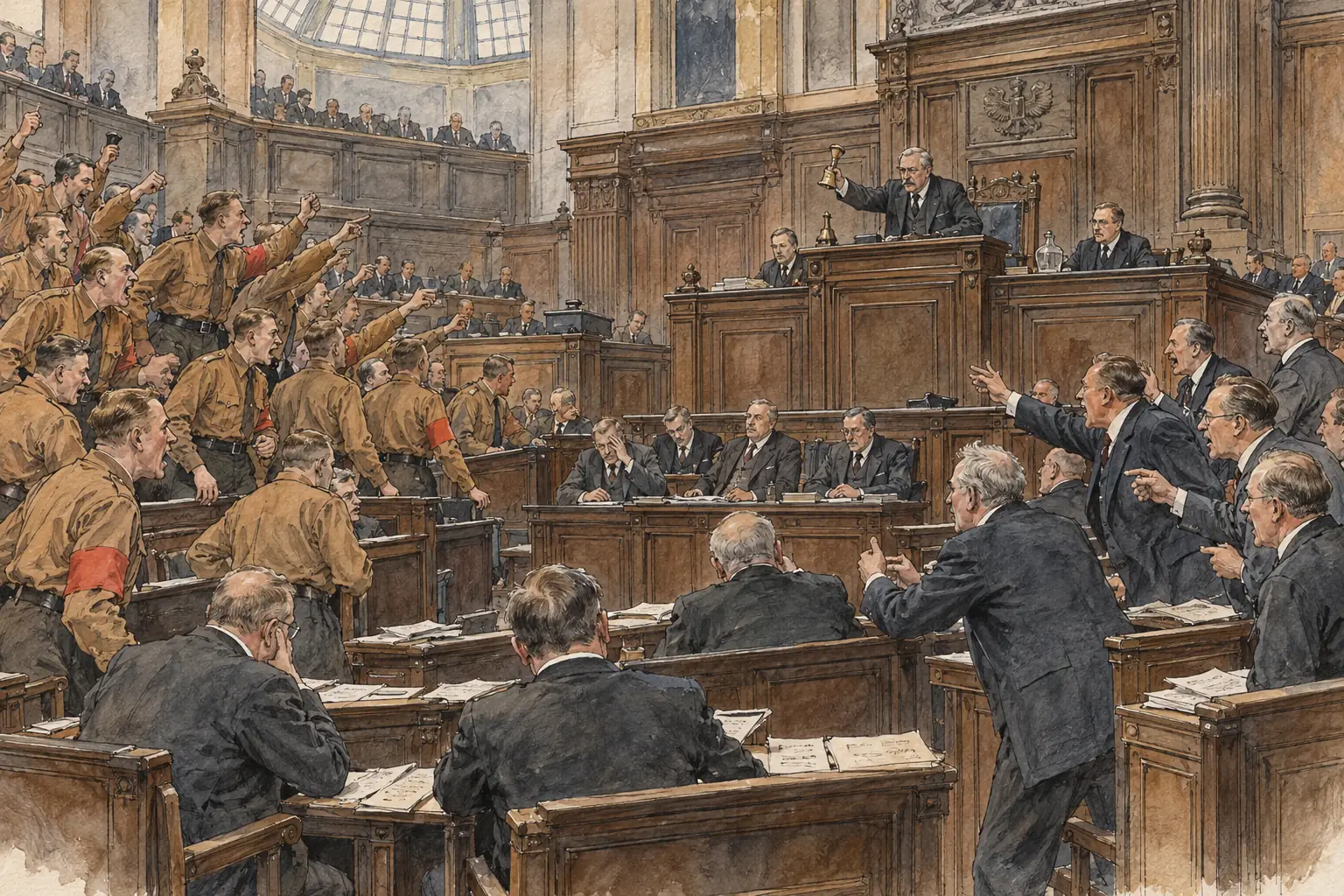
By the early 1930s, the Weimar Republic's political system was plagued by instability, as diverse parties struggled to form lasting governments. This fragmentation, exacerbated by the Great Depression, eroded faith in democratic processes and paved the way for authoritarian alternatives.
Challenges in forming coalitions
- Breakdown of alliances - Governments relied on fragile coalitions that often collapsed over economic policies, such as unemployment benefits or austerity measures, leading to frequent changes in leadership.
- Impact of the July 1932 elections - The Nazi Party surged to become the largest in the Reichstag, securing 230 seats amid high voter turnout and street violence between extremists, but no majority emerged, preventing stable governance.
- Outcomes of the November 1932 elections - Nazi support declined slightly to 196 seats due to voter fatigue and economic strain, yet the fragmented results— with communists also gaining ground—further blocked coalition formation.
- Declining confidence in parliament - Repeated dissolutions of the Reichstag and reliance on emergency decrees under Article 48 signalled a loss of trust in parliamentary democracy, as elites and the public increasingly sought decisive leadership outside traditional politics.
Manoeuvres of Papen and Schleicher
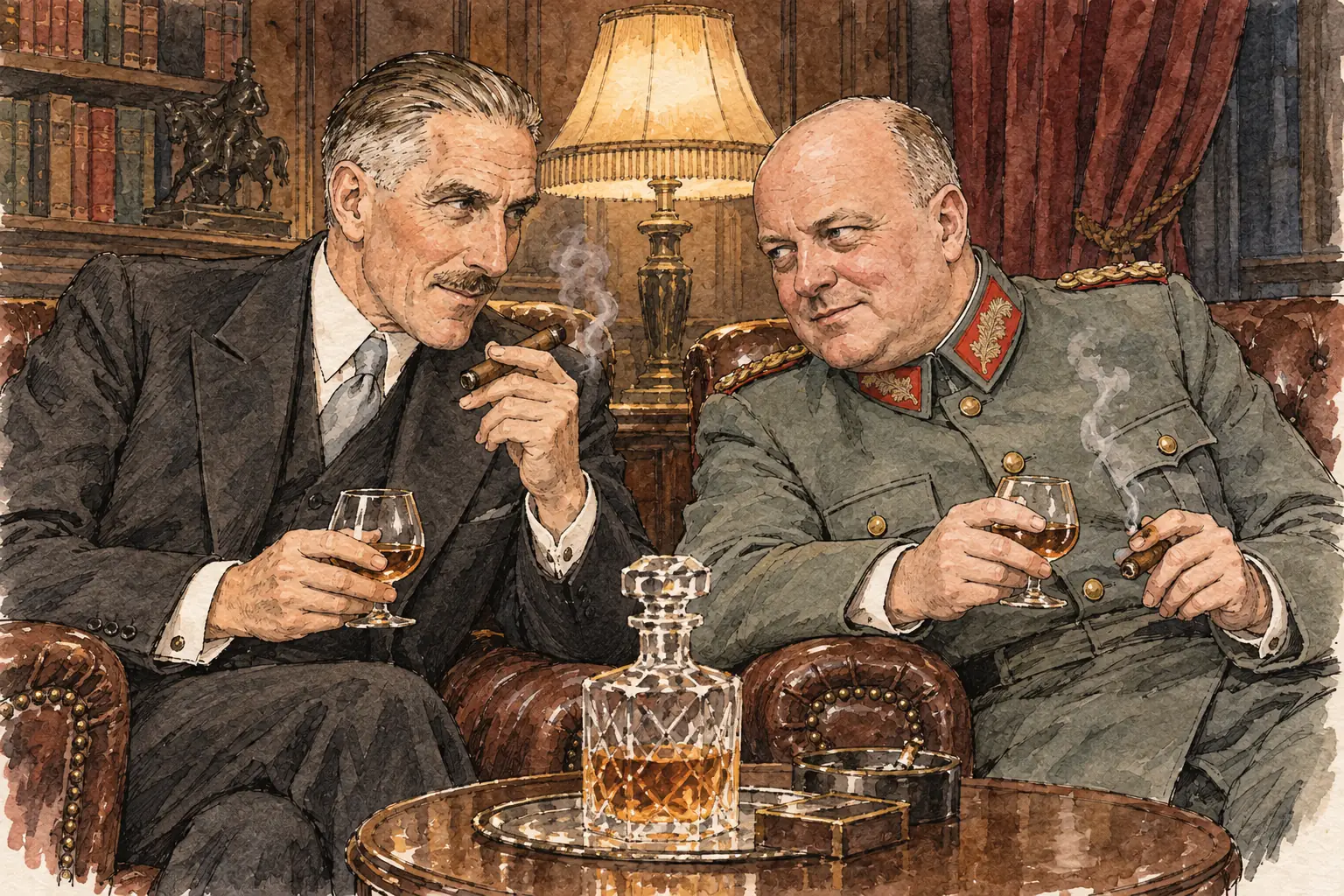
Conservative politicians Franz von Papen and Kurt von Schleicher engaged in behind-the-scenes plotting to stabilise the government, often bypassing democratic norms. Their actions, driven by anti-socialist sentiments, inadvertently strengthened extremist forces.
Key political intrigues
- Papen's chancellorship - Appointed in June 1932, Papen dissolved the Reichstag, lifted bans on Nazi paramilitaries, and used decrees to undermine left-wing strongholds, such as Prussia's Social Democratic government, in a bid to consolidate conservative power.
- Schleicher's strategies - Taking over as chancellor in December 1932, Schleicher attempted to weaken the Nazis by negotiating with trade unions and moderate elements, but his failure to secure broad support led to his quick resignation.
- Backstairs dealings - Both figures operated through informal networks of elites, including industrialists and military leaders, to influence President Hindenburg, reflecting a shift away from open parliamentary debate towards secretive power brokering.
Hindenburg's decision-making and elite fears
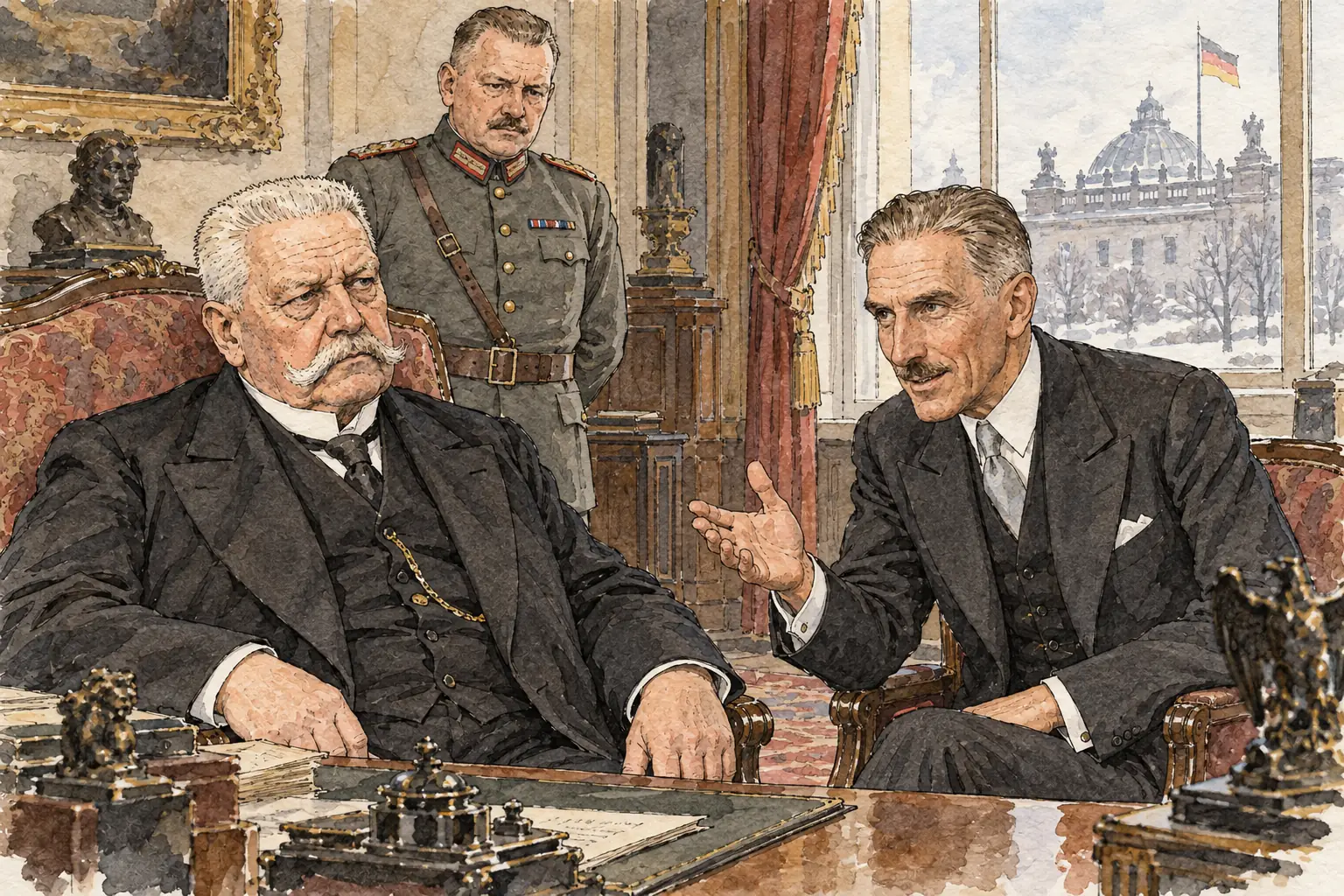
President Paul von Hindenburg played a central role in the republic's collapse, using his powers to appoint chancellors amid growing anxieties among Germany's conservative elite. Fears of socialist revolution and economic chaos shaped their willingness to engage with radicals.
Influences on Hindenburg's choices
- Presidential authority - Under the Weimar Constitution, Hindenburg could dissolve parliament and rule by decree, which he increasingly employed to avoid socialist or communist influence, prioritising stability over democracy.
- Elite apprehensions - Conservative landowners, businessmen, and military officers dreaded a left-wing takeover, viewing the Nazis as a tool to suppress socialism while hoping to moderate Hitler's extremism through inclusion in government.
- Desire to "tame" Hitler - Hindenburg initially resisted appointing Hitler but relented under pressure, believing that surrounding him with traditional conservatives would limit his radical agenda and harness his popularity for national unity.
Appointment of Hitler as Chancellor
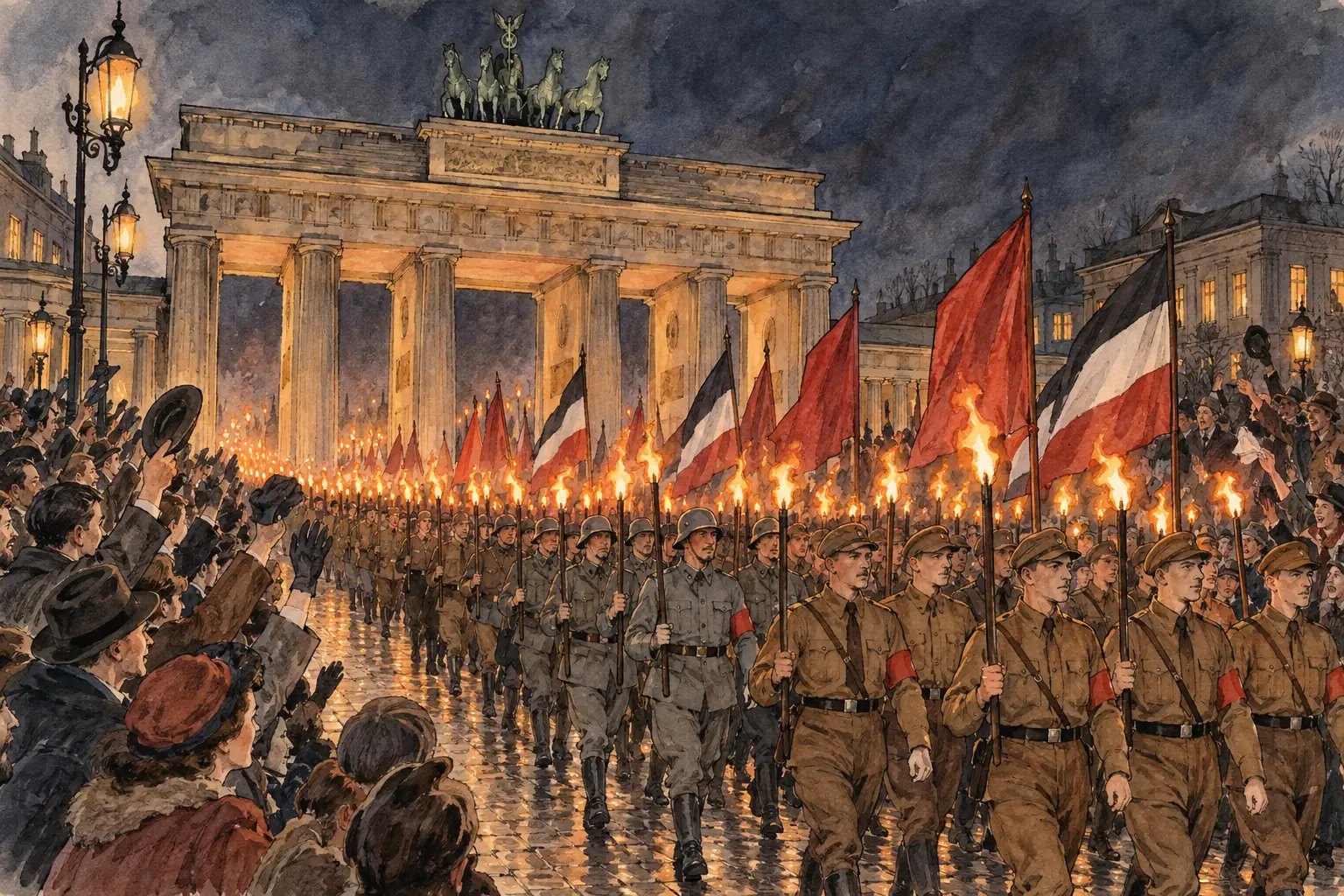
On 30 January 1933, Adolf Hitler was sworn in as chancellor, marking a pivotal moment in the demise of the Weimar Republic. The new government was designed to balance Nazi influence with conservative oversight, but this arrangement underestimated Hitler's ambitions.
Composition and implications of the new government
- Hitler's appointment - Following Schleicher's failure, Hindenburg selected Hitler after negotiations assured a coalition with non-Nazi ministers, aiming to resolve the ongoing political deadlock.
- Make-up of the "cabinet of barons" - The cabinet included only three Nazis (Hitler as chancellor, Wilhelm Frick as interior minister, and Hermann Göring as minister without portfolio), with the majority being conservative nationalists like Papen as vice-chancellor and Alfred Hugenberg as economics minister, drawn from aristocratic and elite backgrounds.
- Initial perceptions - Elites viewed this as a "cabinet of national concentration" to restore order, but it provided Hitler with a legal foothold to consolidate power rapidly through subsequent measures like the Reichstag Fire Decree.
Structural weaknesses and elite miscalculation
The Weimar Republic's inherent flaws, combined with poor judgements by its leaders, accelerated its downfall. These issues highlighted the fragility of democracy in a divided society facing crisis.
Underlying problems in the Weimar system
- Political fragmentation - The proportional representation system encouraged numerous small parties, making majority governments rare and fostering constant instability.
- Excessive presidential powers - Article 48 allowed the president to bypass parliament during emergencies, which became routine and weakened democratic institutions.
- Elite errors - Conservatives misjudged Hitler's intentions, believing they could control him as a figurehead while using Nazi mass appeal to counter left-wing threats; this underestimation enabled the swift erosion of republican structures.