2.4 - Cromwell, the New Model Army & Commonwealth
Key facts and dates
The period from 1645 to 1659 saw significant military and political transformations in England, driven by the New Model Army's successes, Oliver Cromwell's leadership, and experiments in republican governance following the execution of Charles I. These changes reflected broader shifts in war, government, religion, and ideas during the English Civil War and Interregnum.
Timeline of key events
- 1645 – Creation of the New Model Army, a national force with merit-based promotions, leading to victory at the Battle of Naseby.
- 14 June 1645 – Battle of Naseby, a decisive Parliamentarian win that weakened Royalist forces.
- 1649 – Establishment of the Commonwealth after Charles I's execution, marking the start of republican rule.
- 1651 – Navigation Acts introduced to boost English trade and challenge Dutch dominance.
- 1653 – Dissolution of the Rump Parliament and beginning of the Protectorate under Cromwell.
- 1655 – Major-Generals appointed to enforce moral regulations and maintain order.
- 1656 – Readmission of Jewish communities to England, reversing medieval expulsions.
- 1658 – Death of Oliver Cromwell, leading to the Protectorate's collapse and eventual Restoration.
Creation and significance of the New Model Army
Image 1 of 2: The New Model Army, formed in 1645, was a national army of about 22,000 men, trained and paid by Parliament and dressed in red coats
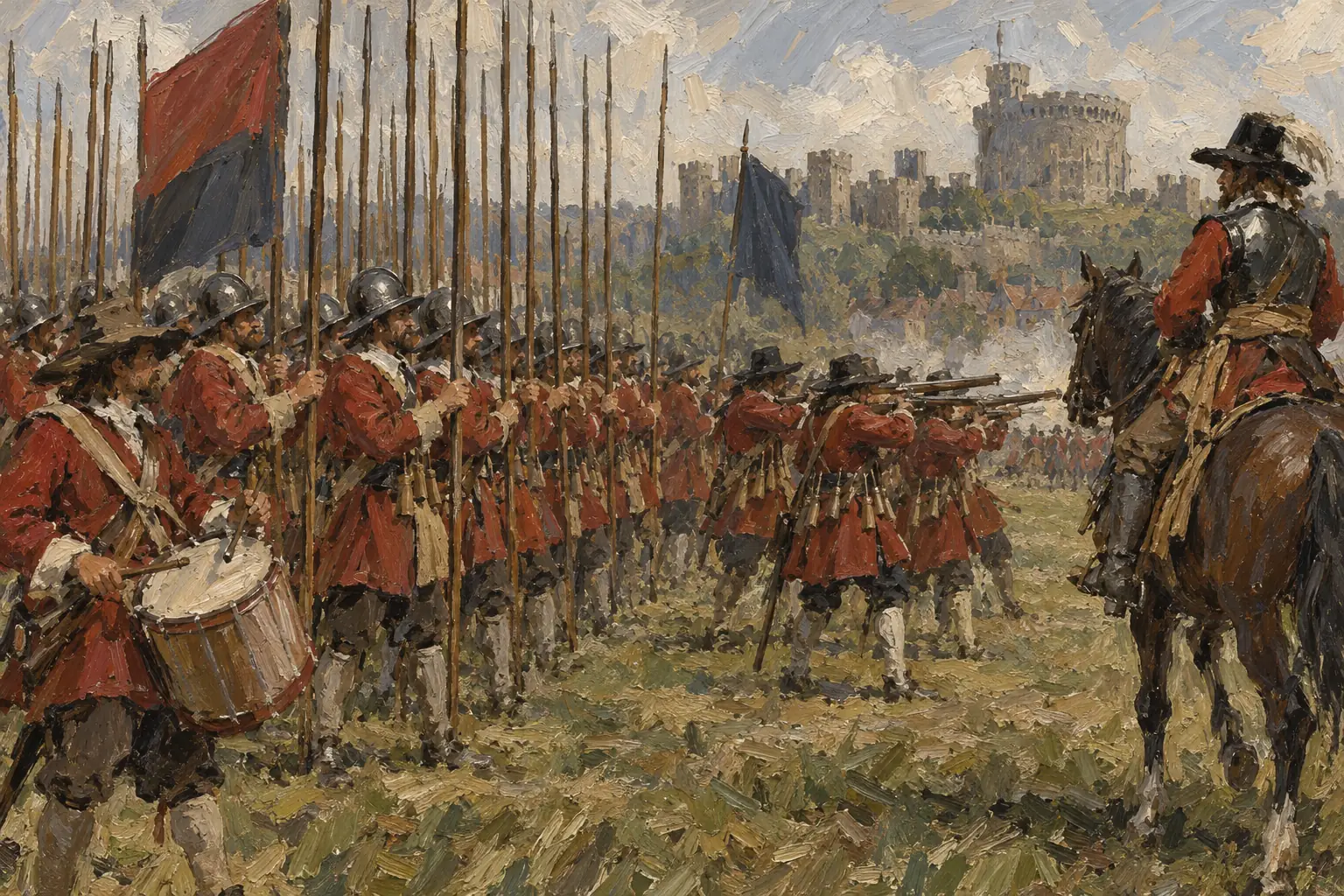
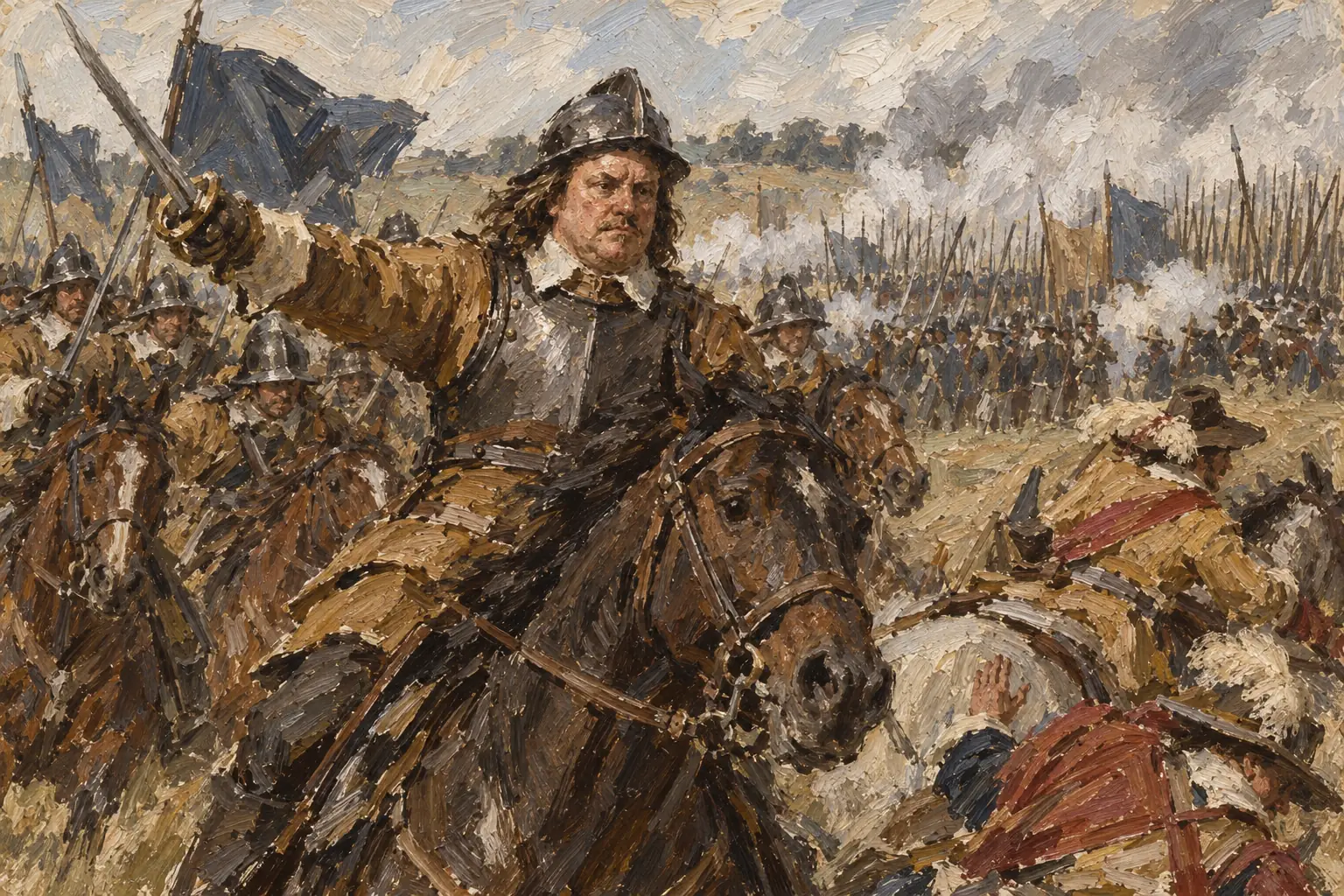
Formed in 1645 amid the English Civil War, the New Model Army represented a radical shift from regional militias to a unified, professional fighting force loyal to Parliament. Its design addressed earlier Parliamentary weaknesses, such as poor coordination and inconsistent leadership, making it a pivotal factor in securing victory over Royalist armies.
Reasons why the New Model Army proved decisive
- National structure - Unlike previous forces drawn from local regions, this army recruited nationwide, creating a cohesive unit of around 22,000 men that could operate across England without divided loyalties.
- Training and discipline - Soldiers underwent rigorous drills and tactical exercises, fostering a high level of professionalism and battlefield effectiveness, which contrasted with the often amateurish Royalist troops.
- Regular pay (when available) - Parliament aimed to provide consistent wages, reducing desertions and boosting morale, though funding shortages sometimes delayed payments.
- Meritocratic promotion - Officers advanced based on ability rather than social status, allowing talented leaders like Oliver Cromwell to rise quickly and implement innovative strategies.
The Battle of Naseby as a turning point
The Battle of Naseby on 14 June 1645 demonstrated the New Model Army's superiority, where Parliamentarian forces under Sir Thomas Fairfax and Cromwell decisively defeated Charles I's army. This victory captured key Royalist artillery and documents, shattered their military strength, and shifted the war's momentum, paving the way for Parliament's dominance.
Oliver Cromwell's military and political role
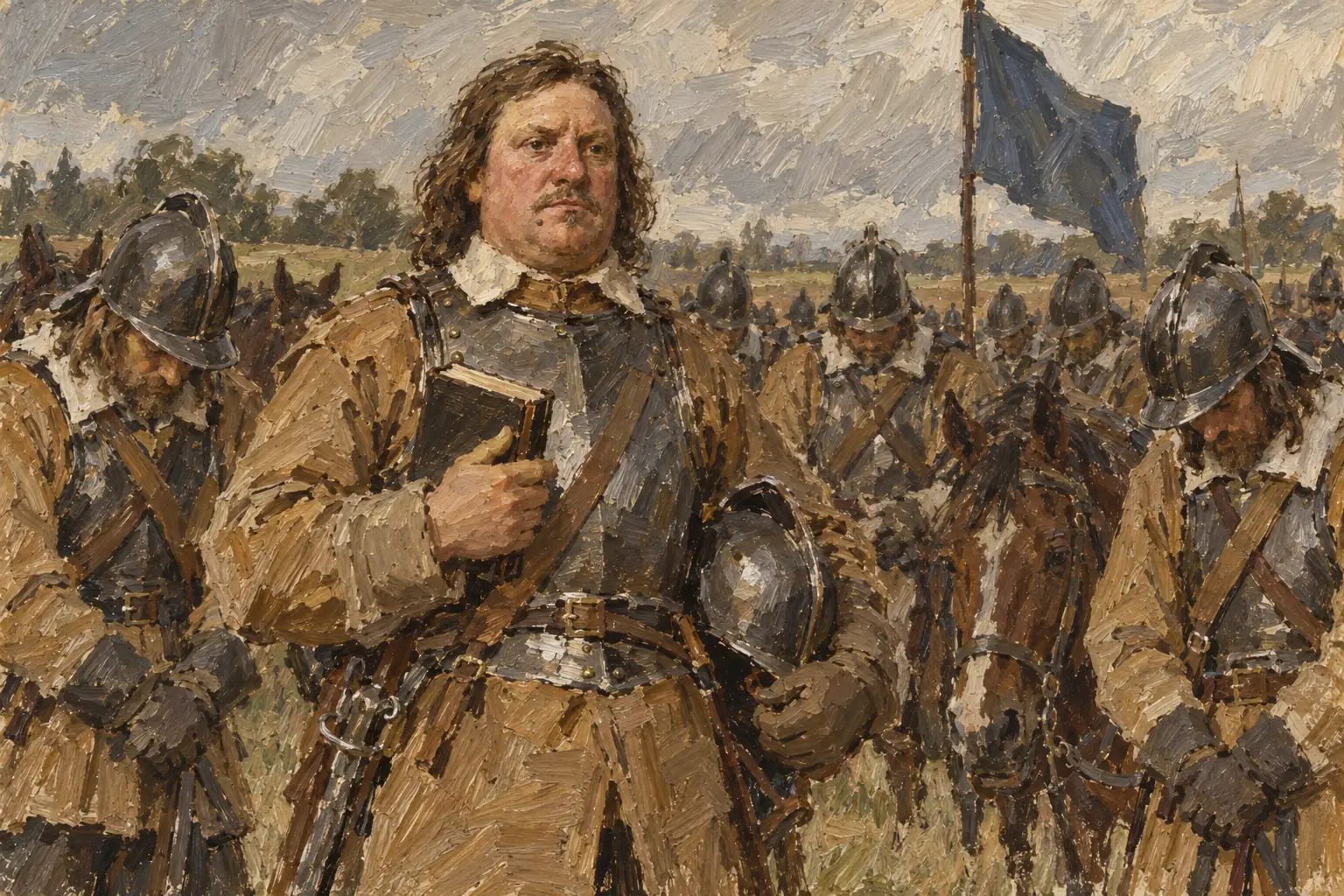
Oliver Cromwell emerged as a central figure during the Civil War and Interregnum, combining military prowess with political influence. His contributions extended beyond the battlefield, shaping debates on governance and religion while embodying the era's ideas of Puritan reform and individual leadership.
Cromwell's military significance
- Cavalry leadership - As a skilled commander, Cromwell reformed Parliamentary cavalry tactics, emphasising disciplined charges that proved crucial at battles like Naseby, where his forces routed Royalist flanks.
- Rise through the ranks - Starting as a minor MP, his successes in eastern England led to rapid promotion in the New Model Army, highlighting the merit-based system he championed.
Cromwell's political significance
- Alignment with Independents - Cromwell supported the Independents in Parliament, advocating for religious toleration and opposing Presbyterian dominance, which influenced army debates like those at Putney in 1647.
- Shaping settlement debates - He played a key role in negotiations after the war, pushing for republican experiments and rejecting monarchical compromises, though his interventions, such as purging Parliament in 1648, polarised factions.
Key features of the Commonwealth period
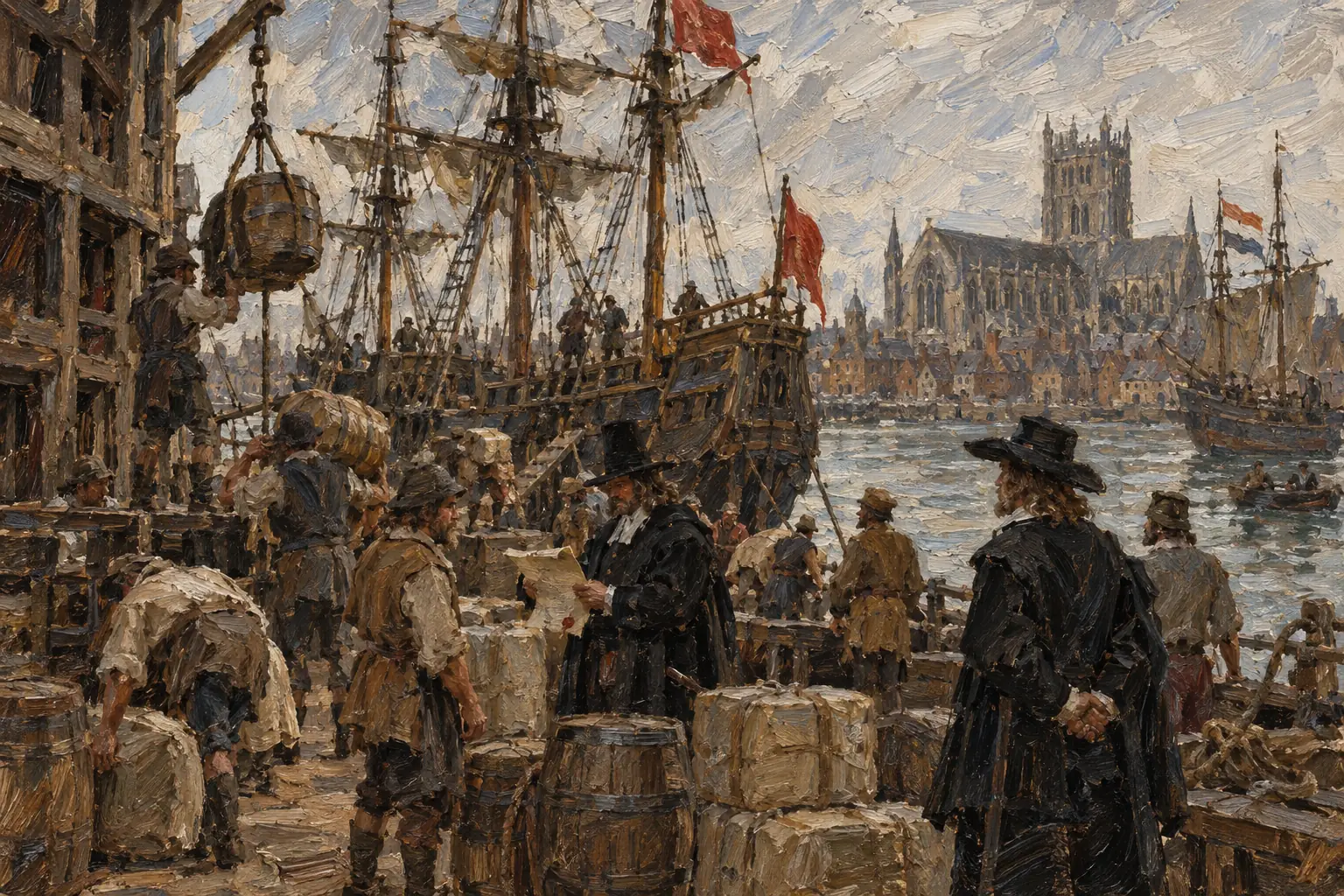
The Commonwealth, established in 1649 after Charles I's execution, represented England's first attempt at republican government without a monarch. Lasting until 1653, it focused on consolidating Parliamentary power, promoting religious reforms, and addressing economic challenges amid ongoing instability.
Experiments in republican government
- Rump Parliament - This reduced assembly governed initially, passing laws to abolish the monarchy and House of Lords, but faced criticism for corruption and failure to implement broader reforms.
- Religious toleration - Limited freedom was extended to Protestant groups like Independents and Baptists, reflecting Puritan ideals, though Catholics and Anglicans faced restrictions.
Commercial and social policies
- Navigation Acts (1651) - These laws required goods imported to England to be carried on English ships, aiming to protect trade from Dutch competition and boost naval power.
- Moral regulation - Efforts to enforce Puritan values included closing theatres and regulating Sabbath observance, aligning with the era's religious ideas.
Characteristics of the Protectorate
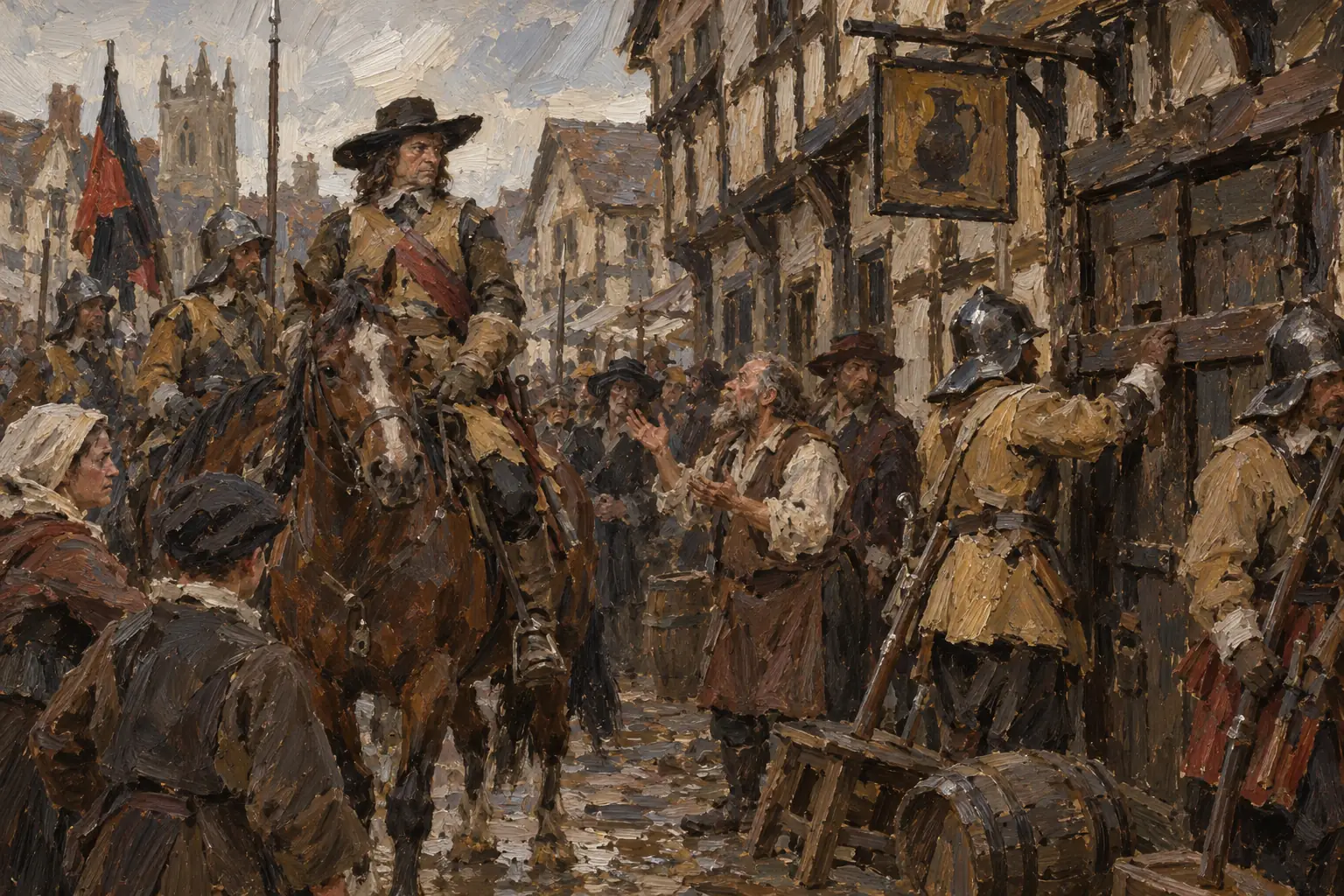
Image 1 of 2: Under the Major-Generals of 1655-57, army officers ran the regions, closing alehouses and enforcing Puritan morals
The Protectorate, from 1653 to 1659, saw Oliver Cromwell installed as Lord Protector under the Instrument of Government, blending republican elements with authoritarian control. This period experimented with governance while tackling security, religious, and economic issues.
Government and military rule
- Rule of the Major-Generals (1655-57) - England was divided into districts overseen by army officers who enforced order, collected taxes, and suppressed Royalist uprisings, though their strict measures alienated many.
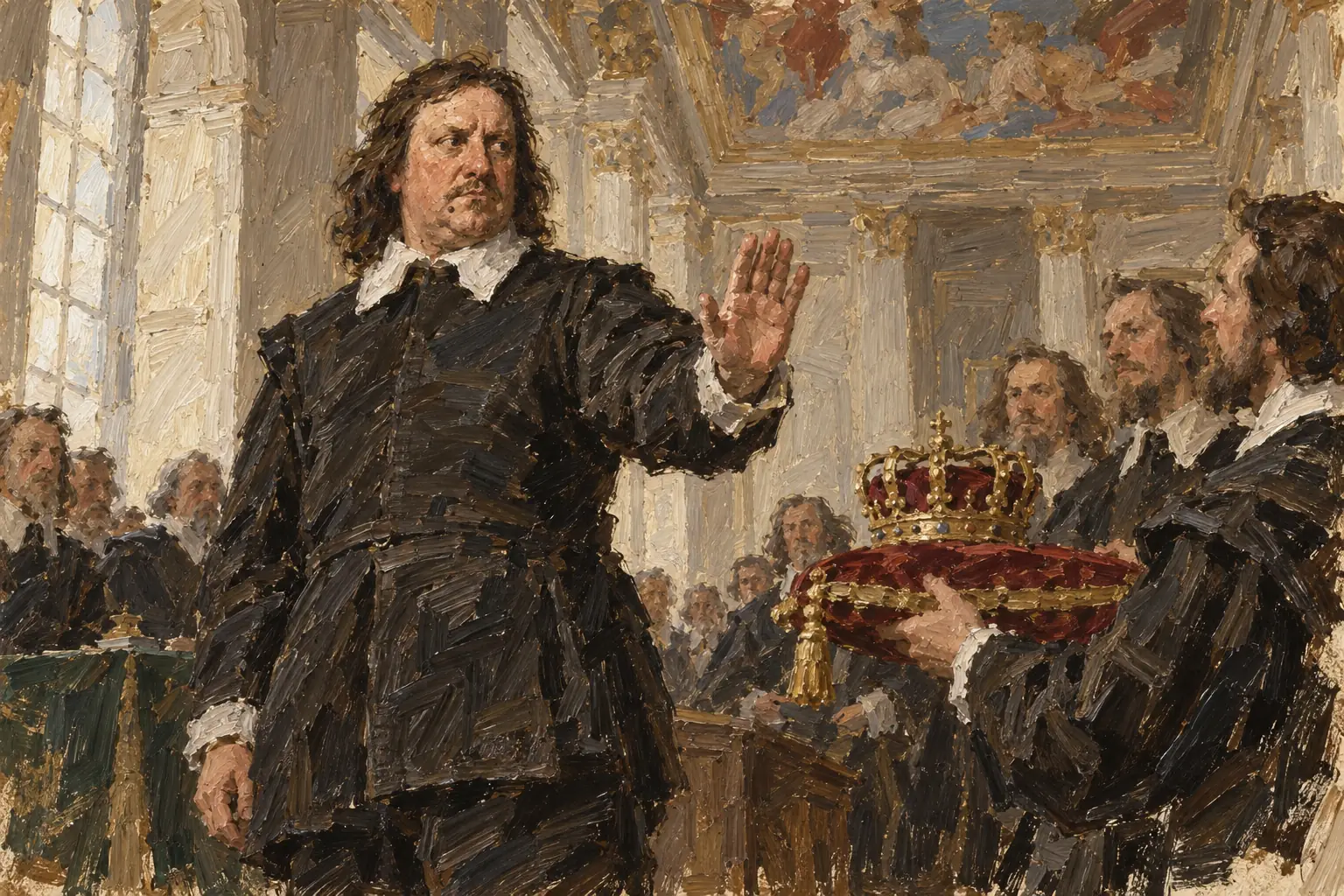
- Constitutional experiments - The Humble Petition and Advice (1657) offered Cromwell a crown, which he declined, maintaining a quasi-republican system with a reformed Parliament.
Religious and social policies
- Toleration for some groups - Protestants enjoyed greater freedoms, but policies remained intolerant towards Catholics; this era also saw the readmission of Jewish communities in 1656, reversing their expulsion in 1290 under Edward I and reflecting economic pragmatism amid medieval precedents of exclusion.
- Commercial focus - Building on Navigation Acts, policies promoted colonial expansion and trade wars, enhancing England's mercantile position despite internal divisions.