2.7 - World War 2: Economic Recovery & the Home Front
Key facts and dates
World War II brought profound economic and social transformations to the United States, shifting from depression-era struggles to wartime mobilisation that boosted industry and challenged social norms. This timeline captures the key events that drove economic recovery and home front changes during the period.
Timeline of key events
- 1939 – Outbreak of World War II in Europe prompts U.S. rearmament efforts, beginning industrial mobilisation.
- 1941 – Lend-Lease Act passed, enabling exports of war materials to Allies and stimulating U.S. production.
- 1941 – U.S. enters World War II after Pearl Harbor, leading to full employment and rapid factory conversions.
- 1942 – Double V campaign launched by African American newspapers, advocating victory abroad and against domestic racism.
- 1942 – Establishment of women's military auxiliaries, such as the Women's Army Corps, expanding female roles.
- 1945 – End of World War II results in post-war economic adjustments and pressures on women to leave wartime jobs.
Economic impact of rearmament and wartime demand
Image 1 of 2: At Ford's Willow Run plant near Detroit, car-making methods were used to build B-24 bombers on an assembly line
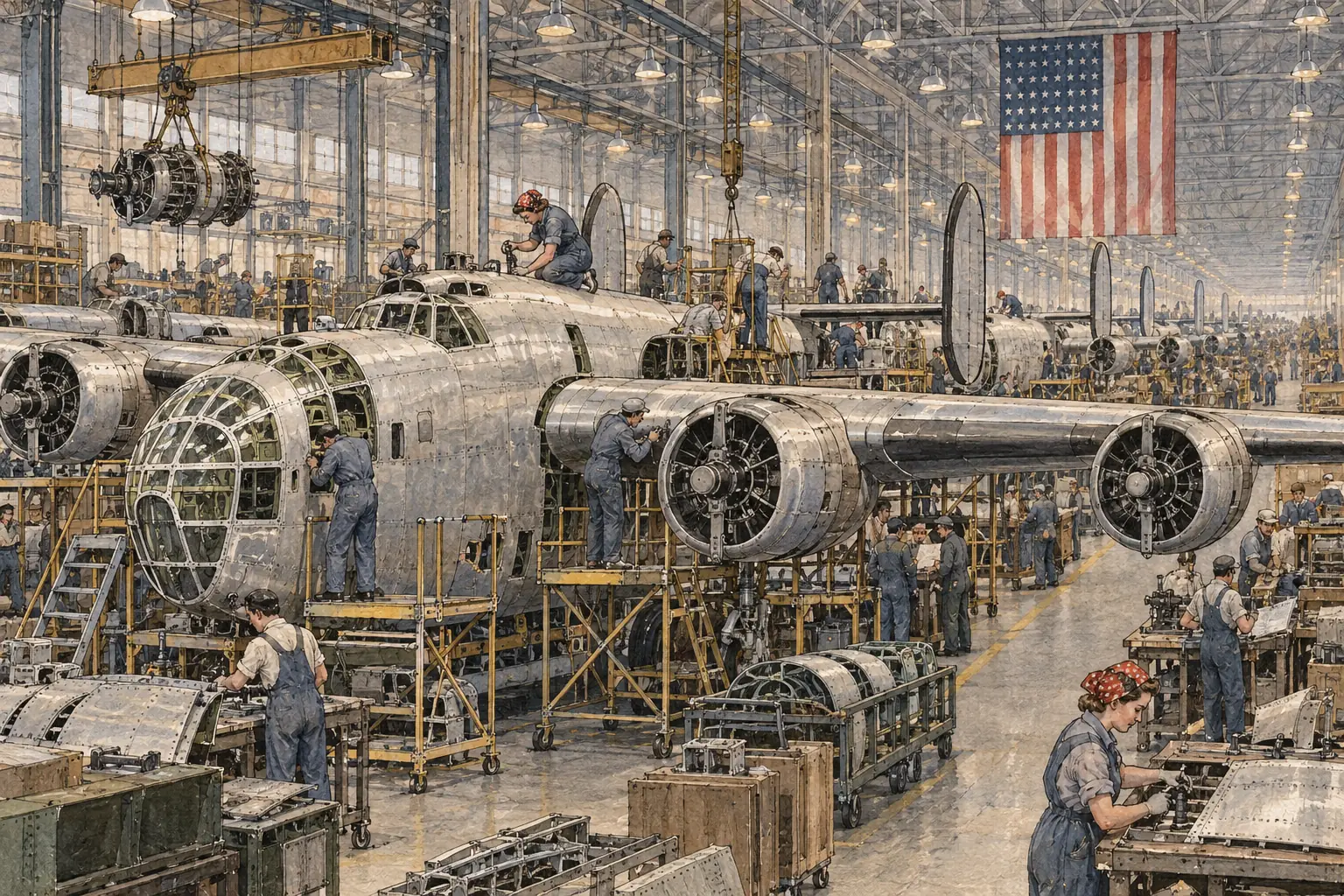
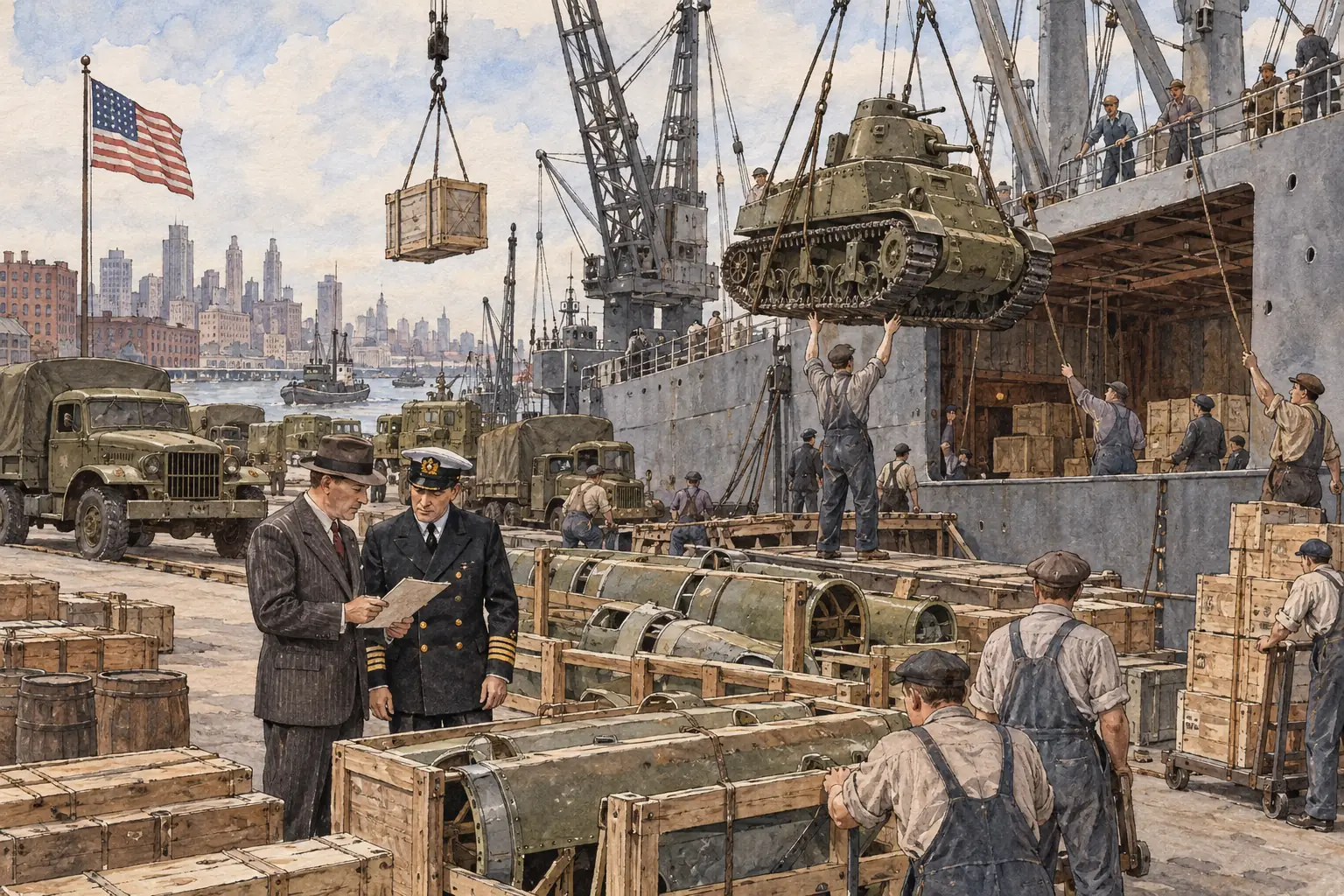
The onset of World War II marked a turning point for the U.S. economy, which had been mired in the Great Depression. Rearmament efforts and the surge in wartime demand revitalised industries, creating widespread prosperity through increased production and international trade.
Factors driving economic transformation
- Mobilised industry - Factories rapidly converted from civilian goods to military equipment, such as shifting car plants to produce tanks and aircraft, which boosted manufacturing output and efficiency.
- Full employment - The need for workers in defence industries eliminated unemployment, drawing millions into jobs and increasing workforce participation across diverse groups.
- Rising production - Wartime orders led to a massive expansion in output, with innovations in mass production techniques enhancing overall industrial capacity.
- Increasing exports - Programmes like Lend-Lease allowed the U.S. to supply allies with goods on credit, stimulating foreign trade and generating revenue that further fuelled domestic growth.
Social changes for African Americans
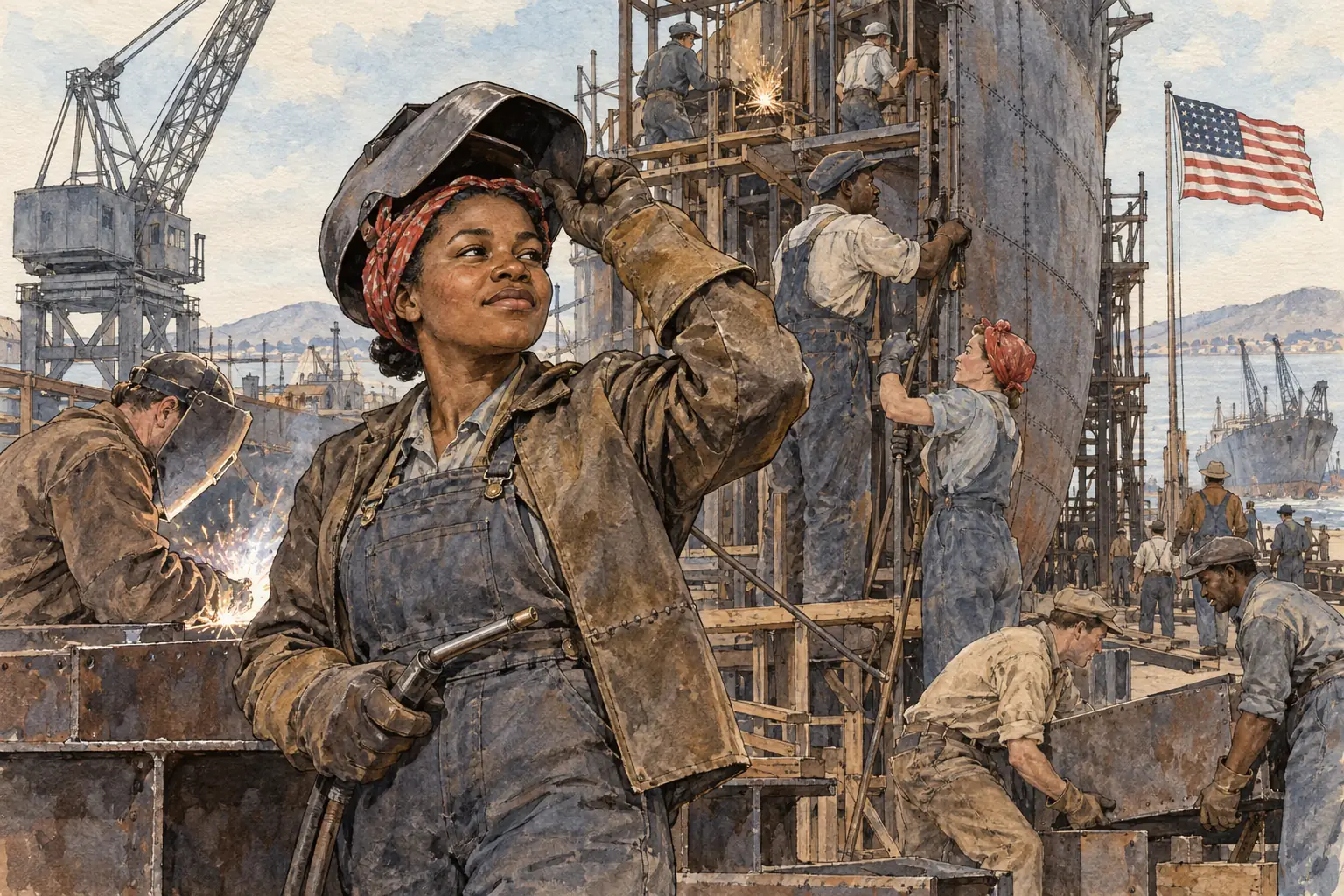
World War II accelerated social shifts for African Americans, offering new opportunities amid persistent discrimination. Migration patterns and advocacy efforts highlighted both progress and ongoing inequalities.
Experiences of African Americans during wartime
- Double V campaign - Initiated by African American press, this movement called for dual victories: defeating fascism overseas and ending racial discrimination at home, raising awareness of civil rights issues.
- Wartime migration - Millions moved from rural southern areas to urban industrial centres in the north and west, seeking jobs in defence factories and escaping agricultural decline.
- Persistent discrimination - Despite contributions to the war effort, African Americans faced segregated workplaces, unequal pay, and racial violence, limiting the benefits of economic opportunities.
- New opportunities - The labour shortage opened doors to skilled positions previously denied, fostering greater economic independence and laying groundwork for post-war civil rights activism.
Social changes for women on the home front
Image 1 of 2: Women took jobs in aircraft factories and shipyards, many of them as riveters and welders
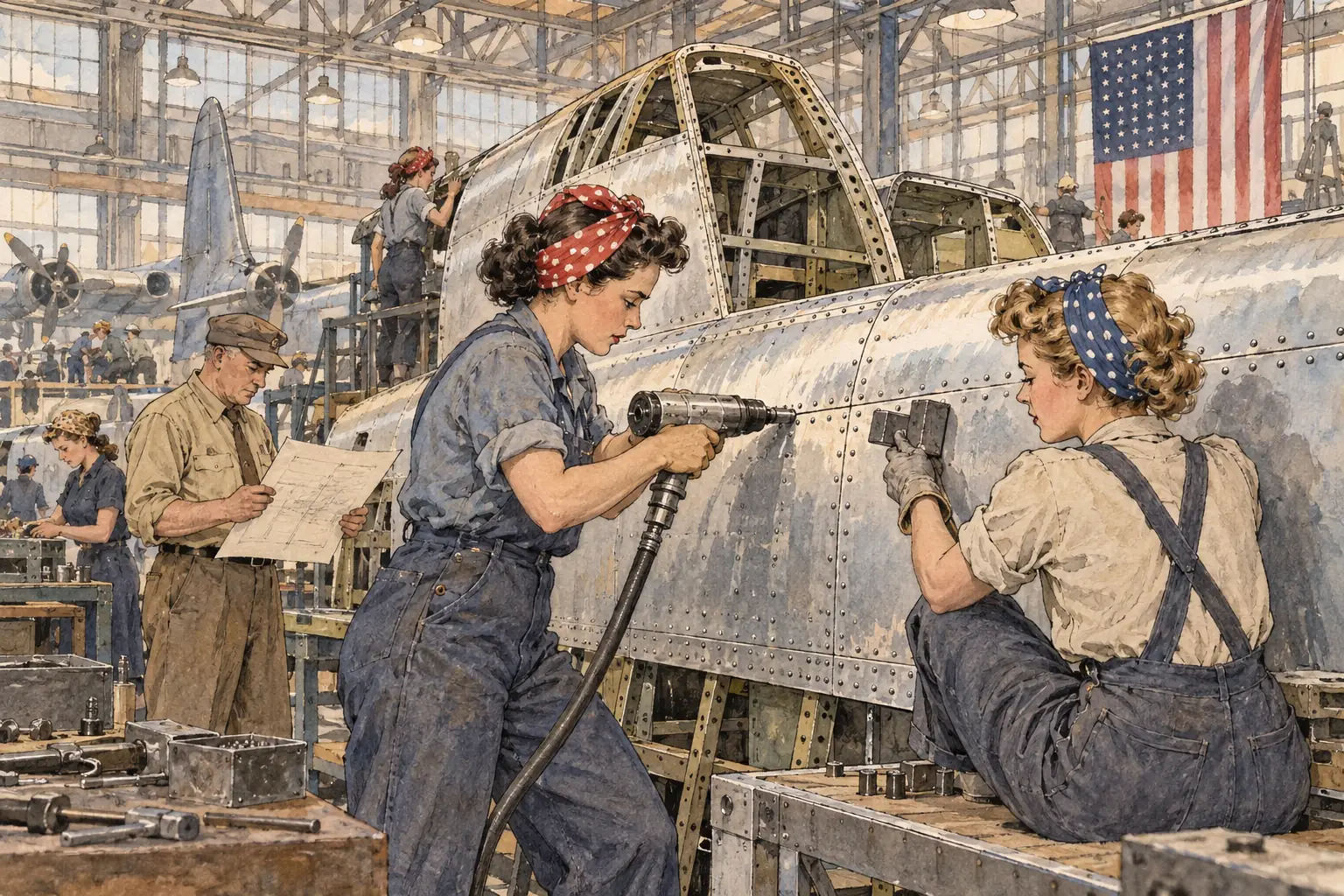
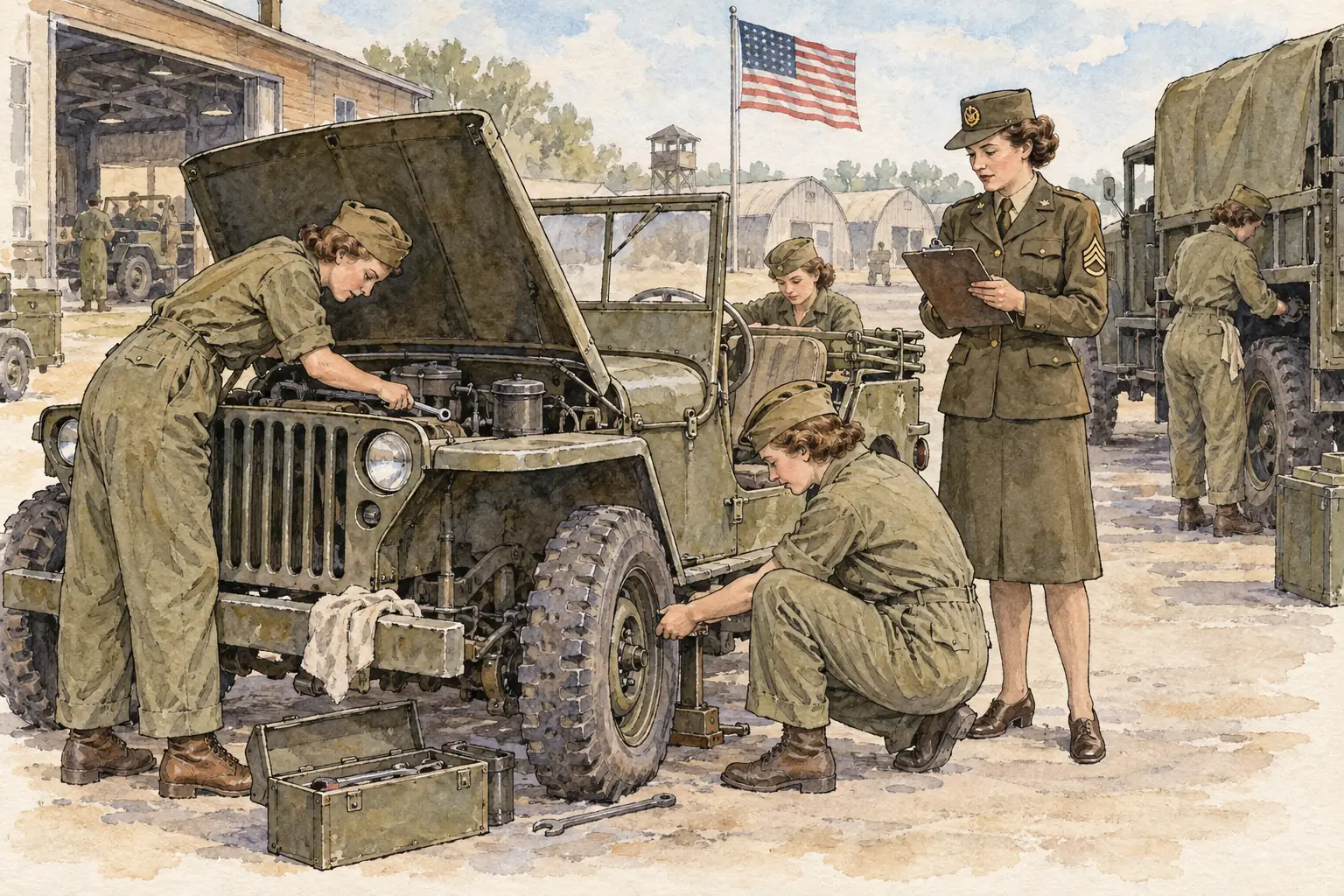
The war reshaped women's roles, pulling them into traditionally male-dominated sectors to support the war effort. However, these gains were often temporary, with societal expectations reverting after the conflict.
Experiences of women during and after wartime
- Expanded wartime work - Women entered factories and shipyards in large numbers, taking on roles like welding and assembly, symbolised by campaigns encouraging female labour participation.
- Military auxiliaries - Organisations such as the Women's Army Corps and Navy WAVES allowed women to serve in non-combat capacities, providing administrative and logistical support to free men for frontline duties.
- Post-war pressures to return home - With the war's end, many women were encouraged or forced to leave their jobs for returning veterans, reinforcing traditional domestic roles despite their wartime contributions.
Comparing WWII's recovery with the New Deal
While the New Deal initiated some economic relief during the 1930s, World War II proved far more effective in achieving full recovery. The war's demands created a scale of transformation that government programmes alone could not match.
Key differences in economic impact
| Aspect | New Deal (1930s) | World War II (1940s) |
|---|---|---|
| Scale of employment | Created temporary jobs through public works but failed to end widespread unemployment. | Achieved full employment by mobilising millions into defence industries and military service. |
| Industrial output | Focused on infrastructure projects with limited long-term production growth. | Dramatically increased manufacturing through wartime contracts and technological advances. |
| Government spending | Introduced reforms and relief but constrained by budget concerns and political opposition. | Involved massive deficit spending on rearmament, unrestricted by peacetime limitations. |
| Overall recovery | Provided partial relief but left the economy stagnant until the war. | Delivered complete recovery, with GDP doubling and exports surging under global demand. |