3.1 - Post-War Boom: Consumerism & the American Dream
Key facts and dates
The post-war boom in the United States from the late 1940s to the early 1960s represented a period of unprecedented economic growth and rising living standards for many Americans. This era saw rapid suburban expansion and a surge in consumer spending, though inequalities persisted. Key facts highlight the main drivers and features of this prosperity.
Key facts to remember
- GI Bill (1944) – Provided veterans with low-cost loans for homes and education, fuelling suburban growth.
- Baby boom (1946–1964) – Population surge increased demand for housing and consumer goods.
- Suburban expansion – Over 13 million new homes built in the 1950s, transforming urban landscapes.
- Consumer spending – Household appliances like televisions became widespread, with ownership rising from 9% in 1950 to 87% in 1960.
- Economic growth – GDP doubled between 1945 and 1960, driven by industrial output and exports.
- Racial disparities – African Americans often excluded from suburban benefits due to discriminatory practices.
- Regional inequalities – Southern and rural areas lagged behind industrial centres in economic gains.
Definition of the American Dream

The American Dream in the years following the Second World War encapsulated the ideal of personal success and stability achievable through hard work. For many, this vision centred on material security and family life, symbolising a shift towards widespread affluence after wartime hardships.
Core elements of the post-war American Dream
- Home ownership - Owning a detached house in the suburbs represented independence and progress, often facilitated by affordable mortgages.
- Steady work - Reliable employment in growing industries provided financial security and the means to support a family.
- Rising consumption - Access to modern goods and conveniences allowed for an improved quality of life, with families enjoying new appliances and leisure activities.
- Family security - The dream emphasised a stable nuclear family, with education for children and protection from economic uncertainty, reflecting optimism in America's future.
Causes of post-war economic prosperity
Image 1 of 2: The GI Bill paid for more than two million ex-servicemen to go to college or university

The United States experienced a remarkable economic surge after 1945, marked by low unemployment and rapid industrial expansion. This prosperity stemmed from a mix of wartime legacies, policy initiatives, and societal shifts that stimulated growth.
Factors driving economic growth
- Accumulated savings - During the war, Americans saved substantial amounts due to rationing and high employment, creating a pool of capital ready for spending on homes and goods.
- Technological advances - Innovations in manufacturing, such as automated production lines, increased efficiency and output, particularly in sectors like automobiles and electronics.
- Cheap credit - Low-interest loans became widely available, encouraging purchases of big-ticket items like cars and houses through instalment plans.
- Government support - Policies like the GI Bill offered subsidised education and housing for veterans, while infrastructure investments boosted construction and job creation.
- Pent-up demand - After years of wartime shortages, consumers eagerly bought deferred goods, sparking a boom in retail and manufacturing.
Examples of consumerism and suburban living
Image 1 of 2: From 1947 the builders of Levittown on Long Island used assembly-line methods to put up thousands of identical, affordable houses

The post-war era witnessed a transformation in daily life, with consumerism driving the adoption of new products and lifestyles. Suburban developments exemplified this change, offering a contrast to pre-war urban crowding.
Key features of suburban expansion
- Rapid housing development - Communities like Levittown provided affordable, mass-produced homes with modern amenities, attracting families seeking space and privacy.
- Lifestyle changes - Suburbs promoted car-dependent living, with driveways and shopping centres becoming common, facilitating easier access to work and leisure.
Rise in consumer goods
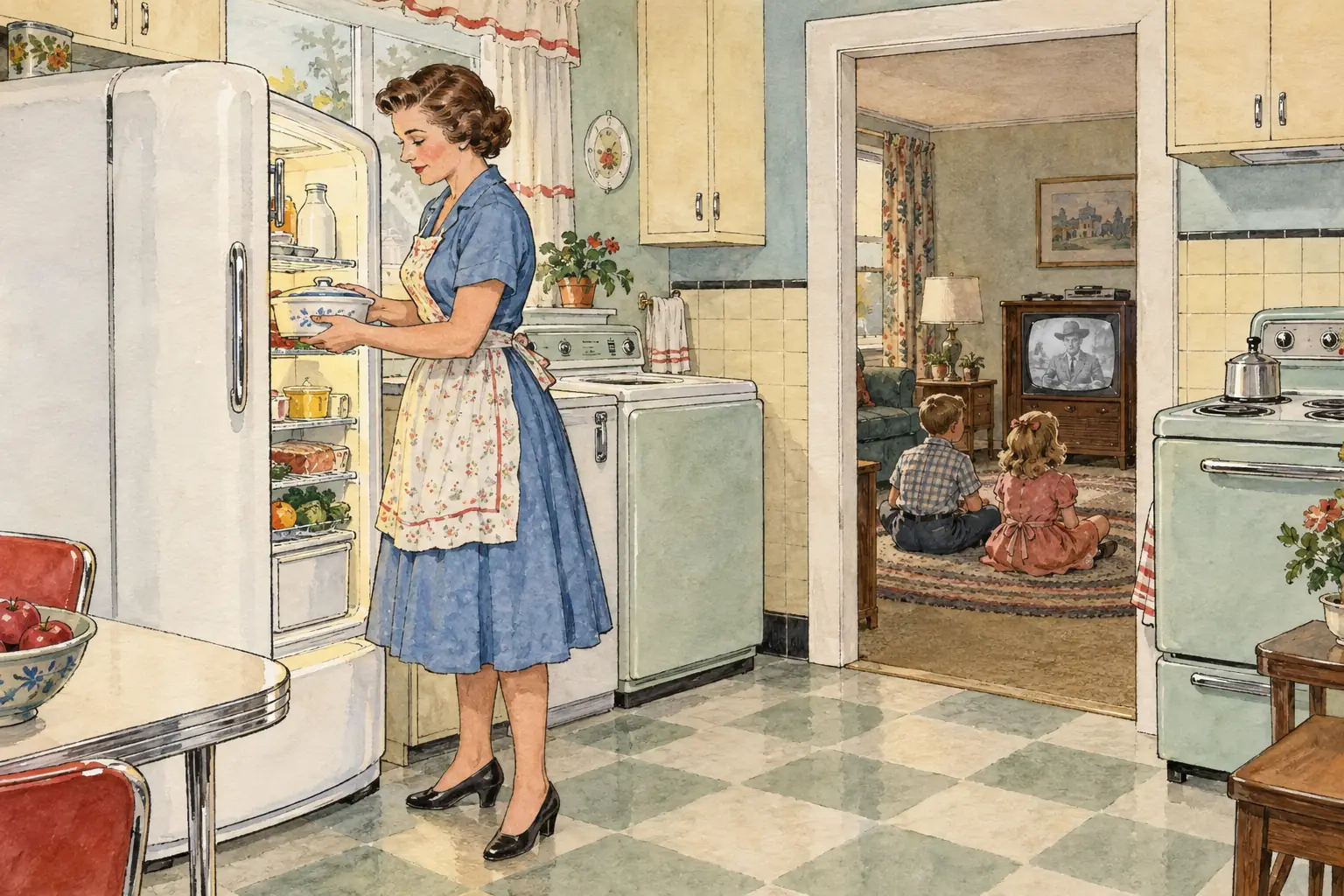
- Household appliances - Items such as washing machines and refrigerators became staples, reducing domestic labour and symbolising modernity; for instance, refrigerator ownership jumped from 44% of households in 1940 to 91% by 1955.
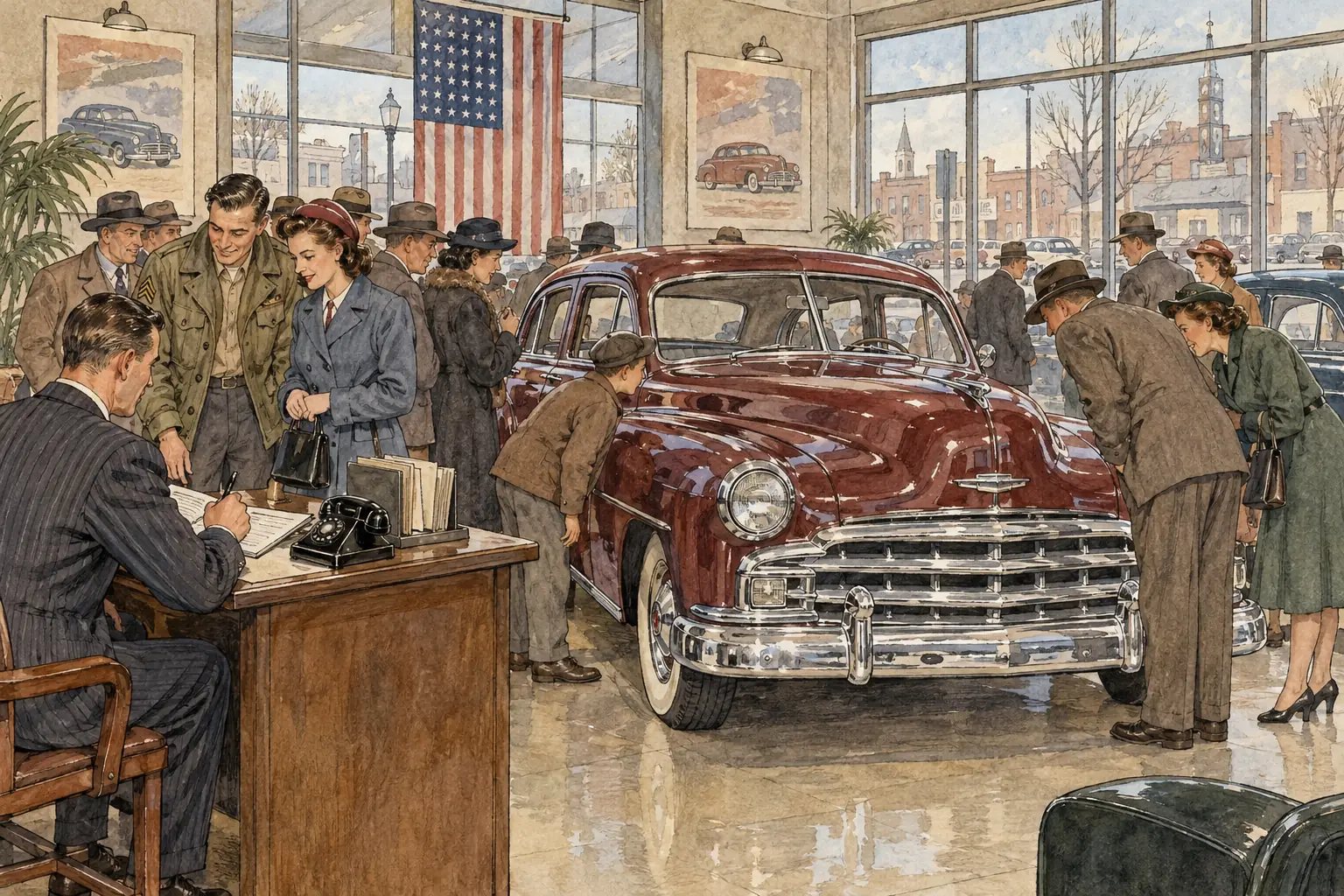
- Entertainment and leisure - Televisions and record players entered homes, fostering family entertainment, while automobiles like the Chevrolet Bel Air enabled weekend outings and holidays.
- Impact on society - This surge in buying power led to a culture of abundance, with advertising promoting the idea that consumption equated to happiness and success.
Groups excluded from the prosperity
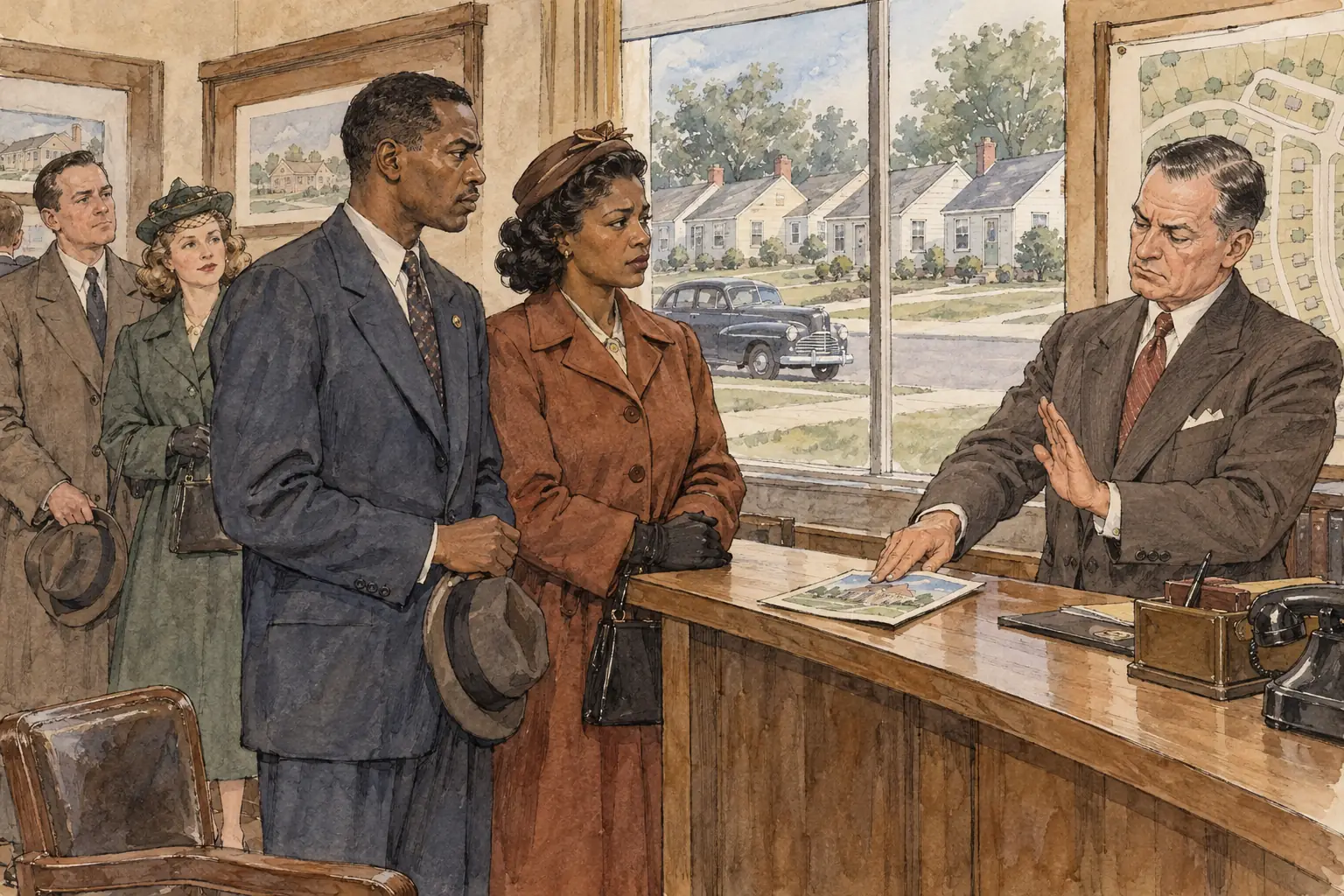
Despite the widespread economic gains, not all Americans shared in the post-war boom. Systemic barriers and regional differences left certain groups marginalised, highlighting the limits of the American Dream.
Sources of exclusion and inequality
- Racial discrimination - African Americans and other minorities faced redlining in housing loans and segregation in suburbs, restricting access to better jobs and education; for example, many were confined to urban areas with declining opportunities.
- Regional disparities - Rural areas, particularly in the South and Midwest, lagged due to slower industrialisation and reliance on agriculture, resulting in higher poverty rates compared to booming coastal cities.
- Gender limitations - Women were often encouraged to focus on homemaking rather than careers, limiting their economic independence despite workforce participation during the war.
- Broader social divides - Immigrants and low-skilled workers struggled with unequal access to government benefits, perpetuating cycles of poverty amid the general affluence.