2.5 - Village Life: Economy, Buildings & Forest Law
Key facts and dates
Village life in medieval England revolved around agriculture, social hierarchies and royal controls, with significant shifts following the Norman Conquest. These elements shaped rural economies and daily existence, often creating tensions between local needs and higher authorities.
Key facts to remember
- Open-field system – Villages typically featured large shared fields divided into strips for crop rotation.
- Manorial system – Lords owned estates, with peasants providing labour in exchange for land use.
- 1066 Norman Conquest – Led to the decline of freemen's status and the end of slavery in England.
- Forest Law (from 1066) – Royal hunting reserves restricted common land use, causing widespread resentment.
- Domesday Book (1086) – Survey recorded village populations, land holdings and economic resources.
- Seasonal farming cycle – Involved ploughing in autumn, sowing in spring and harvesting in summer.
- Village buildings – Included timber halls for lords, churches for worship and barns for storage.
Typical village layouts and locations
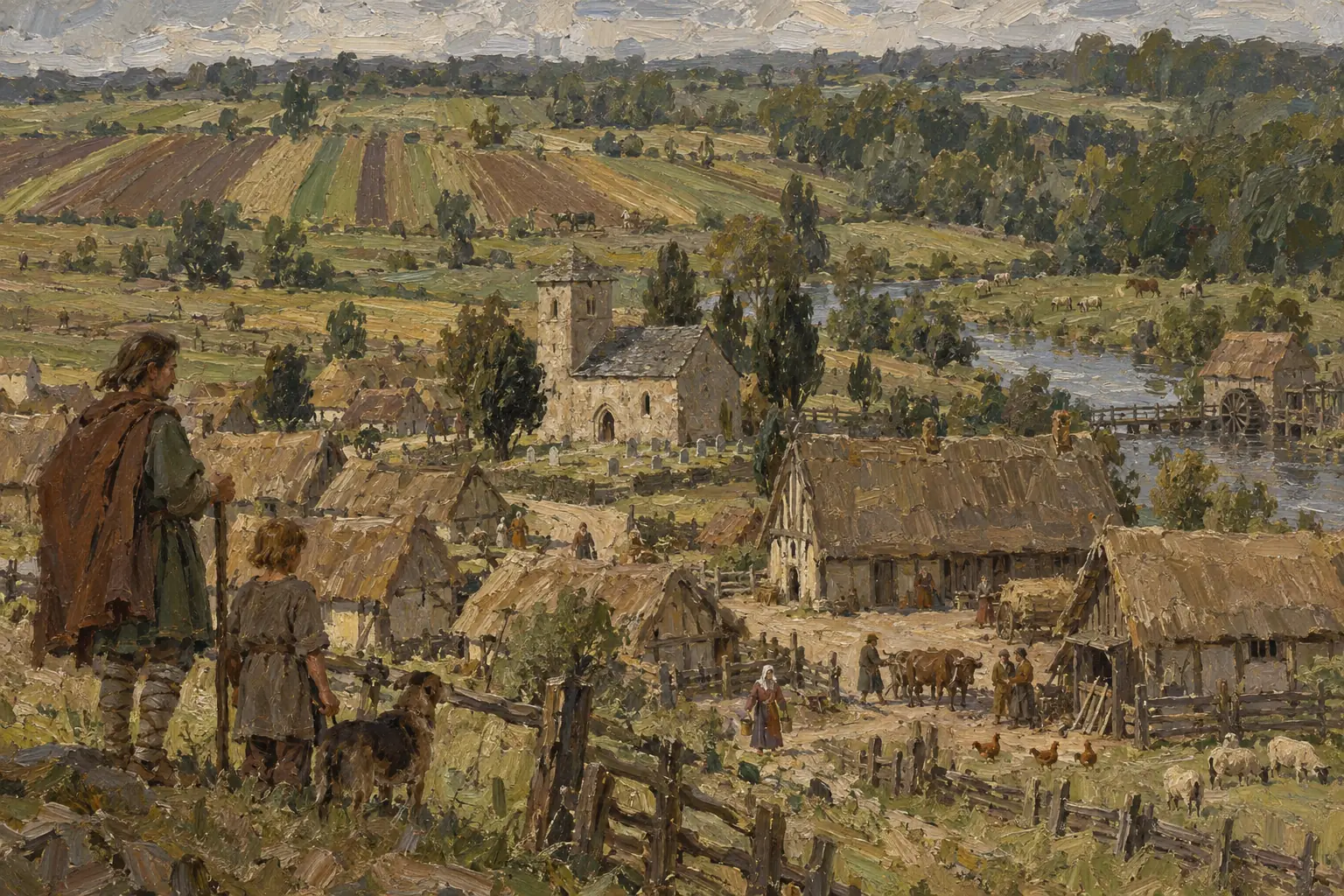
Medieval villages in England were often situated in fertile lowland areas suitable for farming, with layouts designed to support communal agriculture and daily life. Proximity to water sources and transport routes influenced their placement, while defensive considerations sometimes played a role.
Common features of village design
- Central elements - A church often stood at the heart, surrounded by clustered homes, with a manor house for the lord nearby.
- Open fields - Large arable areas were divided into strips allocated to peasants, promoting shared farming practices.
- Common land - Pastures and meadows provided grazing for livestock, essential for communal resources.
- Location factors - Villages were typically built near rivers for water and fishing, or on gentle slopes to avoid flooding, with some in wooded areas for timber supplies.
Agricultural work, food production and seasons
Image 1 of 2: In autumn villagers ploughed with ox teams and sowed winter wheat
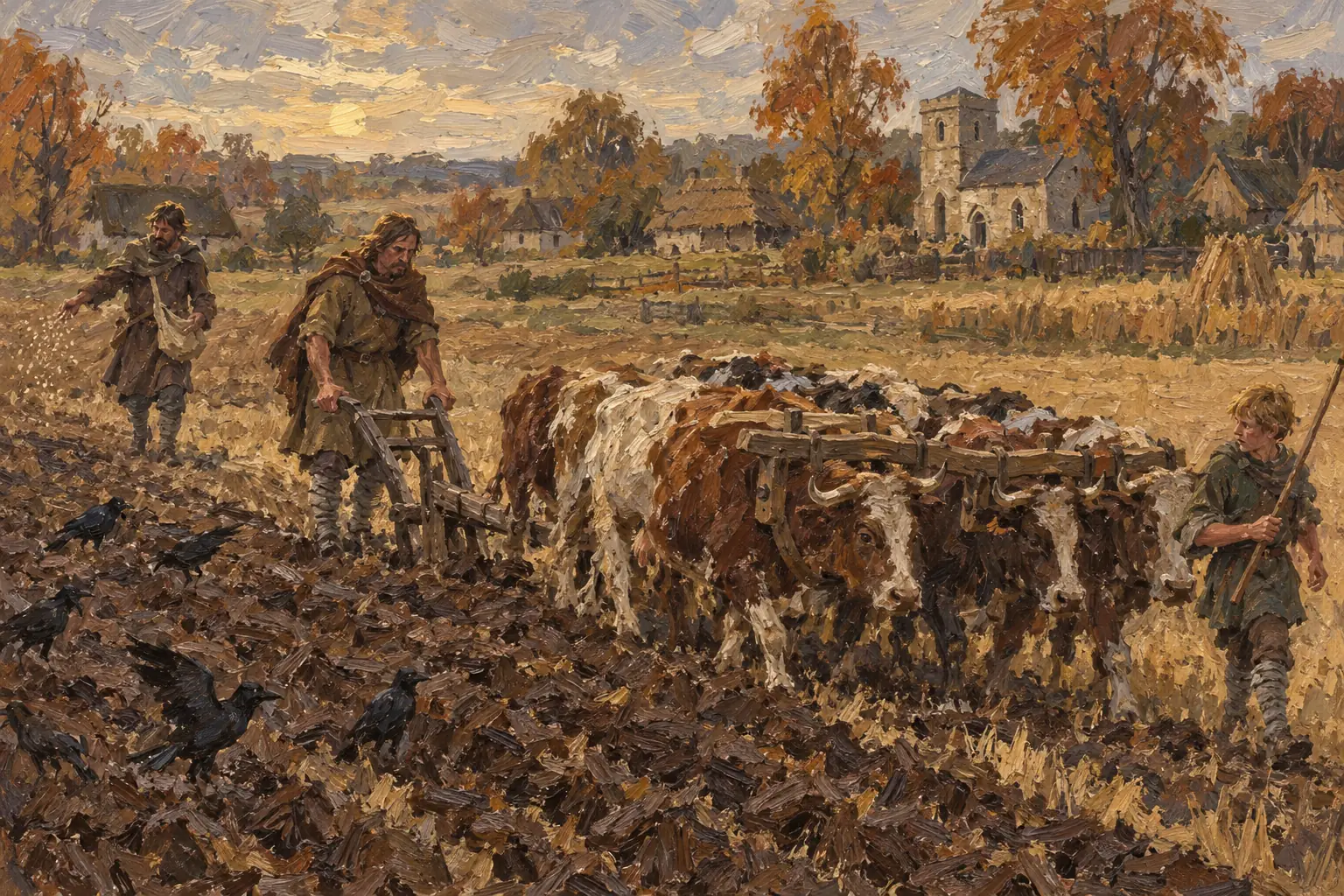
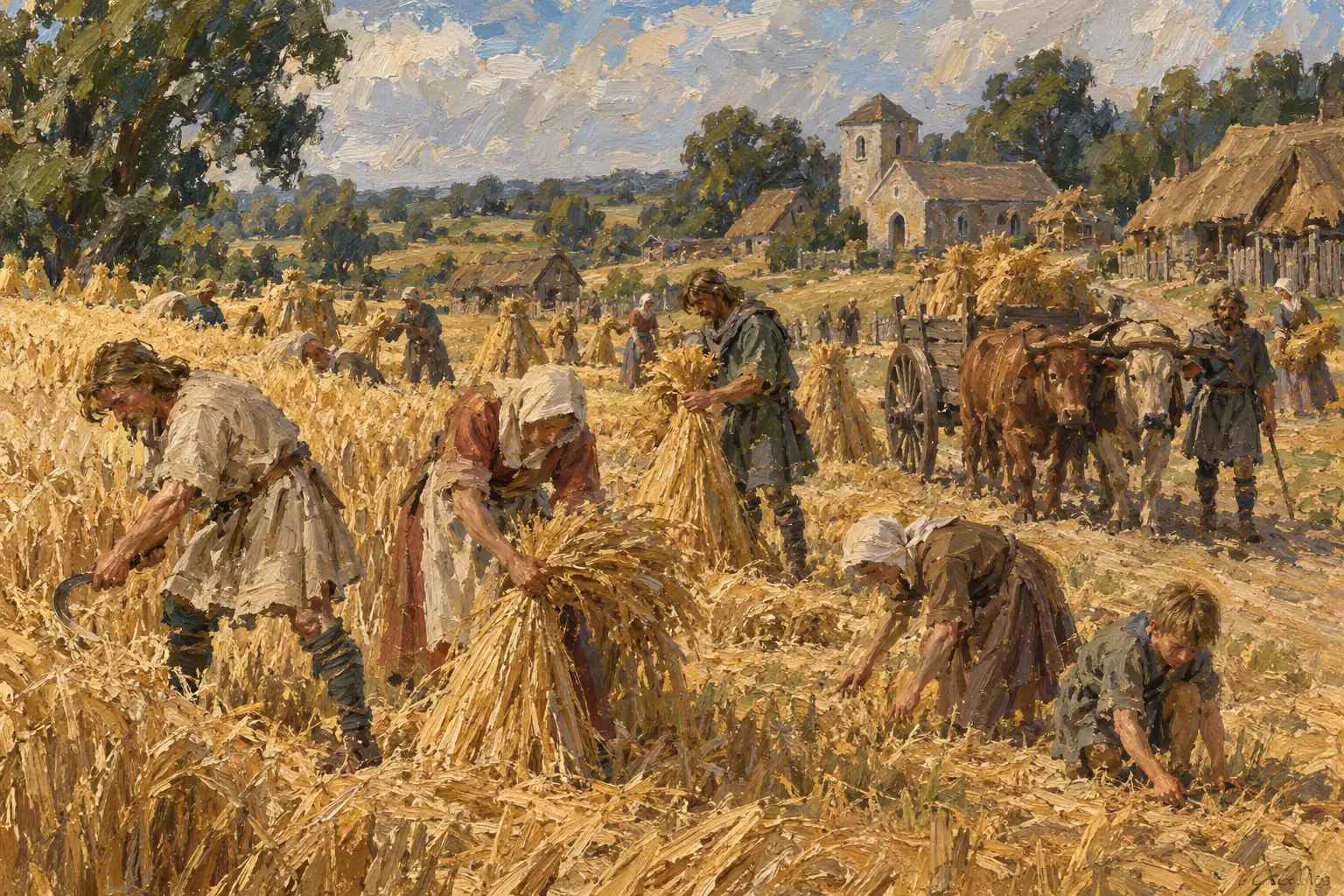
Village life followed a yearly cycle tied to the seasons, with agricultural tasks dictating daily routines and food availability. This rhythm ensured survival through crop cultivation and animal husbandry, though it was vulnerable to weather and disease.
Seasonal patterns in farming and daily life
- Autumn activities - Ploughing fields and sowing winter crops like wheat, alongside gathering firewood and preparing for colder months.
- Winter tasks - Repairing tools, tending livestock indoors and threshing grain from the previous harvest.
- Spring routines - Sowing spring crops such as barley and oats, along with lambing and calving for animals.
- Summer demands - Haymaking, weeding fields and harvesting crops, culminating in communal feasts to celebrate the yield.
- Food production methods - Crops rotated in a three-field system to maintain soil fertility, while animals provided meat, milk and wool; diets relied on bread, vegetables and occasional meat, with surpluses traded at markets.
Roles of lords, reeves and peasants after 1066
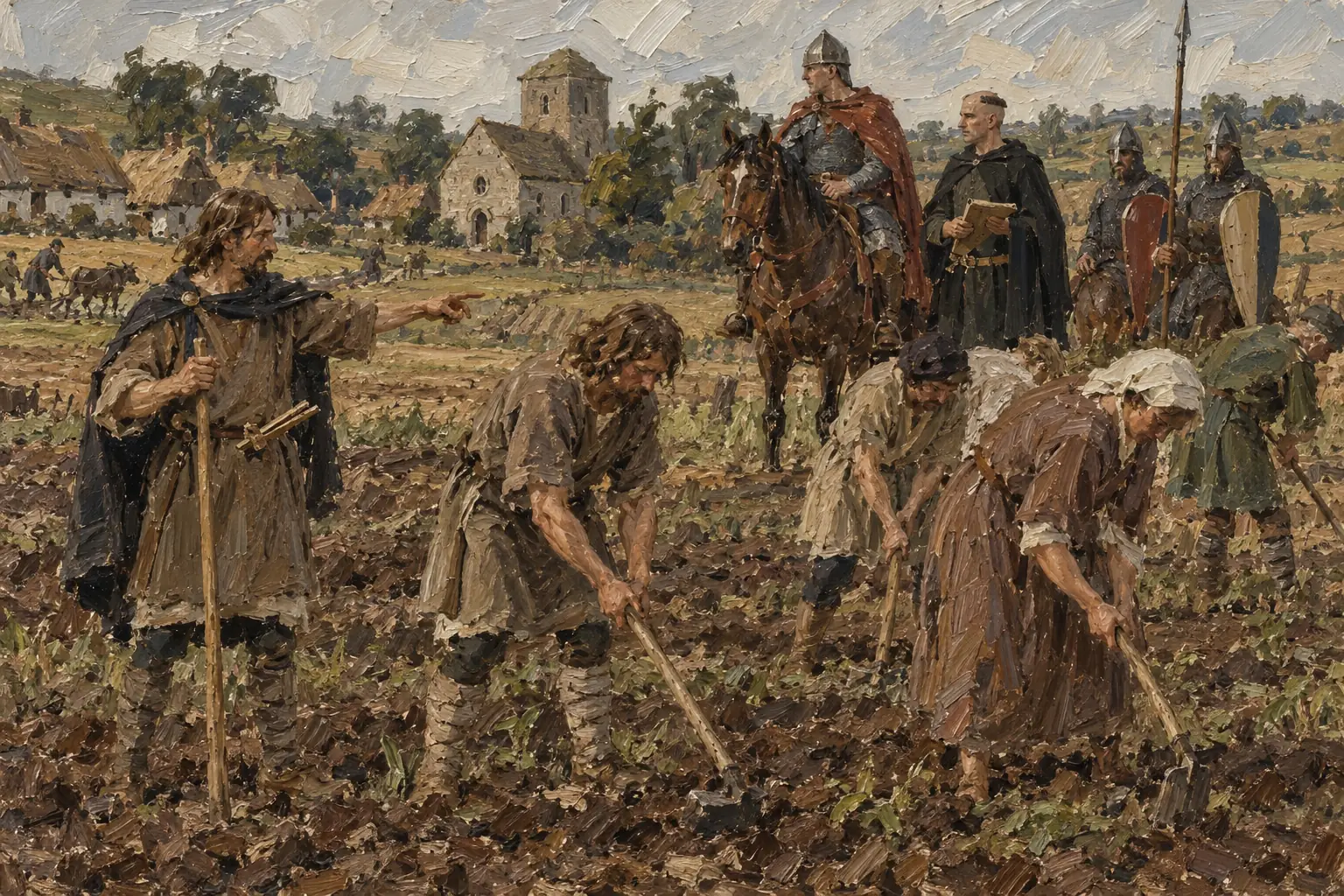
Village society was hierarchical, with distinct roles maintaining order and productivity. The Norman Conquest of 1066 brought notable shifts, altering social statuses and eliminating certain practices.
Key roles in village hierarchy
- Lords - Owned the manor and land, collecting rents and services from peasants while overseeing justice and providing protection.
- Reeves - Appointed by lords to supervise daily work, allocate tasks and ensure obligations like labour on the lord's fields were met.
- Peasants - Divided into freemen, who owned small plots and paid rent, and unfree villeins, who owed heavy labour duties but could farm strips for themselves.
Social changes following the Norman Conquest
- Decline of freemen - Many lost independence as Norman lords imposed stricter controls, reducing their status to that of villeins.
- Abolition of slavery - Enslaved people, common before 1066, were gradually freed or integrated into the peasant class, though overall serfdom increased.
- Impact on communities - These shifts concentrated power with Norman elites, increasing obligations and resentment among the lower classes.
Forest Law and its impact on local communities
Image 1 of 2: Hunting in a royal forest became a serious crime under Forest Law
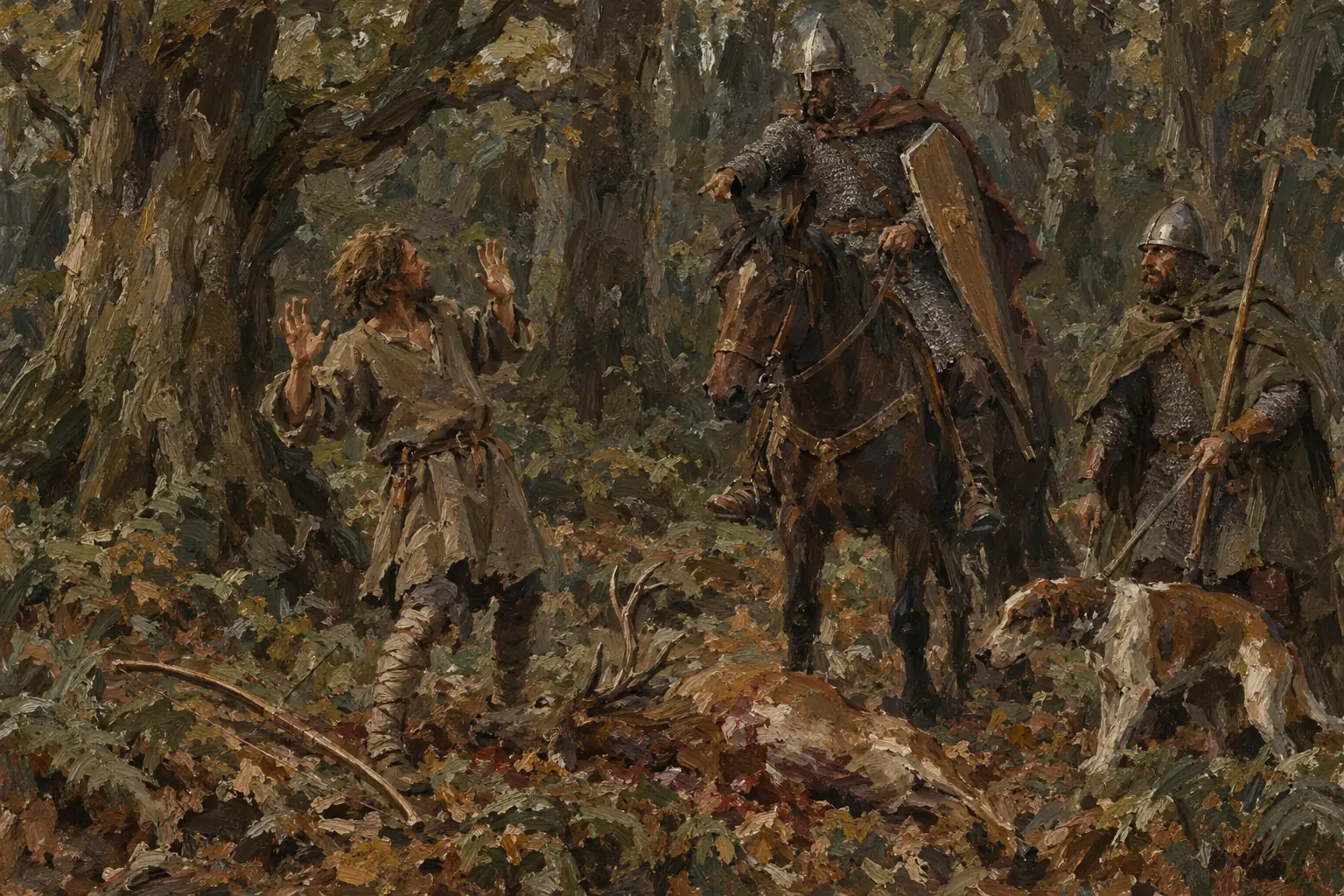
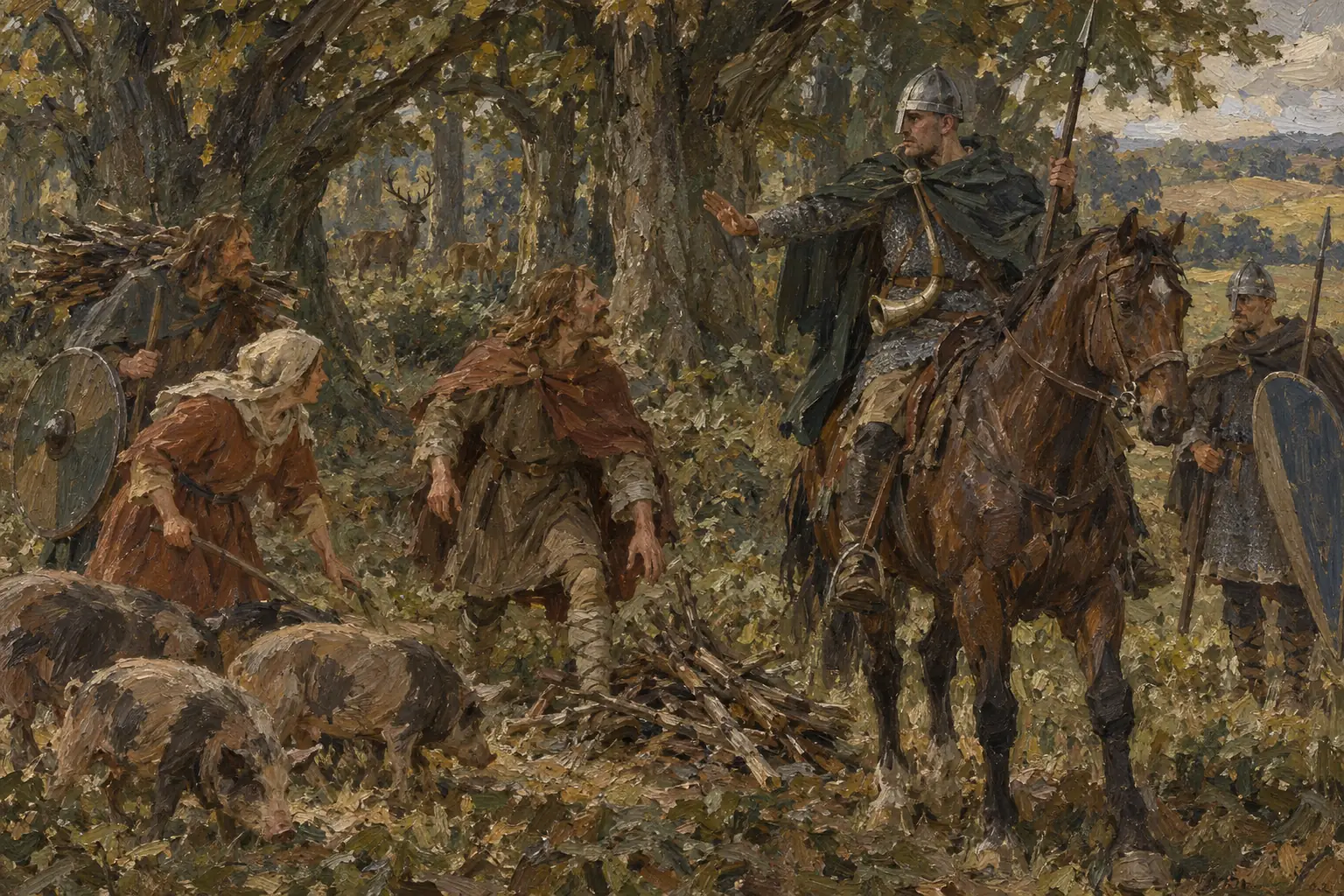
Forest Law, introduced by Norman kings from 1066, designated large areas as royal hunting reserves, imposing strict rules to protect game. This system prioritised royal recreation over local needs, leading to economic hardships.
Restrictions and consequences of Forest Law
- Land use limitations - Common activities like gathering wood, grazing animals or clearing land for farming were banned or heavily regulated in forested areas.
- Penalties for violations - Harsh punishments, including fines or mutilation, were enforced by royal officials, deterring even minor infractions.
- Impact on livelihoods - Villagers lost access to vital resources, reducing food supplies and income from foraging or timber, which exacerbated poverty.
- Reasons for resentment - The laws favoured the king and nobility, ignoring peasants' survival needs and creating a sense of injustice, as forests covered up to a third of England.
Buildings, the local economy and lordship
Village buildings reflected the agricultural economy and social structure, serving practical functions while symbolising authority. Constructed mainly from local materials like timber and thatch, they supported farming and communal activities.
Types of buildings and their roles
- Timber halls - Lords' residences, used for administration, feasts and courts, reinforcing their control over the manor's economy.
- Churches - Central to spiritual and social life, often funded by lords; they stored tithes (a tenth of produce) to support the clergy and community welfare.
- Barns - Essential for storing grain and tools, enabling efficient food production and protecting harvests from weather or theft.
- Economic links - These structures facilitated rent collection, labour organisation and trade, tying the village's productivity to the lord's wealth and influence.