2.4 - 1933: Reichstag Fire, Decree & Enabling Act
Key facts and dates
The events of early 1933 marked a rapid consolidation of Nazi power in Germany, transforming the Weimar Republic into a dictatorship through a series of calculated moves. This timeline outlines the key steps that enabled the Nazis to dismantle democratic structures and suppress opposition.
Timeline of key events
- 27 February 1933 – Reichstag fire occurs, blamed on communists, providing pretext for emergency measures.
- 28 February 1933 – Emergency decree issued, suspending civil liberties and allowing arrests without trial.
- 5 March 1933 – Reichstag elections held amid widespread Nazi intimidation and violence.
- 23 March 1933 – Enabling Act passed, granting Hitler's cabinet legislative powers for four years.
- 2 May 1933 – Trade unions banned and their leaders arrested.
- June-July 1933 – All political parties except the Nazis outlawed, crushing organised opposition.
The Reichstag fire and its immediate consequences
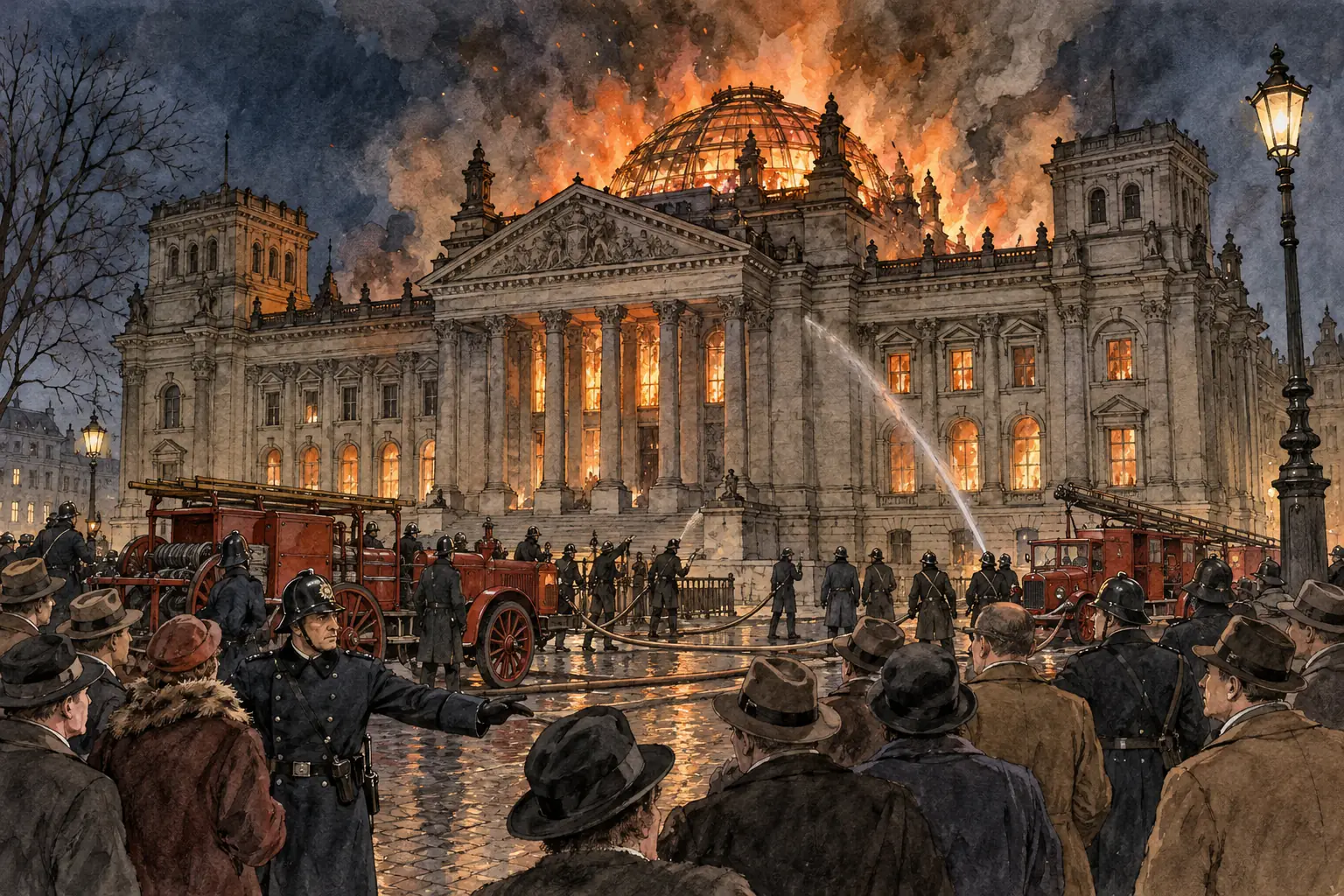
The Reichstag fire on 27 February 1933 was a pivotal incident that the Nazis exploited to justify aggressive actions against perceived threats. The blaze destroyed the German parliament building, and although its origins remain debated, the Nazis quickly attributed it to a communist plot.
Circumstances surrounding the Reichstag fire
- Alleged perpetrator - A young Dutch communist, Marinus van der Lubbe, was arrested at the scene and later executed, though some historians suggest Nazi involvement to create a crisis.
- Nazi response - Hitler and his party used the event to portray communists as a danger to the state, demanding immediate powers to restore order.
- Public impact - The fire heightened fears of revolution, enabling the Nazis to rally support for stronger government controls and suppress left-wing groups.
Emergency decree and suspension of civil liberties
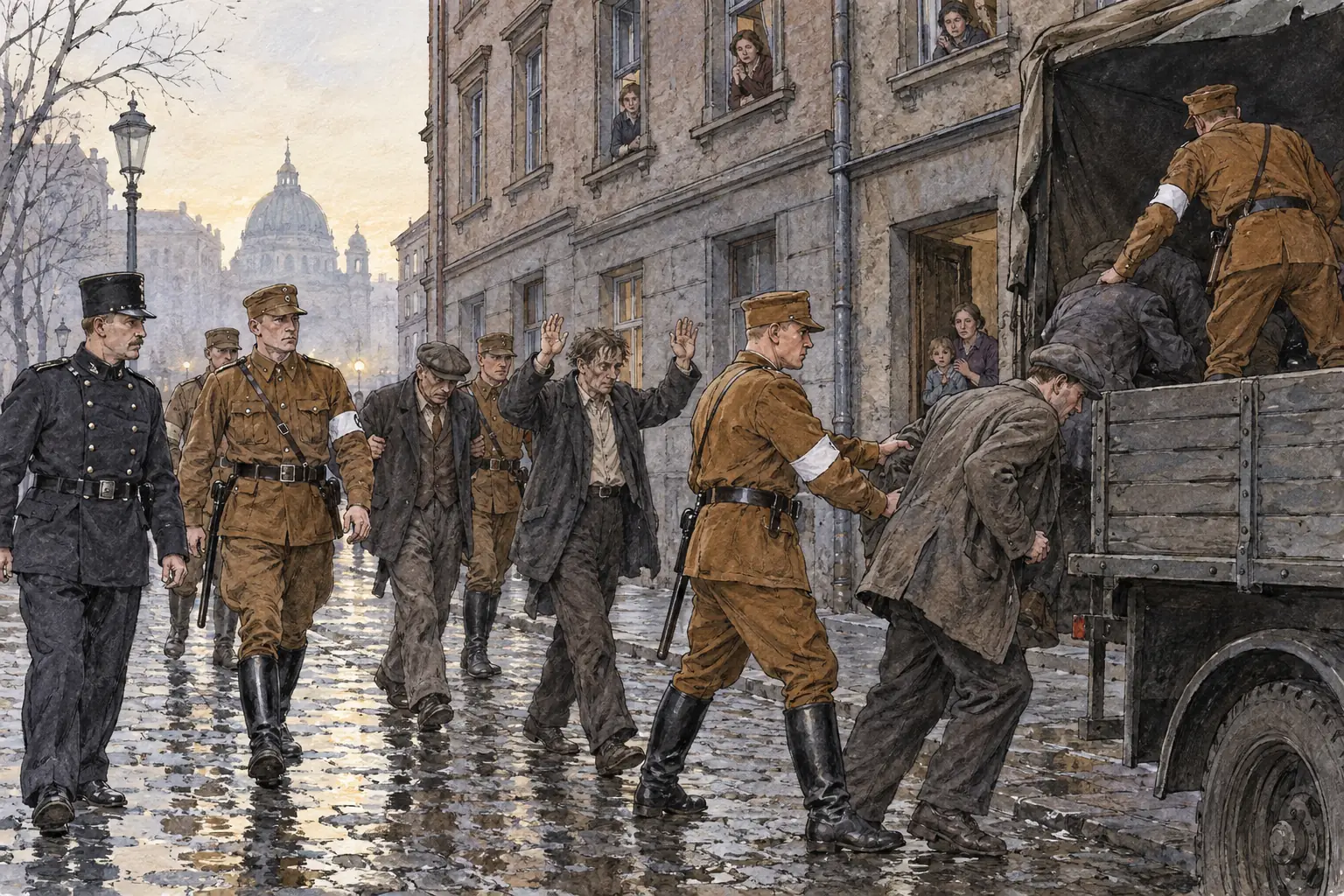
Following the Reichstag fire, President Hindenburg issued the Decree for the Protection of People and State on 28 February 1933. This emergency measure drastically curtailed individual rights, laying the groundwork for authoritarian rule.
Key provisions of the emergency decree
- Suspension of freedoms - Rights such as freedom of speech, press, and assembly were temporarily halted, allowing the government to censor media and ban public gatherings.
- Arrest powers - Authorities gained the ability to detain suspects indefinitely without charges or trials, leading to mass arrests of communists and other opponents.
- Federal intervention - The decree permitted the central government to override state authorities, centralising power in Berlin and weakening regional autonomy.
The March 1933 elections under intimidation
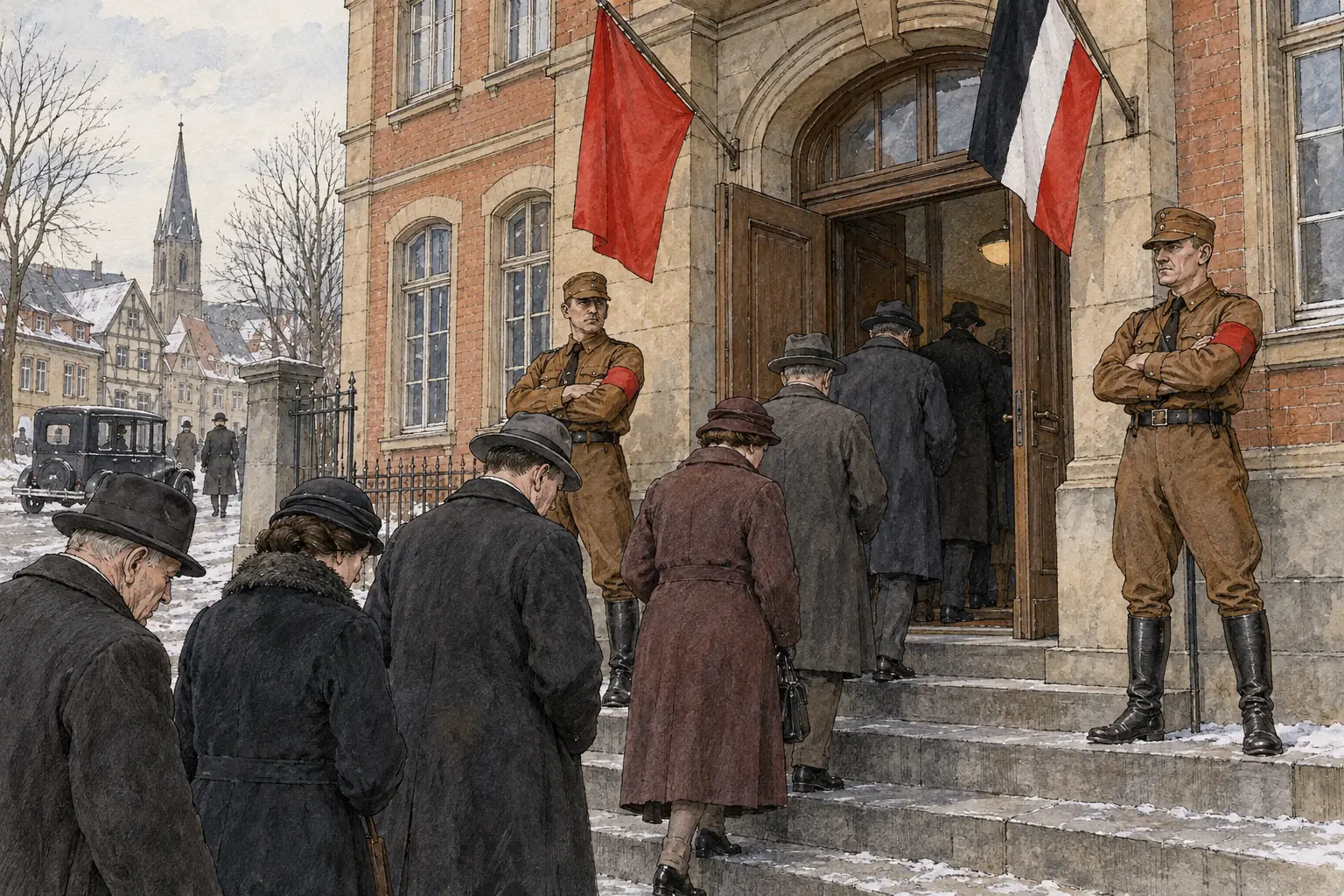
The Reichstag elections on 5 March 1933 were intended to strengthen the Nazi position, but they occurred in an atmosphere of fear and coercion. Despite not achieving an outright majority, the results allowed further consolidation of power.
Tactics used during the elections
- Intimidation and violence - SA stormtroopers disrupted opposition campaigns, attacked rivals, and monitored polling stations to influence voters.
- Propaganda efforts - The Nazis dominated media outlets, spreading messages of national revival while portraying opponents as traitors.
- Election outcomes - The Nazi Party secured 44% of the vote, and with their nationalist allies, they gained a slim majority, setting the stage for legislative changes.
The Enabling Act and transfer of legislative power
The Enabling Act, formally known as the Law to Remedy the Distress of People and Reich, was passed on 23 March 1933. It effectively transferred law-making authority from the Reichstag to Hitler's cabinet, marking a legal shift towards dictatorship.
Features of the Enabling Act
- Legislative transfer - The act allowed the cabinet to enact laws without parliamentary approval for four years, including those altering the constitution.
- Passage in the Reichstag - Achieved through intimidation, with communist deputies arrested and the session held in an opera house surrounded by SA guards; it passed with 444 votes in favour and 94 against.
- Long-term effects - This law provided a veneer of legality for subsequent Nazi policies, enabling rapid changes without democratic oversight.
Legalised dictatorship through Gleichschaltung
Gleichschaltung, or coordination, referred to the process of aligning all aspects of German society with Nazi ideology. Building on the emergency decree and Enabling Act, the Nazis systematically eliminated opposition and centralised control.
Measures implemented during Gleichschaltung
- Purging the civil service - The Law for the Restoration of the Professional Civil Service in April 1933 removed Jews and political opponents from government jobs, ensuring loyalty to the regime.
- Taking over state governments - Commissioners were appointed to control regional administrations, dissolving local parliaments and aligning them with Nazi policies.
- Controlling the press - Newspapers were censored or shut down, with editors required to join the Reich Press Chamber, stifling independent journalism.
- Banning trade unions - On 2 May 1933, union offices were occupied, leaders arrested, and workers forced into the Nazi-controlled German Labour Front.
- Outlawing other parties - By July 1933, all non-Nazi parties were dissolved, with a law declaring the Nazi Party the only legal political organisation, effectively ending multi-party democracy.