1.7 - Berlin Blockade, Airlift & the Propaganda War
Key facts and dates
The Berlin blockade of 1948-49 represented a major escalation in Cold War tensions between the Western Allies and the Soviet Union, triggered by economic and political differences in post-war Germany. This crisis highlighted divisions over occupation policies and led to the formal split of Germany into two states.
Timeline of key events
- 1945 – End of World War II; Germany divided into four occupation zones controlled by the USA, UK, France, and USSR, with Berlin similarly divided.
- June 1948 – Western powers introduce the Deutsche Mark in their zones, prompting Soviet concerns about economic influence.
- 24 June 1948 – Stalin imposes blockade on land routes to West Berlin, aiming to force Western withdrawal.
- 26 June 1948 – Start of the Berlin airlift, with Allied planes supplying West Berlin.
- May 1949 – Blockade lifted after airlift's success demonstrates Western resolve.
- May 1949 – Formation of the Federal Republic of Germany (FRG) in the West.
- October 1949 – Establishment of the German Democratic Republic (GDR) in the East.
- April 1949 – NATO founded, accelerated by the crisis.
Causes of the 1948-49 Berlin crisis
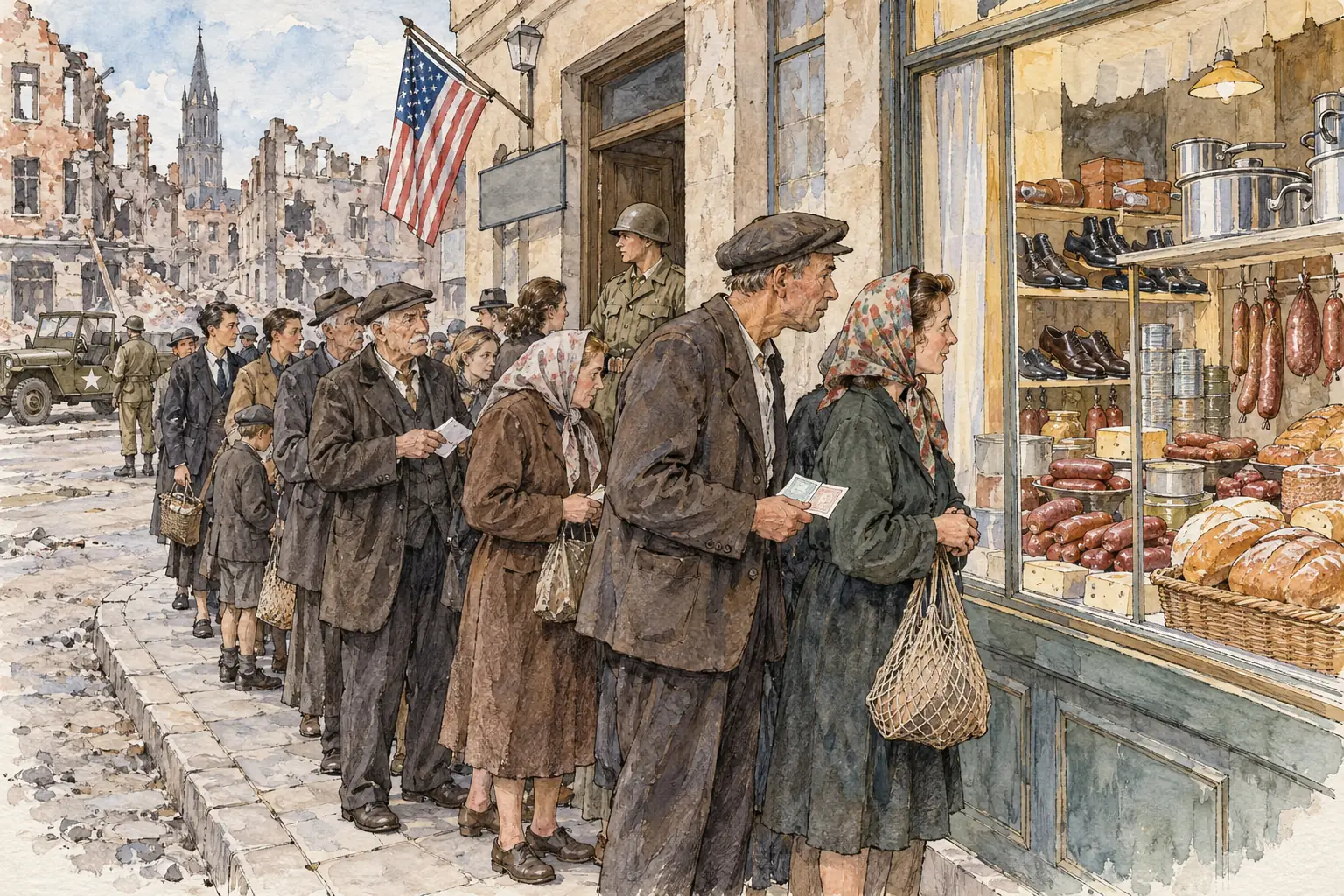
Post-World War II, Germany was divided into four occupation zones controlled by the United States of America (USA), United Kingdom (UK), France, and Union of Soviet Socialist Republics (USSR), with Berlin also split despite being deep in the Soviet zone. Tensions arose from differing approaches to rebuilding, leading to the crisis.
Contrasting occupation policies in post-war Germany
- Western approach - The USA, UK, and France focused on economic recovery, democracy, and integration into a capitalist system, aiming to prevent future instability through prosperity.
- Soviet approach - The USSR prioritised reparations, communist reforms, and tight control, extracting resources to rebuild its own war-damaged economy while suppressing opposition.
- Economic divisions - These differences created friction, as Western zones prospered while the Soviet zone lagged, highlighting ideological clashes between capitalism and communism.
Western currency reform and Soviet fears
- Introduction of the Deutsche Mark - In June 1948, the Western powers launched a new currency in their zones to stabilise the economy and curb inflation, excluding the Soviet zone.
- Soviet concerns - This reform threatened to flood East Germany with a stronger currency, potentially undermining Soviet control and making West Berlin a prosperous enclave within the communist zone.
- Geopolitical worries - Stalin feared West Berlin could serve as a base for anti-Soviet activities, eroding influence in the East and symbolising Western superiority.
Key events of the blockade and airlift
Image 1 of 2: From 24 June 1948 Soviet forces closed every road, rail and canal route into West Berlin
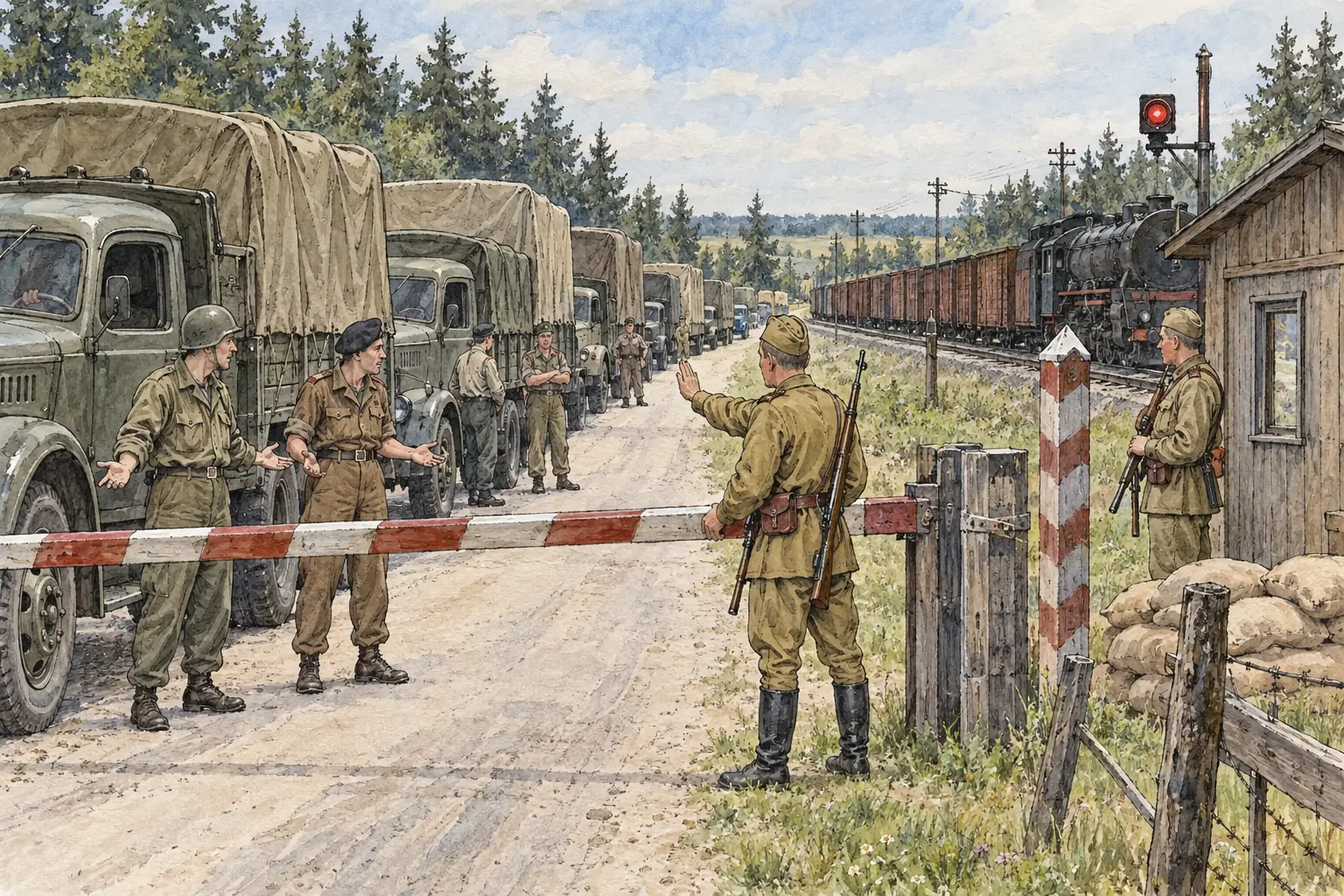
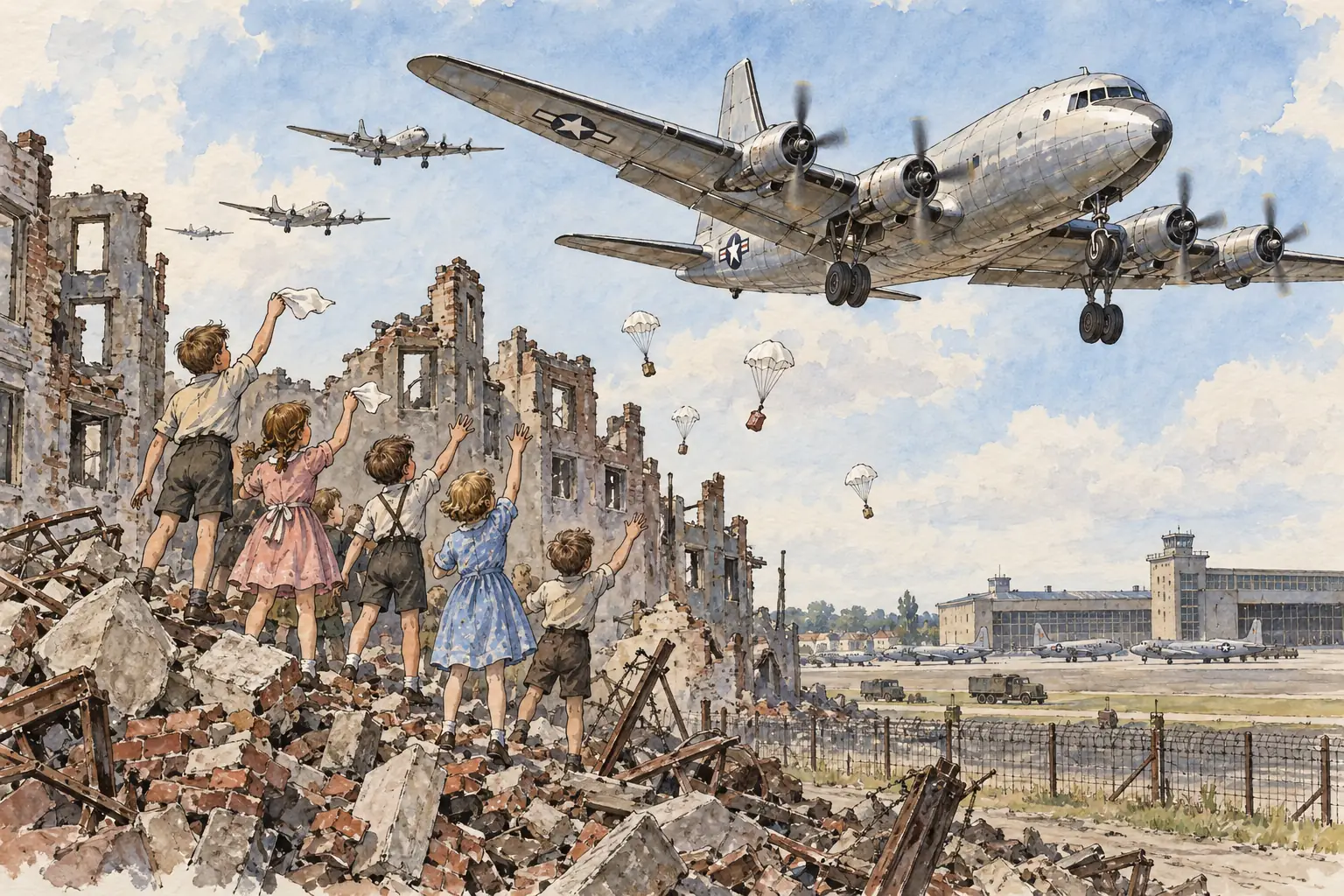
The crisis intensified when the USSR sought to isolate West Berlin, a city of over two million people reliant on Western supplies. This led to a direct confrontation, testing the resolve of both sides without open warfare.
Stalin's blockade of land routes
- Imposition of restrictions - On 24 June 1948, the USSR blocked all road, rail, and canal access to West Berlin, claiming technical issues but aiming to starve the city into submission and force Western Allies out.
- Strategic motivations - By cutting off supplies, Stalin hoped to consolidate control over all of Berlin and demonstrate Soviet dominance in the region.
Western response through the Berlin airlift
- Operation launch - Beginning 26 June 1948, the USA and UK organised an airlift, flying in food, fuel, and essentials using three air corridors guaranteed by post-war agreements.
- Scale of effort - At its peak, planes landed every few minutes, delivering up to 13,000 tonnes daily, with innovations like candy drops for children boosting morale.
- Duration and challenges - The airlift lasted 11 months, overcoming harsh weather and logistical hurdles, symbolising Western ingenuity and commitment.
Outcomes of the crisis
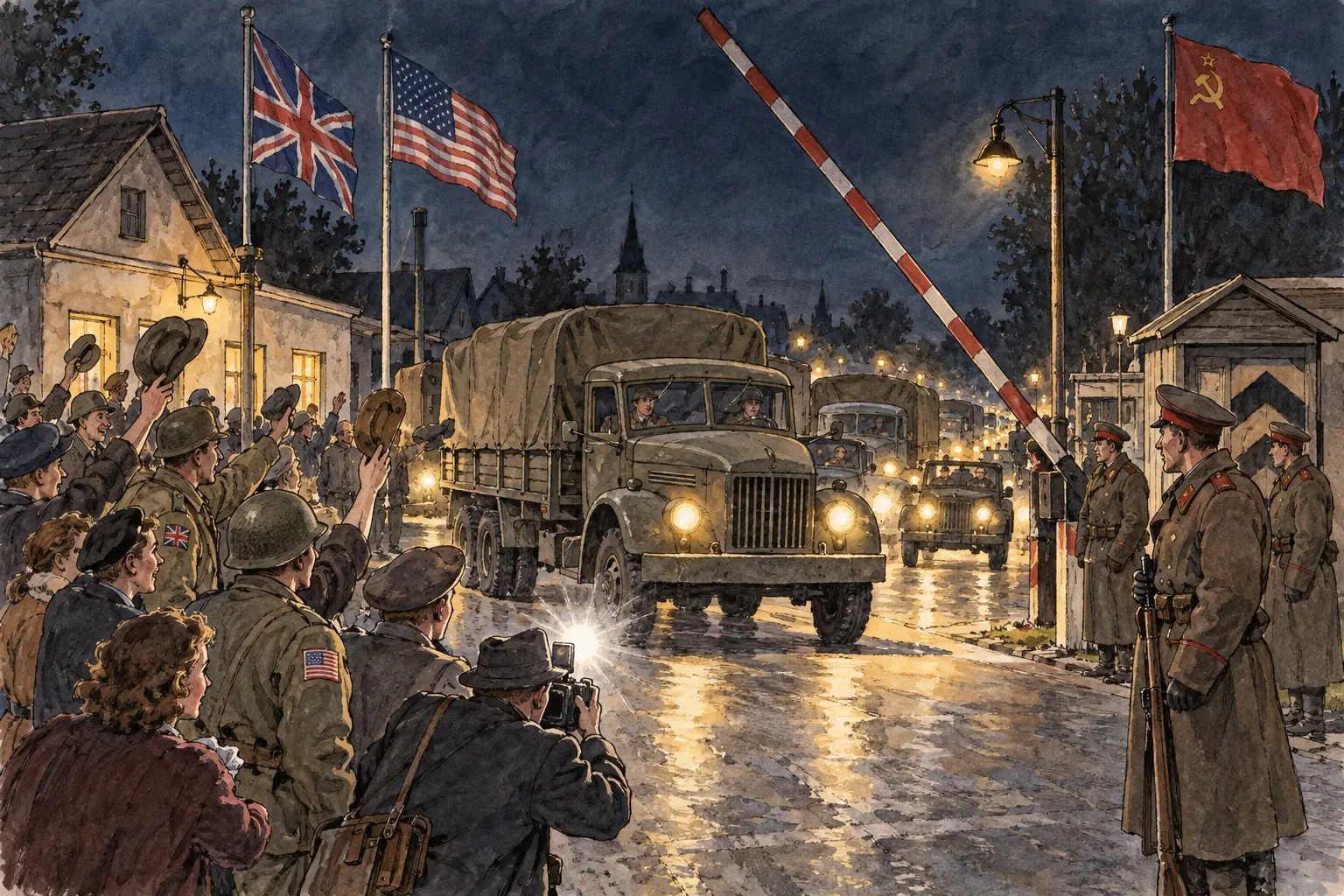
The blockade failed to achieve Soviet goals, leading to its end and immediate political changes in Germany. This resolution reinforced the division of Europe along Cold War lines.
Lifting of the blockade
- Soviet concession - On 12 May 1949, the USSR lifted restrictions after realising the airlift's success made continuation futile, avoiding further escalation.
- Humanitarian success - The airlift sustained West Berlin without a single starvation death, proving air supply viable despite initial doubts.
Creation of separate German states
- Federal Republic of Germany (FRG) - Established in May 1949 in the Western zones, forming a democratic, capitalist West Germany aligned with the West.
- German Democratic Republic (GDR) - Formed in October 1949 in the Soviet zone, creating a communist East Germany under Soviet influence.
- Formal division - These developments solidified the split of Germany, entrenching the Iron Curtain and setting the stage for decades of separation.
Significance including the propaganda war
The crisis had far-reaching effects on international relations, accelerating military alliances and shaping public perceptions through propaganda. It marked a pivotal moment in the early Cold War.
Accelerated formation of NATO
- Defensive alliance - The North Atlantic Treaty Organization (NATO) was signed in April 1949, partly in response to the blockade, uniting Western nations against potential Soviet aggression.
- Strategic impact - This strengthened collective security, deterring further Soviet advances in Europe and formalising the East-West divide.
Propaganda effects and portrayals
- USA as humanitarian and resolute - Western media highlighted the airlift as a triumph of freedom and aid, portraying the USA as a defender of democracy against tyranny.
- USSR as coercive - Soviet actions were depicted as aggressive and bullying, damaging the USSR's image globally and boosting anti-communist sentiment.
- Long-term influence - The propaganda war intensified ideological battles, with both sides using the crisis to rally support and justify their positions in the emerging Cold War narrative.