3.7 - The Armada Campaign: Strategy & Timeline
Key facts and dates
The Spanish Armada campaign of 1588 was a major naval effort by Spain to invade England, involving a large fleet intended to support an army crossing from the Netherlands. Despite its scale, the campaign ended in failure due to English tactics, weather, and logistical issues. The following timeline outlines the critical events and turning points.
Timeline of key events
- May 1588 – The Spanish Armada sets sail from Lisbon with 130 ships, aiming to link up with Parma's forces in the Netherlands.
- 29 July 1588 – Armada sighted off the Lizard in Cornwall, prompting English beacons to alert the fleet at Plymouth.
- 31 July 1588 – Initial skirmishes off Plymouth as English ships harass the Armada's formation.
- 3 August 1588 – Encounters near the Isle of Wight, where English forces prevent the Armada from anchoring.
- 6 August 1588 – Armada anchors at Calais, awaiting Parma's army, but faces a stand-off with the English fleet.
- 7-8 August 1588 – English fireships disrupt the Armada at Calais, followed by the decisive Battle of Gravelines.
- Late August-September 1588 – Defeated Armada retreats northwards around Scotland and Ireland, suffering heavy losses from storms.
The Spanish Armada's strategy and invasion plan
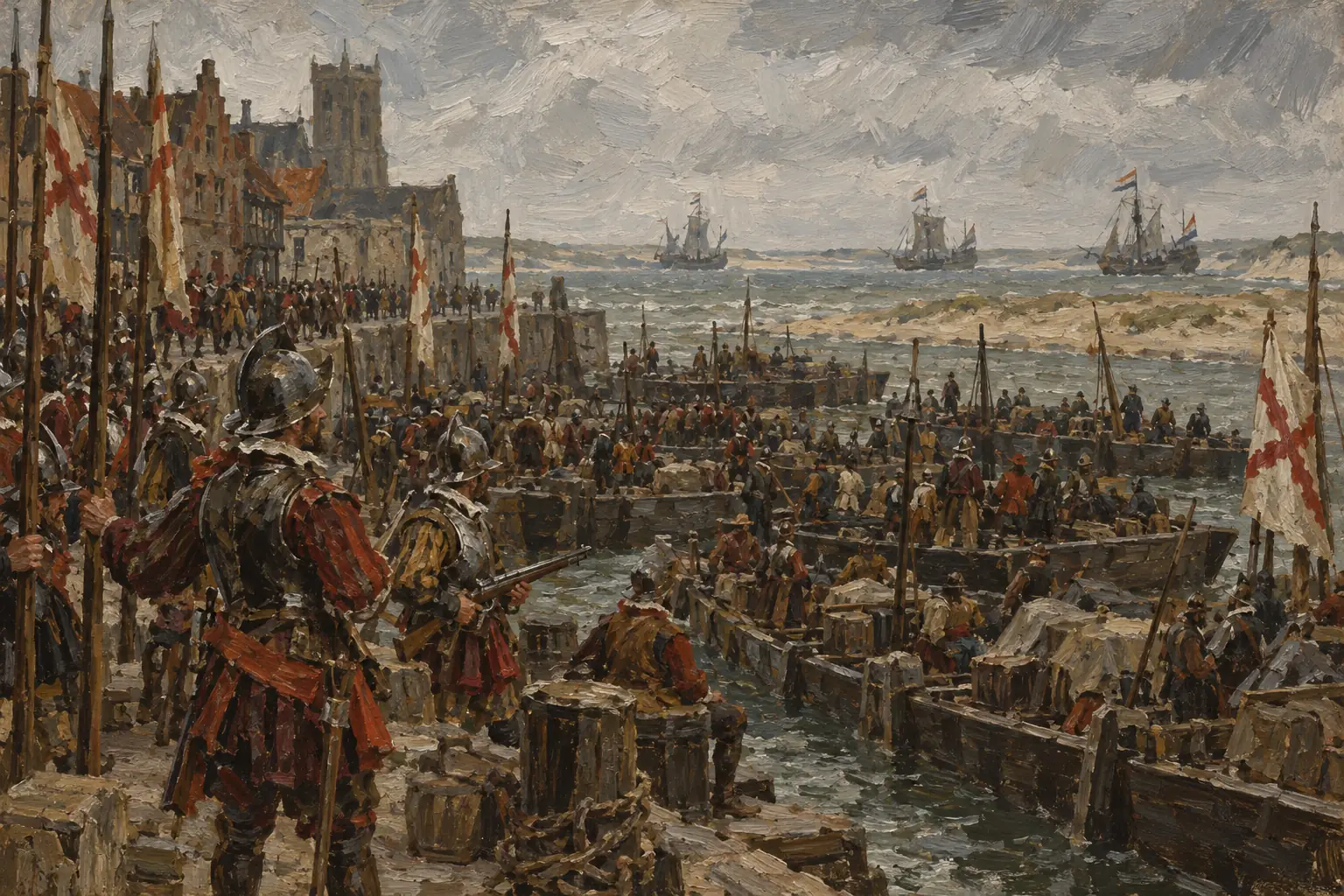
In 1588, Spain launched a massive naval operation known as the Armada to overthrow Queen Elizabeth I and restore Catholic influence in England. The fleet, commanded by the Duke of Medina Sidonia, consisted of around 130 ships carrying troops, supplies, and artillery. The primary objective was to secure the English Channel for a safe crossing.
Core elements of the Spanish invasion plan
- Escorting Parma's army - The Armada aimed to rendezvous with the Duke of Parma's 30,000-strong army in the Spanish-controlled Netherlands, protecting their transport barges across the Channel to land near Margate in Kent.
- Overwhelming naval superiority - Spanish strategy relied on the fleet's size and firepower to dominate the Channel, engaging in close-quarters combat where their heavily armed galleons could board and capture English vessels.
- Logistical preparations - The fleet was equipped for a prolonged campaign, with provisions for six months, but this created vulnerabilities due to the need for resupply and the challenges of coordinating with land forces.
The English defensive strategy in the Channel
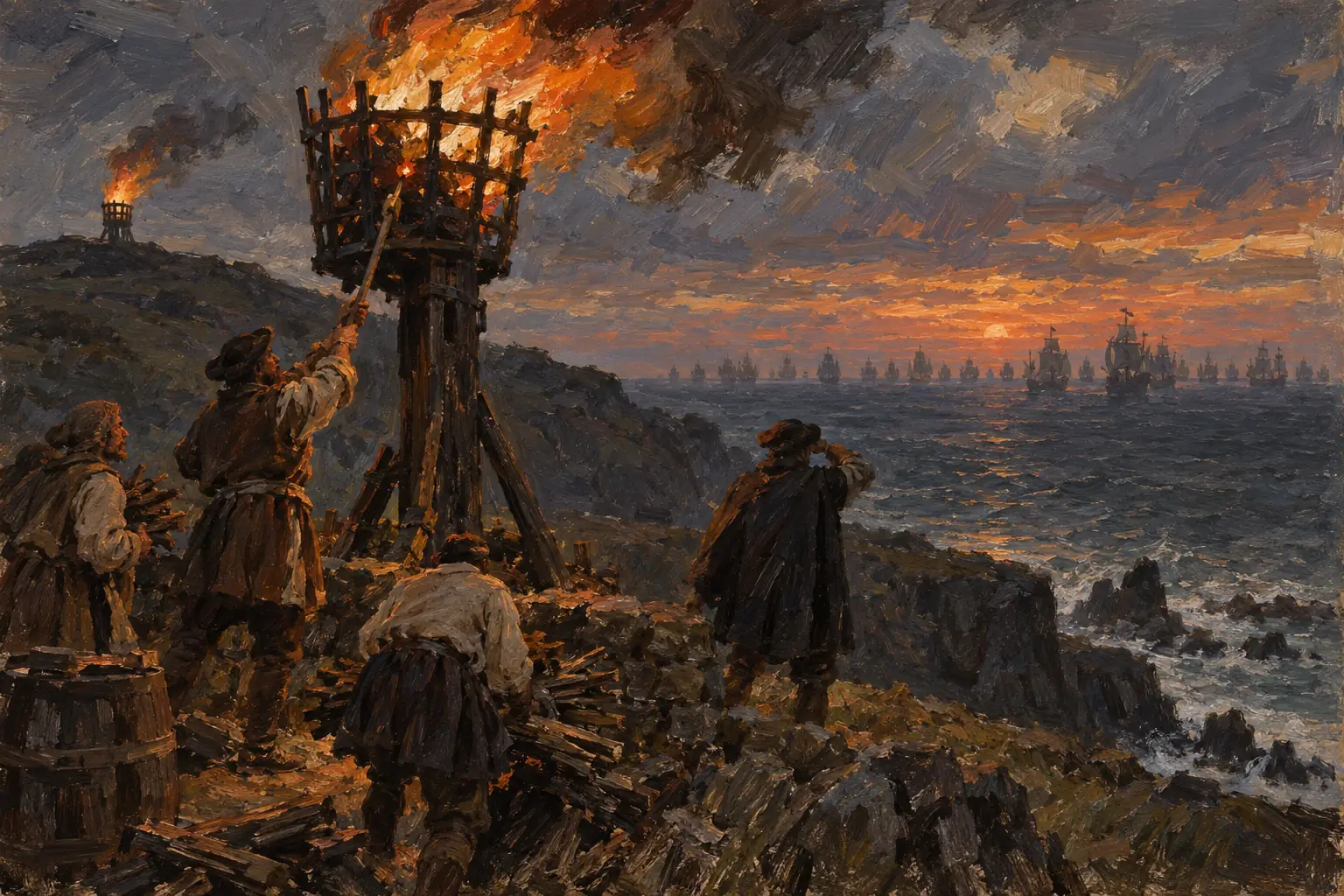
England's response to the threatened invasion focused on naval disruption rather than direct confrontation, leveraging the mobility of their ships. Under the command of Lord Howard of Effingham and Sir Francis Drake, the English fleet operated from Plymouth, aiming to prevent the Armada from achieving its goals.
Key aspects of English tactics
- Harassment in the Channel - English ships used their speed and manoeuvrability to attack from a distance, firing broadsides to damage Spanish vessels without engaging in boarding actions.
- Preventing rendezvous - The strategy emphasised keeping the Armada away from potential anchorages and blocking any link-up with Parma's forces, exploiting the Spanish fleet's slower, more cumbersome formation.
- Use of intelligence and beacons - A network of coastal beacons allowed rapid communication, enabling the English to track and shadow the Armada as it progressed up the Channel from the south-west coast.
Key encounters and battles during the campaign
Image 1 of 3: English ships harassed the Armada's crescent formation from a distance as it sailed up the Channel
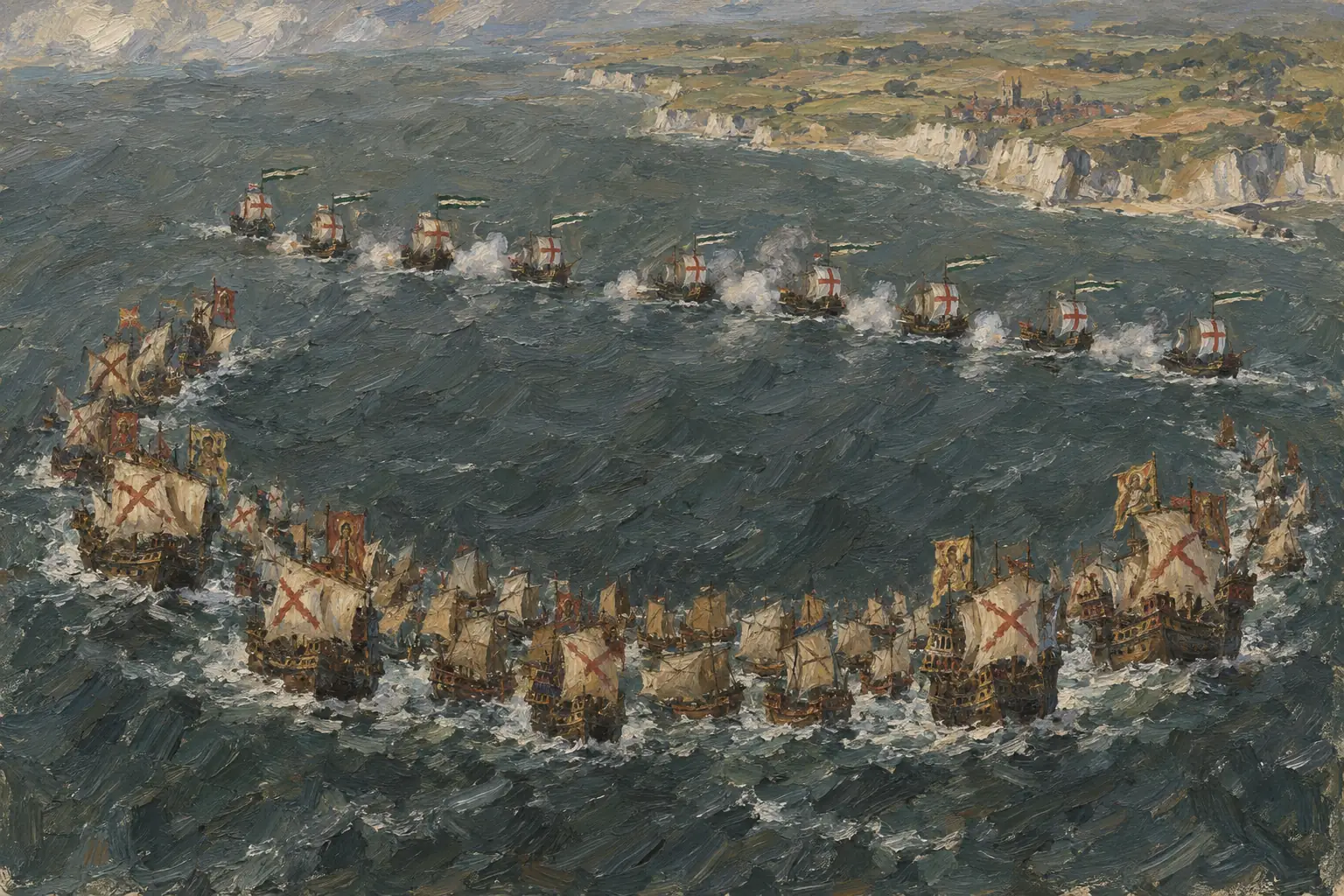
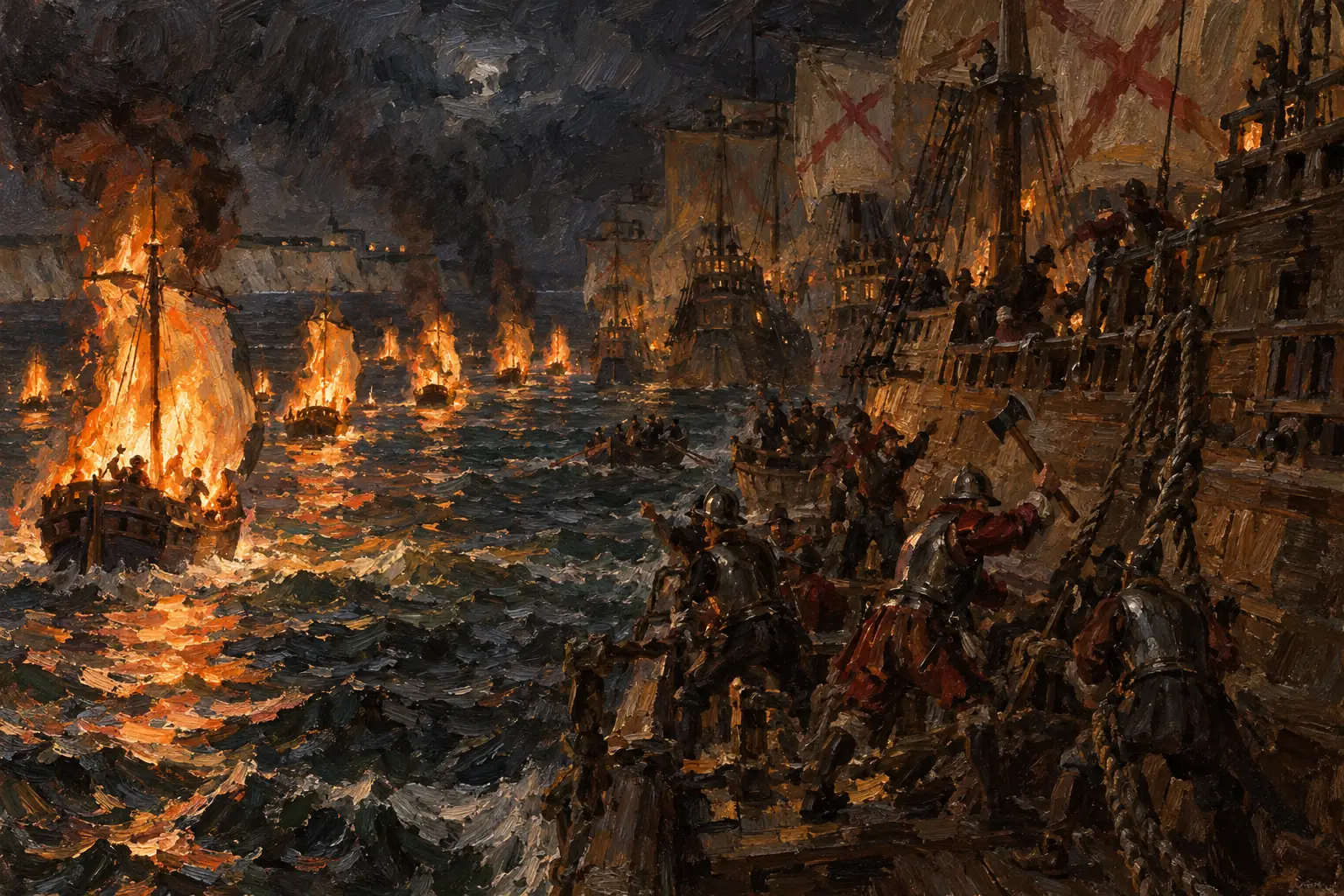
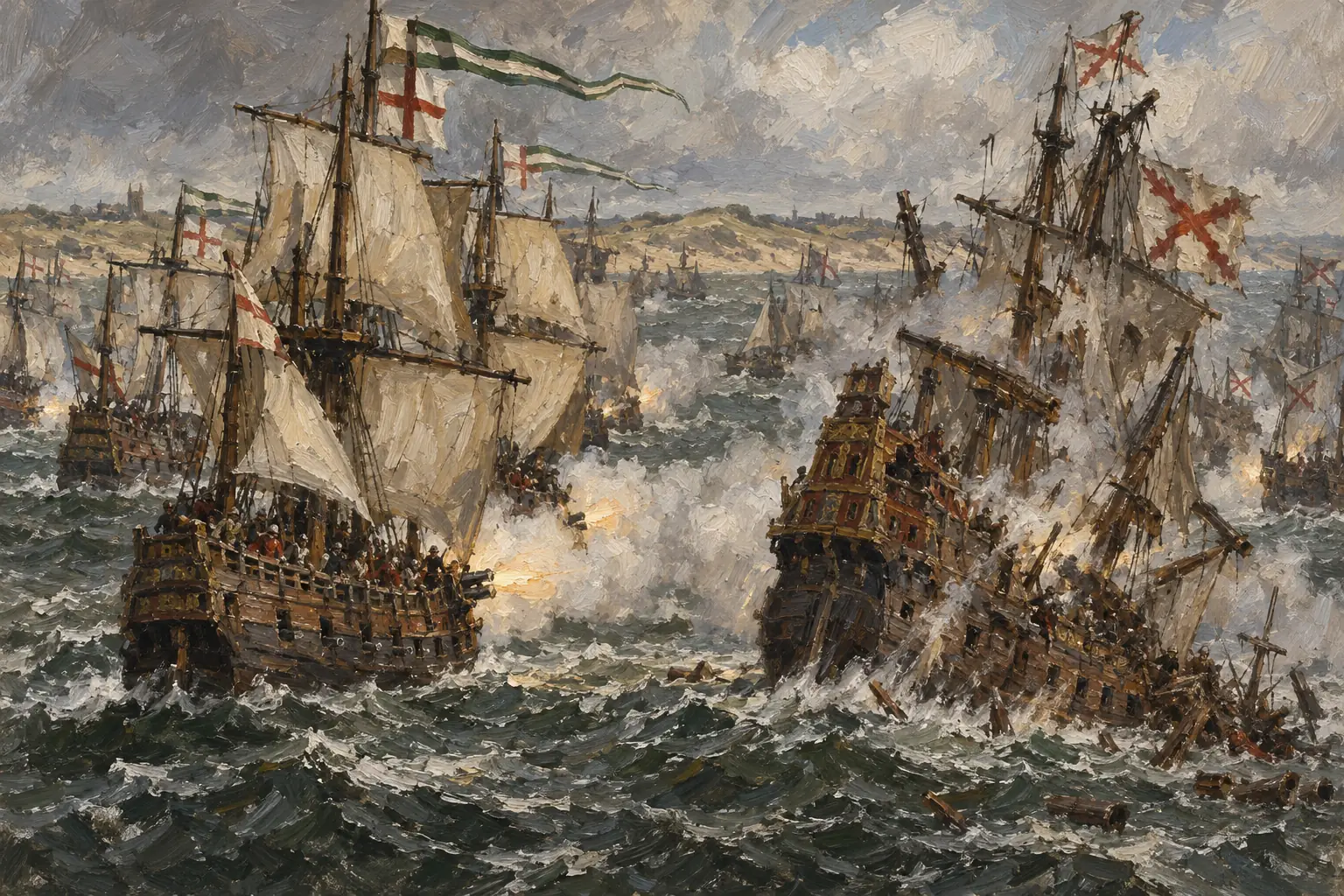
The campaign unfolded through a series of naval clashes as the Armada advanced along England's southern coast. These engagements highlighted the effectiveness of English tactics against the larger Spanish force.
Major confrontations and turning points
- Encounters off the south-west coast - Initial skirmishes near Plymouth and Portland Bill saw English ships disrupt the Armada's crescent formation, inflicting damage while avoiding close combat.
- Stand-off at Calais - The Armada anchored off Calais to await Parma, but shallow waters and delays in the Netherlands left them vulnerable to the pursuing English fleet.
- Deployment of fireships - On the night of 7 August, the English launched eight flaming vessels into the anchored Armada, causing panic and forcing the Spanish ships to scatter and cut anchors.
- Battle of Gravelines - The following day, intense fighting off the Dutch coast resulted in significant Spanish losses, with English artillery proving superior in open-sea combat.
The Armada's retreat and reasons for defeat
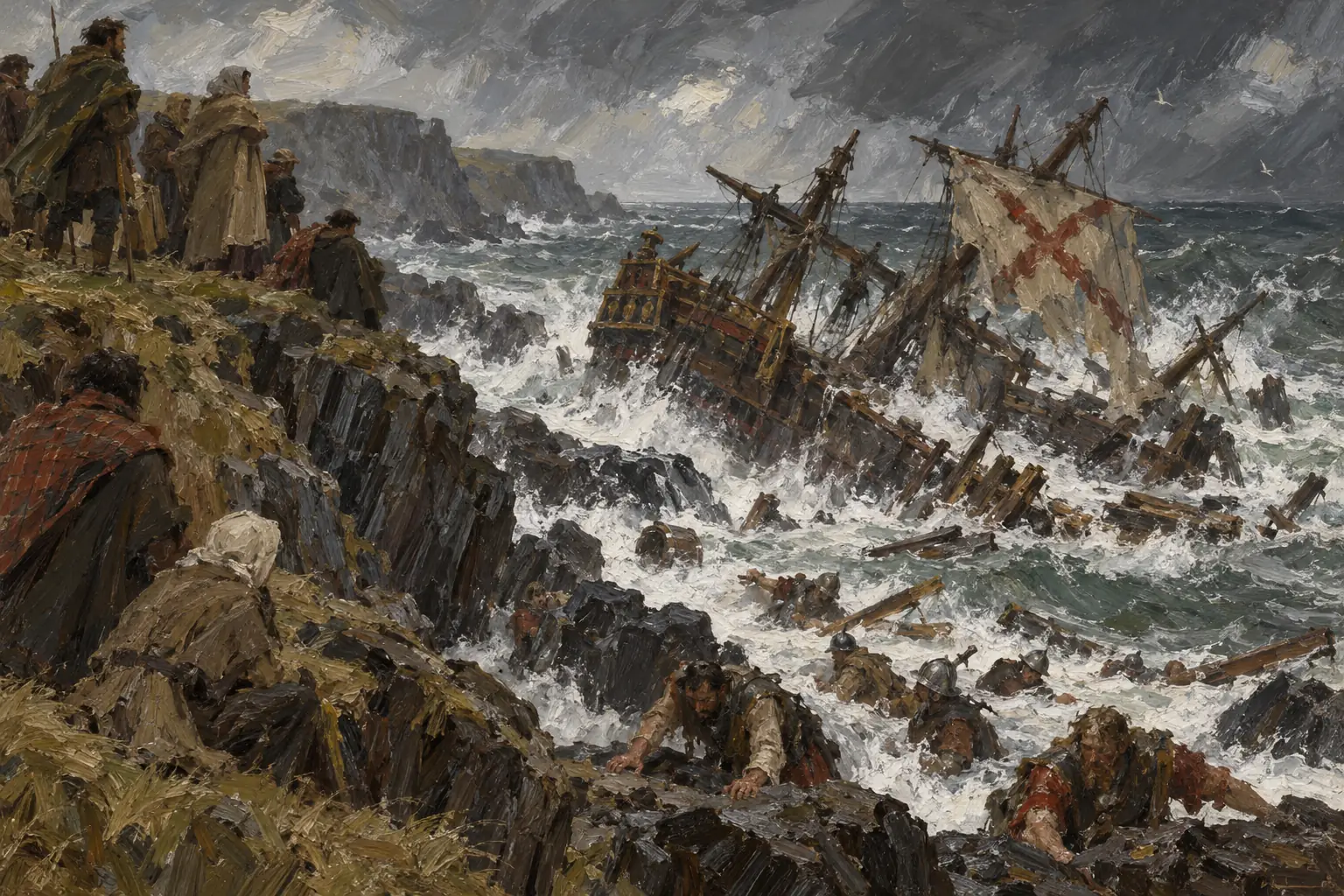
Following the Battle of Gravelines, the Armada was unable to regroup or proceed with the invasion. Forced to abandon their plans, the fleet embarked on a perilous return journey, marking the campaign's ultimate failure.
Factors leading to the Armada's downfall
- Northern retreat route - Driven north by winds and English pursuit, the fleet sailed around Scotland and Ireland, a longer and more hazardous path than the direct return to Spain.
- Storm damage - Severe Atlantic gales wrecked many ships on rocky coasts, particularly off Ireland, where over 5,000 men perished.
- Logistical failures - Shortages of food, water, and ammunition, combined with disease and poor navigation, compounded losses; only about half the fleet returned to Spain.
- Overall impact - The defeat boosted English morale and naval reputation, while weakening Spain's position in Europe.
Timeline of the Armada campaign
To provide a clear overview, the following table summarises the sequence of events in 1588, highlighting strategic decisions and outcomes.
| Date | Event | Significance |
|---|---|---|
| Late May | Armada departs Lisbon under Medina Sidonia | Launch of invasion force towards the Netherlands |
| 29 July | Armada spotted off Cornwall; English fleet mobilises from Plymouth | Beginning of active English defence |
| 31 July-2 August | Skirmishes off Plymouth and Portland | English harassment disrupts Spanish advance |
| 3-4 August | Clashes near the Isle of Wight | Prevents Armada from securing a safe harbour |
| 6 August | Armada anchors at Calais for rendezvous with Parma | Critical stand-off exposes fleet to attack |
| 7-8 August | Fireships at Calais followed by Battle of Gravelines | Decisive English victory scatters the Armada |
| August-September | Retreat via Scotland and Ireland; storms cause wrecks | Heavy losses seal the campaign's failure |