3.8 - Naval Tactics, Technology & Leadership
Key facts and dates
The naval confrontations during the Elizabethan era, particularly the 1588 Spanish Armada campaign, showcased significant differences in tactics, technology, and leadership between England and Spain. These elements contributed to England's unexpected success against a larger fleet, highlighting innovations in ship design and gunnery alongside command decisions.
Key facts to remember
- Race-built galleons – English ships designed for speed and agility, allowing superior manoeuvrability in battle.
- Lighter long-range guns – English artillery focused on distance firing, contrasting with Spanish close-range tactics.
- Line-ahead tactics – English formation that maximised cannon use while exploiting ship speed.
- Boarding doctrine – Spanish preference for grappling and infantry combat, effective in calm seas but vulnerable to ranged attacks.
- Supply problems – Spanish fleet hampered by inadequate provisions and communication breakdowns.
- Lord Howard of Effingham – English Lord High Admiral who coordinated fleet movements.
- Sir Francis Drake – Key English vice-admiral known for bold raids and tactical expertise.
- Duke of Medina Sidonia – Spanish commander appointed despite limited naval experience.
English naval advantages in technology and tactics
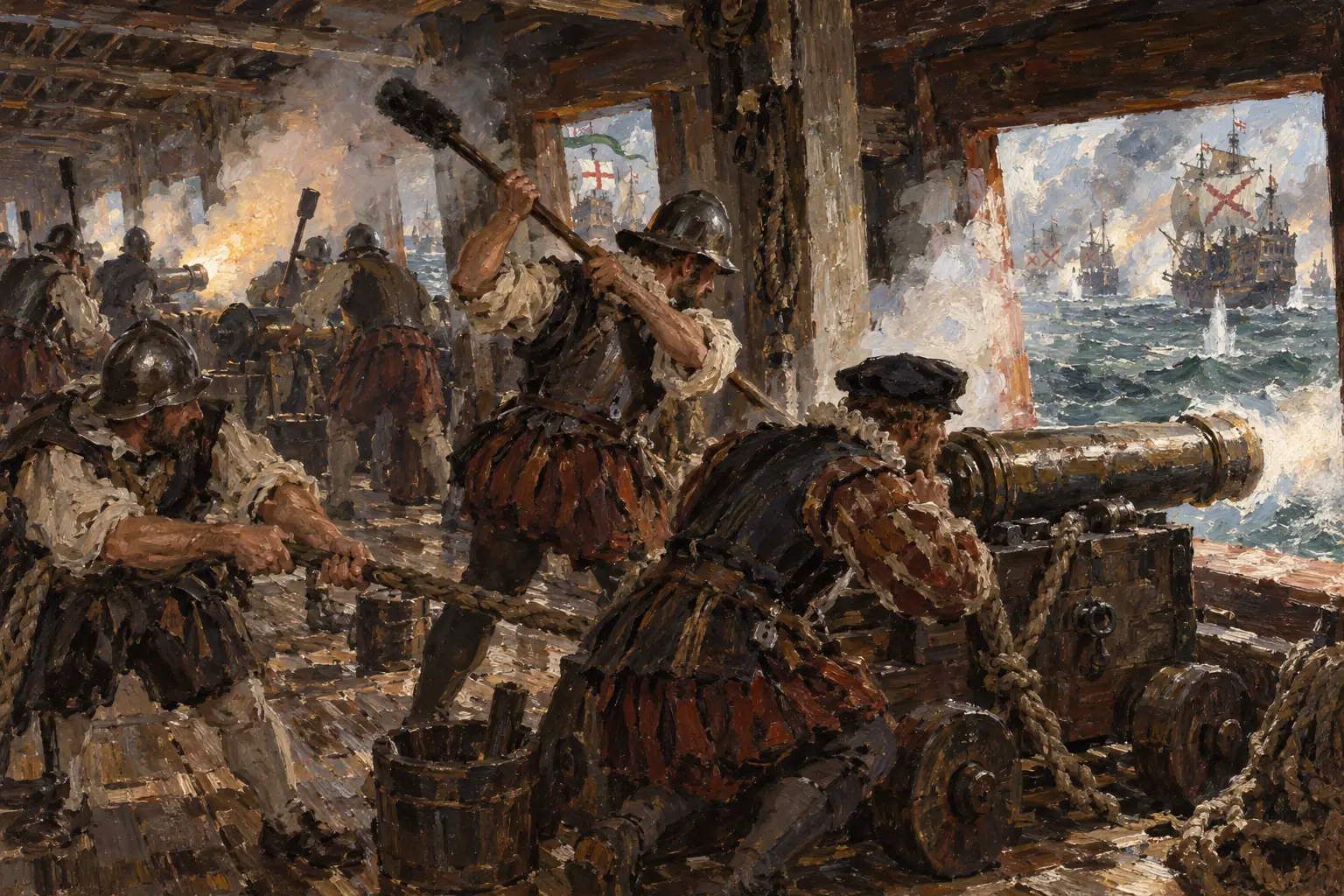
England's naval performance during conflicts like the 1588 Armada campaign stemmed from innovative ship designs and tactical approaches that prioritised speed, firepower, and flexibility. These elements allowed the smaller English fleet to outmanoeuvre and harass the larger Spanish force effectively.
Technological innovations in English ships
- Race-built galleons - These vessels featured sleeker hulls with reduced superstructure, making them faster and more agile than traditional warships. This design enabled quick turns and pursuits, ideal for hit-and-run engagements.
- Lighter long-range guns - English cannons were designed for greater range and faster reloading, allowing ships to fire from afar without closing in. This reduced exposure to enemy boarding attempts.
Tactical developments
- Improved gunnery drill - Crews underwent rigorous training to load, aim, and fire cannons efficiently, increasing the rate of fire and accuracy during battles.
- Line-ahead tactics - Ships formed a single file to bring broadsides to bear on enemies, exploiting manoeuvrability to circle and attack from advantageous positions while avoiding direct confrontations.
Spanish naval strengths and weaknesses
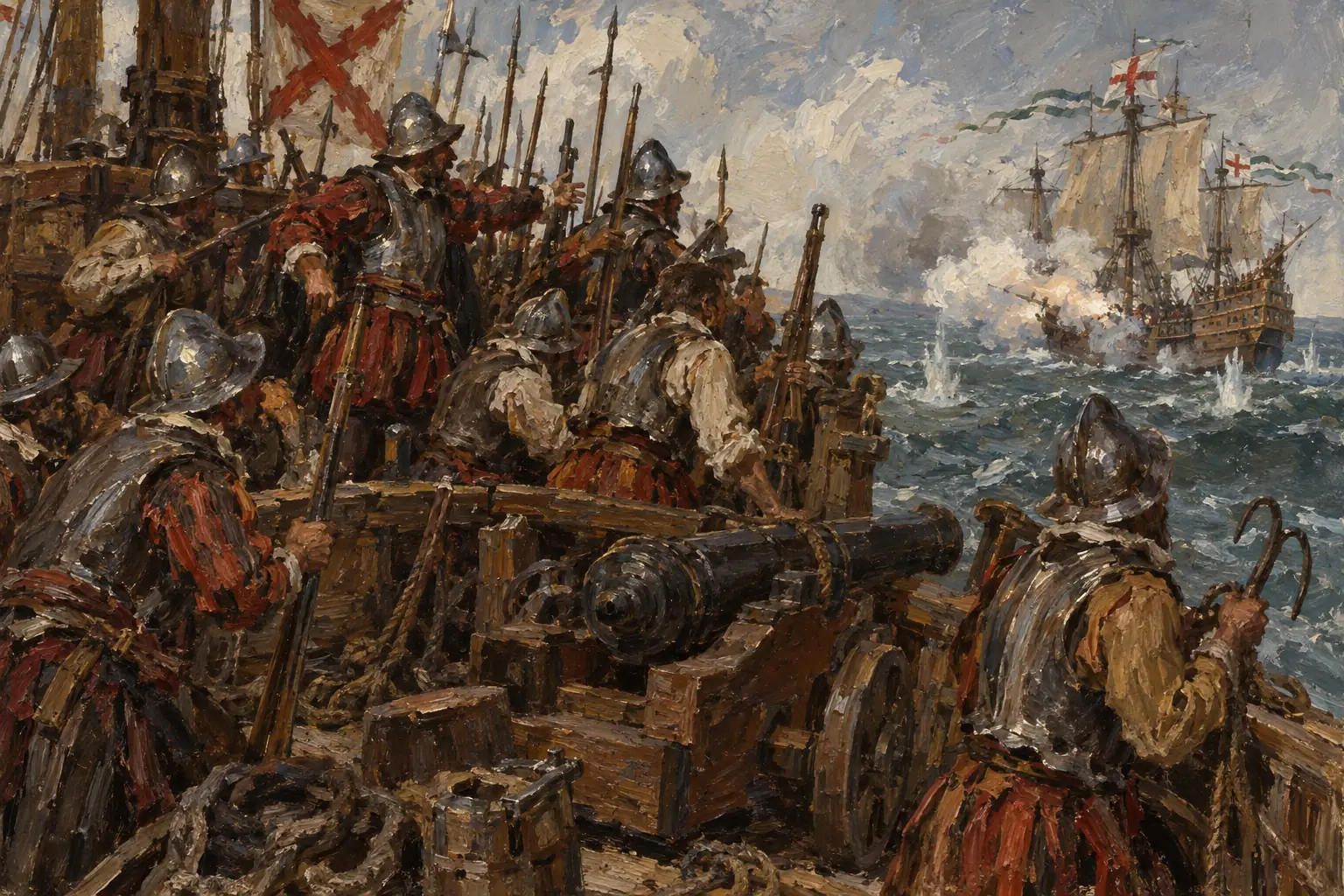
The Spanish fleet possessed certain robust features suited to their traditional fighting style, but these were undermined by critical flaws in coordination, logistics, and adaptability. This contrast highlighted why the Armada struggled against English tactics.
Strengths of the Spanish navy
- Robust hulls - Spanish ships were built with thick, durable timbers, providing strong defence against ramming or boarding actions and enabling them to withstand rough seas.
- Boarding doctrine - The preferred tactic involved closing with enemy vessels to grapple and board, using soldiers for hand-to-hand combat, which was effective in Mediterranean-style warfare.
Weaknesses of the Spanish navy
- Inadequate artillery coordination - Guns were often poorly positioned and crews lacked training for sustained bombardment, limiting effectiveness at range.
- Supply problems - The fleet suffered from shortages of food, water, and ammunition, exacerbated by long voyages and reliance on distant bases.
- Poor communications - Command signals were inefficient, with language barriers among multinational crews and inadequate methods for relaying orders during chaotic engagements.
Leadership and command structures on both sides
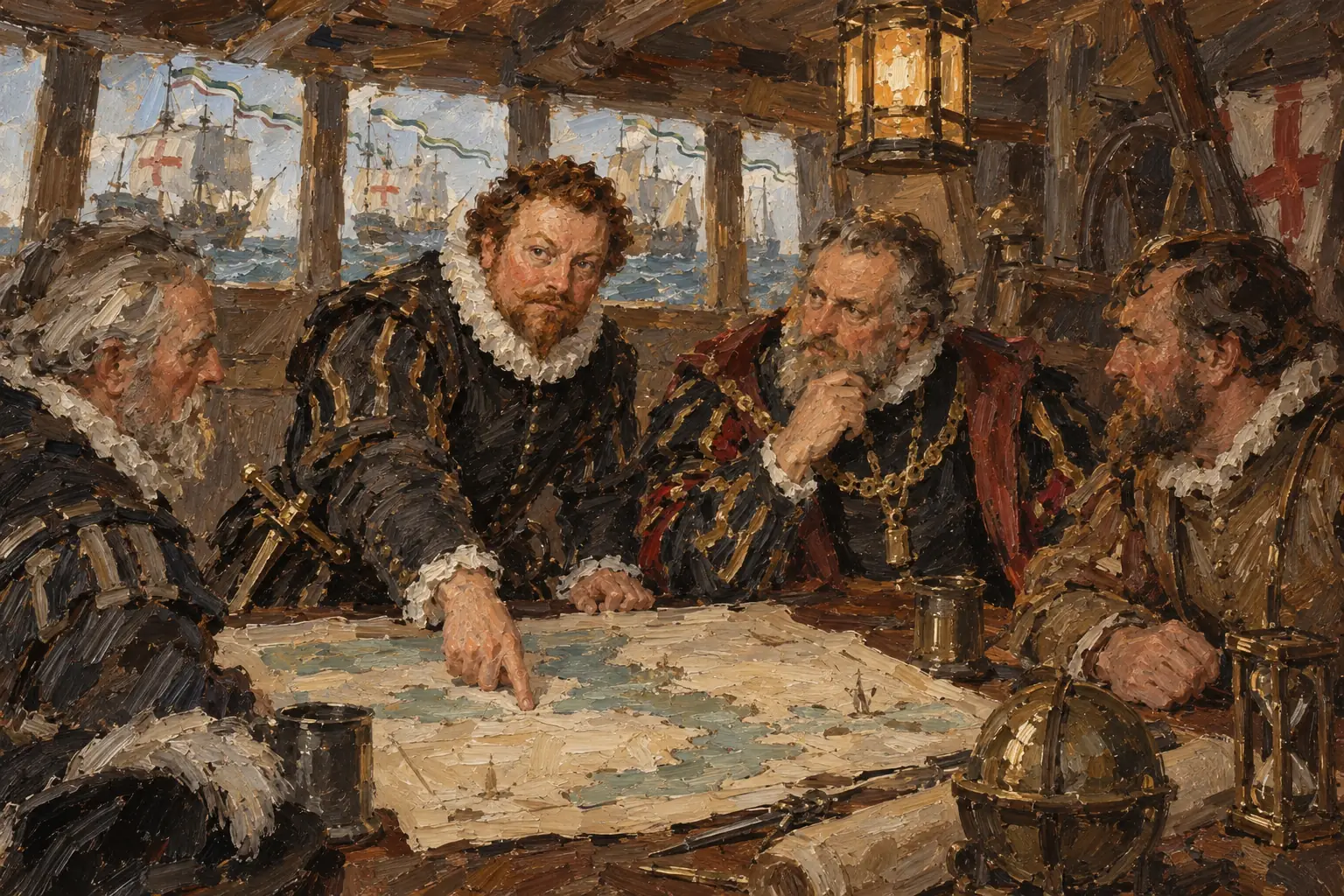
Effective leadership played a crucial role in naval outcomes, with English commanders demonstrating adaptability and initiative, while Spanish structures were more hierarchical but hampered by inexperience. These differences influenced decision-making and fleet cohesion.
English leadership and command
- Lord Howard of Effingham - As Lord High Admiral, he led the overall strategy, coordinating diverse squadrons and maintaining discipline. His cautious yet flexible approach ensured unified responses to threats.
- Sir Francis Drake - Serving as vice-admiral, Drake brought aggressive tactics, such as the fireship attack at Calais, drawing on his experience from raids on Spanish ports.
- Command structure - Decentralised with experienced captains given autonomy, fostering quick decisions and innovation in battle.
Spanish leadership and command
- Duke of Medina Sidonia - Appointed fleet commander despite his noble status and lack of sea experience, he focused on maintaining formation but struggled with tactical adjustments.
- Command structure - Highly centralised and rigid, with orders flowing from the top down, which limited responsiveness to changing conditions and contributed to disarray during pursuits.