3.5 - Malcolm X, Black Power & Civil Rights Acts
Key facts and dates
The mid-to-late 1960s marked a period of evolving strategies in the American civil rights movement, with contrasting approaches from figures like Malcolm X and the rise of Black Power amid legislative reforms. These developments reflected growing frustration with slow progress and highlighted the push for both legal and cultural change.
Timeline of key events
- 1954 – Brown v. Board of Education decision declares segregated schools unconstitutional, laying groundwork for civil rights legislation.
- 1963 – Malcolm X delivers his "Message to the Grassroots" speech, emphasising self-determination and criticising non-violent integration.
- 1964 – Civil Rights Act prohibits discrimination in public places and employment, advancing desegregation.
- 1965 – Assassination of Malcolm X shifts focus to emerging Black Power leaders.
- 1966 – Stokely Carmichael popularises "Black Power" slogan during the Meredith March.
- 1968 – Fair Housing Act bans discrimination in housing sales and rentals, passed amid urban riots.
Malcolm X compared to Martin Luther King Jr.
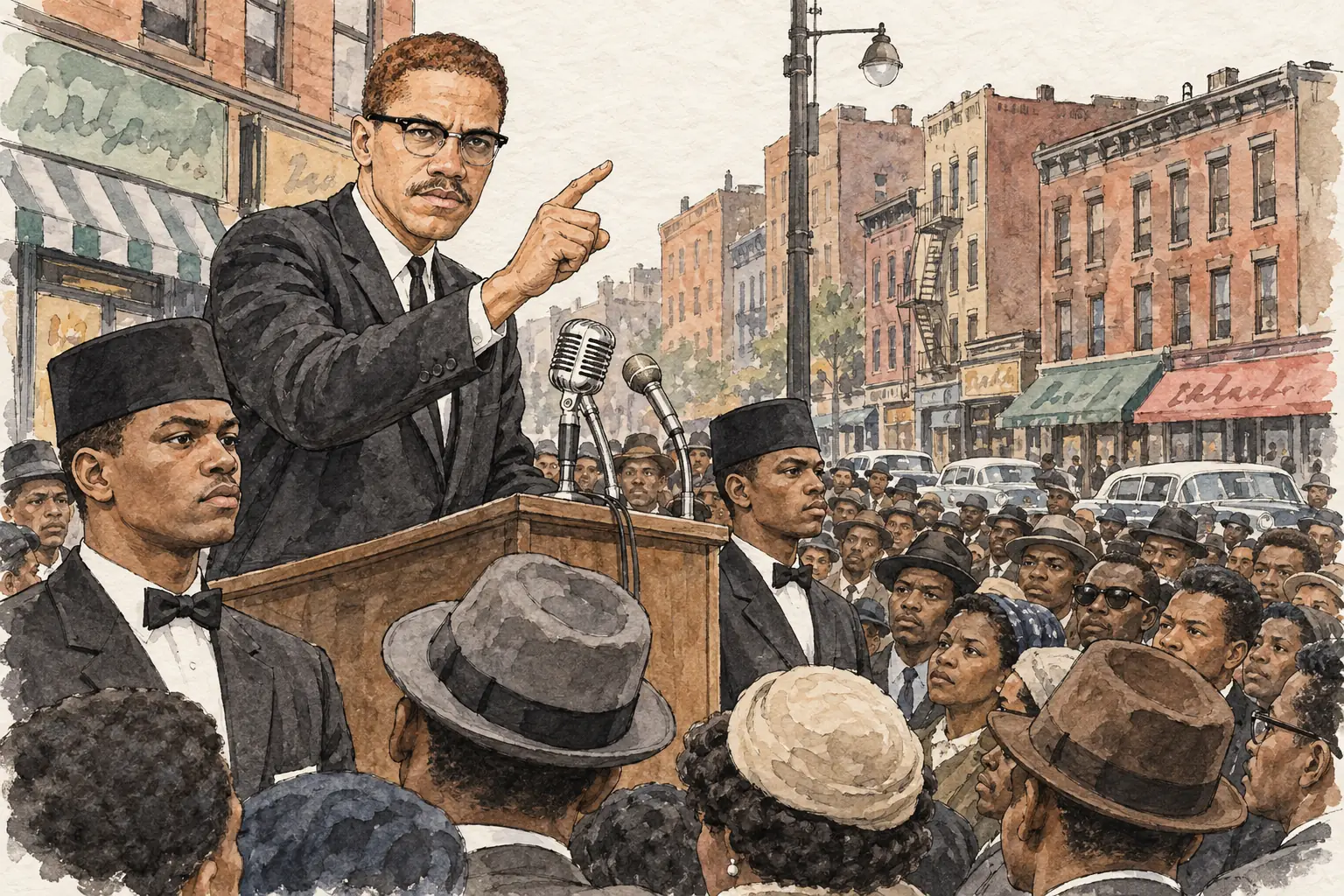
Malcolm X and Martin Luther King Jr. represented contrasting philosophies within the civil rights movement, reflecting different visions for achieving racial equality. Malcolm X advocated for black nationalism and separation, while King promoted integration through peaceful means.
Key differences in their approaches
- Self-determination and community control - Malcolm X emphasised black self-reliance, urging African Americans to build independent economic and political institutions, control their own communities, and defend themselves against oppression, often rejecting white alliances.
- Critique of non-violence - He viewed King's non-violent strategy as submissive, famously calling it ineffective against systemic racism and arguing that self-defence was a human right, including the use of force if necessary.
- Integration vs. separation - King focused on non-violent protest and integration into American society, believing in moral persuasion and interracial cooperation to dismantle segregation, whereas Malcolm X promoted black pride and separation from white-dominated structures until equality was achieved.
- Religious influences - Malcolm X's ideas were shaped by his affiliation with the Nation of Islam, promoting black supremacy and cultural identity, in contrast to King's Christian-based philosophy of love and passive resistance.
Appeal, limits and diversity of black power
Image 1 of 2: From 1969 the Black Panther Party ran free breakfasts for children in poor neighbourhoods
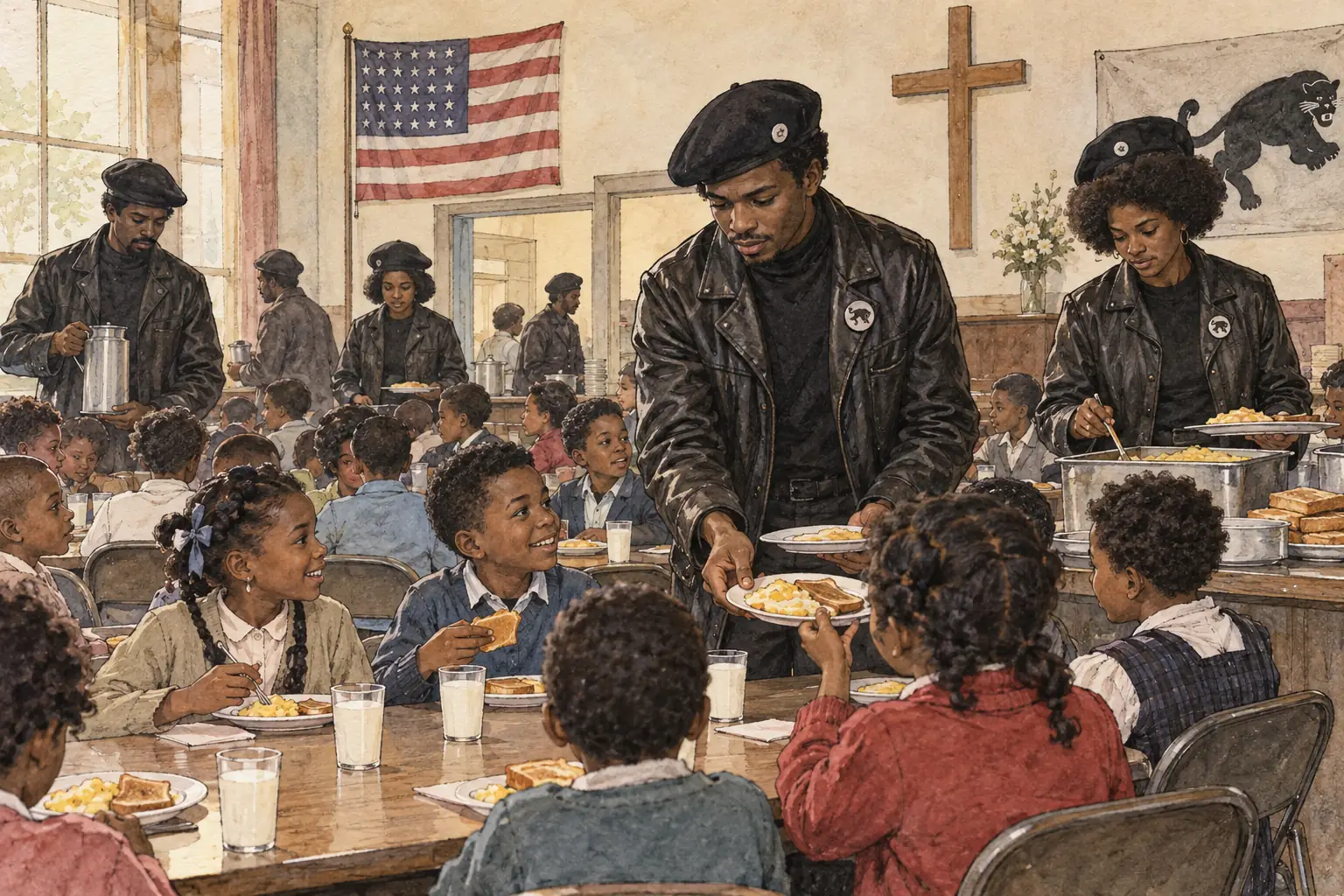
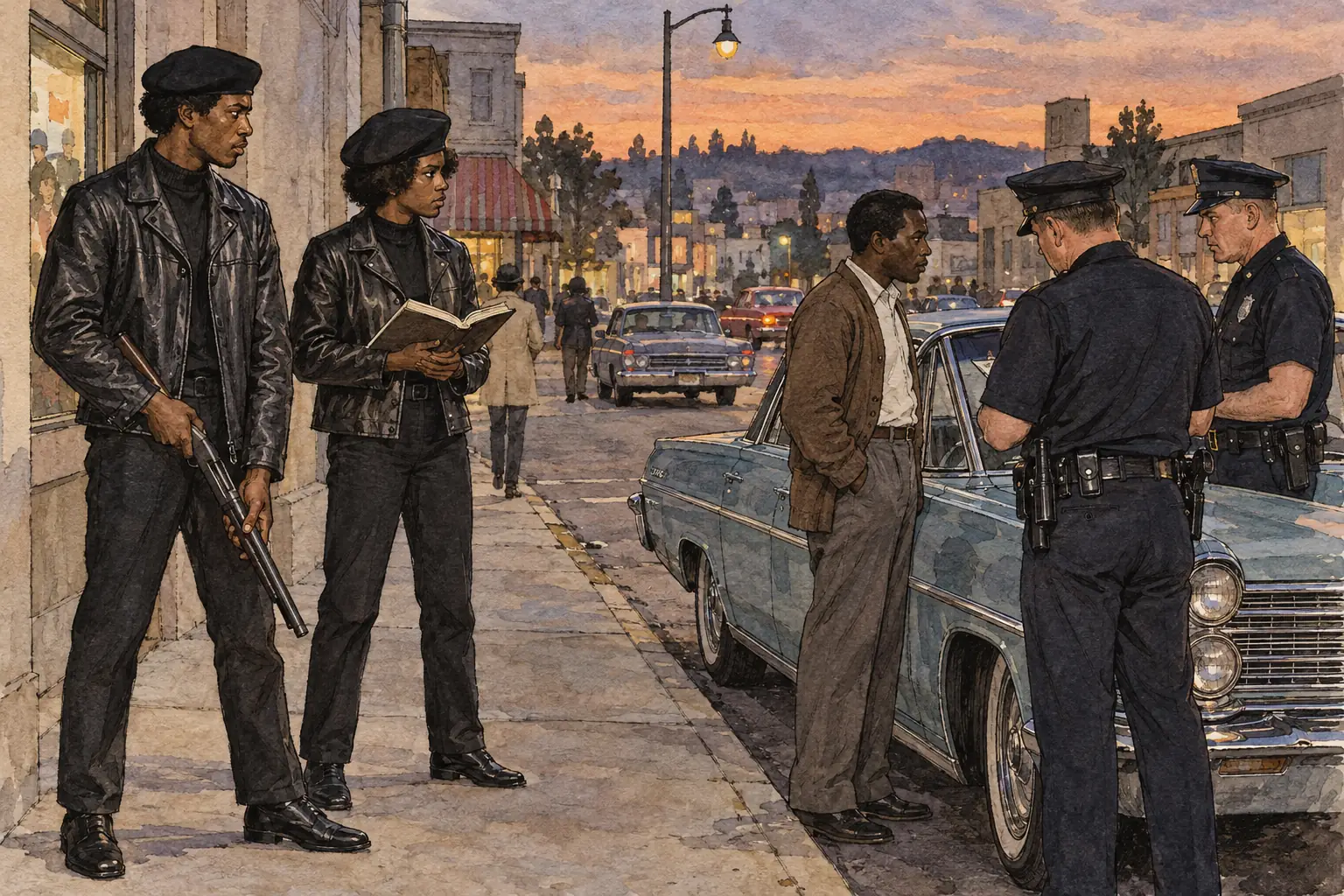
Black Power emerged in the mid-1960s as a militant alternative to traditional civil rights tactics, appealing to those disillusioned with slow progress. It encompassed a range of ideologies, from cultural nationalism to revolutionary action, but faced significant limitations in achieving widespread change.
Reasons for the appeal of Black Power
- Response to frustration - Amid ongoing violence and poverty in urban areas, Black Power resonated with young African Americans who saw non-violence as inadequate, offering empowerment through slogans like "Black is beautiful" and calls for self-defence.
- Focus on identity and economics - It promoted cultural pride, economic independence, and community programmes, such as the Black Panther Party's free breakfast initiatives, addressing immediate needs ignored by mainstream politics.
Limitations of Black Power
- Internal divisions - The movement lacked unity, with groups like the Black Panthers advocating armed revolution and self-defence, while others emphasised cultural revival, leading to fragmentation and infighting.
- Repression and backlash - Government surveillance, such as the FBI's COINTELPRO programme, disrupted organisations, and media portrayals as violent alienated moderate supporters, reducing broader appeal.
- Limited policy impact - While inspiring grassroots activism, Black Power struggled to translate into national legislation, often overshadowed by legal-focused efforts.
Diversity within the Black Power movement
- Ideological range - It included revolutionary socialism from figures like Huey Newton, cultural nationalism from Ron Karenga's US Organization, and separatist views from the Nation of Islam.
- Organisational variety - Groups varied from the community-oriented Black Panthers to artistic expressions in the Black Arts Movement, reflecting a broad spectrum of tactics and goals.
Impacts of the Civil Rights Act of 1964
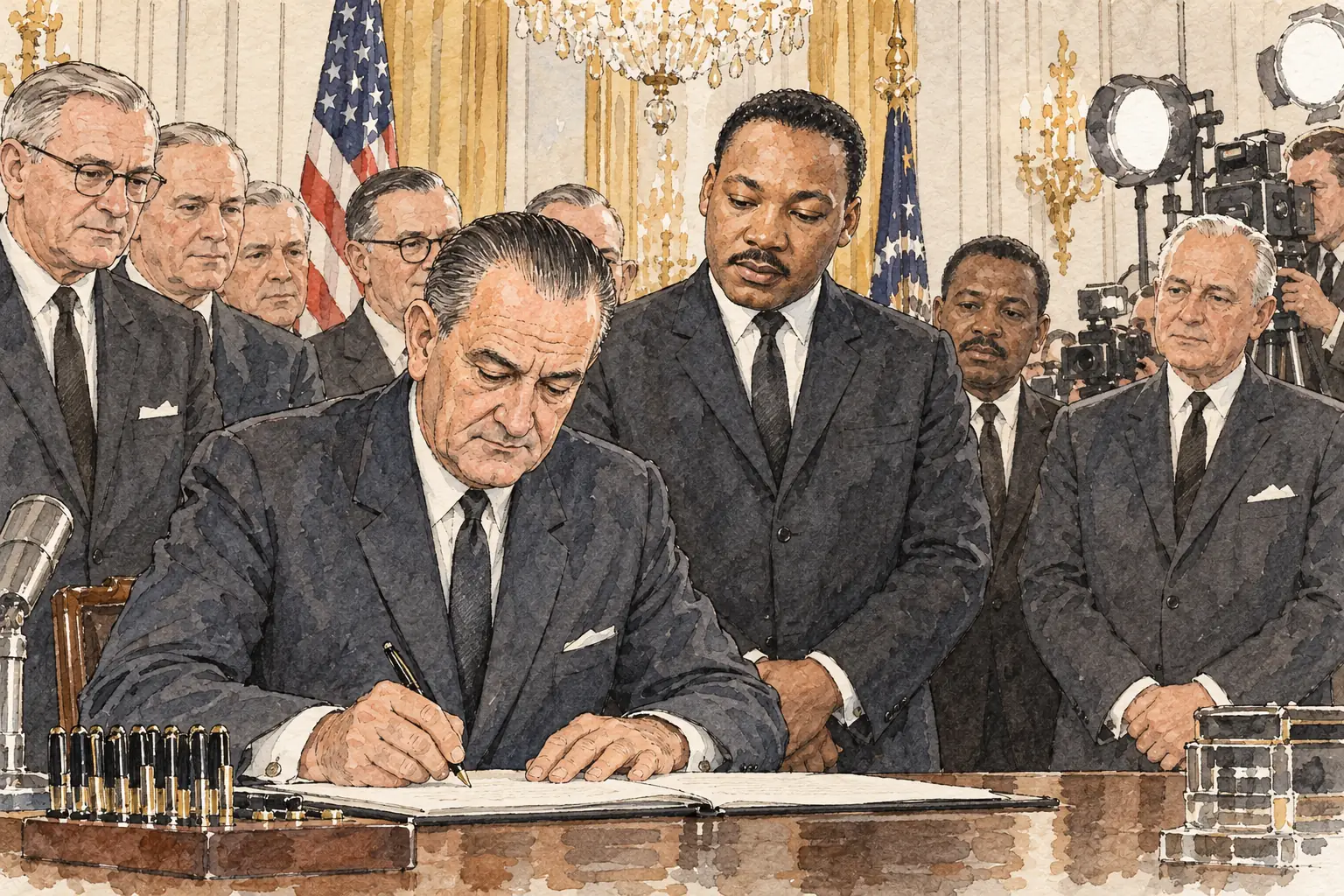
The Civil Rights Act of 1964 was a landmark law that addressed widespread discrimination, building on earlier court rulings and protests. It aimed to enforce equality in public and professional spheres but faced challenges in implementation.
What the act changed
- Desegregation of public facilities - It banned discrimination in places like restaurants, hotels, and theatres based on race, colour, religion, or national origin, promoting access to shared spaces.
- Employment equality - The act prohibited discrimination in hiring, firing, and promotions, establishing the Equal Employment Opportunity Commission to investigate complaints.
- School integration - It empowered the federal government to withhold funding from segregated schools, accelerating desegregation efforts.
What the act did not change and enforcement variations
- Voting rights gaps - It did not fully address barriers to voting, which were later tackled in the 1965 Voting Rights Act.
- Housing discrimination - The act omitted protections against bias in housing, leaving residential segregation intact.
- Enforcement issues - Implementation varied by region; Southern states often resisted through legal loopholes, while federal oversight was inconsistent due to limited resources and political opposition.
Impacts of the Fair Housing Act of 1968
Image 1 of 2: In 1966 King led marches against housing discrimination through white neighbourhoods of Chicago, where hostile crowds attacked the marchers
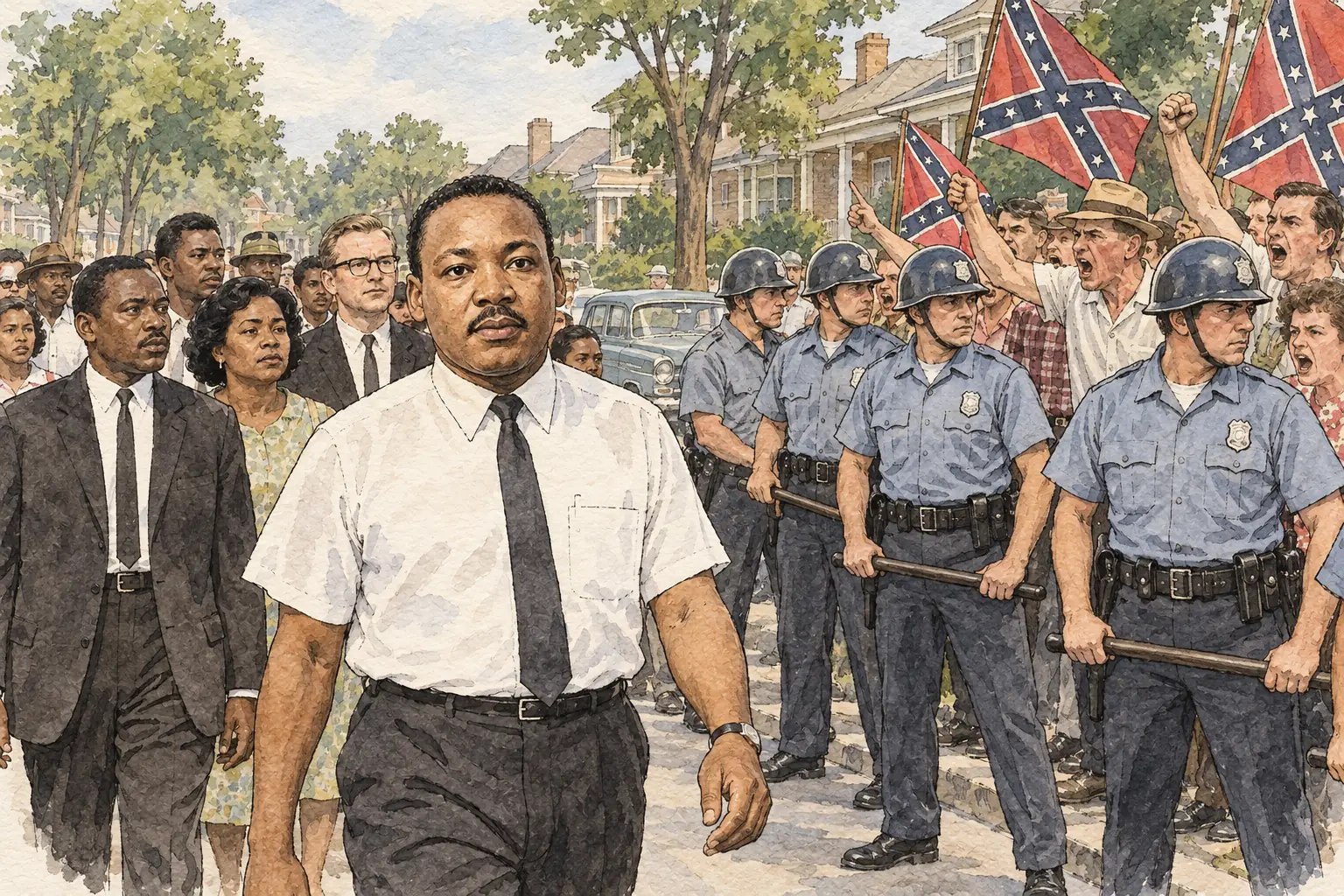
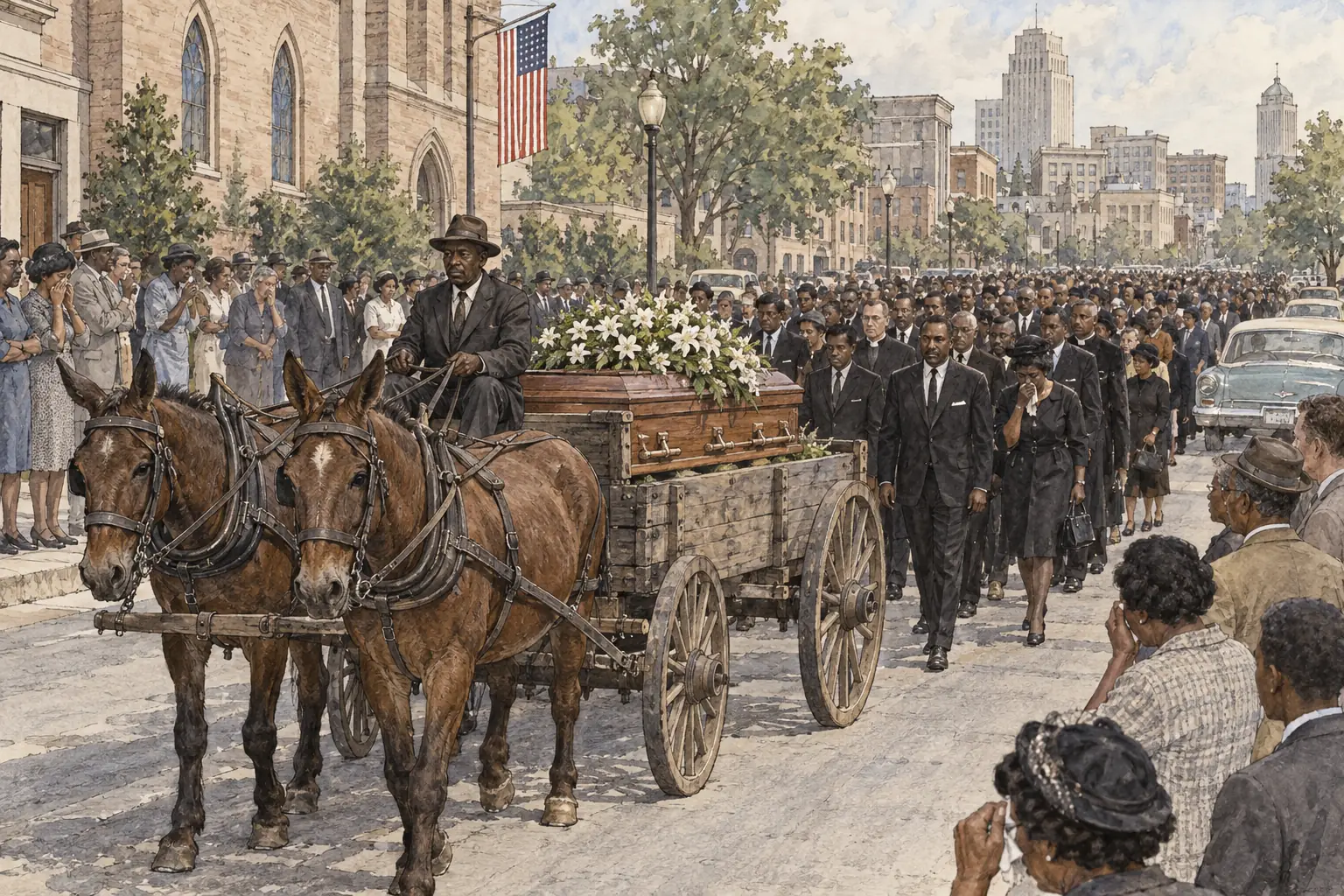
Passed in the wake of Martin Luther King Jr.'s assassination and urban unrest, the Fair Housing Act of 1968 sought to eliminate discrimination in housing. It represented a step towards residential equality but encountered significant hurdles.
What the act changed
- Ban on housing discrimination - It prohibited refusing to sell or rent properties based on race, colour, religion, or national origin, extending to advertising and financing.
- Federal enforcement mechanisms - The Department of Housing and Urban Development was tasked with investigating violations, with powers to seek court injunctions.
- Broader protections - Later amendments added safeguards against discrimination based on sex, disability, and family status.
What the act did not change and enforcement variations
- Existing segregation - It did not require active integration of already segregated neighbourhoods, allowing patterns of racial division to persist.
- Economic barriers - The act overlooked affordability issues, leaving low-income African Americans trapped in under-resourced areas.
- Enforcement challenges - Weak penalties and reliance on individual complaints limited effectiveness; local resistance and inadequate funding meant uneven application, particularly in suburban areas.
Extent of change by the late 1960s
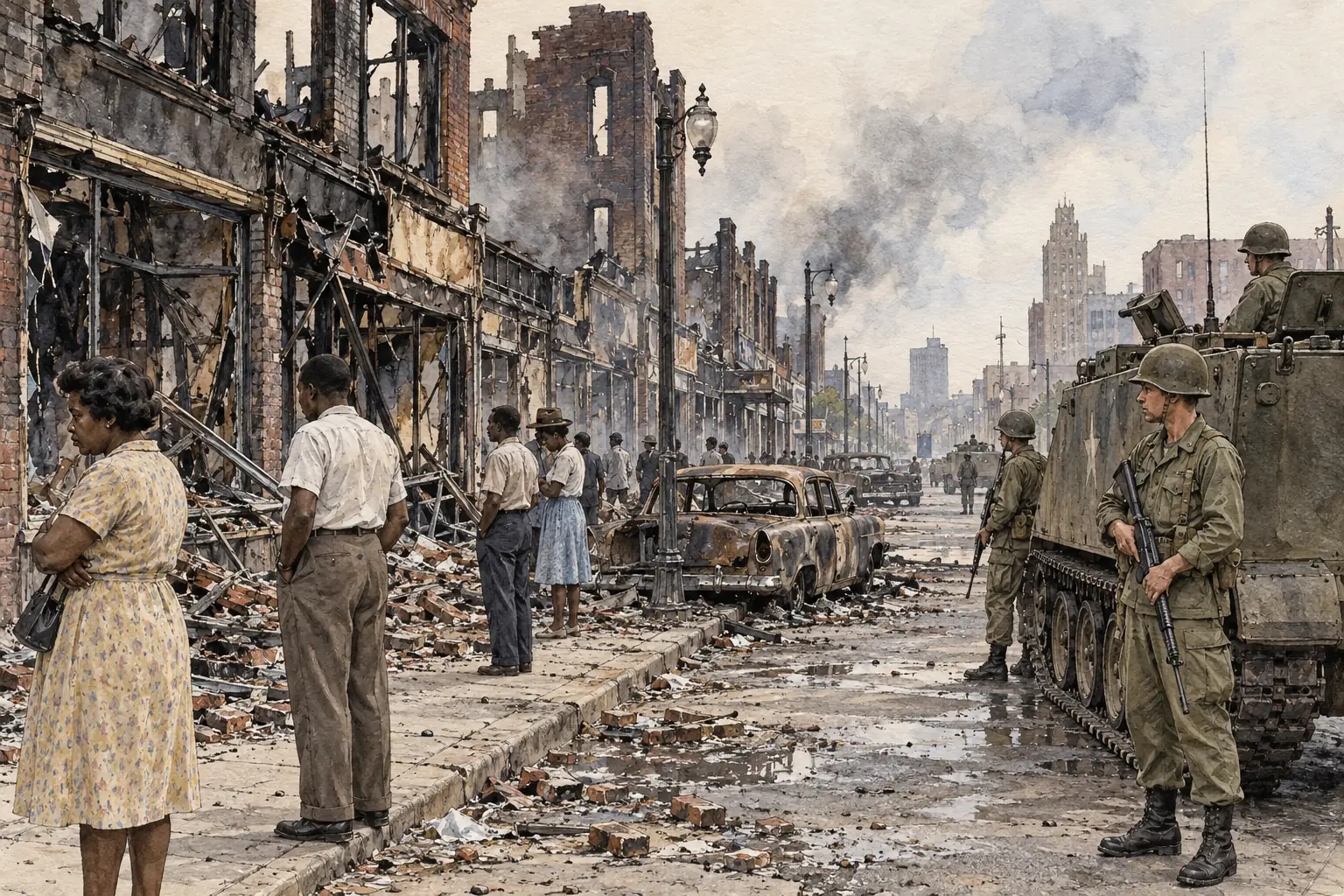
By the late 1960s, the civil rights movement had achieved notable legal victories, but systemic inequalities remained entrenched. These developments highlighted both progress and the need for ongoing reform.
Achievements in legal and social spheres
- Legislative milestones - Acts like those of 1964 and 1968 dismantled formal barriers, increasing access to public services, jobs, and housing for African Americans.
- Cultural shifts - Movements like Black Power fostered greater racial pride and community activism, influencing education and media representations.
Persistent challenges and limited change
- Economic disparities - Poverty and unemployment in black communities continued, unaffected by laws focused on discrimination rather than wealth redistribution.
- Racial violence and unrest - Urban riots in cities like Detroit and Newark revealed ongoing frustrations, with enforcement gaps allowing de facto segregation to endure.
- Extent of transformation - While formal equality advanced, deeper structural changes were minimal; by 1969, many African Americans still faced barriers, indicating that true equity required more than legislation.