3.6 - The Great Society: Poverty, Education & Health
Key facts and dates
The Great Society was a series of domestic reforms initiated by Presidents Kennedy and Johnson in the 1960s, aimed at tackling poverty, improving education, and expanding healthcare access. These measures built on earlier New Deal ideas but faced challenges from rising costs and foreign policy demands.
Timeline of key events
- 1961 – Kennedy establishes the Peace Corps and proposes early anti-poverty measures.
- 1964 – Johnson declares a "War on Poverty" and passes the Economic Opportunity Act, creating programmes like Job Corps.
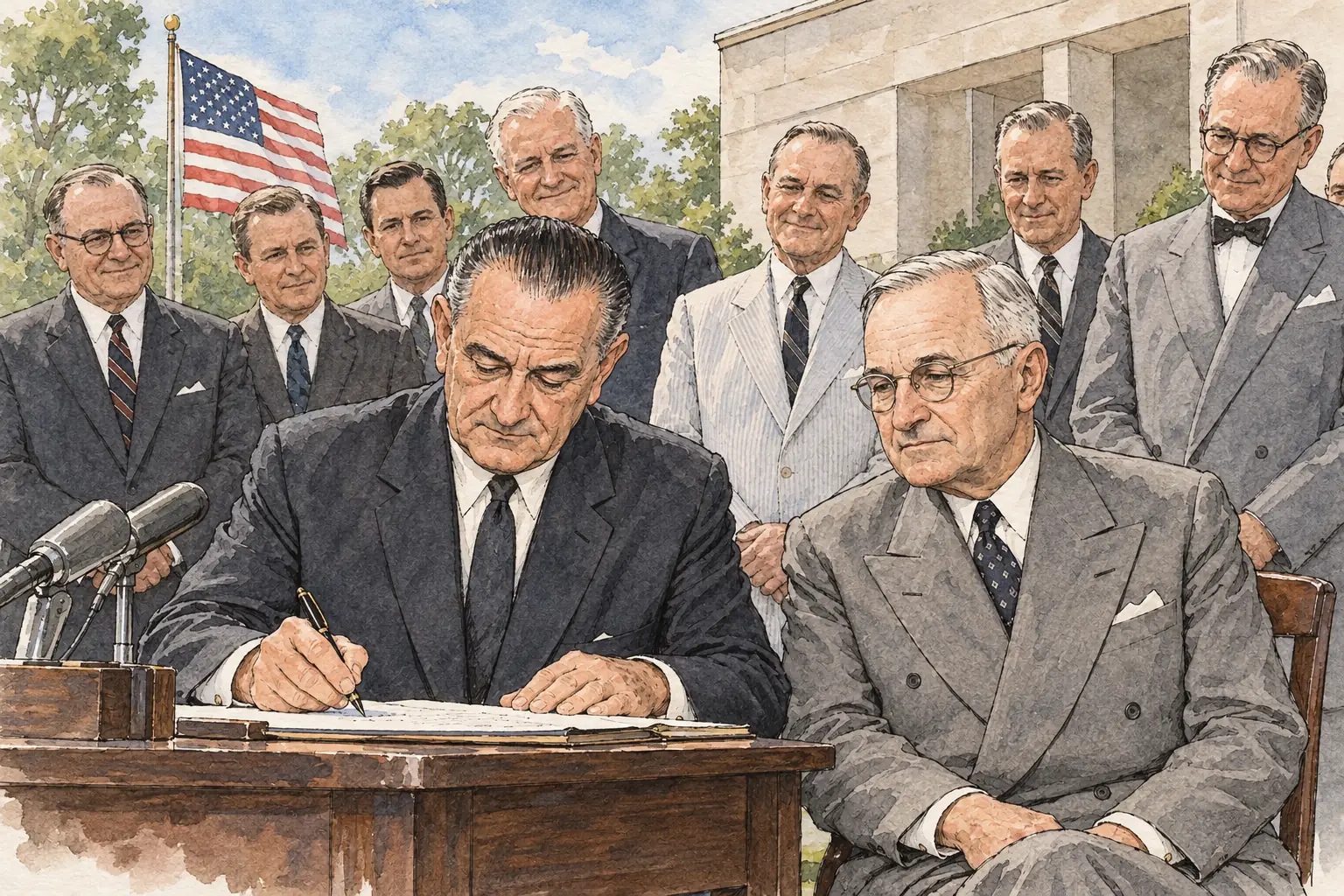
- 1965 – Elementary and Secondary Education Act provides federal funding for schools; Medicare and Medicaid are established for elderly and poor healthcare.
- 1966 – Model Cities Programme launched to address urban poverty and housing.
- 1968 – Escalating Vietnam War costs begin diverting funds from Great Society initiatives.
Aims and key legislation of the Great Society
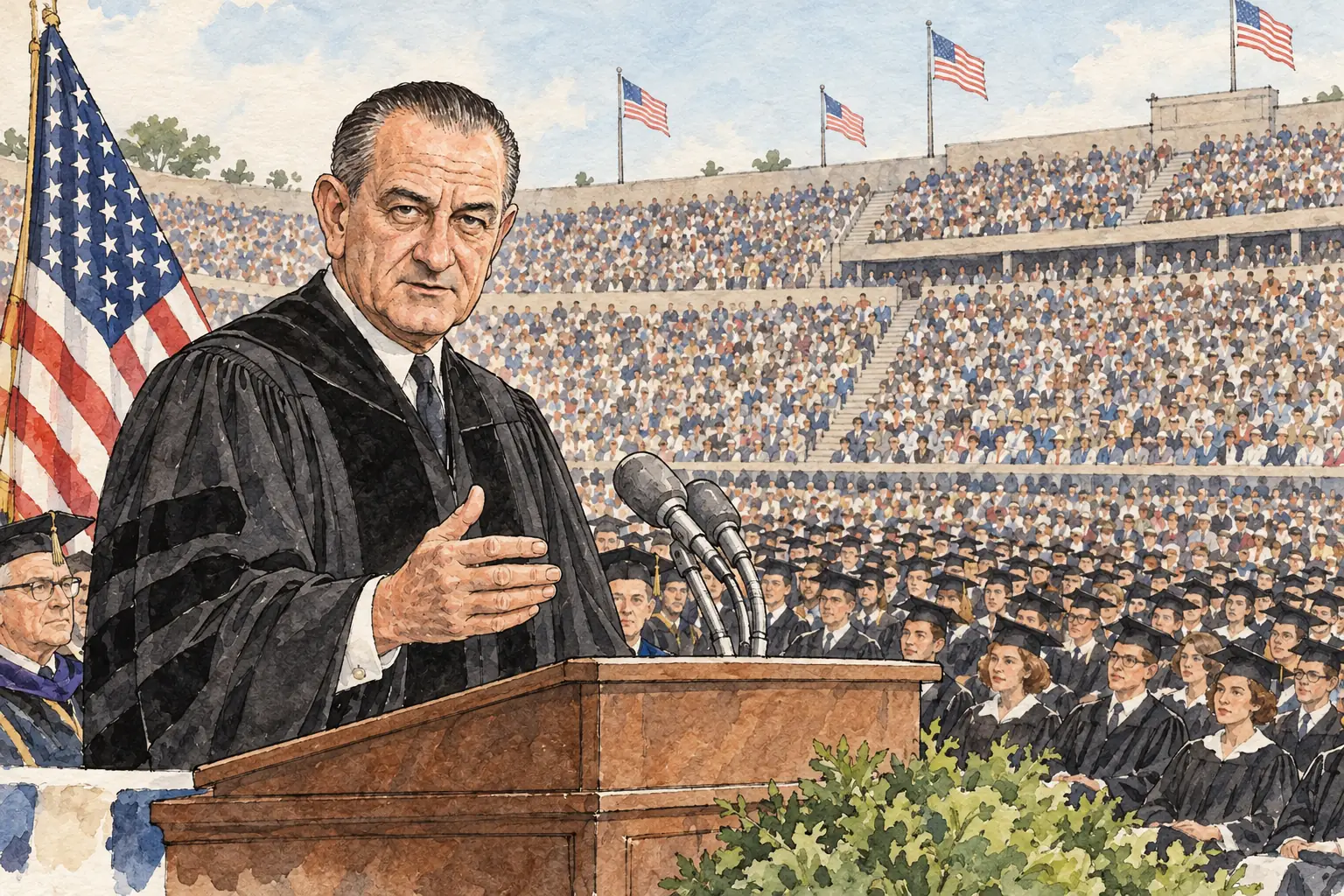
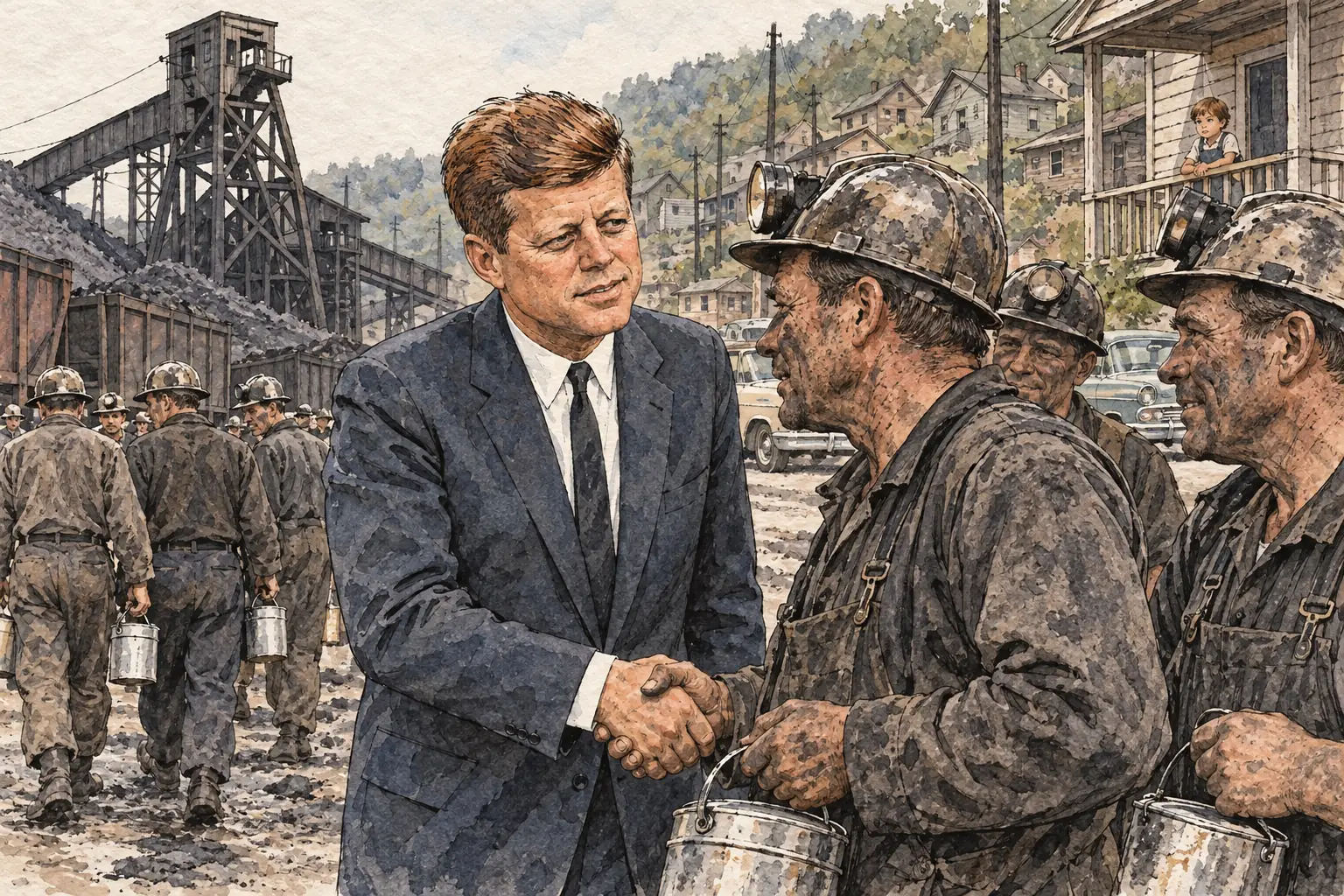
The Great Society represented an ambitious set of domestic policies pursued by Presidents John F. Kennedy and Lyndon B. Johnson in the 1960s. Building on Kennedy's initial ideas, Johnson expanded them into a comprehensive agenda to eliminate poverty and inequality, inspired by the New Deal but adapted to modern challenges like urban decay and racial disparities.
Primary aims of the Great Society
- Eradicating poverty - Focused on lifting millions out of economic hardship through job creation, training, and welfare support.
- Promoting equal opportunity - Aimed to provide access to education and healthcare regardless of income or background.
- Addressing social issues - Targeted urban renewal, civil rights, and environmental protection to create a more just society.
Major legislation introduced
| Legislation | Description |
|---|---|
| Economic Opportunity Act (1964) | Established the Office of Economic Opportunity to coordinate anti-poverty efforts. |
| Civil Rights Act (1964) | Banned discrimination, supporting broader social reforms. |
| Social Security Amendments (1965) | Created Medicare for the elderly and Medicaid for low-income groups. |
| Elementary and Secondary Education Act (1965) | Allocated federal funds to improve schooling in disadvantaged areas. |
| Housing and Urban Development Act (1965) | Funded urban renewal and affordable housing projects. |
Anti-poverty programmes and initiatives
Image 1 of 2: In April 1964 Johnson visited Inez, Kentucky, to draw attention to rural poverty in Appalachia as he launched his War on Poverty
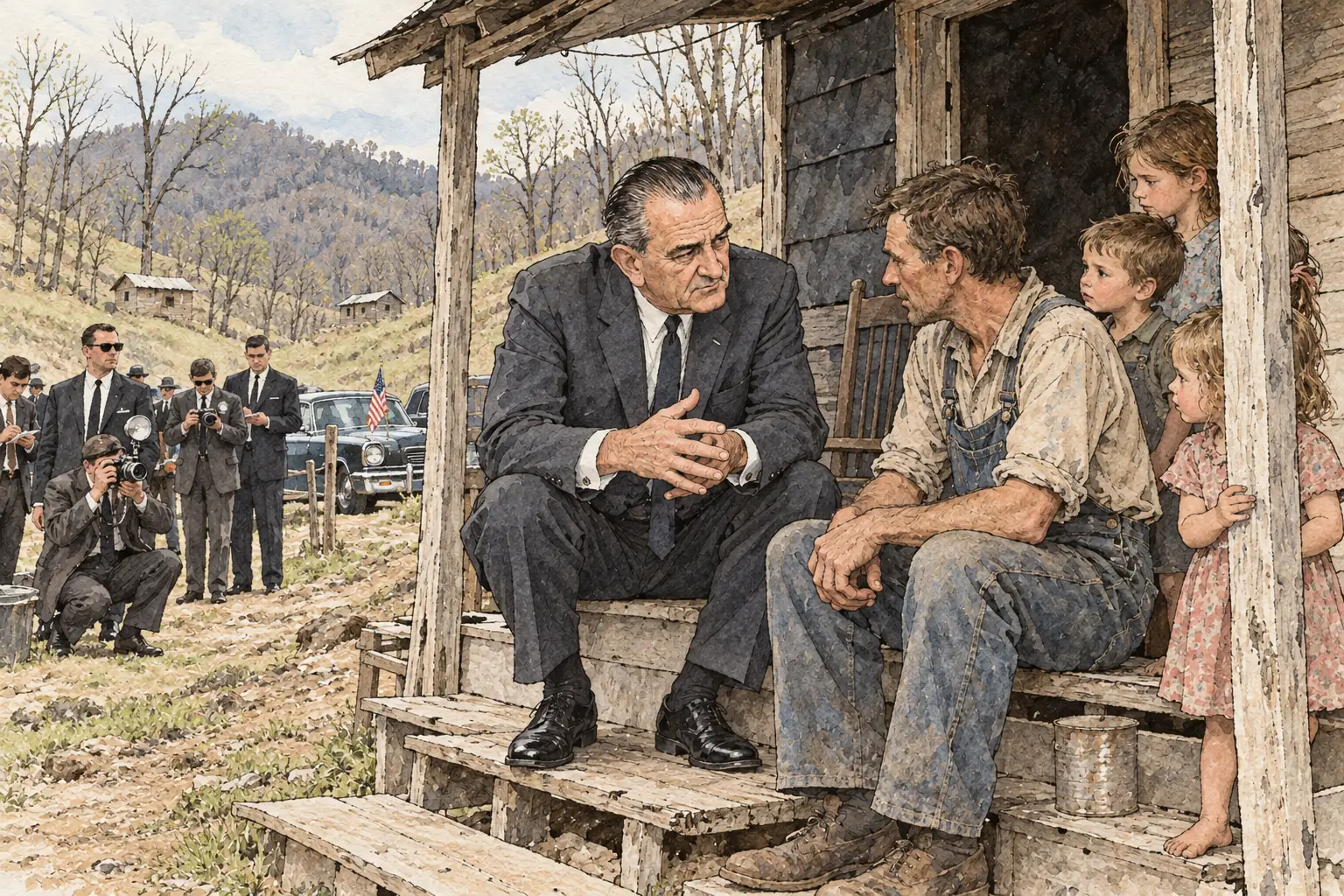
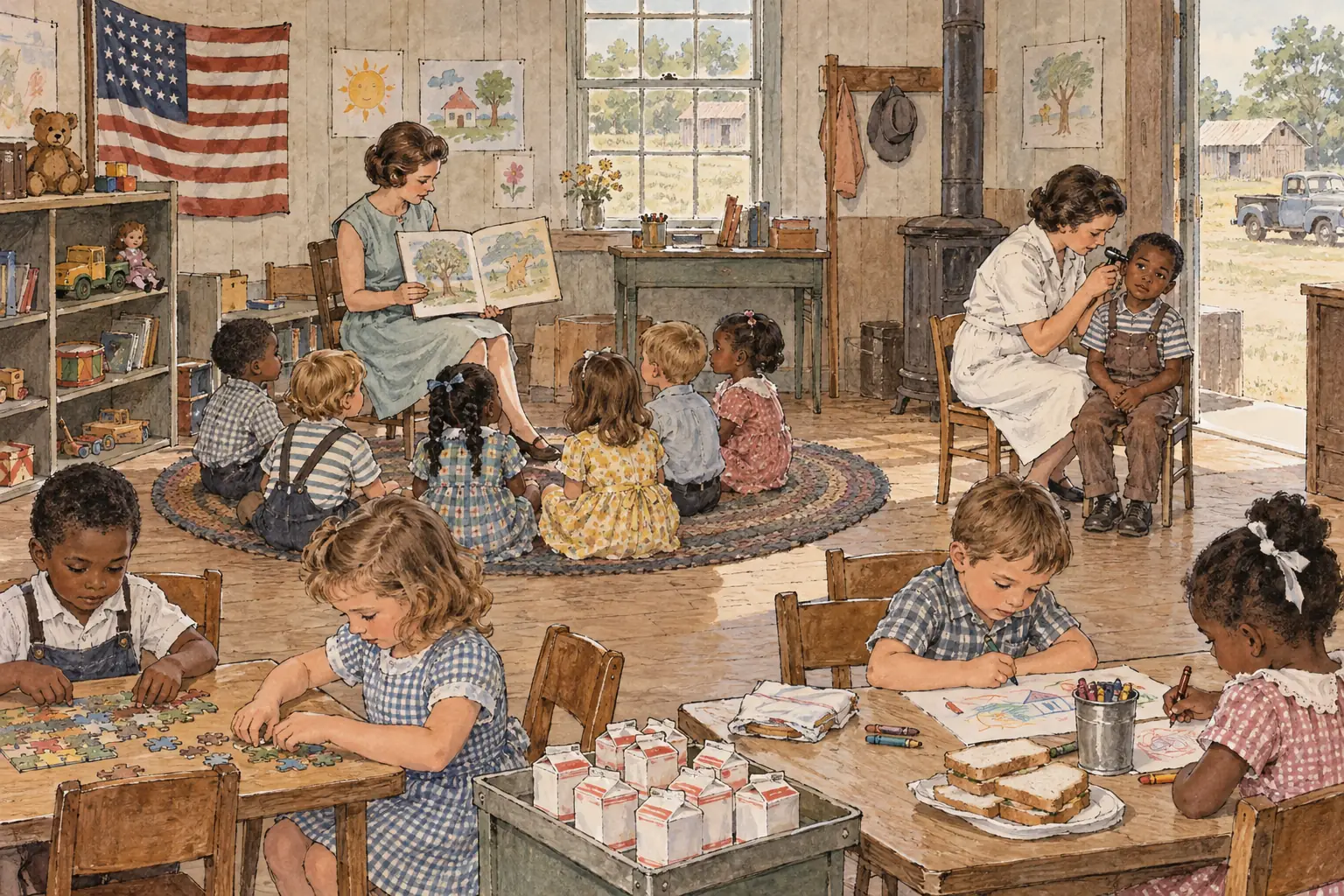
A core component of the Great Society was the "War on Poverty," declared by Johnson in 1964, which introduced targeted programmes to assist the unemployed, rural poor, and urban communities. These initiatives sought to provide immediate relief while building long-term skills and opportunities.
Key anti-poverty measures
| Programme | Description |
|---|---|
| Job Corps | Offered vocational training and education for young people from low-income backgrounds to prepare them for employment. |
| Community Action Programmes | Empowered local groups to design and run their own anti-poverty projects, fostering grassroots involvement. |
| Food Stamp Programme | Expanded access to nutritional support for families in need, helping to combat hunger. |
| Volunteers in Service to America (VISTA) | Recruited volunteers to work in impoverished areas, similar to a domestic Peace Corps. |
| Head Start | Provided early childhood education and health services for preschool children from disadvantaged families. |
Reforms in education funding and health insurance
Image 1 of 2: Johnson signed the Elementary and Secondary Education Act on 11 April 1965 outside the small Texas school he had first attended, with his first teacher beside him
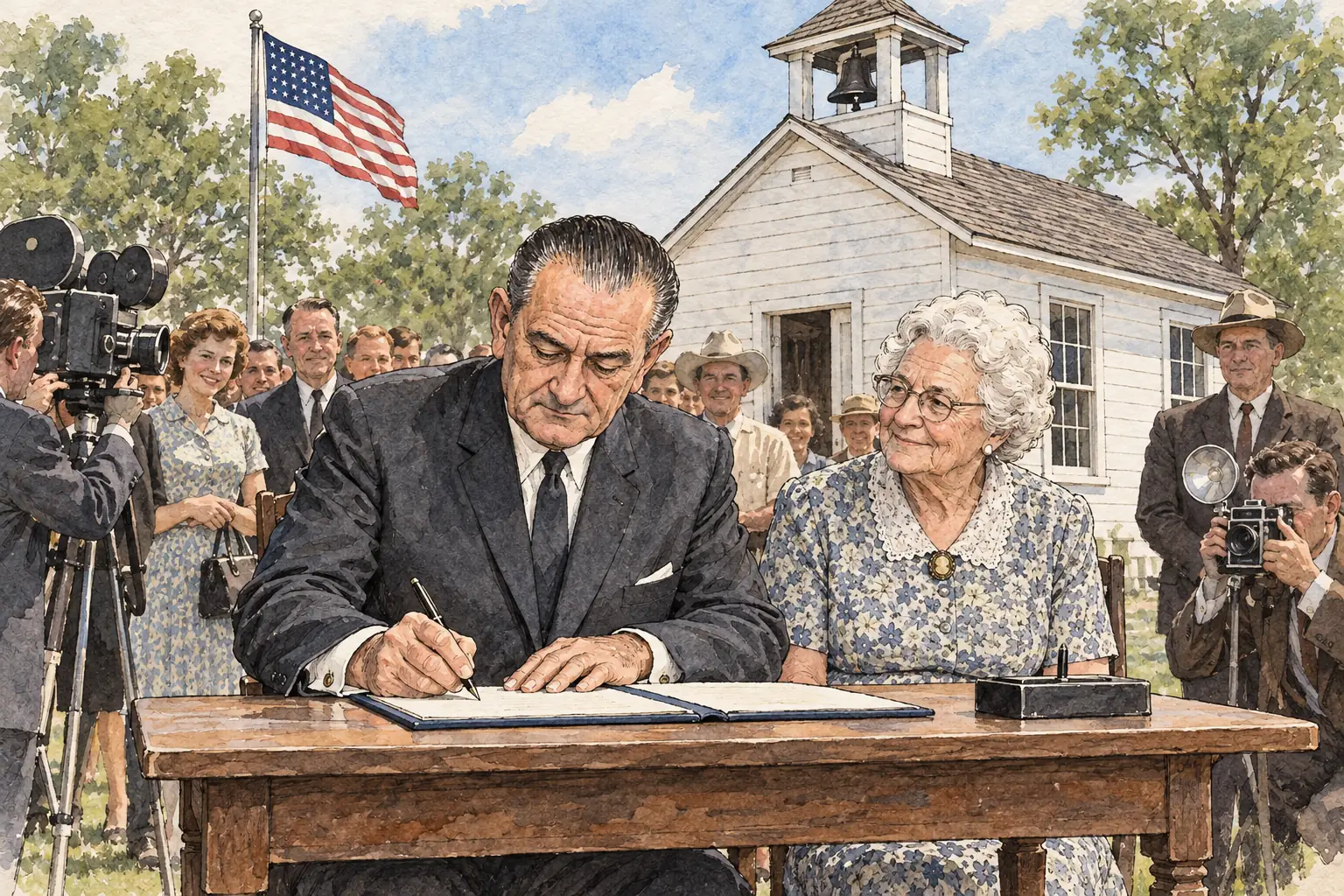
The Great Society placed significant emphasis on education and health as foundations for social mobility. Reforms aimed to bridge gaps in access, particularly for underprivileged groups, through increased federal involvement and funding.
Education funding reforms
- Federal aid to schools - The Elementary and Secondary Education Act directed resources to low-income districts, funding textbooks, libraries, and special programmes.
- Higher education support - Initiatives like the Higher Education Act (1965) offered scholarships and loans to make university accessible to more students.
- Focus on equality - Programmes targeted rural and inner-city schools to reduce disparities in educational quality.
Health insurance for the elderly and poor
- Medicare - Provided hospital and medical insurance for Americans aged 65 and over, funded through payroll taxes.
- Medicaid - Offered healthcare coverage for low-income individuals and families, administered by states with federal matching funds.
- Broader health initiatives - Included funding for community health centres to serve underserved areas, improving preventive care and access.
Achievements and criticisms of the Great Society
The Great Society achieved notable successes in reducing poverty and expanding access to services, but it also faced substantial criticisms related to implementation and external pressures. Evaluating its impact reveals a mix of progressive gains and practical limitations.
Achievements of the Great Society
- Poverty reduction - Lifted millions out of poverty, with rates dropping from 19% in 1964 to 12% by 1969 through targeted programmes.
- Expanded access - Medicare and Medicaid covered over 20 million people initially, while education reforms benefited millions of students in disadvantaged areas.
- Social progress - Contributed to civil rights advancements and urban improvements, laying groundwork for future welfare policies.
Criticisms and limitations
- High costs - Massive federal spending led to budget strains, with critics arguing it fuelled inflation and increased taxes.
- Bureaucratic issues - Complex administration created inefficiencies, with overlapping programmes and red tape hindering effectiveness.
- Impact of the Vietnam War - Escalating war costs from 1965 diverted funding and political focus, stalling many initiatives by the late 1960s.
- Incomplete success - Some programmes failed to address root causes of inequality, leading to accusations of dependency rather than empowerment.
Social rights and economic opportunity
The Great Society formed part of a longer struggle for social rights and economic opportunity in the United States, echoing earlier reforms while influencing future policies. It addressed systemic inequalities rooted in the post-Depression era and civil rights movements.
Historical context and legacy
- Connection to prior reforms - Built on Franklin D. Roosevelt's New Deal, expanding federal roles in welfare and education amid the civil rights era's push for equality.
- Role in social rights - Aligned with movements for African American and minority rights, using legislation to combat discrimination and promote inclusion.
- Influence on economic opportunity - Aimed to create a safety net that enabled upward mobility, though debates persist on its effectiveness in reducing wealth gaps.
- Long-term impact - Shaped modern American social policy, with programmes like Medicare enduring, while highlighting tensions between domestic priorities and foreign commitments.