3.4 - New Model Unions & New Unionism: 1888–89 Strikes
Key facts and dates
The late 19th century saw significant shifts in British trade unionism, from exclusive organisations for skilled workers to more inclusive movements that empowered the unskilled. These changes were highlighted by key strikes that demonstrated new tactics and broadened union influence. The timeline below captures the essential events and developments.
Timeline of key events
- 1850s–1860s – Formation of New Model Unions, focusing on skilled workers with high fees and apprenticeship controls.
- 1870s–1880s – Economic downturns and rising unemployment spark interest in organising unskilled labourers.
- 1888 – Matchgirls' Strike at Bryant & May factory in London, leading to improved working conditions.
- 1889 – London Dock Strike, involving 100,000 workers, resulting in better pay and union recognition.
- 1890s – Growth of New Unionism expands union membership and political influence, paving the way for the Labour Party.
Characteristics of New Model Unions
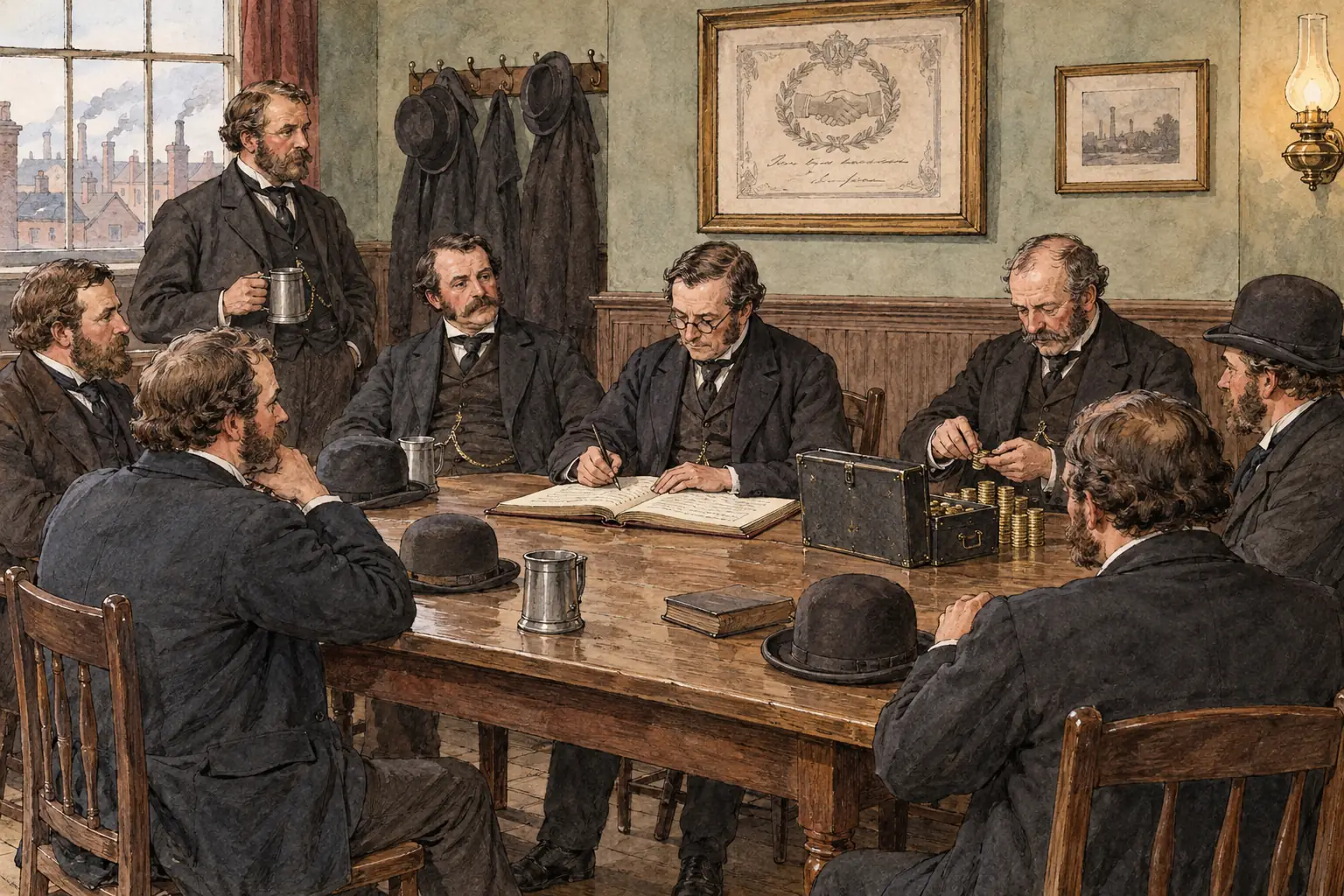
New Model Unions emerged in the mid-19th century as organised groups representing skilled tradespeople, such as engineers and carpenters. These unions prioritised stability and mutual support, distinguishing themselves through structured membership and financial security measures.
Key features of New Model Unions
- High subscription fees - Members paid substantial weekly contributions, which funded benefits like sickness pay and unemployment support, ensuring financial resilience during disputes.
- Control over apprenticeships - Unions regulated entry into trades by limiting the number of apprentices, maintaining high skill levels and protecting job opportunities for existing members.
- Focus on skilled workers - Membership was restricted to qualified artisans, excluding the unskilled, which allowed for targeted negotiations with employers over wages and conditions.
- Economic and governmental influences - Benefiting from Britain's industrial prosperity, these unions gained legal recognition through acts like the 1871 Trade Union Act, enhancing their bargaining power without frequent strikes.
Emergence of New Unionism for unskilled workers
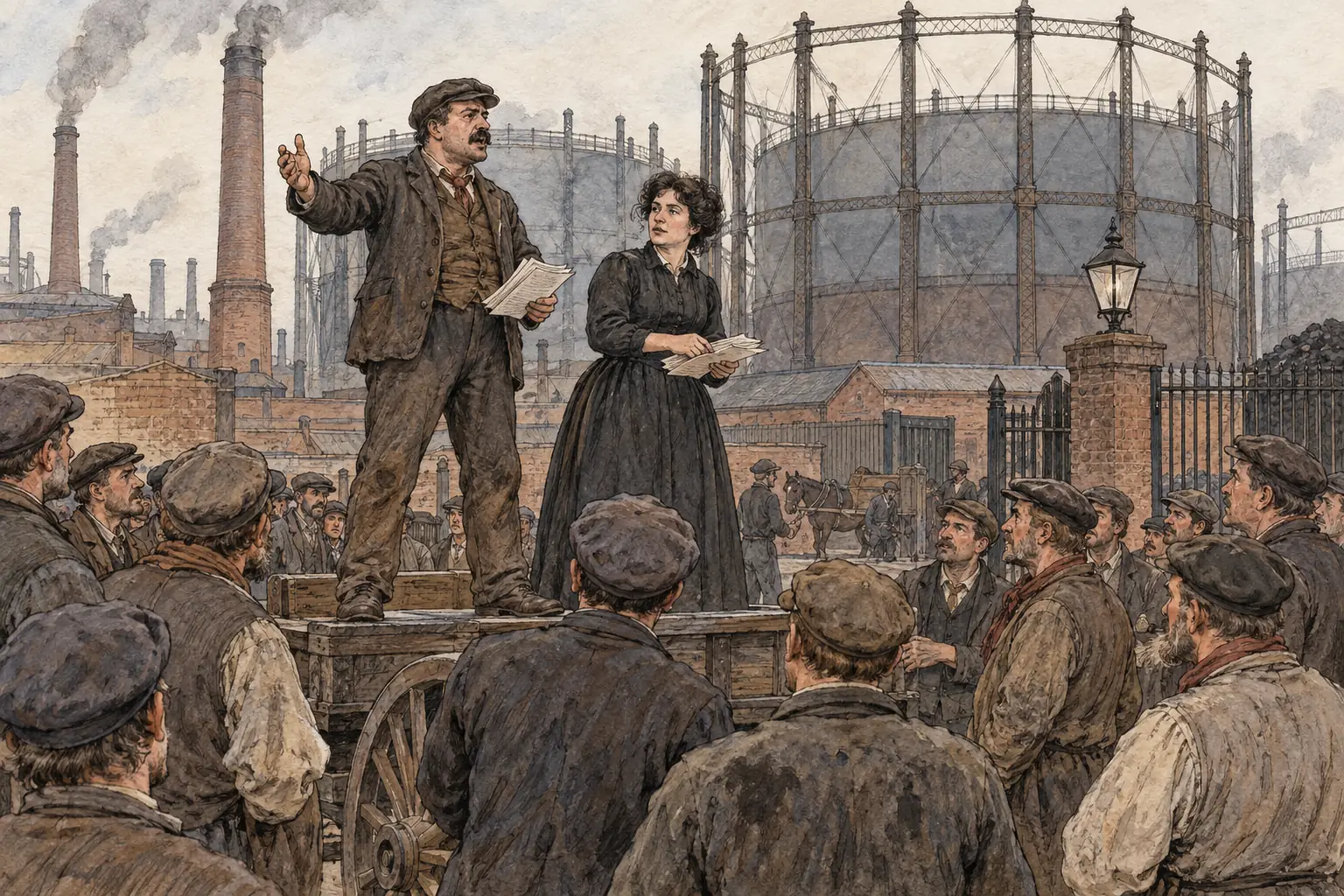
By the late 1880s, New Unionism represented a shift towards organising semi-skilled and unskilled workers, such as factory hands and dockers. This movement arose amid economic hardships and aimed to include broader segments of the workforce previously ignored by traditional unions.
Factors driving the rise of New Unionism
- Economic pressures - Downturns in the 1870s and 1880s led to low wages and high unemployment, prompting unskilled workers to seek collective action for better pay and job security.
- Role of key individuals - Figures like Will Thorne and Eleanor Marx promoted inclusive unionism, emphasising mass recruitment and solidarity among diverse groups.
- Improved communication - Newspapers and pamphlets spread awareness of workers' rights, while mass meetings facilitated coordination and built momentum for strikes.
- Government and legal context - Reforms like the 1875 Conspiracy and Protection of Property Act decriminalised peaceful picketing, enabling unskilled workers to form unions without severe legal repercussions.
The 1888 Matchgirls' Strike and its outcomes
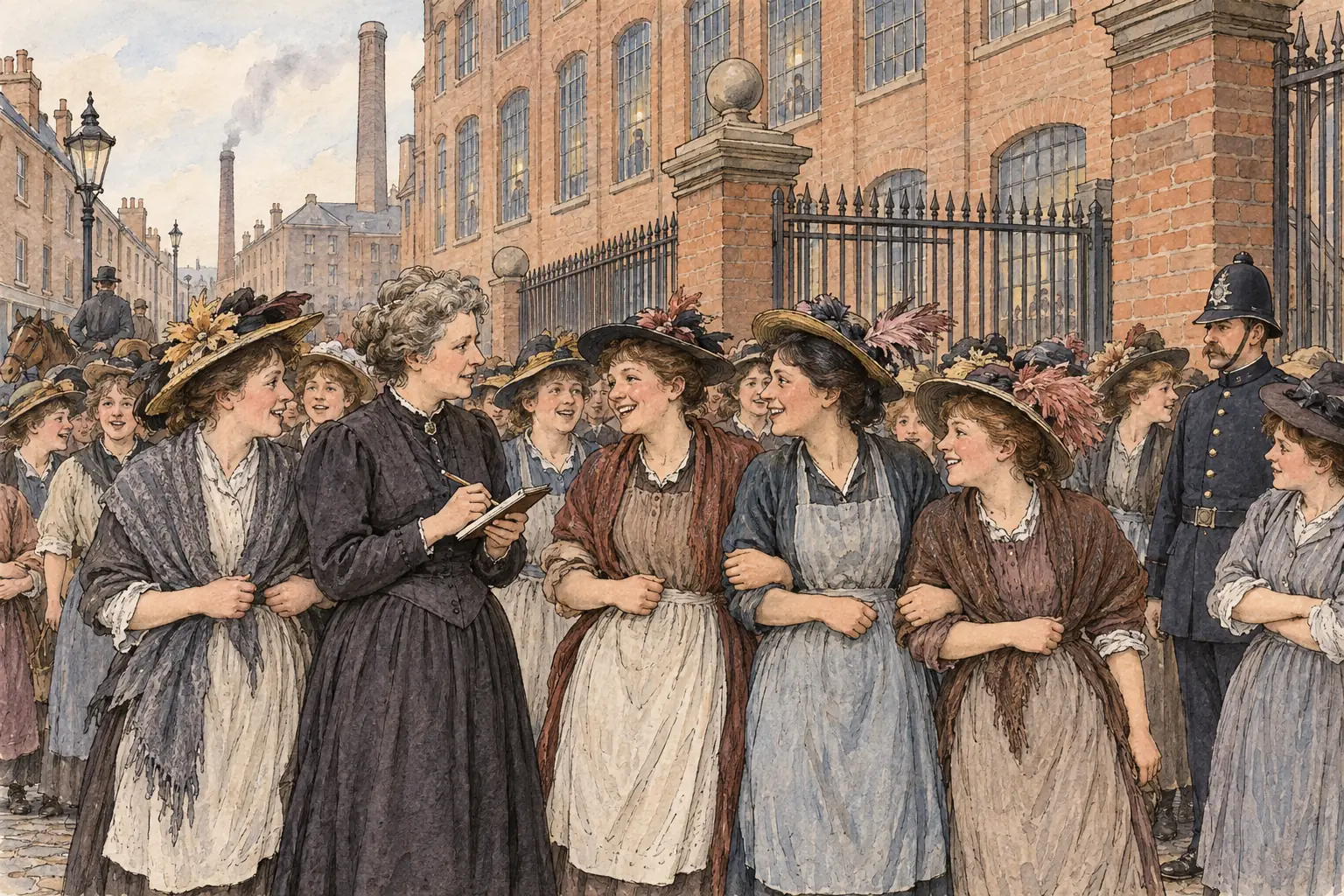
The 1888 Matchgirls' Strike involved around 1,400 female workers at the Bryant & May match factory in east London, protesting against hazardous conditions and unfair pay deductions. This action marked an early success for New Unionism by demonstrating effective tactics among low-paid, unskilled groups.
Tactics and outcomes of the Matchgirls' Strike
- Mass meetings and publicity - Strikers held public gatherings to rally support, with journalists like Annie Besant highlighting dangers such as phosphorus poisoning, which garnered widespread sympathy.
- Strike funds and solidarity - Donations from the public and other unions provided financial aid, sustaining the three-week strike without workers returning to exploitative conditions.
- Role of individuals and communication - Besant's investigative articles exposed factory abuses, pressuring management through public opinion and parliamentary scrutiny.
- Key results - The strike secured the abolition of arbitrary fines, improved safety measures, and union recognition, inspiring other unskilled groups to organise and boosting New Unionism's momentum.
The 1889 London Dock Strike and its significance
Image 1 of 2: Each morning casual dockers fought for a day's work at the dock gates, where a foreman picked just a few
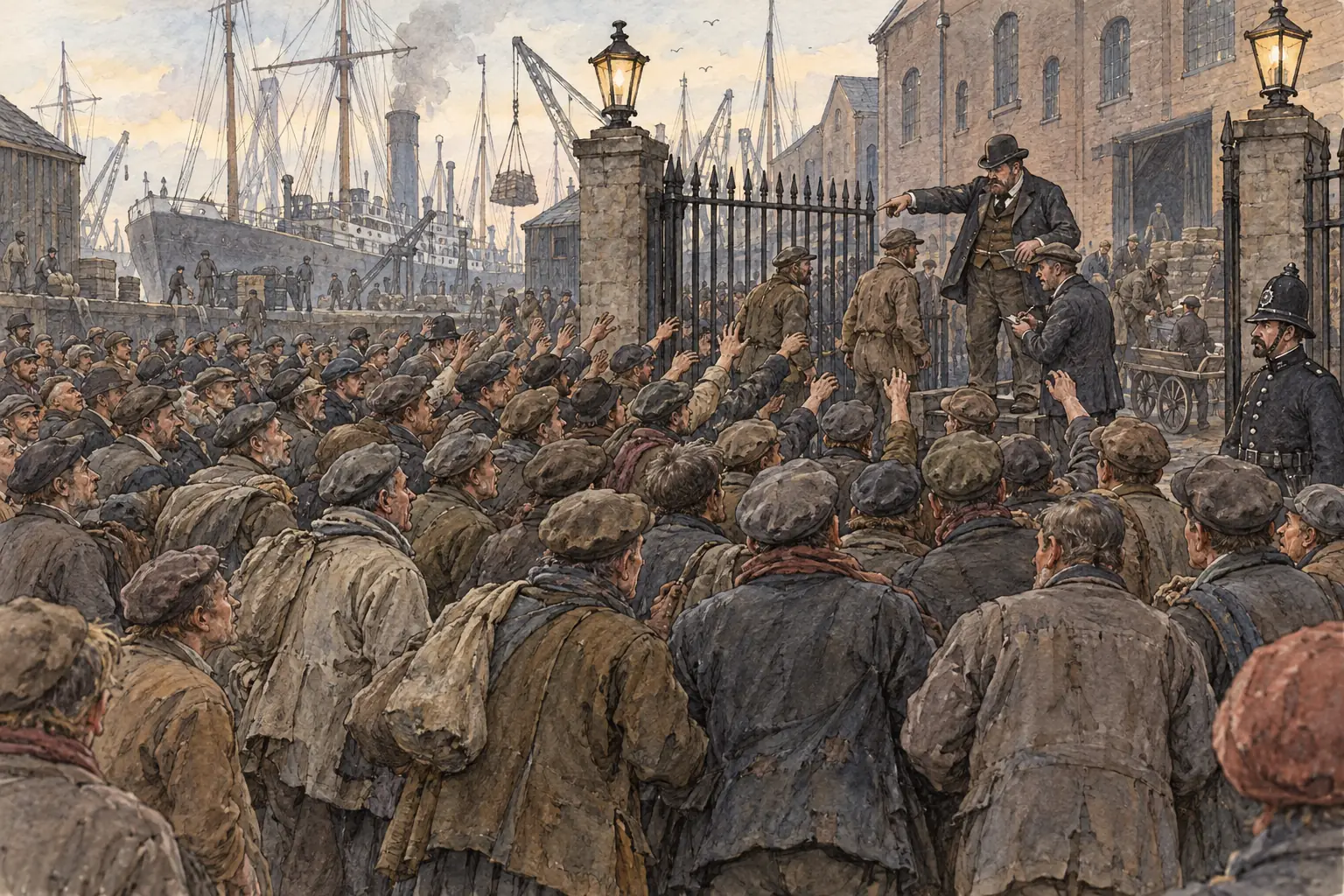
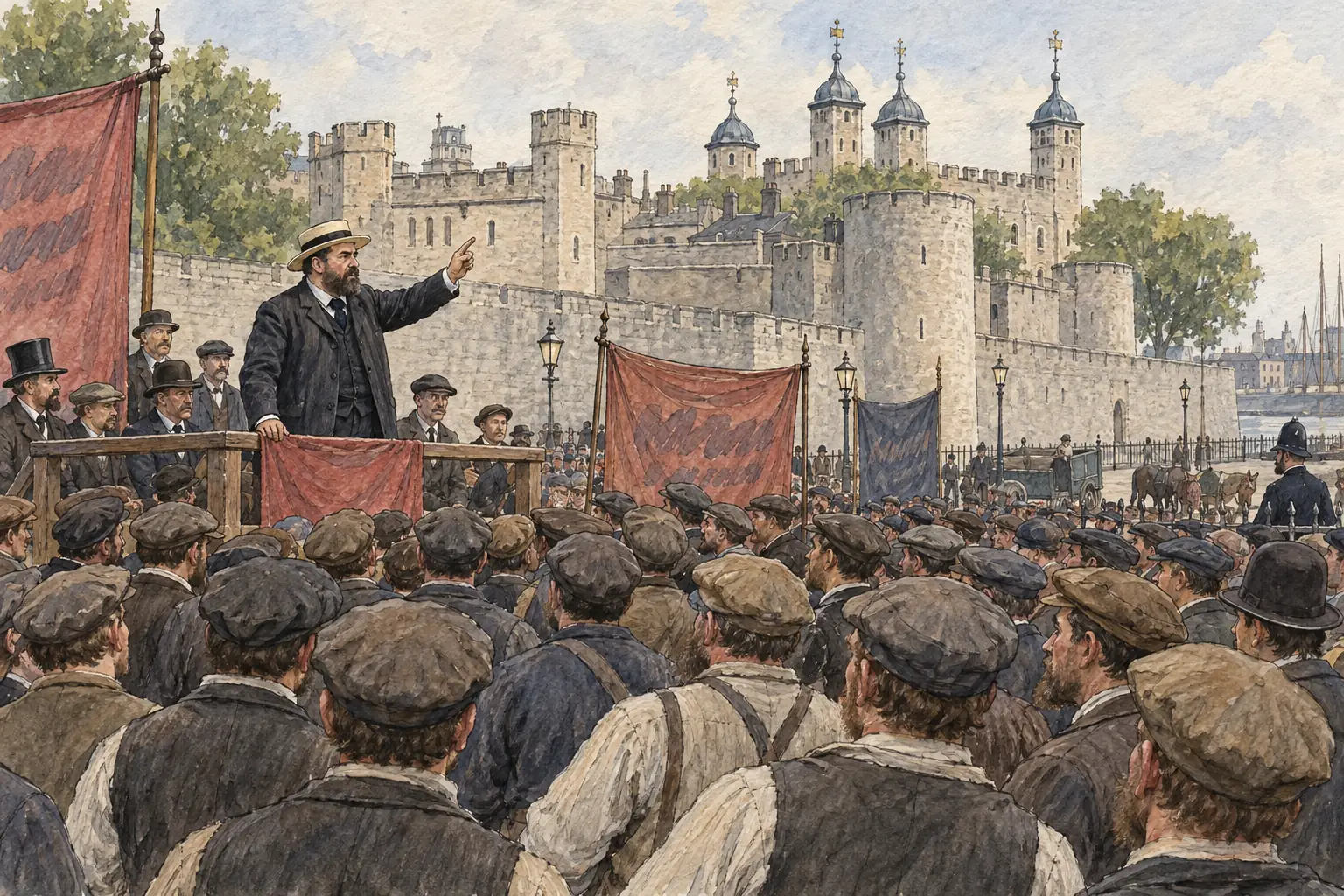
The 1889 London Dock Strike saw over 100,000 dockers and related workers halt operations in the Port of London, demanding a minimum wage of sixpence per hour. This large-scale action exemplified New Unionism's strategies and highlighted the power of collective bargaining for casual labourers.
Tactics and significance of the London Dock Strike
- Mass meetings and organisation - Daily gatherings at Tower Hill coordinated efforts, led by figures like Ben Tillett and John Burns, who emphasised disciplined picketing to maintain order.
- Strike funds and international solidarity - Support from Australian trade unions and British sympathisers raised substantial funds, preventing starvation and prolonging the five-week strike.
- Economic and governmental factors - The strike disrupted trade during a busy season, prompting mediation by figures like Cardinal Manning, who helped negotiate terms with dock companies.
- Major outcomes - Workers achieved the 'dockers' tanner' (sixpence hourly rate), better hiring practices, and the formation of the Dock, Wharf, Riverside and General Labourers' Union, significantly expanding union membership among the unskilled.
Impact on union reach and political leverage
The strikes of 1888–89 transformed trade unionism by extending its influence beyond skilled workers, fostering greater inclusivity and political clout. This broader participation reshaped labour relations and laid foundations for future reforms.
Changes in union reach and political influence
- Expanded membership - New Unionism recruited hundreds of thousands of unskilled workers, increasing overall union numbers from around 750,000 in 1888 to over 2 million by 1914, diversifying the movement.
- Enhanced tactics and solidarity - The success of mass actions and cross-union support demonstrated the effectiveness of collective strategies, influencing later disputes and strengthening bargaining positions.
- Political leverage - Greater visibility led to the formation of the Independent Labour Party in 1893, giving workers a stronger voice in Parliament and pushing for legislation like the 1906 Trade Disputes Act.
- Economic and social factors - By addressing poverty and exploitation, these developments pressured governments to intervene in labour issues, while improved communication through media amplified unions' demands nationally.