2.5 - Space Race: Sputnik, Gagarin, Apollo & Propaganda
Key facts and dates
The Space Race was a key aspect of Cold War rivalry, where the United States and Soviet Union competed in space exploration to demonstrate technological superiority, closely linked to military capabilities. This timeline outlines the major milestones that highlighted each side's achievements and influenced global perceptions.
Timeline of key events
- 1957 – Launch of Sputnik 1 by the Soviet Union, the first artificial satellite, showcasing advanced rocket technology.
- 1958 – Creation of NASA in the United States, in response to Soviet successes, to coordinate space efforts.
- 1961 – Yuri Gagarin becomes the first human in space, orbiting Earth aboard Vostok 1.
- 1961 – US President Kennedy pledges to land a man on the Moon by the end of the decade.
- 1969 – Apollo 11 mission achieves the first Moon landing, with Neil Armstrong and Buzz Aldrin walking on the lunar surface.
Space exploration and the arms race
During the Cold War, space exploration became deeply connected to the arms race between the United States and the Soviet Union. Advances in rocket technology for satellites and manned missions directly supported the development of intercontinental ballistic missiles (ICBMs), capable of delivering nuclear warheads over long distances.
Connections between space achievements and military capabilities
- Technological overlap - Rockets designed for launching satellites or spacecraft were adapted for military use, such as ICBMs, allowing both superpowers to enhance their nuclear deterrence while pursuing peaceful space goals.
- Dual-purpose innovations - Space programmes provided a testing ground for guidance systems, propulsion technologies, and materials that improved missile accuracy and range, blurring the line between civilian exploration and military strength.
- Strategic competition - Each breakthrough in space demonstrated a nation's scientific prowess, which was seen as a proxy for overall military superiority, intensifying the arms race without direct conflict.
Soviet milestones: Sputnik and Gagarin's flight
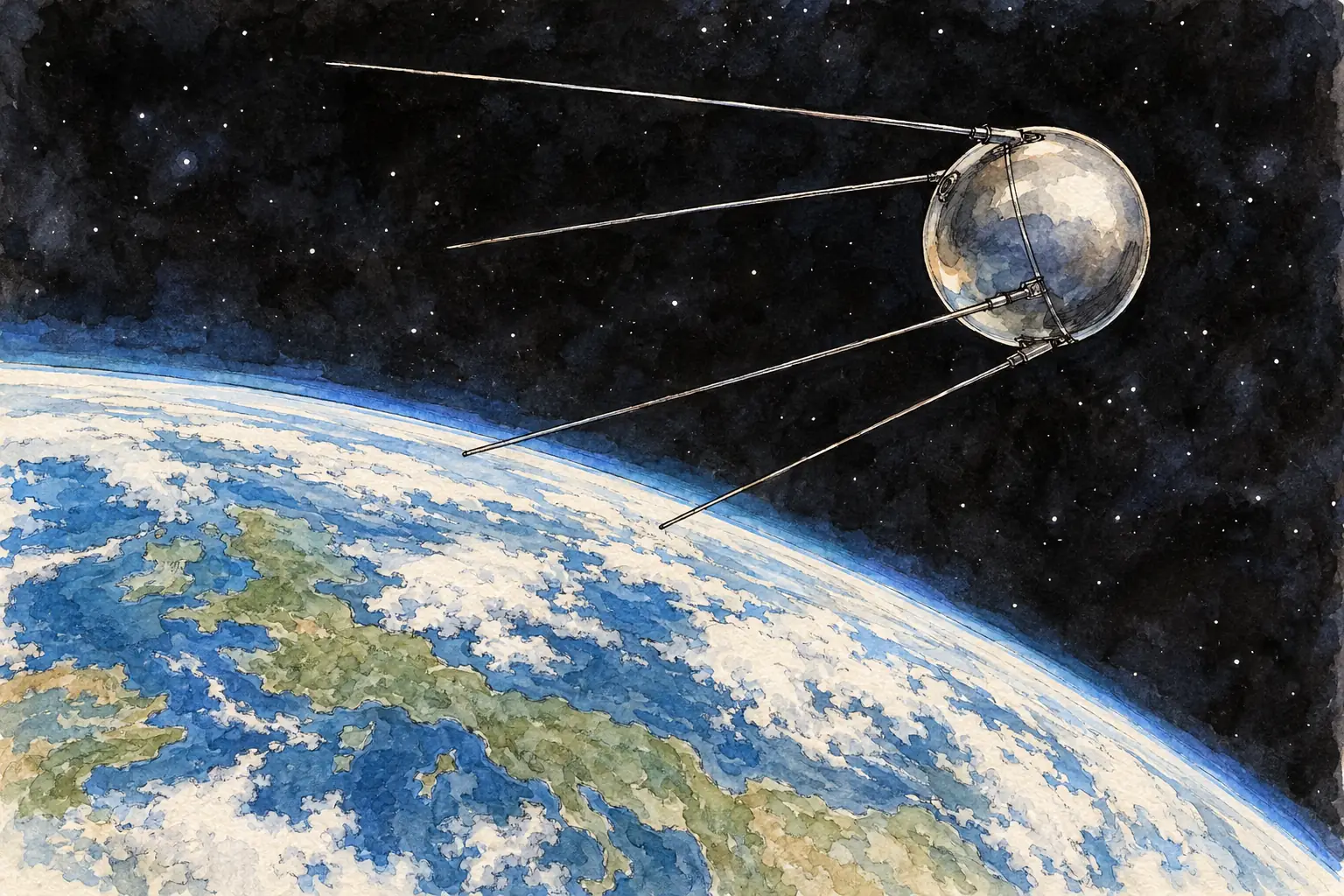
Image 1 of 2: Sputnik 1, launched on 4 October 1957, was a metal sphere 58 centimetres across that sent out a radio signal as it orbited
The Soviet Union achieved early successes in the Space Race, which stunned the world and highlighted their engineering capabilities. These milestones not only advanced space technology but also served as symbols of communist efficiency.
Launch of Sputnik in 1957
- Technical achievement - Sputnik 1, a small satellite, was propelled into orbit using an R-7 rocket, transmitting radio signals back to Earth and proving the Soviets could place objects in space.
- Global impact - The launch created widespread fear in the West, known as the 'Sputnik crisis', prompting concerns about Soviet dominance in technology and potential military applications like spy satellites.
- Response in the US - It led to increased funding for education in science and mathematics, as well as the establishment of the National Aeronautics and Space Administration (NASA) in 1958 to catch up.
Yuri Gagarin's spaceflight in 1961
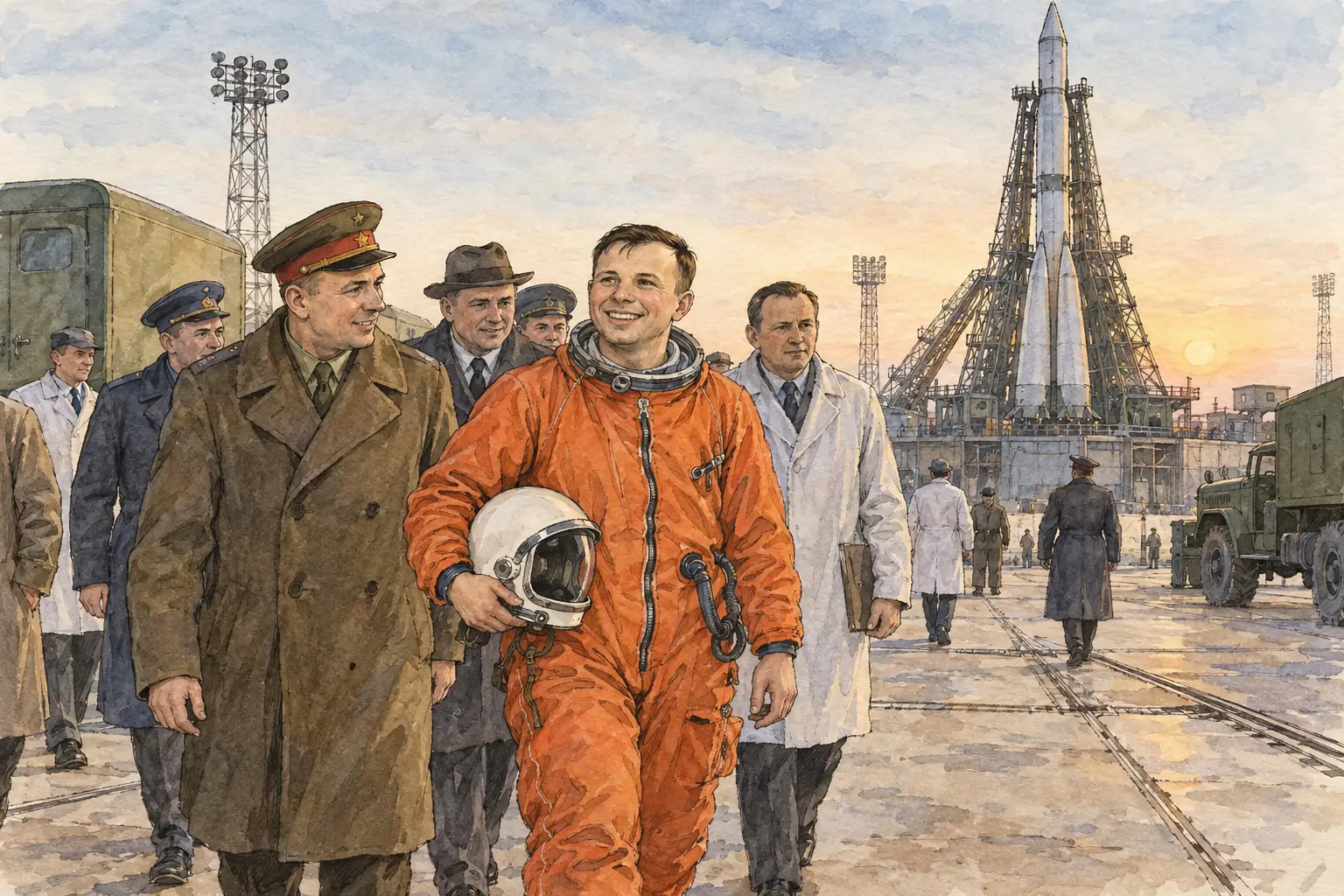
- Mission details - Gagarin completed a single orbit of Earth in the Vostok 1 spacecraft, lasting about 108 minutes, marking the first time a human had ventured into space.
- Significance for human spaceflight - This event demonstrated the feasibility of manned missions and showcased Soviet advancements in life support systems and re-entry technology.
- International reactions - It reinforced perceptions of Soviet leadership in space, boosting their global image while pressuring the US to accelerate its own efforts.
The US Apollo programme and 1969 Moon landing
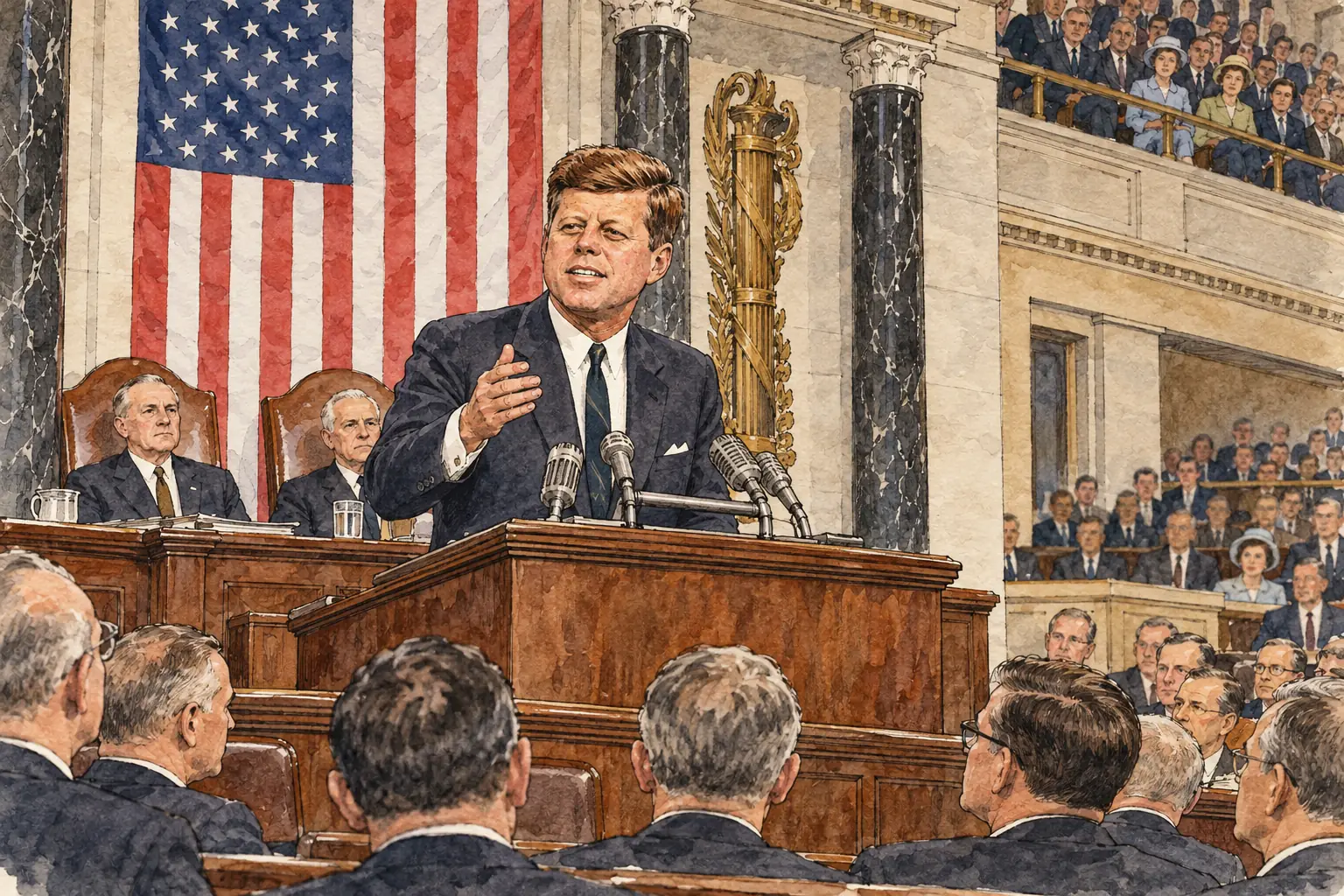
Image 1 of 2: On 25 May 1961 Kennedy told Congress that the USA should land a man on the Moon before the end of the decade
In response to Soviet gains, the United States initiated the Apollo programme, a massive effort to achieve a manned Moon landing. This project represented a major investment in resources and innovation to regain prestige.
Development of the Apollo programme
- Kennedy's commitment - In 1961, President John F. Kennedy announced the goal of landing a man on the Moon before 1970, allocating billions of dollars and mobilising thousands of scientists and engineers.
- Technological challenges - The programme involved creating the Saturn V rocket, lunar modules, and advanced computing systems to handle navigation, docking, and safe return to Earth.
- Broader objectives - Beyond exploration, it aimed to demonstrate American ingenuity and industrial might, countering Soviet propaganda with a highly visible triumph.
The Apollo 11 Moon landing
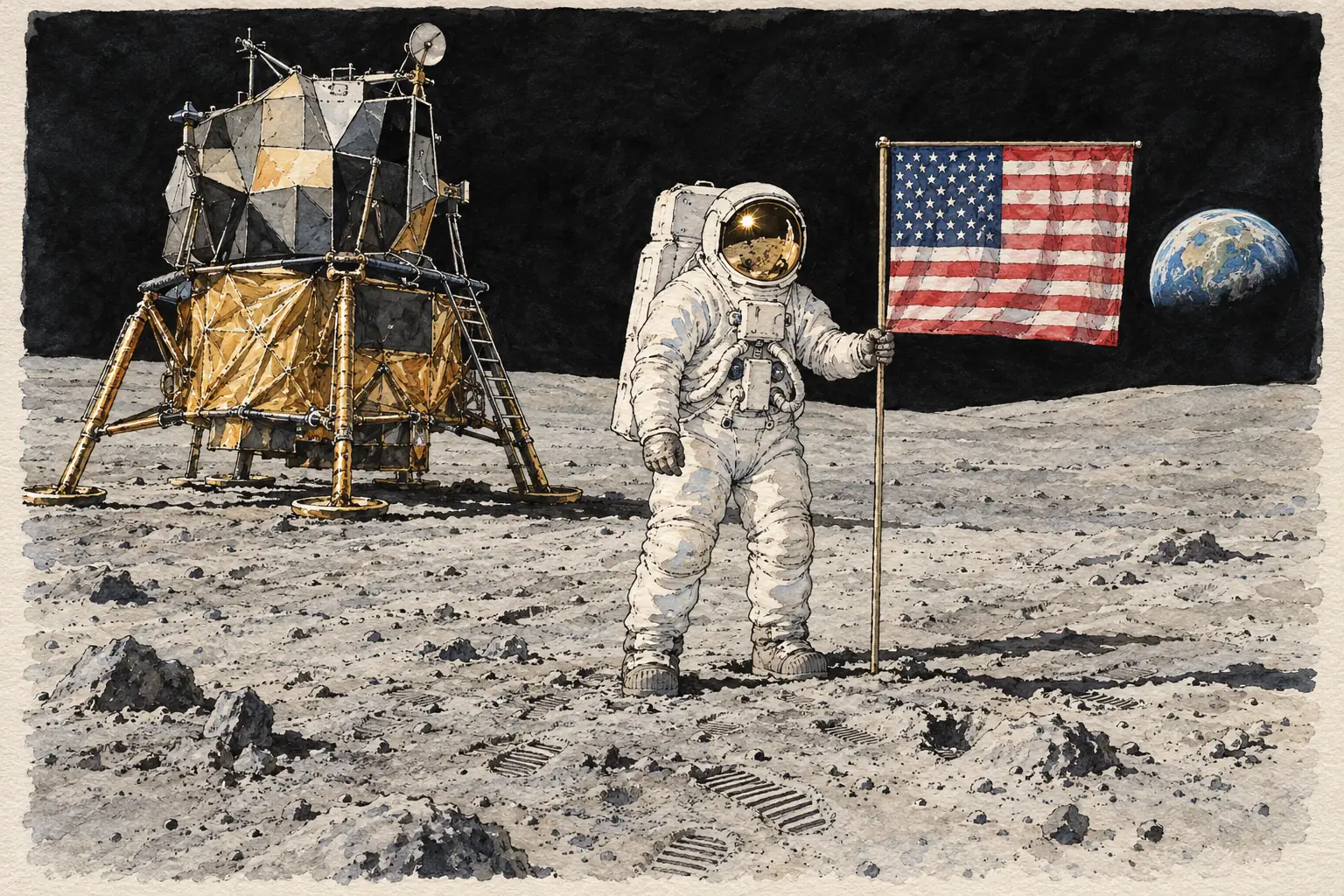
- Mission overview - In July 1969, astronauts Neil Armstrong, Buzz Aldrin, and Michael Collins travelled to the Moon; Armstrong and Aldrin spent over two hours on the surface, collecting samples and conducting experiments.
- Historic moment - Armstrong's famous words upon stepping onto the Moon emphasised the achievement as a leap for humanity, broadcast live to millions worldwide.
- Legacy - The landing shifted the balance in the Space Race, proving US superiority in complex missions and inspiring future space endeavours.
Propaganda value of scientific triumphs
Image 1 of 2: Khrushchev welcomed Gagarin at a huge celebration in Red Square on 14 April 1961
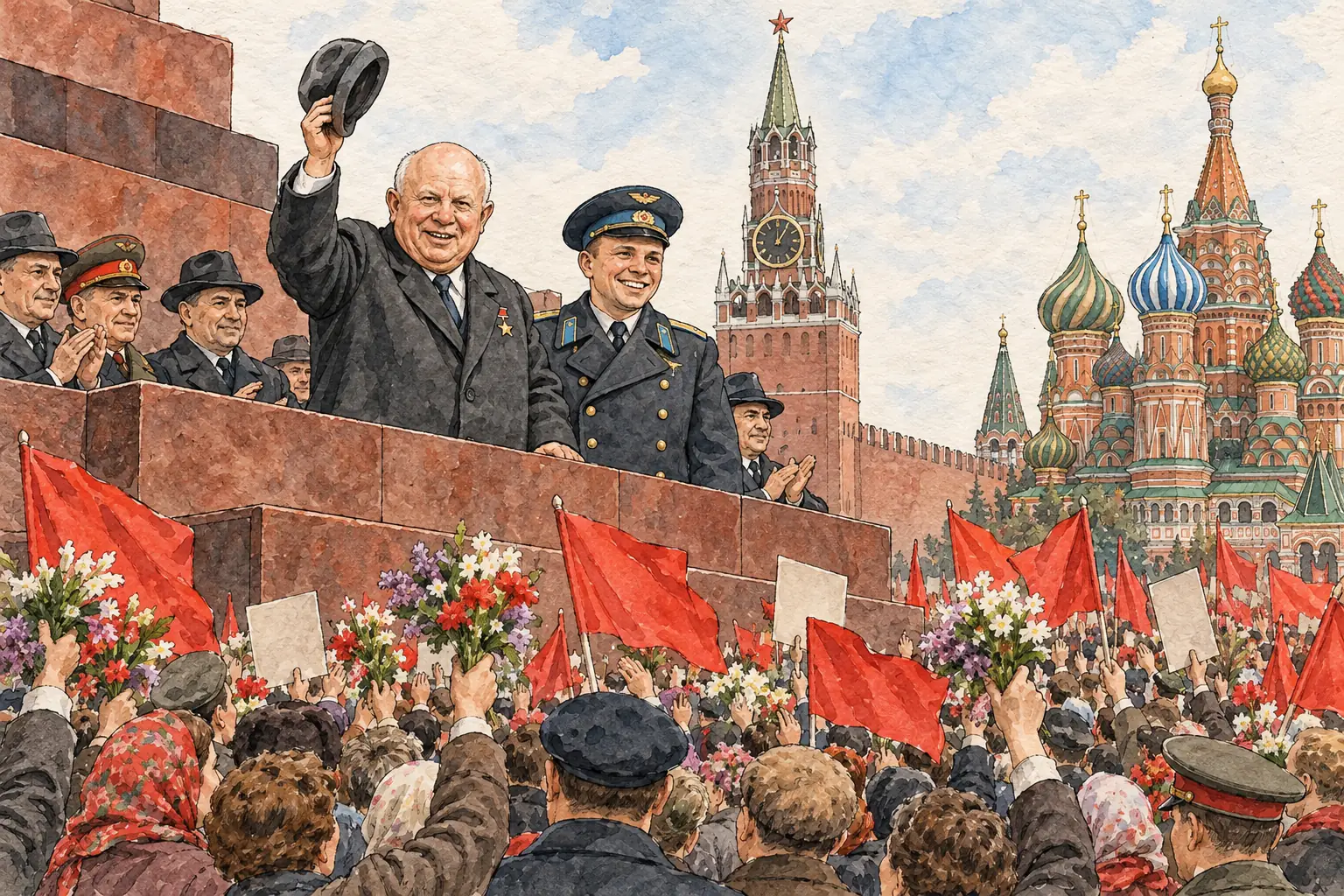

Space achievements were powerful tools for propaganda during the Cold War, allowing both superpowers to promote their ideologies through 'scientific' successes. These events were carefully staged to influence global opinion and domestic support.
How space milestones were used for propaganda
- Soviet messaging - Victories like Sputnik and Gagarin's flight were portrayed as evidence of socialism's efficiency, with state media emphasising collective effort and technological progress to inspire citizens and attract allies.
- US messaging - The Moon landing was presented as a win for democracy and free enterprise, with live broadcasts and heroic narratives reinforcing American values of innovation and individualism.
- Symbolic demonstrations - Both sides used space feats to project strength without warfare, turning technical accomplishments into ideological statements that enhanced national pride and international influence.
Impact of perceived gaps on politics and prestige
Perceived technological gaps in the Space Race, whether real or exaggerated, had significant effects on internal politics and the global standing of the superpowers. These perceptions drove policy changes and public sentiment.
Impact on domestic politics
- In the United States - The 'missile gap' fear, amplified by Soviet successes, influenced elections and led to increased defence spending, as seen in Kennedy's campaign promises to close the divide.
- In the Soviet Union - Space triumphs bolstered the Communist Party's legitimacy, but later US advances created pressure to maintain appearances, straining resources and contributing to economic challenges.
- Public mobilisation - Gaps prompted educational reforms and scientific investments, fostering a sense of urgency that united populations behind national efforts.
Effects on superpower prestige
- Global perceptions - Early Soviet wins enhanced their image among non-aligned nations, while the US Moon landing restored American leadership, affecting alliances and diplomatic relations.
- Long-term consequences - These dynamics extended the Cold War rivalry into space, with prestige tied to technological edge, ultimately leading to détente as costs mounted and mutual achievements were recognised.