2.6 - Alliances: NATO Formation & Warsaw Pact Response
Key facts and dates
The formation of Nato in 1949 and the Warsaw Pact in 1955 represented key developments in the early Cold War, formalising military alliances that divided Europe into opposing blocs. These pacts emerged from escalating tensions between the Western powers and the Soviet Union, shaping the structure of international relations for decades.
Timeline of key events
- 1948 – Berlin Blockade heightens fears of Soviet aggression in Western Europe.
- 1949 – Nato established with 12 founding members to provide collective defence.
- 1954 – Western European Union formed, paving the way for West German rearmament.
- 1955 – West Germany joins Nato, prompting the creation of the Warsaw Pact.
- 1956 – Hungarian uprising tests Warsaw Pact unity under Soviet control.
Reasons for the formation of Nato in 1949
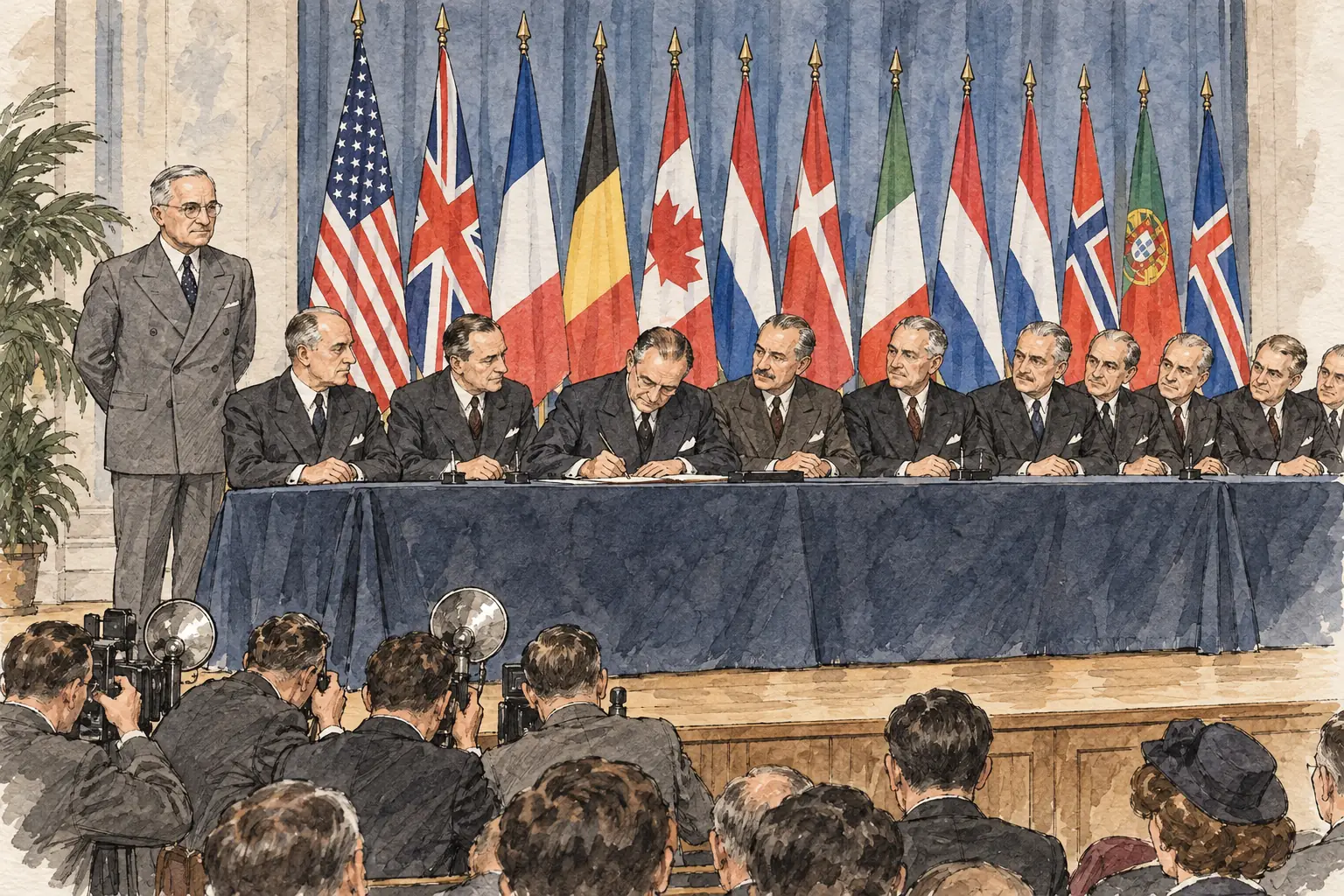
The North Atlantic Treaty Organisation (Nato) was established in April 1949 as a response to growing concerns about Soviet expansion in Europe. This alliance aimed to unite Western nations in a mutual defence framework amid the emerging Cold War divisions.
Factors leading to Nato's creation
- Collective security needs - Western European countries, weakened by the Second World War, sought protection against potential Soviet threats, especially after events like the 1948 Czech coup and Berlin Blockade.
- Article 5 commitment - The treaty's core provision stated that an attack on one member would be considered an attack on all, ensuring a unified response to aggression and deterring isolated invasions.
- Integration of West German rearmament - Although not immediate, Nato later facilitated West Germany's military revival in 1955, allowing it to contribute to Western defence while preventing independent German militarism through alliance oversight.
Formation of the Warsaw Pact in 1955
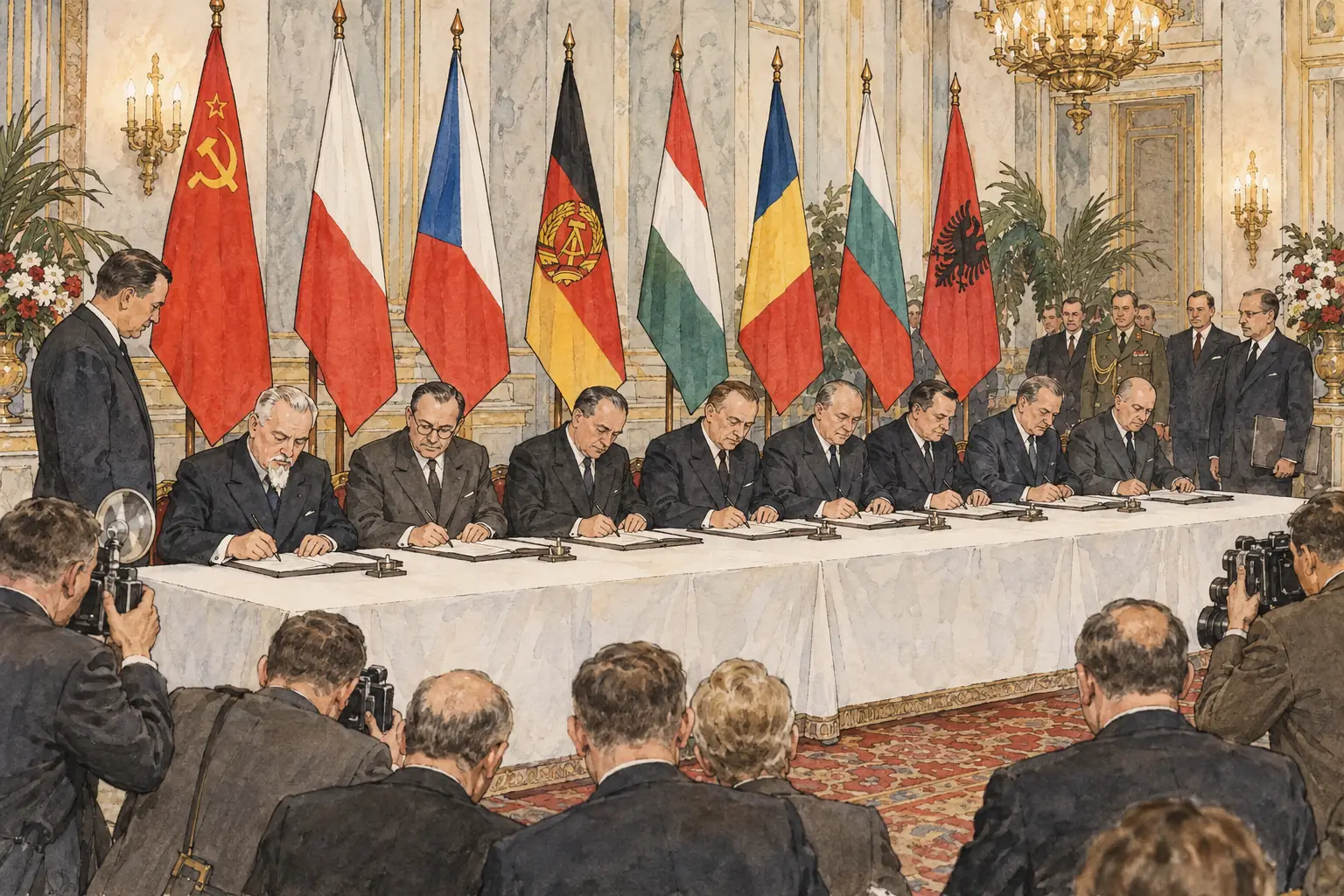
The Warsaw Pact, formally known as the Treaty of Friendship, Cooperation and Mutual Assistance, was signed in May 1955. It served as the Soviet Union's counter to Nato, consolidating control over its Eastern European satellites.
Key aspects of the Warsaw Pact's establishment
- Response to Nato expansion - The pact was created shortly after West Germany joined Nato, which the Soviets viewed as a direct threat, aiming to formalise a collective defence system for the Eastern bloc.
- Institutionalisation of Soviet leadership - It provided a legal framework for Soviet dominance, allowing Moscow to station troops in member states and coordinate military strategies under unified command.
- Purpose beyond defence - While framed as a mutual assistance treaty, it primarily enabled the Soviet Union to suppress internal dissent, as seen in interventions like the 1956 Hungarian invasion.
Comparison of Nato and the Warsaw Pact
Nato and the Warsaw Pact represented parallel but contrasting alliance systems during the Cold War, each reflecting the ideological and structural differences between the Western and Eastern blocs. Their designs highlighted varying approaches to membership, command, and objectives.
Differences in membership, command structures, and purposes
| Aspect | Nato | Warsaw Pact |
|---|---|---|
| Membership | Voluntary alliance starting with 12 Western nations (e.g., USA, UK, France); expanded to include West Germany in 1955; focused on democratic states. | Compulsory for eight Soviet satellite states (e.g., Poland, East Germany); membership enforced by Soviet influence, with no option for withdrawal. |
| Command structures | Integrated military command with a supreme allied commander (often American); decisions required consensus, promoting shared responsibility. | Centralised under Soviet control; the political committee and unified command were dominated by Moscow, limiting autonomy for other members. |
| Purposes | Primarily defensive, emphasising collective security and deterrence against Soviet aggression; also supported economic and political cooperation. | Ostensibly defensive but mainly a tool for Soviet political control and intervention in member states; reinforced the Iron Curtain division. |
Impacts of alliance systems on Cold War dynamics
The establishment of Nato and the Warsaw Pact created rigid alliance structures that influenced superpower interactions. While they provided stability for members, they also intensified global tensions.
Effects on risk reduction and bloc confrontation
- Reduction of miscalculation risks - Clear alliance commitments signalled that aggression against one member would trigger a broader response, deterring impulsive actions and encouraging diplomatic caution during crises.
- Deepening of bloc confrontation - The pacts solidified the division of Europe into opposing camps, escalating arms races and proxy conflicts, as each side viewed the other's expansions as provocative threats.
- Long-term consequences - These systems fostered a bipolar world order, where loyalty to alliances often prioritised over neutral diplomacy, prolonging Cold War hostilities until the pact's dissolution in 1991.