3.6 - Learning & Education: Schools, Latin & Vernacular
Key facts and dates
Education in Norman England was limited and closely tied to the church, with Latin dominating scholarly pursuits while vernacular languages evolved among the populace. Key elements included religious institutions as learning centres and literacy's role in administration, reflecting the period's blend of Norman and Anglo-Saxon influences.
Key facts to remember
- Cathedral schools – Focused on training clerics with a curriculum emphasising grammar, rhetoric, and theology.
- Monastic schools – Provided education within monasteries, often including music and manuscript production.
- Access to education – Primarily available to boys from elite or clerical families, with rare opportunities for girls.
- Latin's dominance – Used for church services, official records, and scholarly works.
- Anglo-Norman French – Spoken by the ruling elite for court and administration.
- Vernacular evolution – English gradually incorporated Norman words, used in everyday communication.
- Monasteries' role – Served as hubs for copying manuscripts and maintaining records essential for governance.
- Literacy and power – Knowledge of Latin enabled roles in church administration and royal writs.
Education in Norman England and access to it
In Norman England, following the conquest of 1066, education was not widespread and was largely controlled by the church. It served religious and administrative purposes, with limited availability shaped by social class and gender.
Who could access education
- Boys from elite families - Sons of nobles or wealthy landowners often received instruction to prepare for roles in governance or the clergy.
- Clerical trainees - Young males entering the church were prioritised, as education aligned with religious vocations.
- Limited opportunities for girls - Education was rare for females, typically restricted to noblewomen learning basic literacy in convents or at home.
- Exclusion of lower classes - Peasants and common folk had little to no formal schooling, relying instead on oral traditions and practical skills.
Cathedral and monastic schools
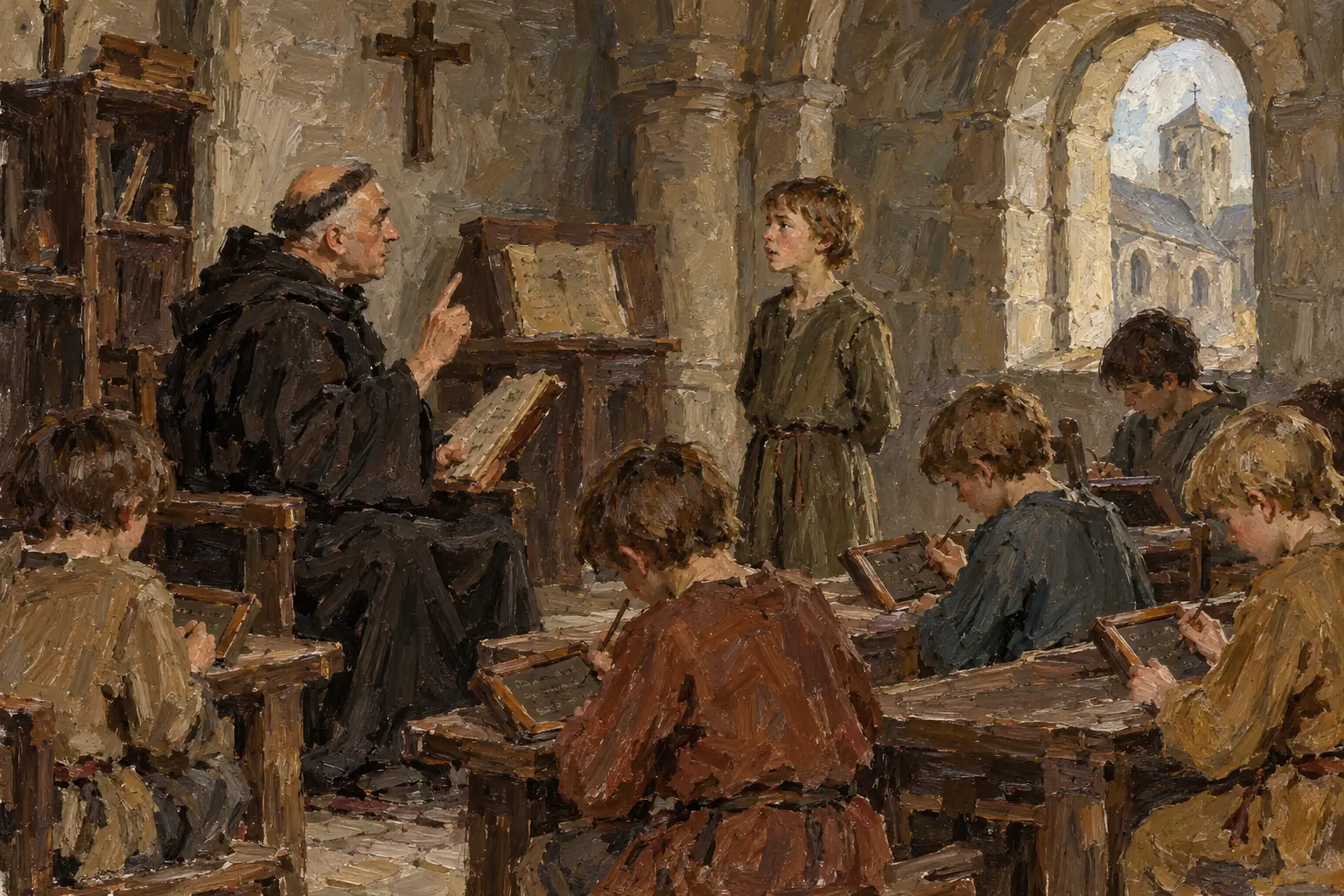
Schools in Norman England were primarily attached to religious institutions, providing structured learning environments. Cathedral schools operated in urban centres, while monastic schools were based in rural abbeys, both emphasising a curriculum rooted in classical and religious studies.
Structure and focus of cathedral schools
- Location and purpose - Based at cathedrals, these schools trained future priests and administrators, combining religious instruction with practical skills.
- Curriculum components - Included grammar for language mastery, rhetoric for persuasive speaking, music for liturgical chants, and theology for understanding scripture.
Structure and focus of monastic schools
- Location and purpose - Housed within monasteries, these schools catered to monks and novices, fostering a disciplined environment for spiritual and intellectual growth.
- Curriculum components - Emphasised grammar and rhetoric alongside music and theology, with additional emphasis on copying religious texts.
Pathways for clerics and administrators
Education in Norman England opened doors to influential careers, particularly in the church and royal administration. Trained individuals could advance through structured hierarchies, leveraging their literacy and knowledge.
Career routes for educated individuals
- Clerical pathways - Graduates often became priests, bishops, or monks, using their skills in theology and Latin for church leadership and scripture interpretation.
- Administrative pathways - Literate individuals served as royal clerks or scribes, drafting charters and writs essential for governance.
- Advancement opportunities - High achievers could rise to roles like archdeacons or royal advisors, combining religious authority with secular power.
Languages used in education and society
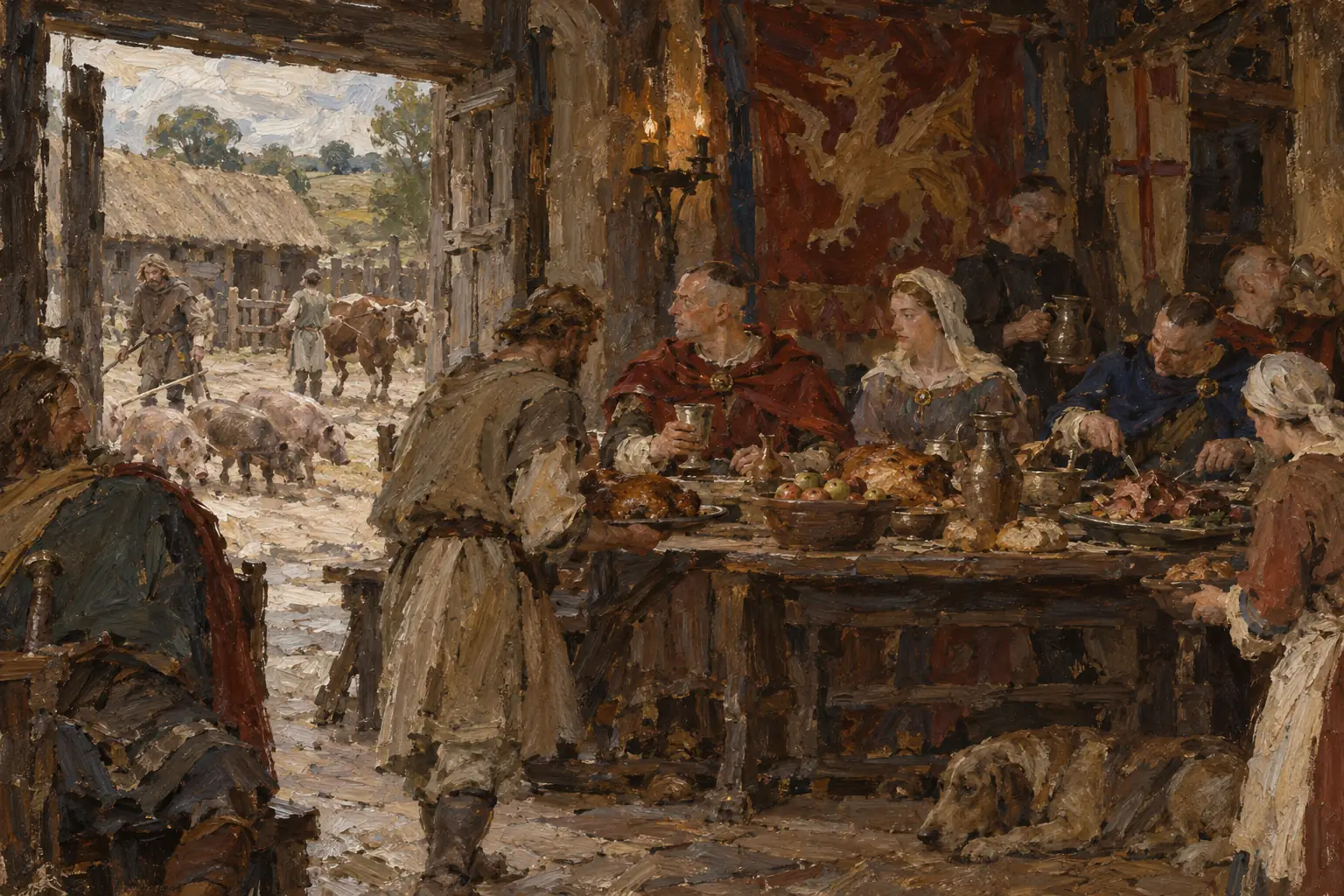
Languages in Norman England reflected social divisions, with Latin holding prestige in formal contexts, while spoken tongues evolved through cultural mixing. This linguistic landscape influenced education, administration, and daily life.
Key languages and their roles
- Latin - Served as the primary language of the church for services and scholarly texts, and for official records like legal documents.
- Anglo-Norman French - Used among the Norman elite for court proceedings, literature, and elite communication, distinguishing rulers from the common people.
- Vernacular English - Evolved as a spoken language among the Anglo-Saxon population, gradually incorporating French words; it gained ground in literature and everyday use over time.
Role of monasteries in learning and governance
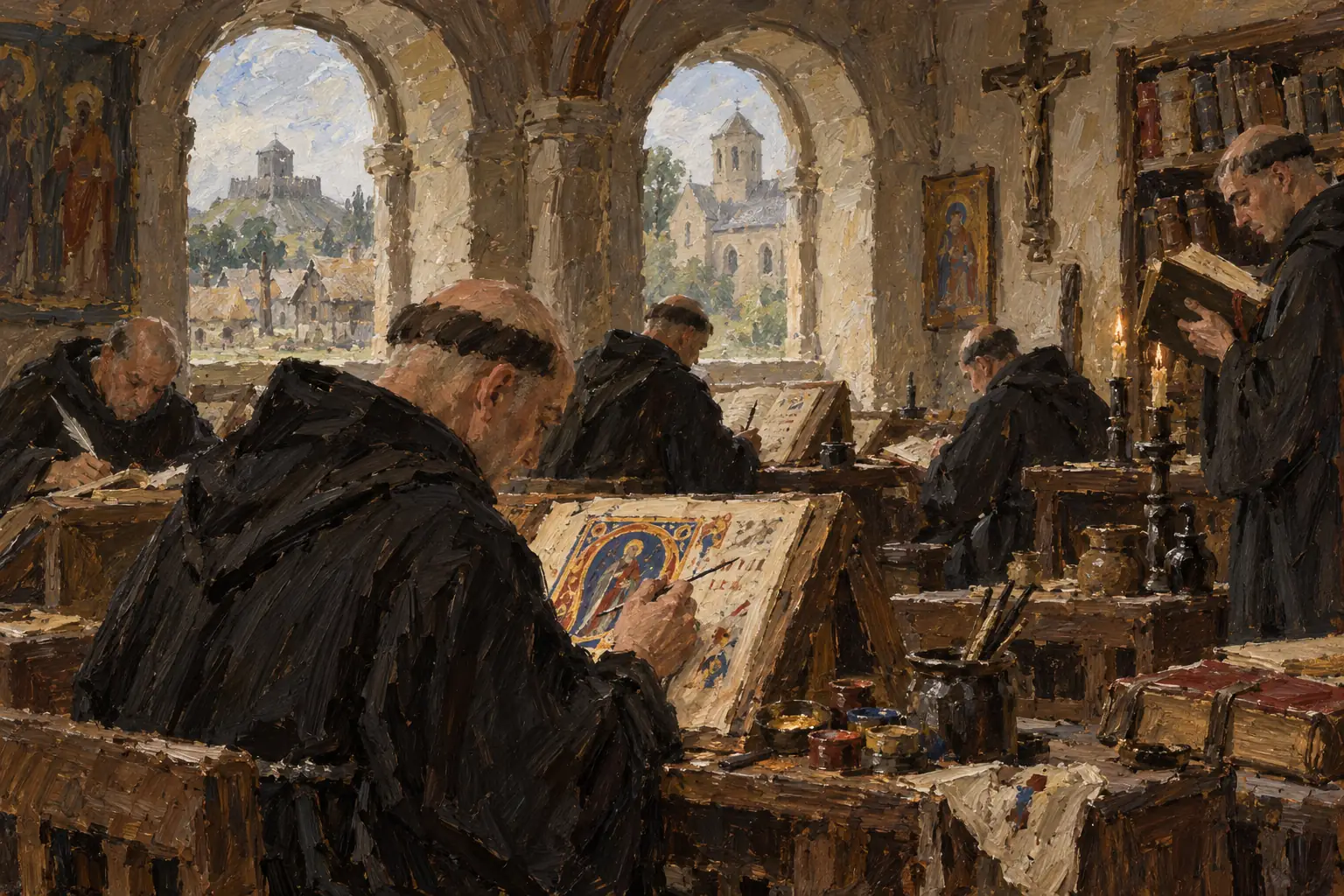
Monasteries were vital hubs of intellectual activity in Norman England, extending beyond education to preserve knowledge and support administration. They linked literacy directly to effective rule through document production.
Functions of monasteries as learning centres
- Manuscript production - Monks copied religious and classical texts by hand, preserving knowledge in illuminated books stored in monastic libraries.
- Record-keeping - Monasteries maintained archives of charters and writs, documenting land grants and legal decisions.
- Link to governance - Literacy enabled the creation of royal writs for commands and charters for property rights, ensuring stable administration across the kingdom..