3.1 - Extending the Franchise: Reform Act & Chartism
Key facts and dates
The push to extend voting rights in 19th-century Britain reflected growing demands for political reform amid industrial change and social unrest. The 1832 Great Reform Act addressed some inequalities, while Chartism sought broader democracy but faced setbacks. This timeline captures the main milestones in these efforts.
Timeline of key events
- 1832 – Great Reform Act passed, redistributing seats and enfranchising some middle-class men.
- 1838 – People's Charter published, outlining six demands for democratic reform.
- 1839 – First Chartist petition presented to Parliament with over 1.2 million signatures, but rejected.
- 1842 – Second petition, with 3.3 million signatures, also dismissed, sparking strikes and arrests.
- 1847 – Feargus O'Connor launches the Chartist Land Plan, aiming to resettle workers on small farms.
- 1848 – Third petition and Kennington Common meeting lead to further government crackdowns.
Context and provisions of the 1832 Great Reform Act
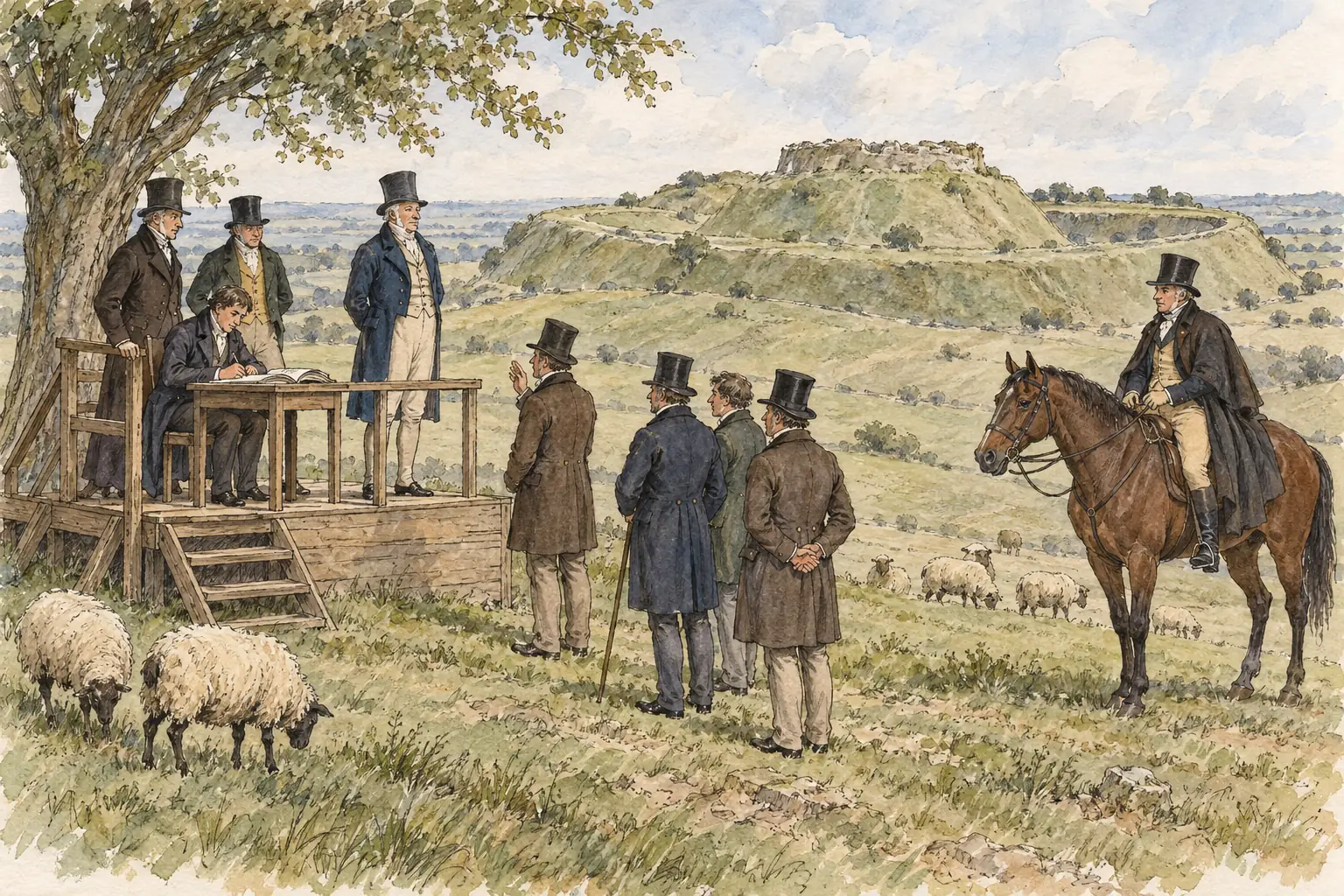
Image 1 of 2: Before 1832 Old Sarum, an empty hill with a handful of voters who voted aloud, elected two MPs
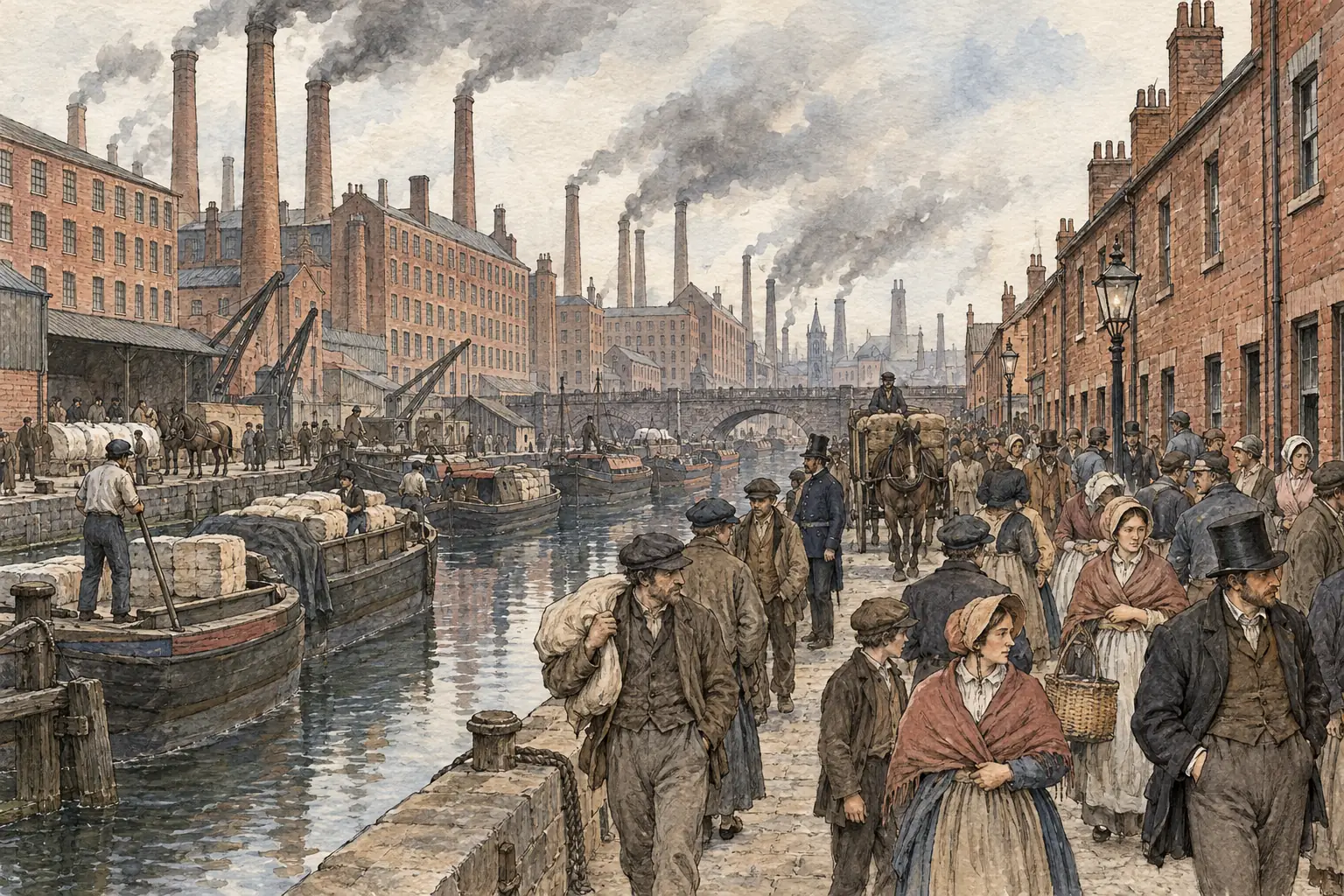
By the early 19th century, Britain's electoral system was outdated and corrupt, failing to reflect population shifts caused by industrialisation. Boroughs with tiny populations elected MPs, while growing cities like Manchester had none, fuelling demands for change from middle-class reformers and radical groups.
Pressures leading to reform
- Borough corruption - 'Rotten boroughs' like Old Sarum allowed wealthy patrons to control seats through bribery or small voter numbers, distorting representation.
- Uneven representation - Industrial towns lacked MPs despite their economic importance, while rural areas were over-represented, ignoring urban growth.
- External influences - The 1830 French Revolution inspired British radicals, while economic distress from poor harvests and unemployment increased calls for political inclusion.
What the Act achieved and its limitations
The Great Reform Act redistributed parliamentary seats and expanded voting rights, but it fell short of universal suffrage.
| Aspect | Provisions | Limitations |
|---|---|---|
| Seat redistribution | Eliminated 56 rotten boroughs and created 67 new seats for industrial areas, better reflecting population distribution. | Many small boroughs remained, and counties still dominated over urban centres. |
| Voting rights | Enfranchised middle-class men owning property worth £10 annually, adding about 217,000 voters. | Excluded working-class men, women, and most tenant farmers, leaving 80% of adults without the vote. |
| Electoral process | Introduced voter registration to reduce corruption and standardised borough qualifications. | Secret ballots were not implemented, allowing continued intimidation and bribery. |
Origins and key demands of Chartism
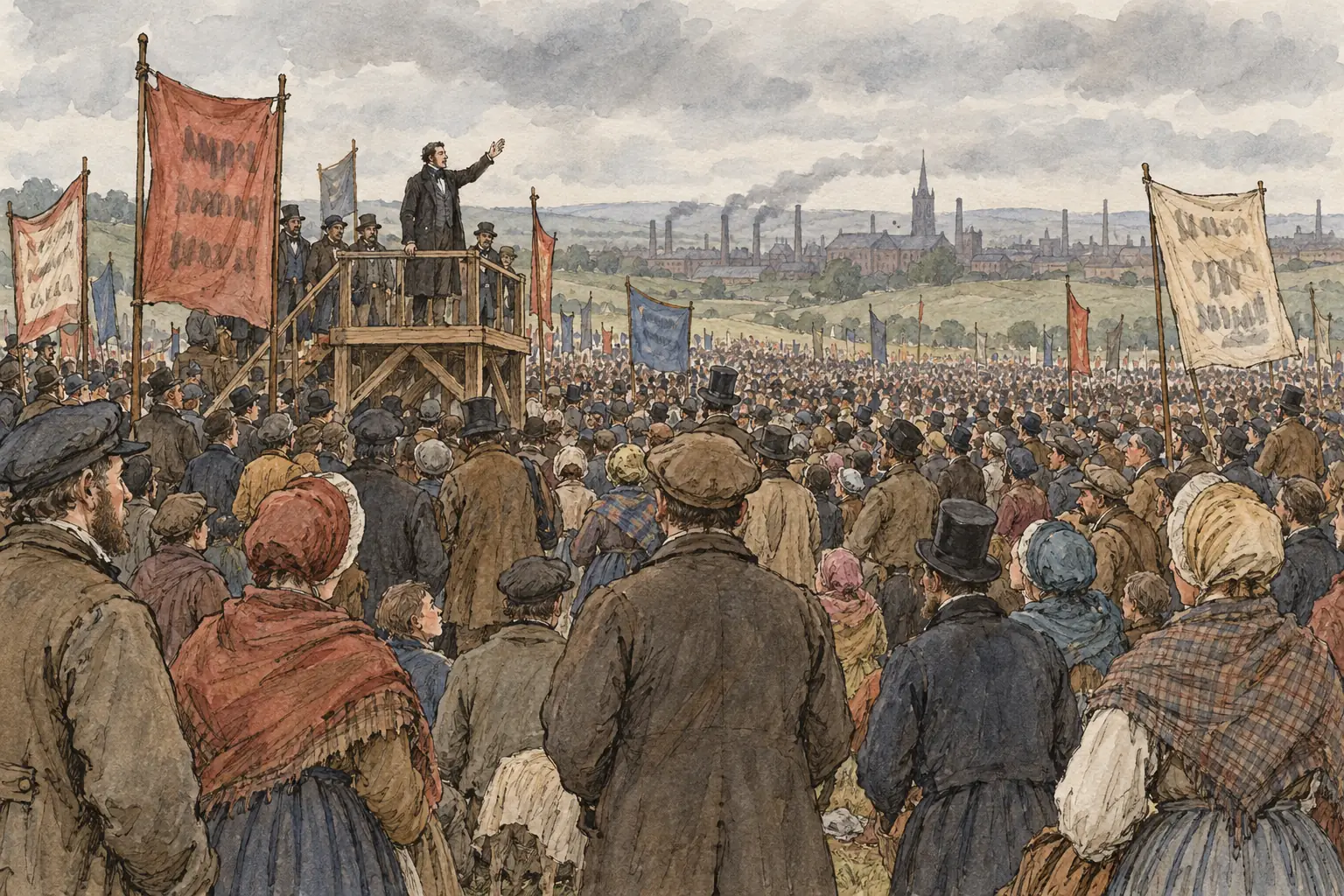
Chartism emerged in the late 1830s as a working-class movement seeking democratic reforms beyond the 1832 Act. It drew support from artisans, factory workers, and the unemployed, particularly in industrial regions like northern England, Wales, and Scotland, where economic hardship amplified calls for change.
Social base and regional support
- Working-class roots - The movement appealed to those disillusioned by the Reform Act's failure to address poverty, low wages, and factory conditions, uniting diverse groups through shared grievances.
- Geographic spread - Strongest in manufacturing areas such as Lancashire and Yorkshire, with active branches in mining communities in Wales and urban centres in Scotland.
The six points of the People's Charter
| Point | Purpose |
|---|---|
| Universal male suffrage | Voting rights for all men over 21, regardless of property ownership. |
| Secret ballots | To protect voters from employer or landlord influence. |
| Equal electoral districts | To ensure fair representation based on population. |
| Annual parliaments | To make MPs more accountable through frequent elections. |
| Payment for MPs | Allowing working-class individuals to serve without financial loss. |
| No property qualifications | Removing barriers for candidates. |
Leadership and strategies within the Chartist movement
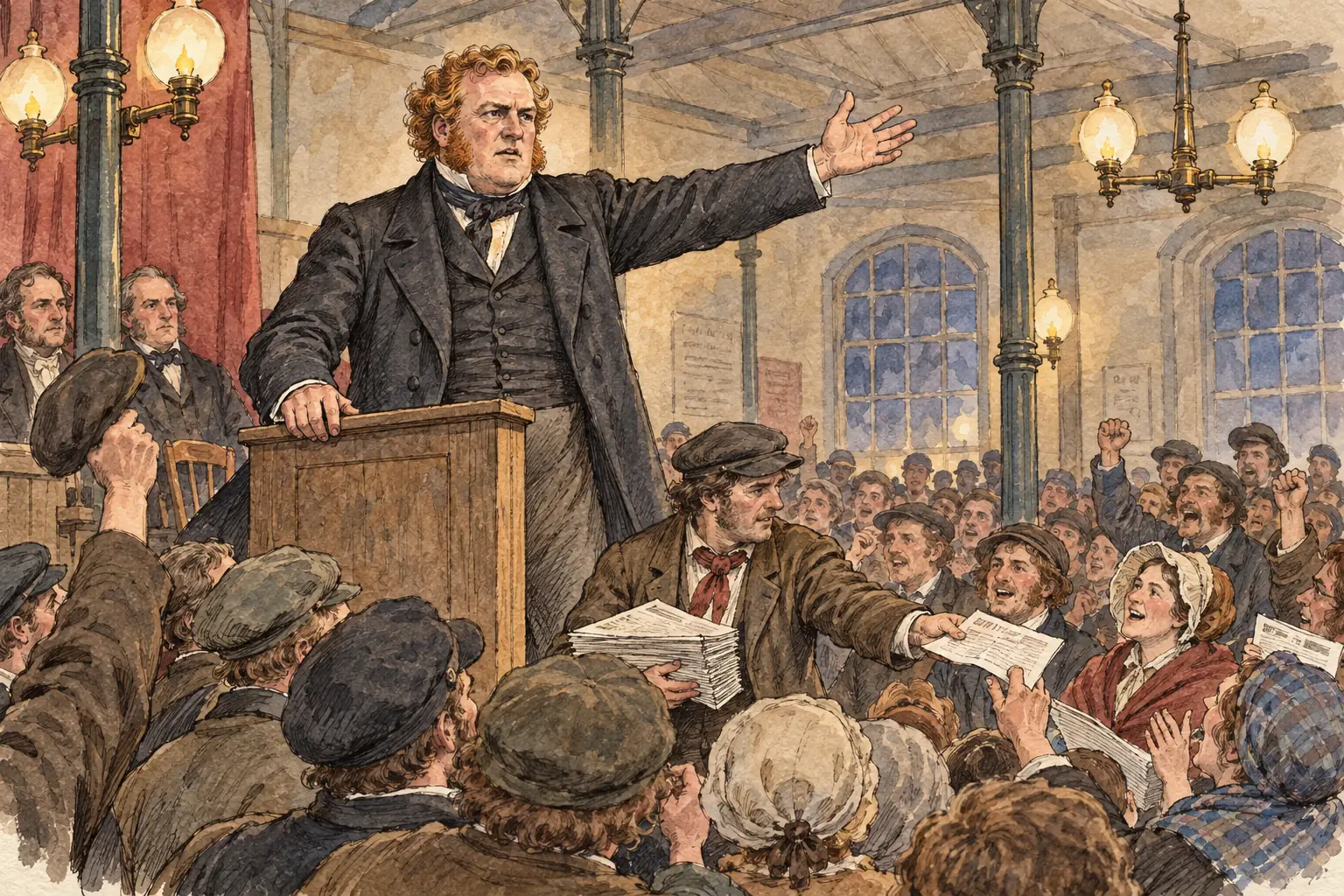
Chartist leaders adopted varied approaches, reflecting divisions between peaceful persuasion and confrontational tactics. These strategies were shaped by ideas of democracy, economic pressures, and individual charisma.
Key leaders and their approaches
- William Lovett's moral-force strategy - Advocated non-violent methods like education and petitions to build public support, emphasising reasoned argument over force.
- Feargus O'Connor's mass mobilisation - Focused on large-scale rallies and strikes to pressure Parliament, using newspapers like the Northern Star to rally thousands.
- William Cuffay's contributions - A black tailor and radical activist, he organised London Chartists and pushed for inclusive tactics, facing arrest and transportation for his role in 1848.
- Mary Fildes' involvement - A prominent female reformer (often spelled 'Fields'), she promoted women's participation and linked Chartism to broader social causes like education.
Tactics, petitions, and related movements
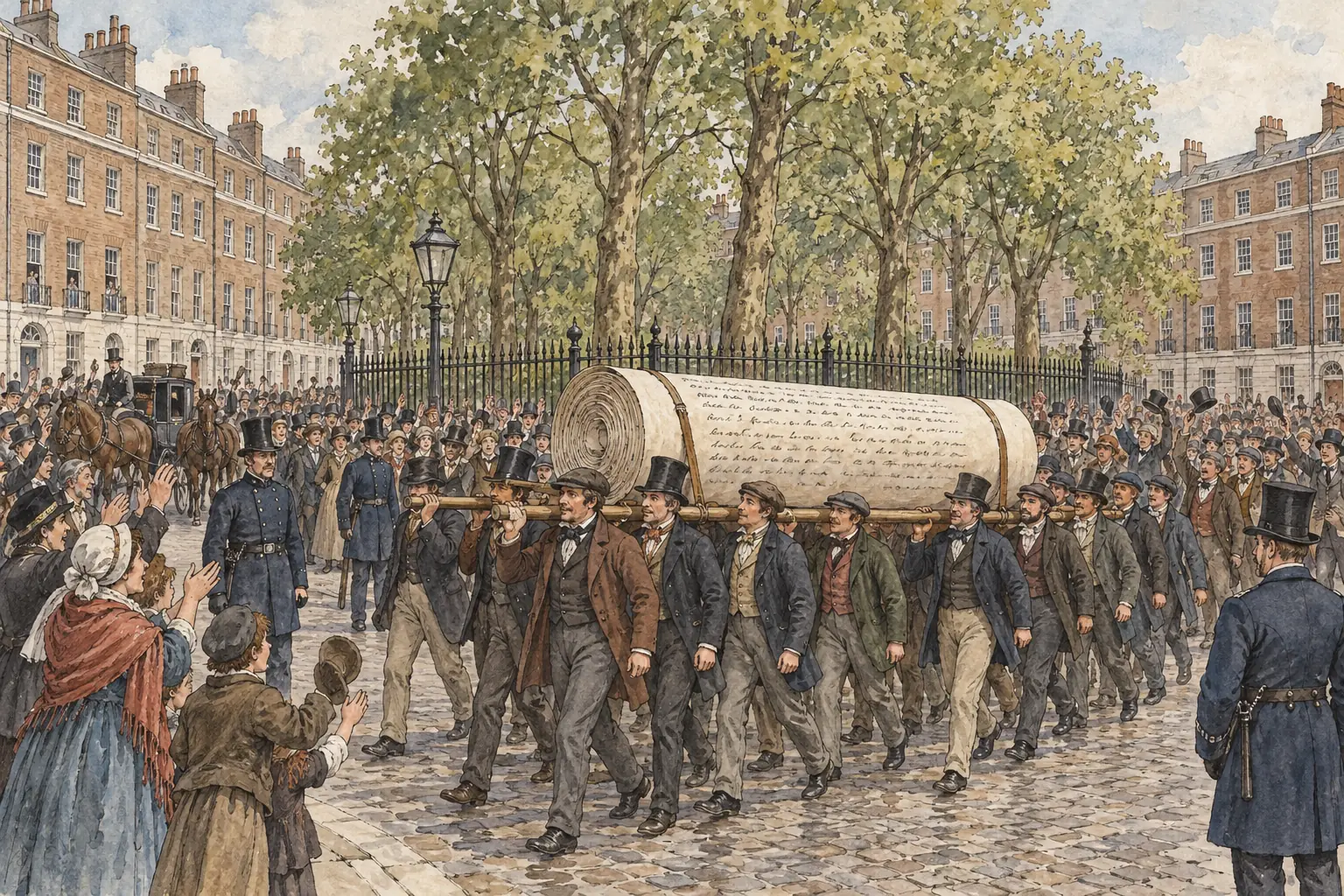
Chartists employed petitions and conventions to advance their demands, but internal divisions over tactics weakened unity. These efforts intersected with other social movements, broadening the appeal.
Main tactics and divisions
- Petitions and conventions - National petitions in 1839, 1842, and 1848 gathered millions of signatures, presented at conventions where delegates debated strategies, but rejections led to riots and arrests.
- Tactical splits - Moral-force supporters favoured legal channels, while physical-force advocates endorsed strikes and uprisings, causing rifts that hampered coordination.
Linked movements
- Temperance campaign - Promoted sobriety to strengthen moral arguments for reform, tying personal improvement to political rights.
- Land plan - O'Connor's scheme to buy estates and allocate smallholdings to workers, aiming for economic independence, though it collapsed due to financial mismanagement.
- Co-operatives - Encouraged worker-owned stores and societies to foster self-reliance, influencing later trade unionism.
Reasons for failure and long-term significance
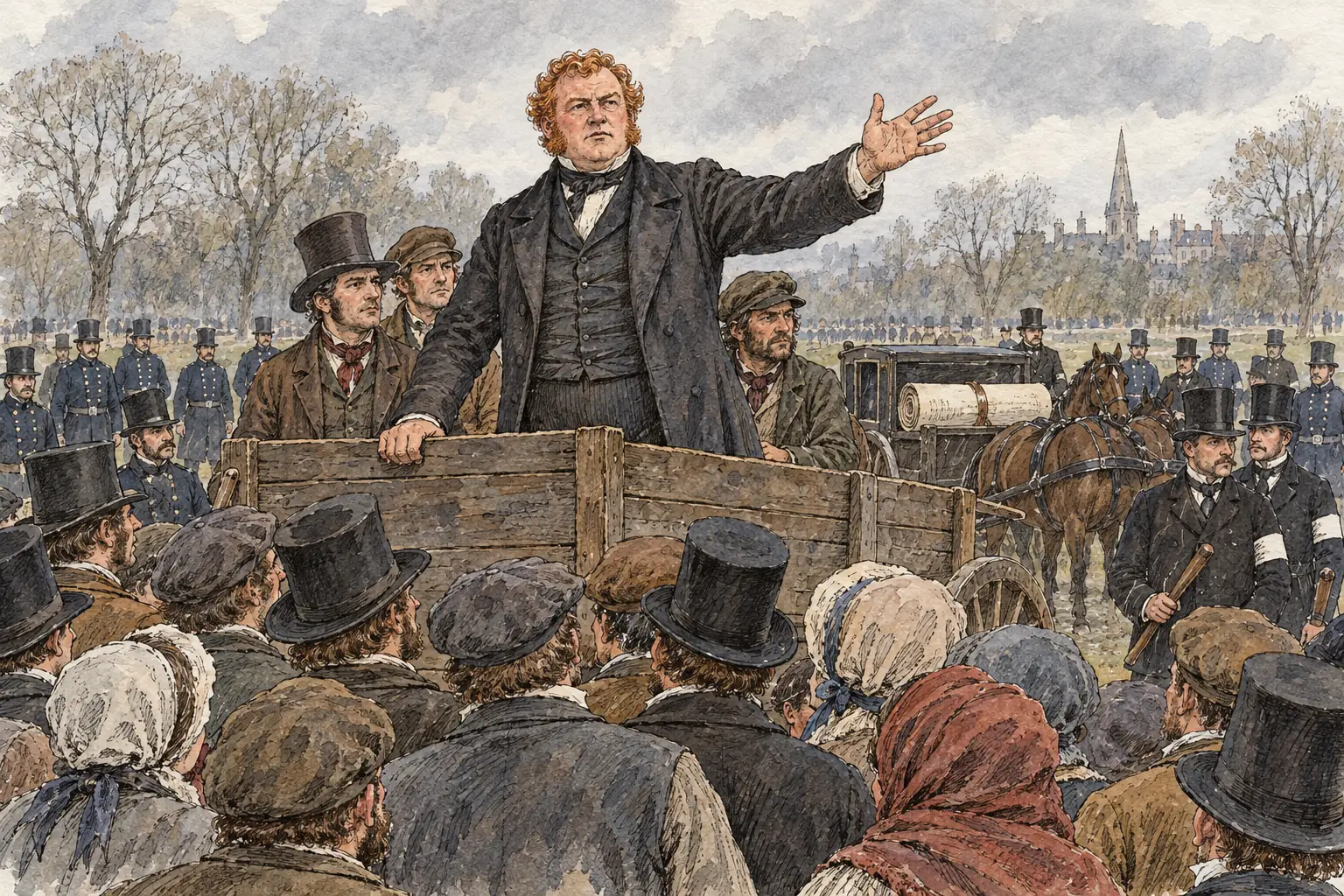
Chartism did not achieve its goals immediately, due to government opposition and internal weaknesses, but it laid groundwork for future democratic advances.
Factors in short-term failure
- Government response - Authorities used troops to suppress protests, arrested leaders, and rejected petitions, exploiting economic improvements in the 1840s to reduce unrest.
- Economic factors - Boom periods lessened urgency for change, while poor communication and regional divisions limited national cohesion.
- Internal issues - Leadership rivalries and tactical disagreements fragmented the movement.
Long-term importance
- Influence on suffrage - Ideas like universal voting inspired later reforms, such as the 1867 and 1884 Acts, which gradually extended the franchise.
- Role of individuals and communication - Figures like O'Connor popularised radical ideas through print media, shaping public discourse on democracy.
- Economic and social legacy - Highlighted working-class grievances, contributing to the growth of trade unions and co-operative movements.