3.2 - Campaigning Groups: Slavery, Corn Laws & Factories
Key facts and dates
The 19th century saw significant campaigning movements in Britain that addressed social injustices, driven by economic pressures, religious convictions, and individual leadership. These efforts led to key legislative changes, though their impacts varied in scope and effectiveness.
Timeline of key events
| Year | Event |
|---|---|
| 1807 | Slave Trade Act passed, banning the transatlantic slave trade but not slavery itself. |
| 1833 | Slavery Abolition Act enacted, ending slavery in most British colonies. |
| 1833 | Factory Act introduced, limiting child labour in textile mills. |
| 1842 | Mines Act prohibited women and young children from underground work. |
| 1846 | Corn Laws repealed, removing import tariffs on grain and affecting food prices. |
Anti-slavery movement: methods and impact
Image 1 of 2: Campaigners collected signatures for mass petitions, sold medallions showing a kneeling enslaved man, and urged people to stop buying slave-grown sugar
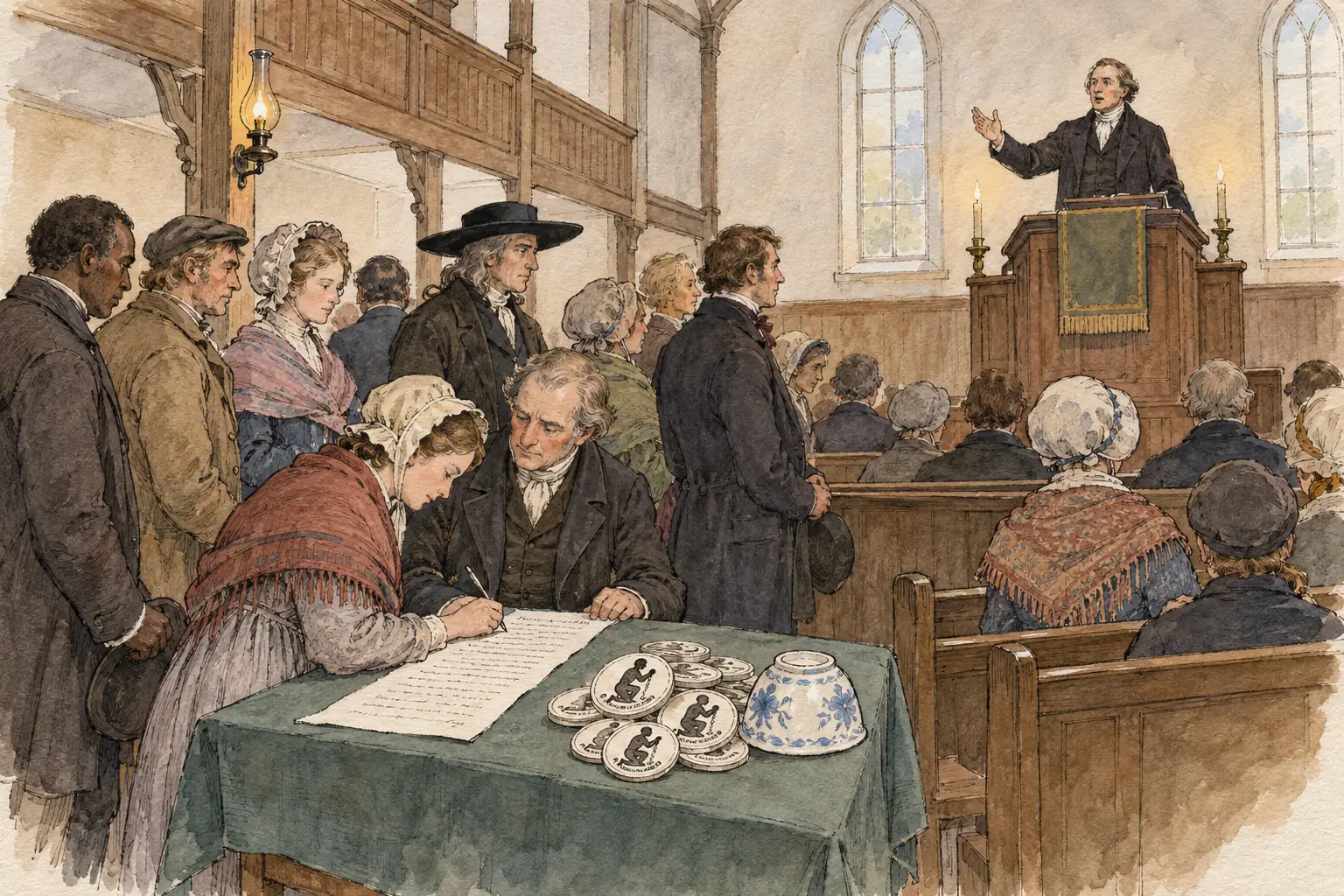
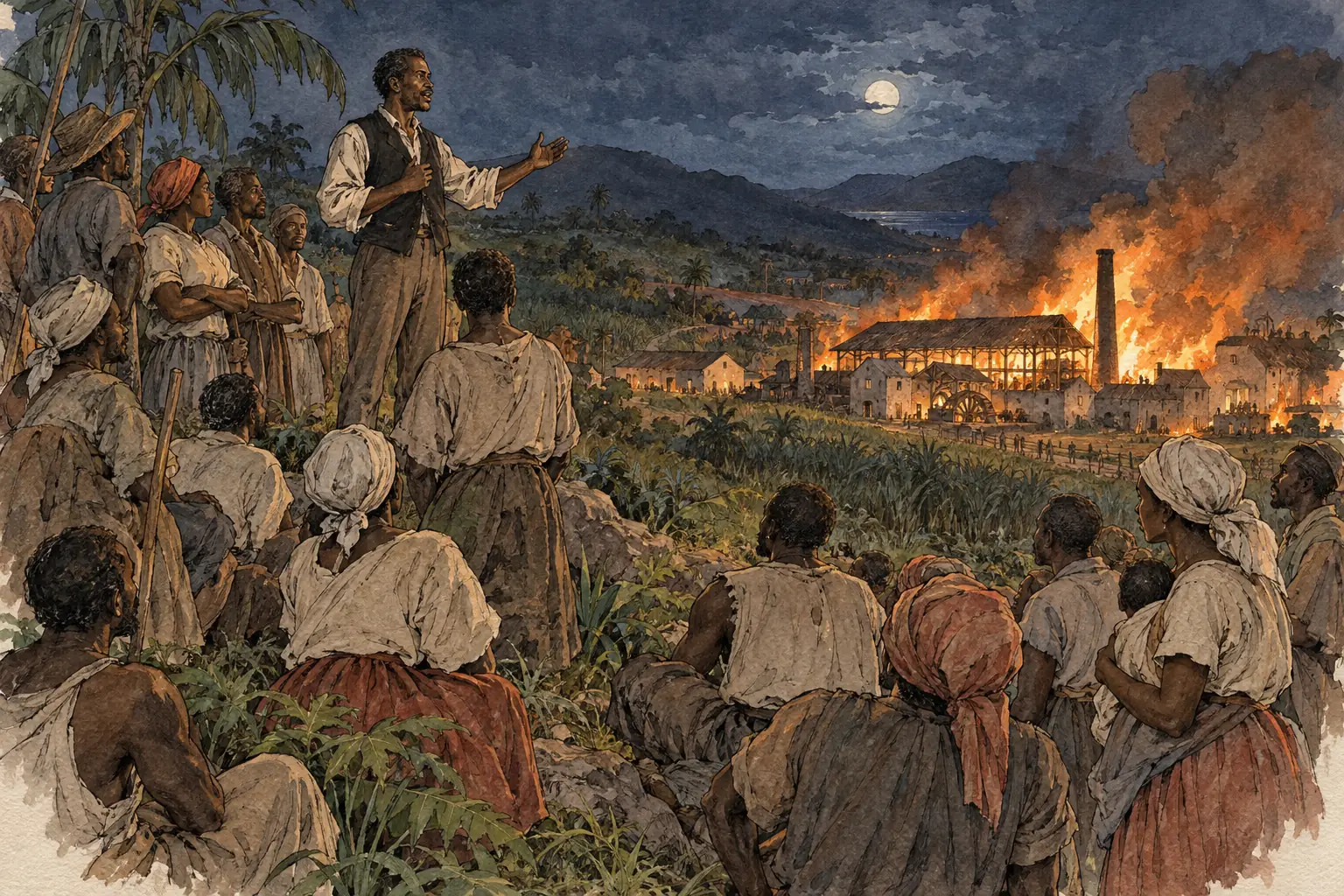
The anti-slavery movement in Britain gained momentum in the late 18th and early 19th centuries, highlighting the brutal conditions faced by enslaved people and employing various campaigning strategies to push for change. It involved a diverse range of individuals and emphasised the active resistance of those enslaved.
Conditions faced by enslaved people
Enslaved individuals, primarily from Africa, endured harsh treatment on plantations in British colonies, including forced labour, physical punishment, and family separation, which campaigners used to build public outrage.
Campaigning methods used in the movement
- Meetings and petitions - Large public gatherings and mass petitions, such as those organised by the Society for the Abolition of the Slave Trade, mobilised support and pressured Parliament.
- Pamphlets and publications - Influential writings, including autobiographies and exposés, spread awareness; these tools educated the public on the horrors of slavery and garnered widespread sympathy.
- Diverse campaigners - Key figures included William Wilberforce, who led parliamentary efforts; Olaudah Equiano, whose memoir detailed his experiences; Ignatius Sancho, a writer advocating through letters; Ellen Craft, who escaped enslavement and spoke publicly; and Elizabeth Heyrick, who pushed for immediate abolition through her writings.
Key legislation and its effects
- Slave Trade Act (1807) - This law prohibited the transportation of enslaved people across the Atlantic, marking a partial victory by disrupting the trade's infrastructure.
- Slavery Abolition Act (1833) - It fully abolished slavery in British territories, freeing approximately 800,000 people, though it included compensation for slave owners and a period of apprenticeship.
Role of enslaved people in resisting enslavement
Enslaved individuals actively resisted through rebellions, escapes, and daily acts of defiance, such as those in the Jamaican uprisings, which heightened pressure on British authorities and contributed to legislative reforms.
Anti-Corn Law League and Corn Law repeal
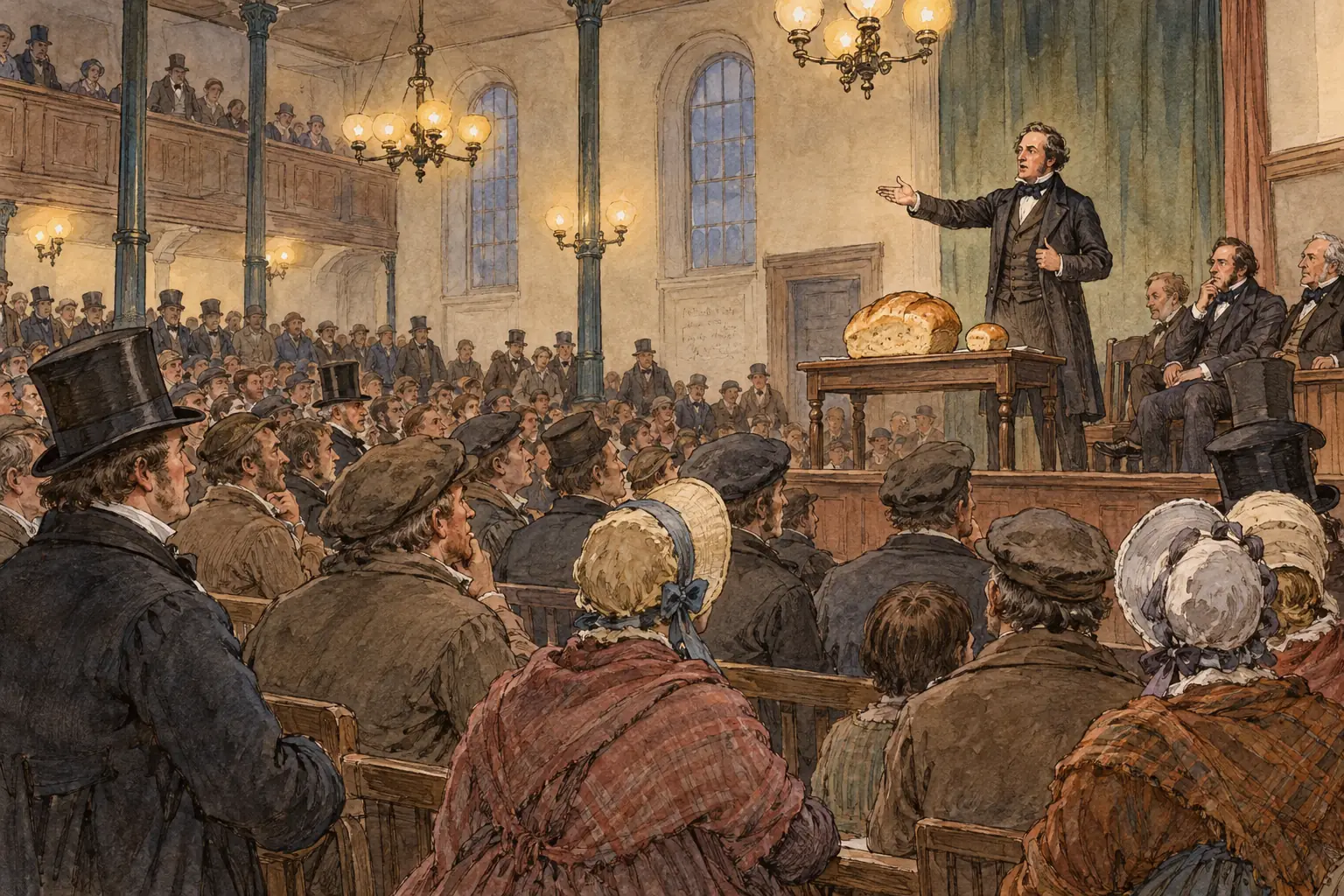
The Anti-Corn Law League formed in 1839 to challenge protective tariffs on imported grain, known as the Corn Laws, which kept food prices high to benefit landowners. The league used mass mobilisation to argue for free trade and achieved repeal in 1846.
Explanation of the Corn Laws
Introduced in 1815, these laws imposed duties on foreign grain to protect British farmers from cheap imports, leading to elevated bread prices and hardship for the working classes during times of poor harvests.
Arguments for repeal
Campaigners argued that repeal would lower food costs, boost industrial growth by freeing up trade, and prevent famines, emphasising economic ideas like free markets over protectionism.
Methods of mass mobilisation
The league organised nationwide lectures, distributed leaflets, and held bazaars to raise funds and awareness, drawing support from urban manufacturers and workers who benefited from cheaper imports.
Effects of the repeal
The 1846 repeal reduced food prices, stimulated trade, and shifted economic power from landowners to industrialists, though it initially caused short-term disruption for some farmers.
Factory reformers and working conditions
Image 1 of 2: Young children worked long hours in textile mills, crawling under the machines to clean them
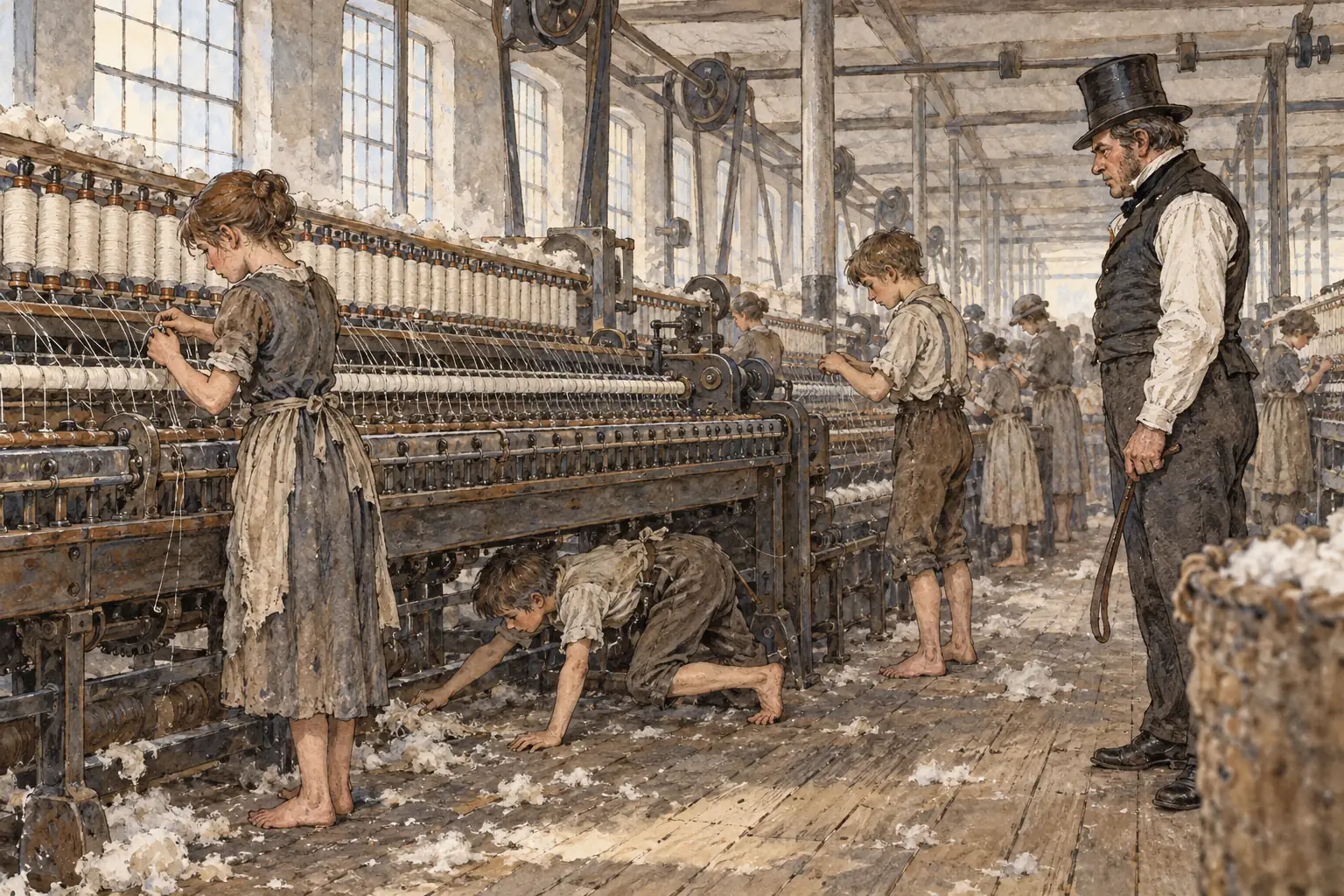
Factory reformers in the early 19th century addressed the dire conditions in mills and mines, where long hours, unsafe machinery, and child labour were common. Philanthropic individuals drove changes through advocacy and model communities.
Conditions in mills and mines
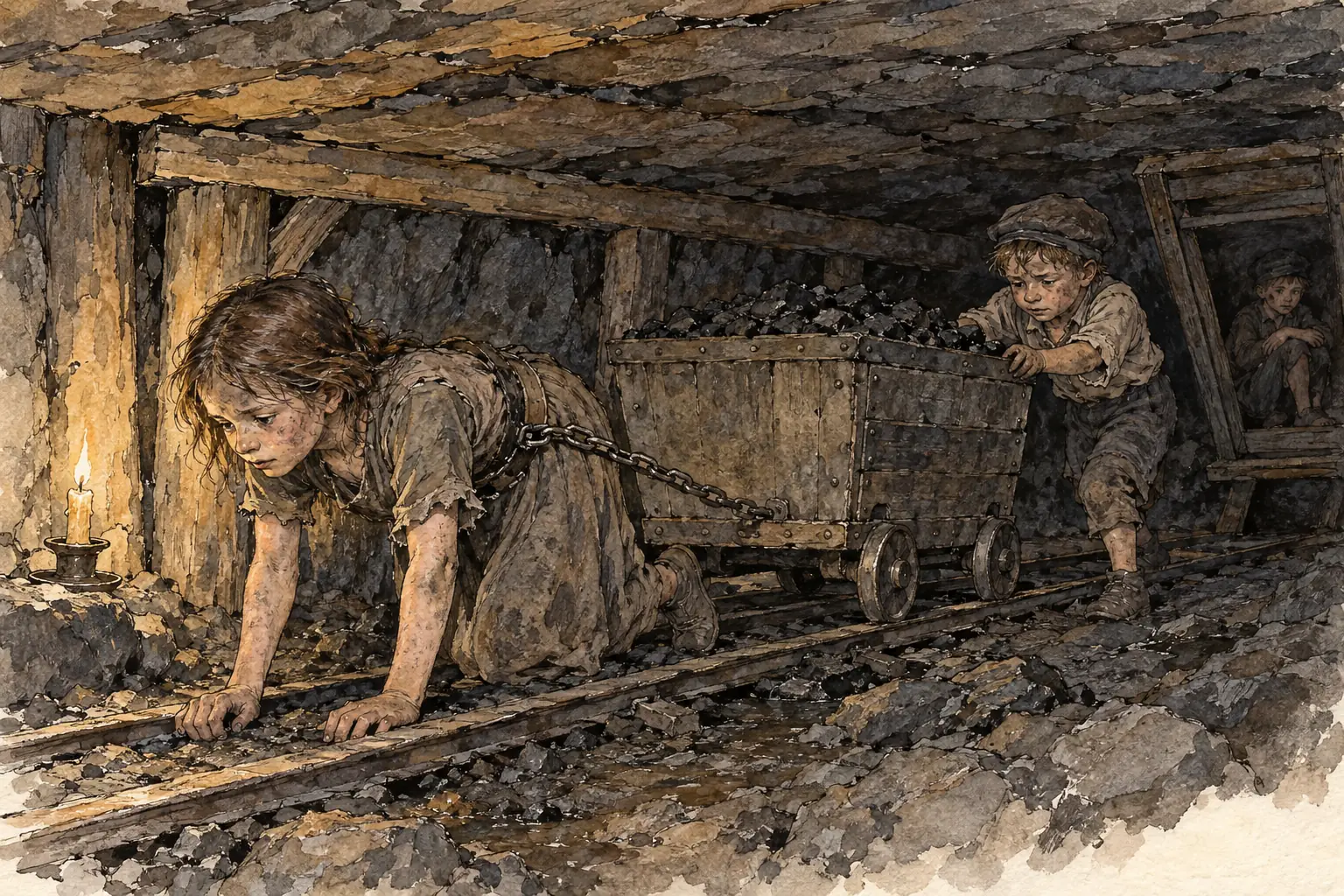
Workers, including children, faced 12- to 16-hour shifts in poorly ventilated factories, with frequent accidents from unguarded equipment; mines involved hazardous underground labour with risks of collapses and lung diseases.
Key legislation for reform
- Factory Act (1833) - Restricted children under nine from working in textile mills and limited older children's hours to nine per day, introducing inspectors to enforce rules.
- Mines Act (1842) - Banned women and boys under ten from underground mining, improving safety and reducing exploitation in coal pits.
Philanthropic and reforming individuals
| Reformer | Contribution |
|---|---|
| Robert Owen | Established model factories with better conditions and education for workers' children. |
| Richard Oastler | Campaigned against child labour, labelling it "Yorkshire slavery". |
| Octavia Hill | Focused on housing reforms for the poor, linking living conditions to workplace issues. |
| Titus Salt | Built Saltaire, a model village with improved housing and facilities for mill workers. |
| The Cadbury family | Created Bournville, providing decent homes and amenities to enhance employee welfare. |
Successes, limitations, and motivating factors
While these movements achieved notable reforms, their successes were often partial, influenced by broader factors like economics, ideas, and religion. Evaluating them reveals both progress and ongoing challenges.
Successes of the movements
- Anti-slavery ended legal enslavement in British territories, factory reforms improved child protections, and Corn Law repeal lowered food costs, demonstrating the power of organised campaigning.
Limitations of the movements
- Anti-slavery did not immediately address racism or economic inequalities; factory acts excluded many industries and were poorly enforced; Corn Law repeal benefited urban areas but harmed rural economies.
Motivating factors behind the campaigns
- Ideas and economics - Enlightenment ideals of human rights and free trade economics drove anti-slavery and Corn Law efforts, while industrial growth highlighted factory abuses.
- Role of the individual and government - Charismatic leaders influenced public opinion, and parliamentary support was crucial for legislation.
- Communication and religion - Printed materials spread messages effectively, and religious motivations, such as Christian ethics of compassion, inspired many campaigners across all movements..