3.5 - Racial Policy: Persecution & 'Final Solution'
Key facts and dates
Nazi racial policy evolved from initial discrimination in the 1930s to systematic genocide during the Second World War, targeting Jews and other groups deemed inferior. This escalation reflected ideological goals of racial purity, intensified by wartime conquests and bureaucratic efficiency. The timeline below outlines the major developments in this process.
Timeline of key events
| Year | Event |
|---|---|
| 1933 | Boycott of Jewish businesses begins, marking early economic exclusion. |
| 1935 | Nuremberg Laws strip Jews of citizenship and ban intermarriage with Aryans. |
| 1938 | Kristallnacht pogrom destroys Jewish property and leads to mass arrests. |
| 1939 | T4 euthanasia programme targets people with disabilities for sterilisation and killing. |
| 1940 | Establishment of ghettos in occupied Poland to isolate Jewish populations. |
| 1941 | Einsatzgruppen initiate mass shootings in Eastern Europe following invasion of Soviet Union. |
| 1942 | Wannsee Conference formalises the 'Final Solution', leading to deportations to extermination camps. |
Escalation from boycott to systematic persecution
Image 1 of 2: SA men stood outside Jewish shops during the boycott of April 1933 to turn customers away
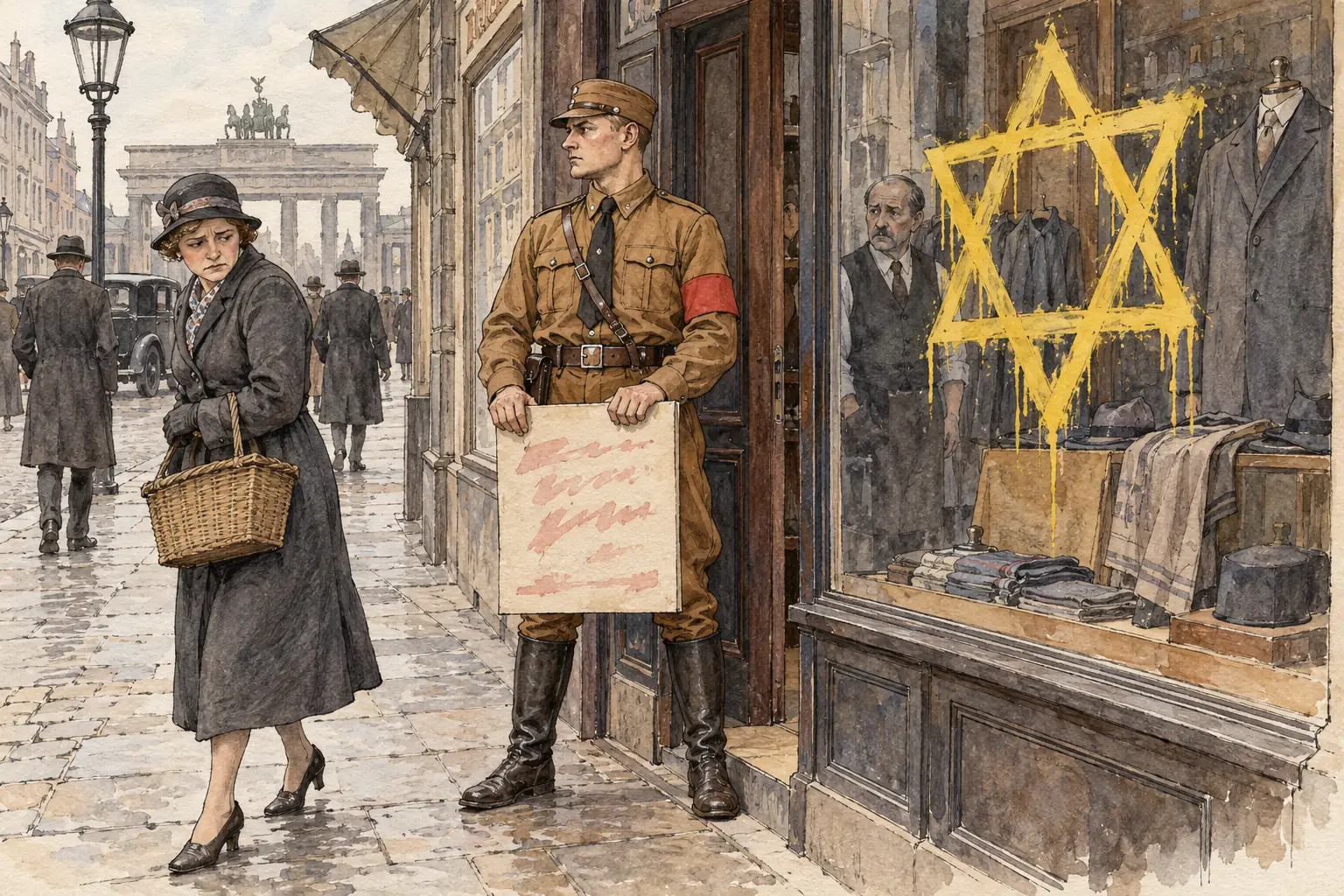
Nazi racial policy began with targeted discrimination against Jews shortly after Hitler came to power, gradually intensifying through legal and violent means. This progression aimed to exclude Jews from German society, economy, and public life, setting the stage for later atrocities.
Initial boycott and exclusion in 1933
The regime launched an economic boycott of Jewish shops and businesses in April 1933, encouraged by SA stormtroopers who painted anti-Semitic slogans and intimidated customers. This was followed by laws barring Jews from civil service roles, universities, and professions like law and medicine, effectively isolating them from mainstream society.
The Nuremberg Laws of 1935
These laws formalised racial discrimination by defining Jewish identity based on ancestry and revoking citizenship for non-Aryans. They prohibited marriages or sexual relations between Jews and Germans, and introduced the Reich Citizenship Law, which limited rights to those of "German blood". Segregation extended to public spaces, with Jews banned from parks, theatres, and schools.
Aryanisation of businesses and Kristallnacht in 1938
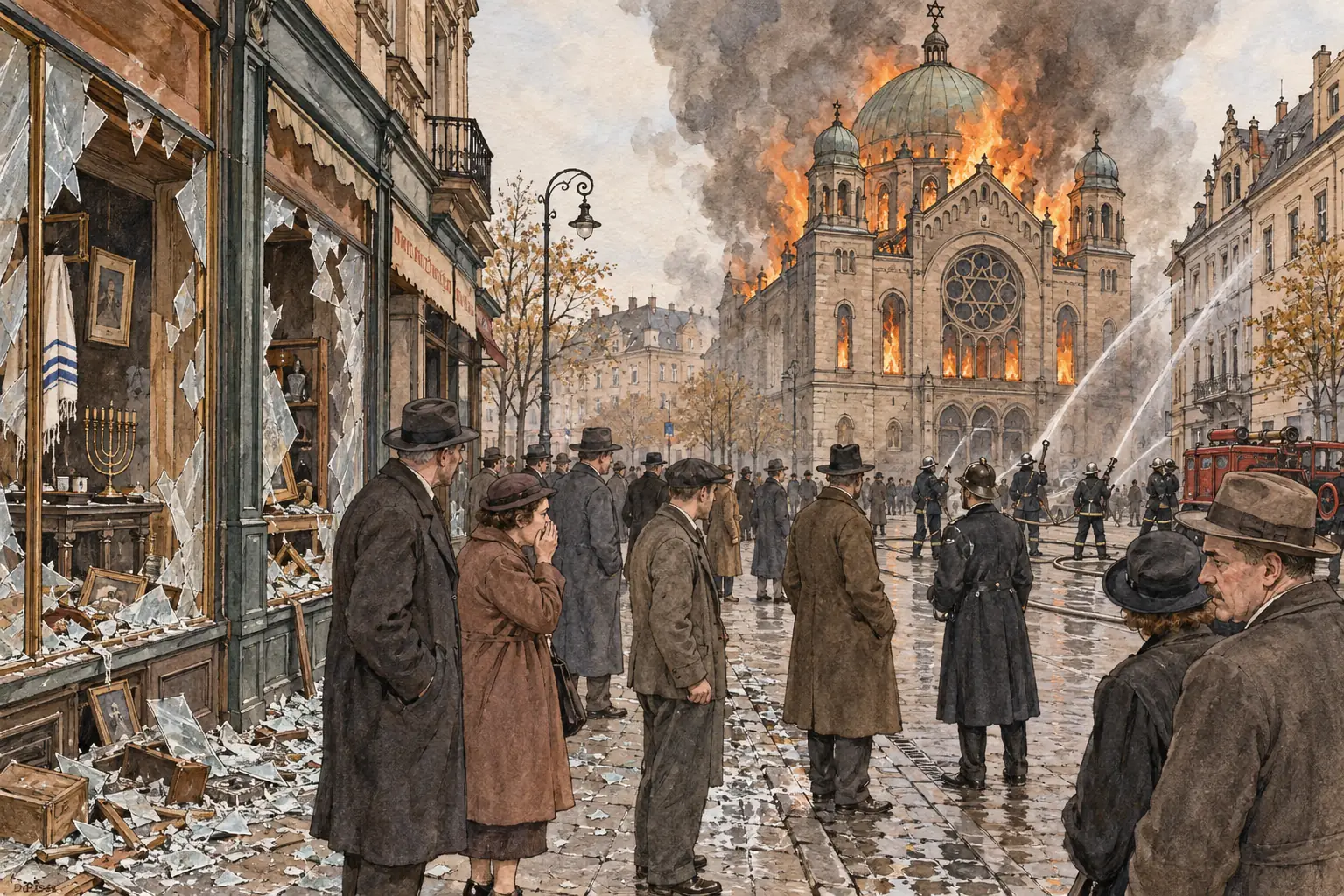
Aryanisation involved the forced transfer of Jewish-owned businesses to non-Jewish Germans, often through coerced sales at low prices. This culminated in Kristallnacht on 9-10 November 1938, a state-orchestrated pogrom where synagogues were burned, shops looted, and around 30,000 Jewish men arrested and sent to concentration camps. The event marked a shift to overt violence and accelerated emigration pressures.
Persecution of Roma, Sinti, disabled and LGBTQ+
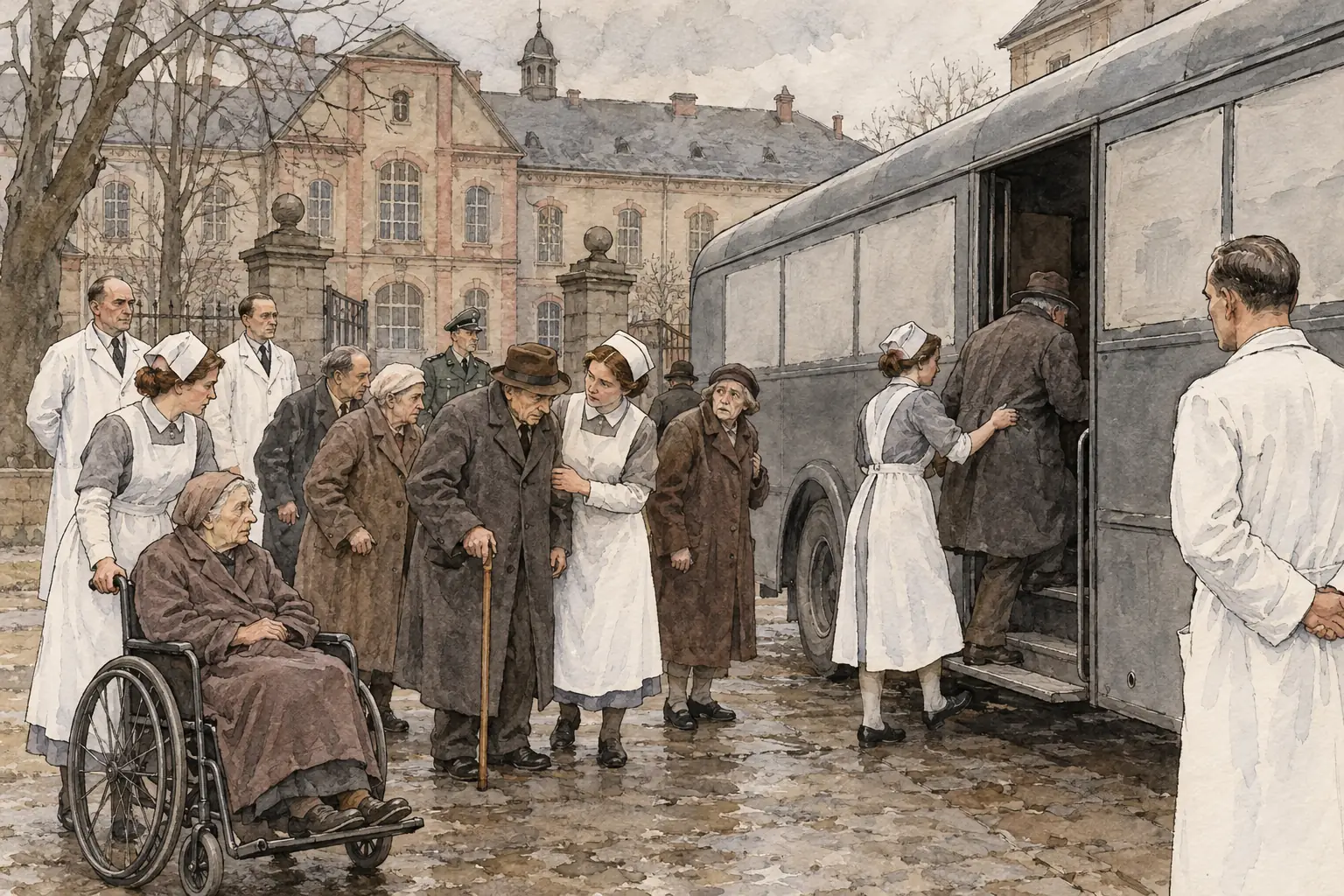
Beyond Jews, Nazi policy targeted other groups seen as threats to racial purity or societal norms. These persecutions were justified under eugenics and ideology, leading to sterilisation, imprisonment, and murder.
Persecution of Roma and Sinti
Roma and Sinti groups, labelled as "asocial" and racially inferior, faced registration, forced labour, and deportation to camps. From 1936, they were subjected to discriminatory laws similar to those against Jews, with mass killings intensifying during the war, resulting in the deaths of hundreds of thousands.
Persecution of people with disabilities
The T4 programme, starting in 1939, aimed at "euthanasia" for those with physical or mental disabilities, viewed as burdens on the state. It involved gassing in specialised centres, killing around 70,000 by 1941, and set precedents for later extermination methods. Earlier, the 1933 sterilisation law affected over 400,000 individuals deemed genetically unfit.
Persecution of LGBTQ+ Germans
Homosexual acts, criminalised under Paragraph 175, led to arrests of around 100,000 men, with many sent to concentration camps marked by pink triangles. Lesbians faced less systematic targeting but endured social stigma and forced conformity. The regime promoted these actions as protecting moral and racial health.
Wartime radicalisation and the 'Final Solution'
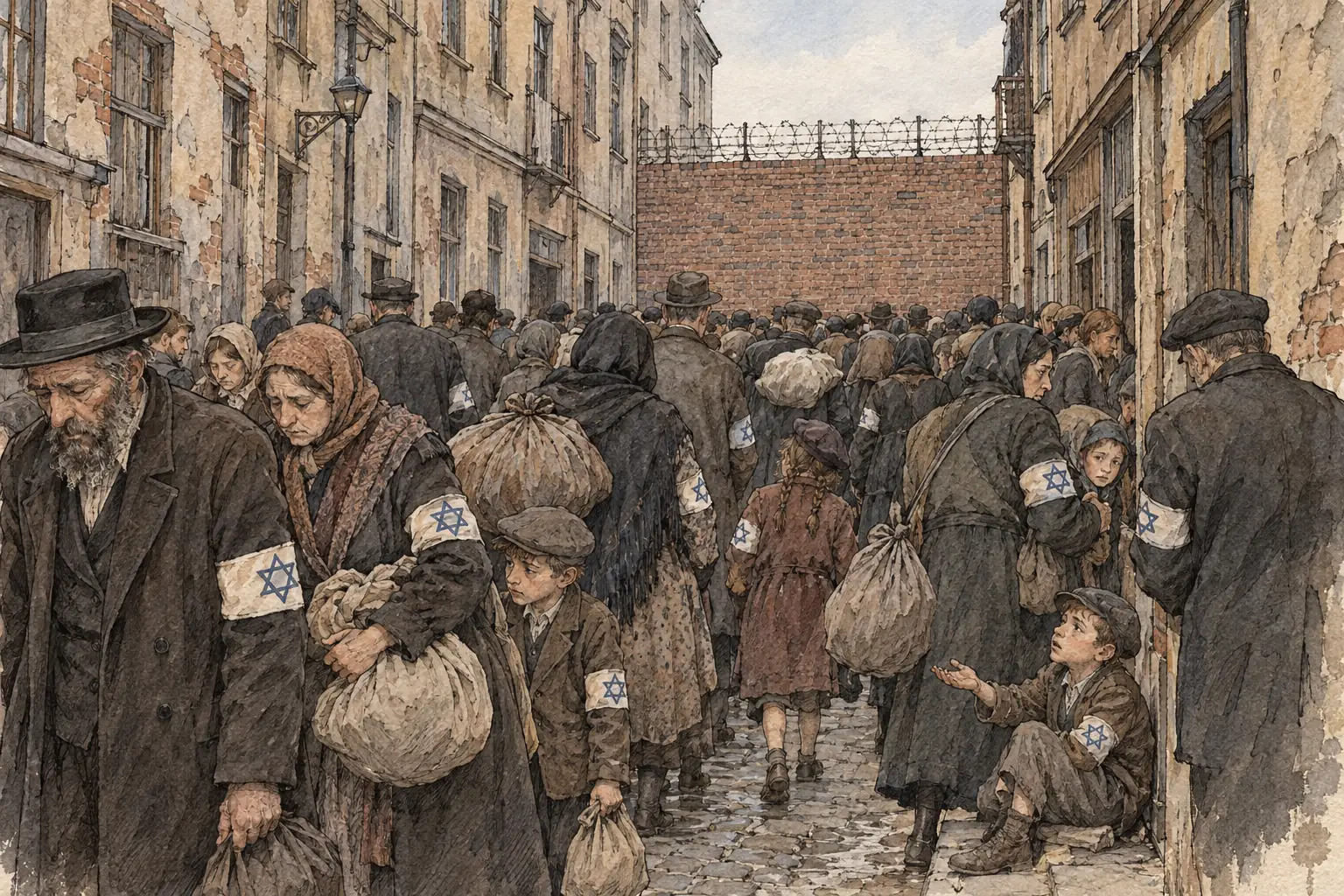
Image 1 of 2: The Warsaw ghetto, where starvation, disease and forced labour caused high death rates
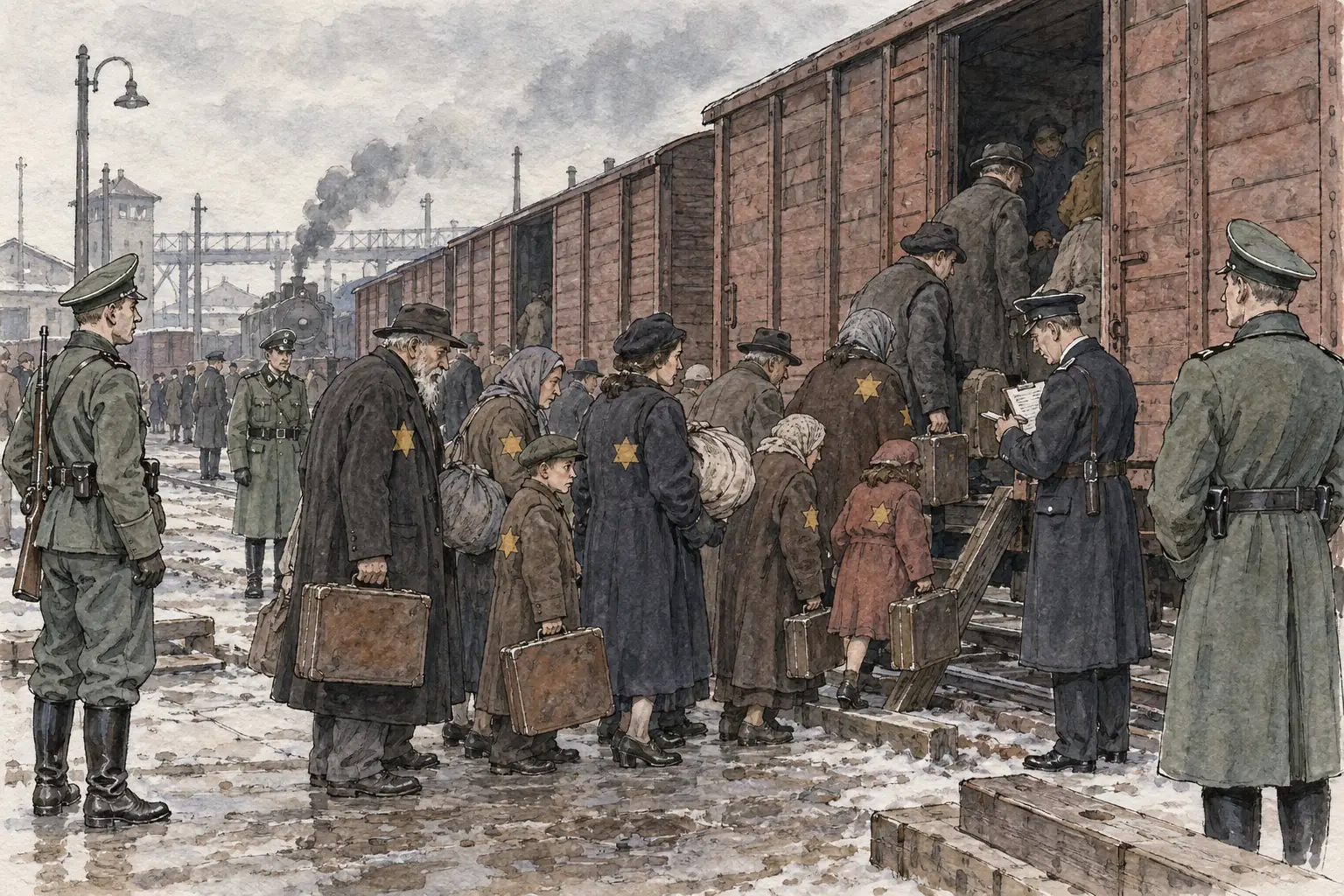
The outbreak of war in 1939 radicalised racial policies, shifting from exclusion to extermination, particularly in occupied Eastern Europe. This phase exploited conquests to implement mass murder on an industrial scale.
Establishment of ghettos in occupied territories
From 1940, Jews in Poland and other areas were confined to overcrowded ghettos like Warsaw and Lodz, where starvation, disease, and forced labour caused high death rates. These served as holding areas before deportations.
Einsatzgruppen shootings in the East
Following the 1941 invasion of the Soviet Union, mobile killing squads known as Einsatzgruppen conducted mass shootings of Jews, communists, and others, murdering over a million in pits and ravines. This method proved inefficient, prompting a search for more systematic approaches.
The 1942 decision for the 'Final Solution'
The Wannsee Conference in January 1942 coordinated the genocide, deciding on deportations to extermination camps like Auschwitz, Treblinka, and Sobibor. Gas chambers using Zyklon B enabled the murder of millions, with the 'Final Solution' aiming for the total elimination of European Jews.
Mechanisms of implementing racial policies
The implementation of Nazi racial policies relied on a complex network of organisations and societal factors, blending bureaucracy with coercion. This enabled widespread participation without direct orders for every action.
Bureaucratic and logistical mechanisms
The state bureaucracy managed deportations through detailed planning, while the German railways transported victims to camps under the guise of resettlement. The SS, led by Himmler, oversaw concentration and extermination camps, using efficient administrative systems to process arrivals and selections.
Roles of complicity, fear, and coercion
Ordinary Germans and occupied populations participated through complicity, often motivated by fear of reprisals or career incentives. Coercion included propaganda to normalise anti-Semitism, while denunciations by citizens aided arrests. Collaborationist governments in occupied countries assisted in round-ups, spreading responsibility across society.
Victims' experiences, survival and resistance
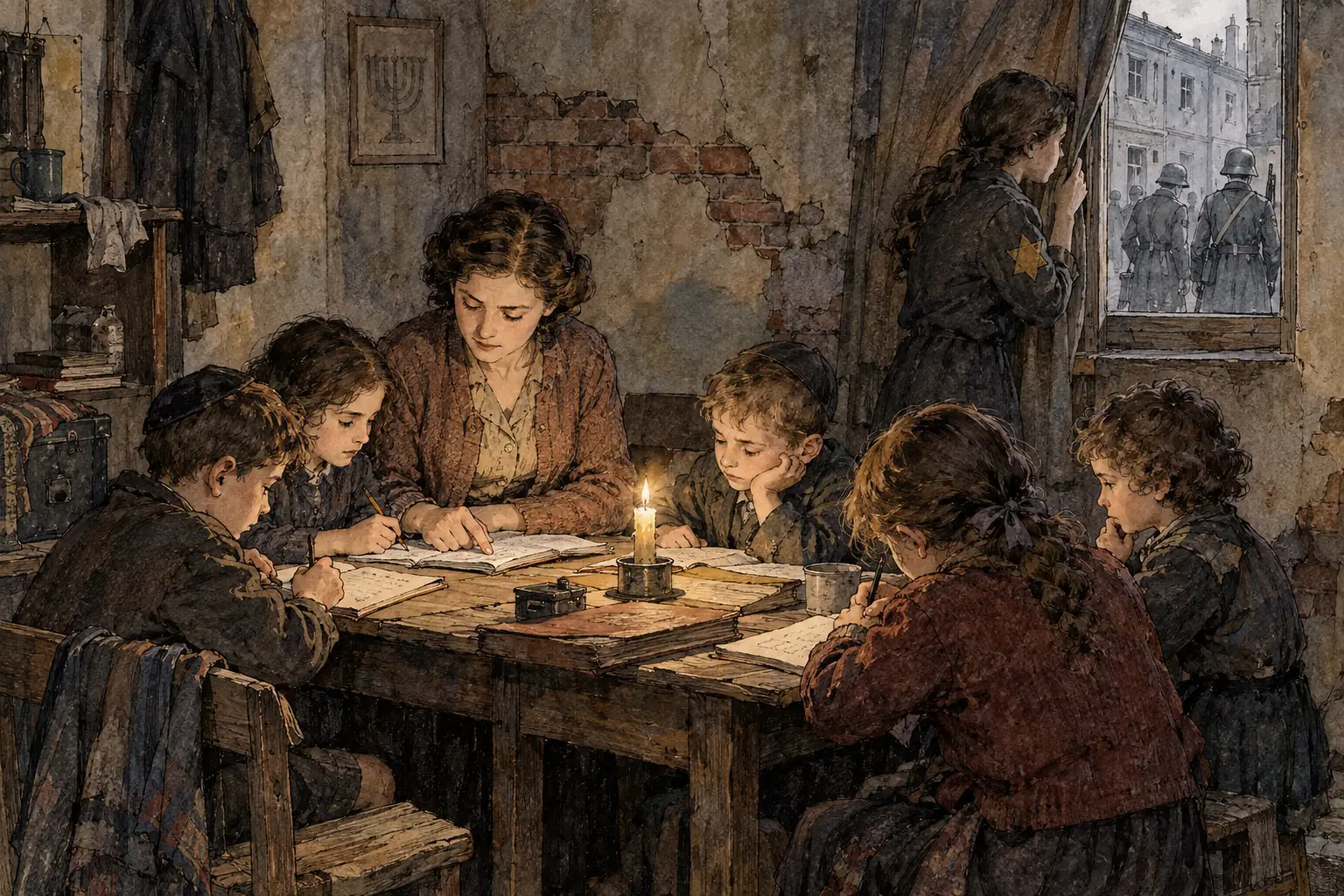
Victims of Nazi persecution endured varied hardships, from daily discrimination to the horrors of camps, yet many showed resilience through survival tactics and active resistance. These experiences highlight human endurance amid systematic dehumanisation.
Varied experiences of victims
Jewish victims faced escalating terror, from loss of rights to ghetto life and camp selections, where families were separated and subjected to forced labour, medical experiments, or immediate death. Roma, disabled individuals, and LGBTQ+ people encountered similar dehumanisation, though often in different camp sections or through targeted killings.
Strategies for survival and resistance
Survival involved small acts like sharing food in ghettos or forging documents for escape. Resistance took forms such as the Warsaw Ghetto Uprising in 1943, where fighters held off German forces for weeks, or underground networks smuggling children to safety. Spiritual resistance included secret religious observances, while some joined partisan groups in forests to sabotage Nazi operations.