2.7 - The 'Thaw' Tested: Hungary 1956 & U-2 Crisis 1960
Key facts and dates
The period following Stalin's death in 1953 saw tentative efforts towards easing Cold War tensions under Soviet leader Nikita Khrushchev, known as the 'Thaw'. However, events like the Hungarian uprising and the U2 spy plane incident revealed the fragility of improved relations, highlighting ongoing mistrust between the superpowers.
Timeline of key events
- 1953 – Stalin's death leads to Khrushchev's rise and the start of de-Stalinisation.
- 1955 – Geneva Summit fosters cautious optimism about peaceful coexistence.
- 1956 – Hungarian uprising begins; Imre Nagy announces reforms and withdrawal from the Warsaw Pact.
- November 1956 – Soviet forces invade Hungary, crushing the rebellion and reinstalling a pro-Soviet government.
- 1959 – Vienna Summit between Khrushchev and Eisenhower shows brief warming in relations.
- 1 May 1960 – U.S. U2 spy plane shot down over Soviet territory; pilot Gary Powers captured.
- May 1960 – Paris Summit collapses due to the U2 incident, escalating tensions.
Khrushchev's policy of peaceful coexistence
Image 1 of 2: In his Secret Speech of February 1956 Khrushchev denounced Stalin's crimes to a closed session of the Soviet Communist Party congress
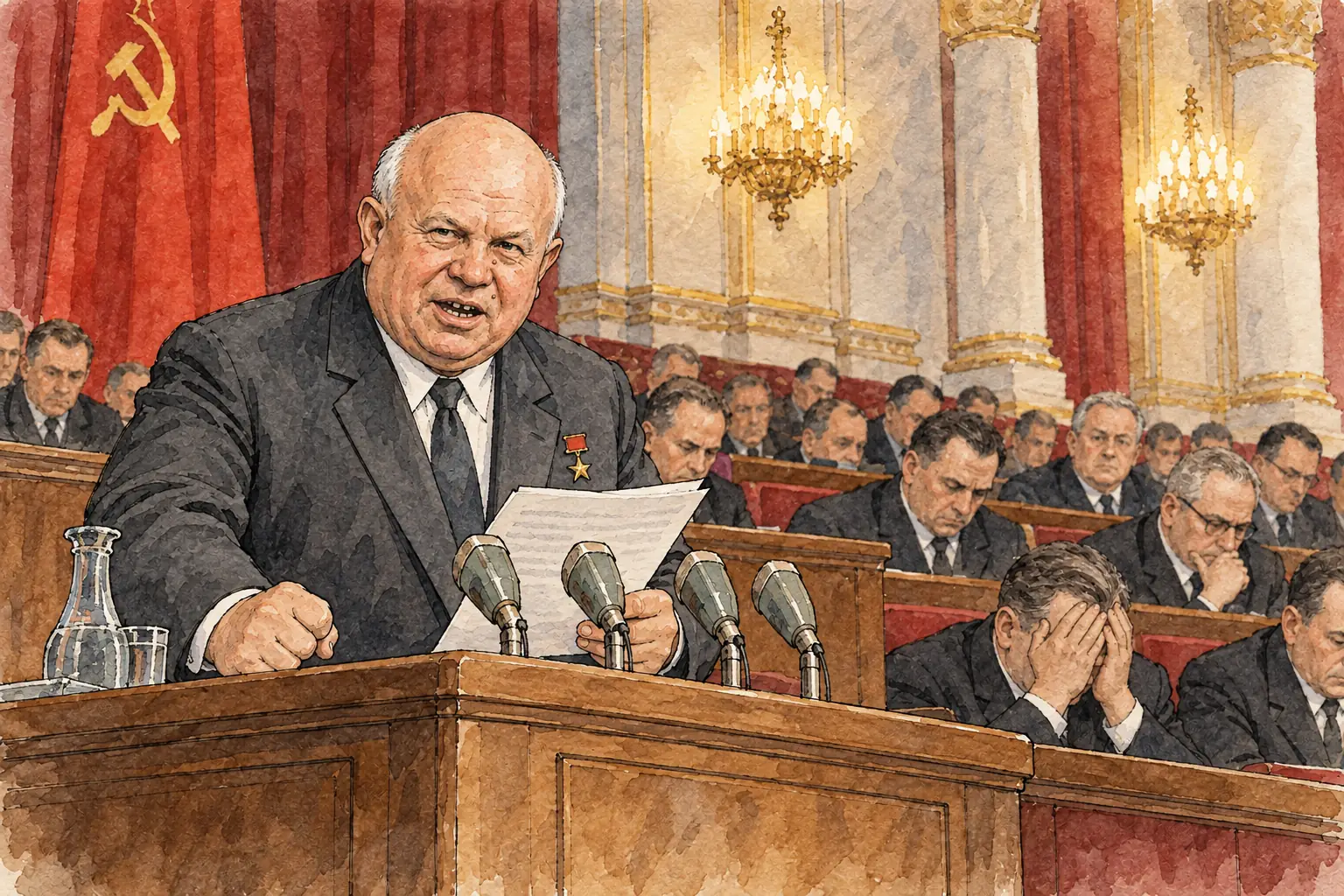
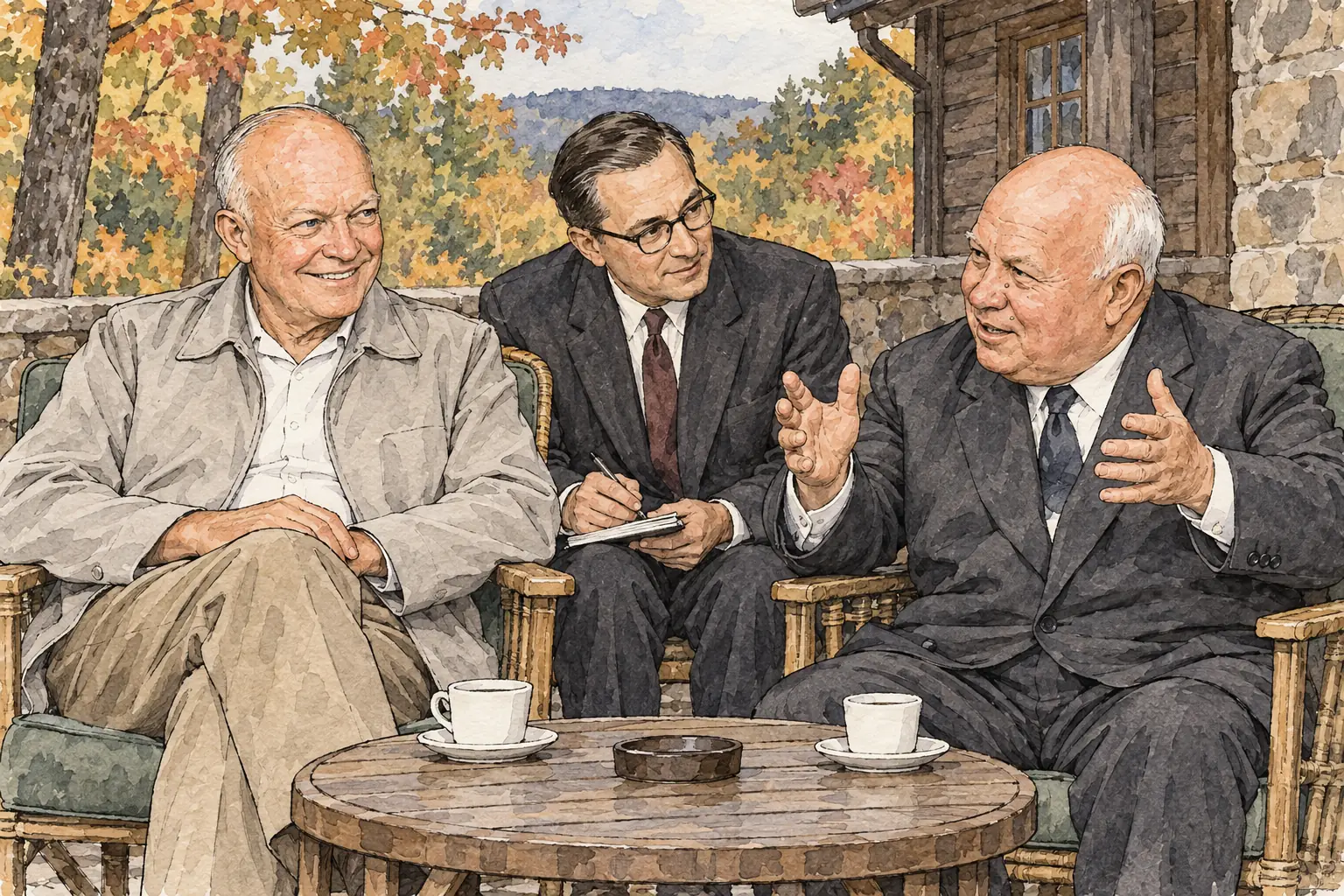
After Joseph Stalin's death in 1953, Nikita Khrushchev emerged as the new Soviet leader and introduced a policy of peaceful coexistence, aiming to reduce the risk of nuclear conflict with the West while still competing ideologically. This marked a limited 'Thaw' in Cold War relations, characterised by diplomatic summits and a degree of cautious optimism, though underlying suspicions persisted.
Main features of peaceful coexistence
- De-Stalinisation efforts - Khrushchev's 1956 'Secret Speech' denounced Stalin's brutal regime, signalling a shift towards less repressive policies within the Soviet bloc and opening doors for dialogue with the United States.
- Diplomatic engagements - Summits such as Geneva in 1955 and Vienna in 1959 allowed leaders like Khrushchev and U.S. President Eisenhower to discuss arms control and European security, fostering hopes for reduced hostilities.
- Cautious optimism - The policy emphasised competition through economic and scientific means rather than direct confrontation, leading to temporary cultural exchanges and a slight easing of propaganda wars.
- Limitations of the 'Thaw' - Despite these steps, the policy did not dismantle core ideological divides, and Soviet control over Eastern Europe remained firm, setting the stage for tests of its boundaries.
The Hungarian uprising and Soviet intervention
Image 1 of 3: On 23 October 1956 protesters in Budapest pulled down a giant statue of Stalin and cut the communist emblem out of Hungarian flags
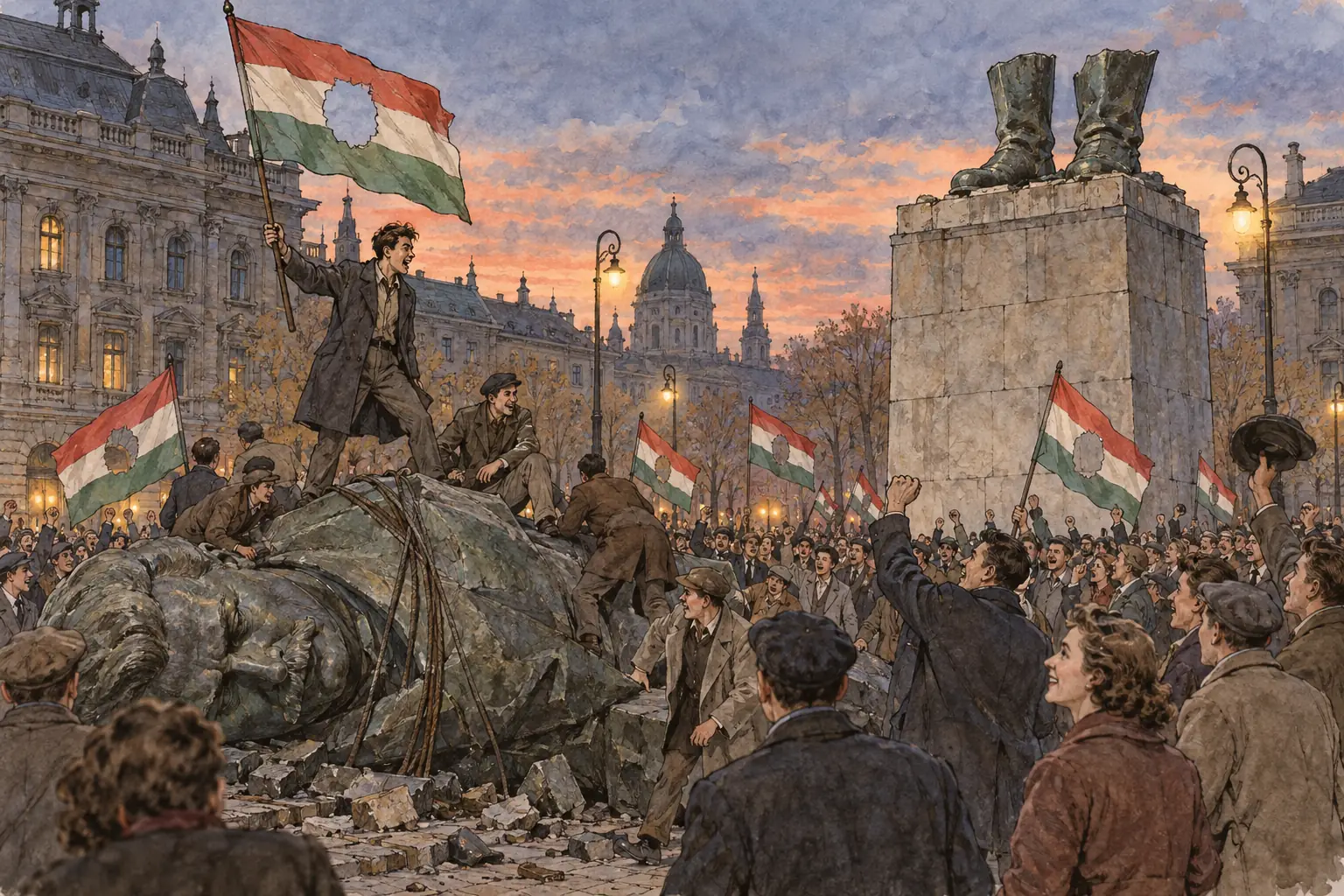
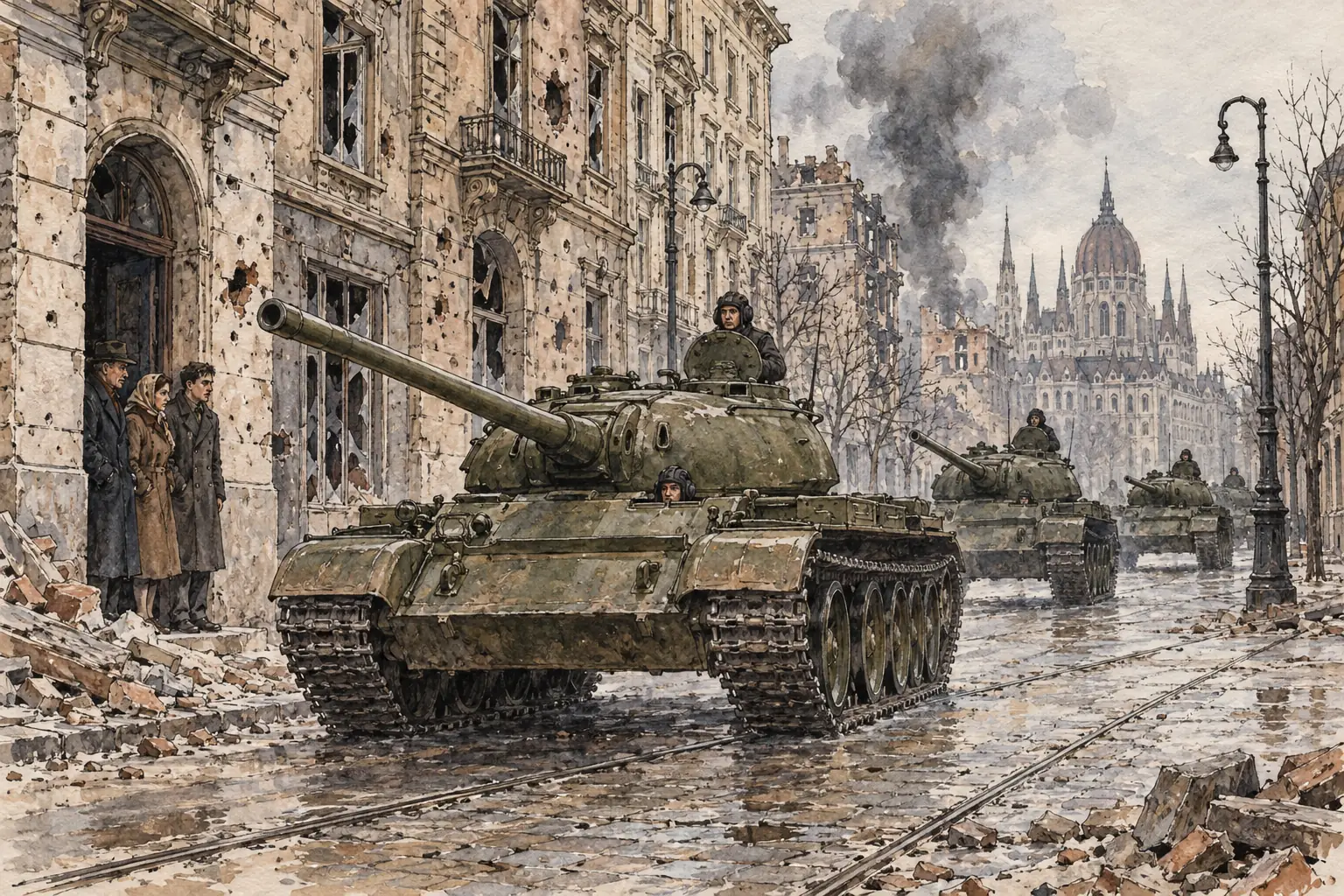
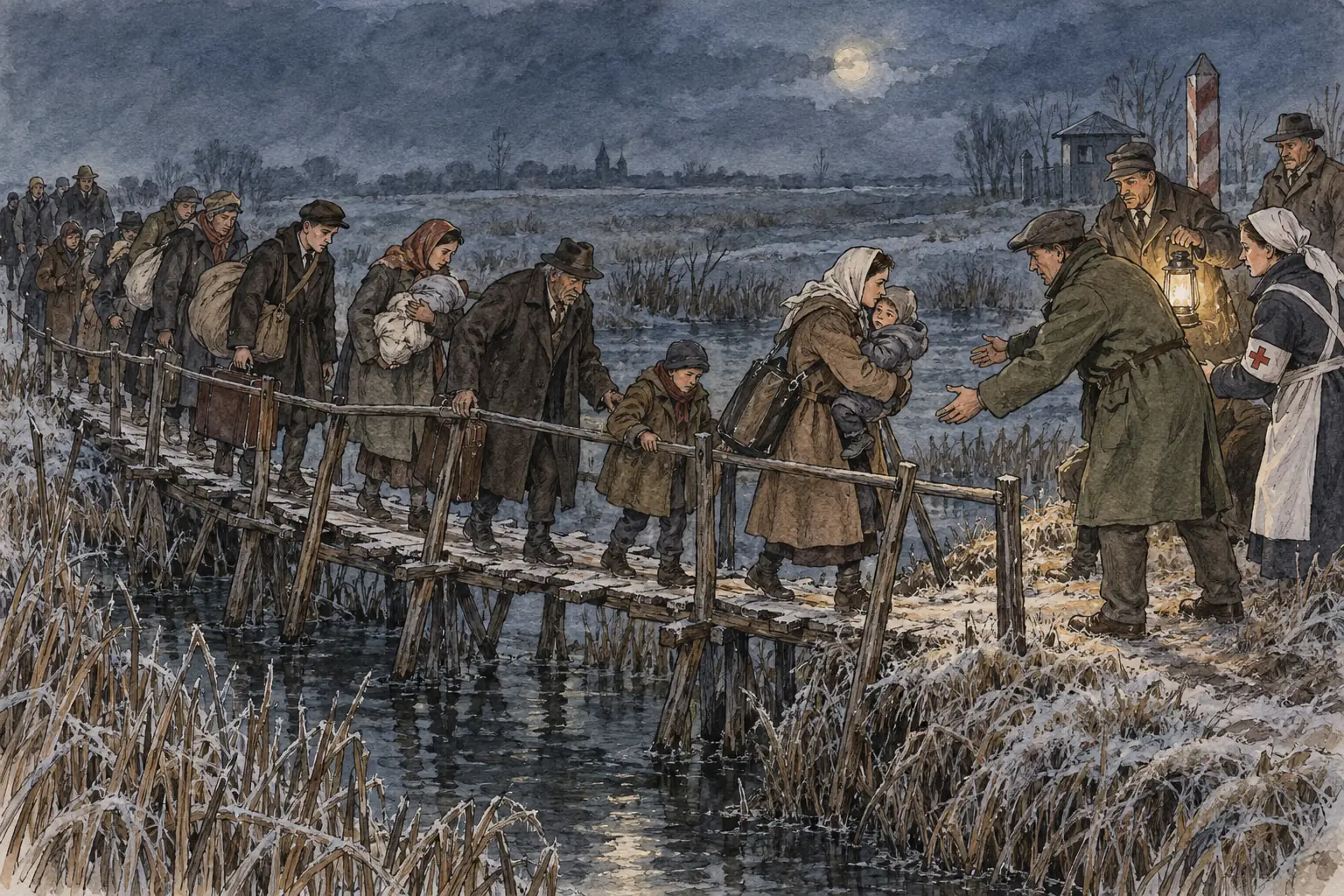
The Hungarian uprising in 1956 exposed the limits of Khrushchev's 'Thaw', as popular demands for reform challenged Soviet dominance in Eastern Europe. What began as student protests escalated into a nationwide rebellion, prompting a harsh Soviet response that demonstrated the boundaries of peaceful coexistence.
Key developments in the Hungarian uprising
- Origins of unrest - Widespread dissatisfaction with Soviet-imposed communism, including economic hardships and political repression, led to mass demonstrations in Budapest starting in October 1956.
- Nagy's reforms - Imre Nagy, appointed as prime minister, introduced changes such as multi-party elections, greater press freedom, and plans to withdraw Hungary from the Warsaw Pact, aiming for neutrality.
- Soviet intervention - In November 1956, Soviet troops and tanks invaded Hungary, overthrowing Nagy's government after he declared withdrawal from the Warsaw Pact; the operation resulted in thousands of deaths and the arrest of Nagy, who was later executed.
- Consequences - A pro-Soviet regime under János Kádár was installed, reinforcing the Brezhnev Doctrine's precursor that the Soviet Union would intervene to protect socialism; this event deterred similar uprisings elsewhere in the bloc.
The U2 crisis and its impact on the Paris Summit
Image 1 of 2: The Soviet Union put the wreckage of Gary Powers' U-2 on public display in Moscow
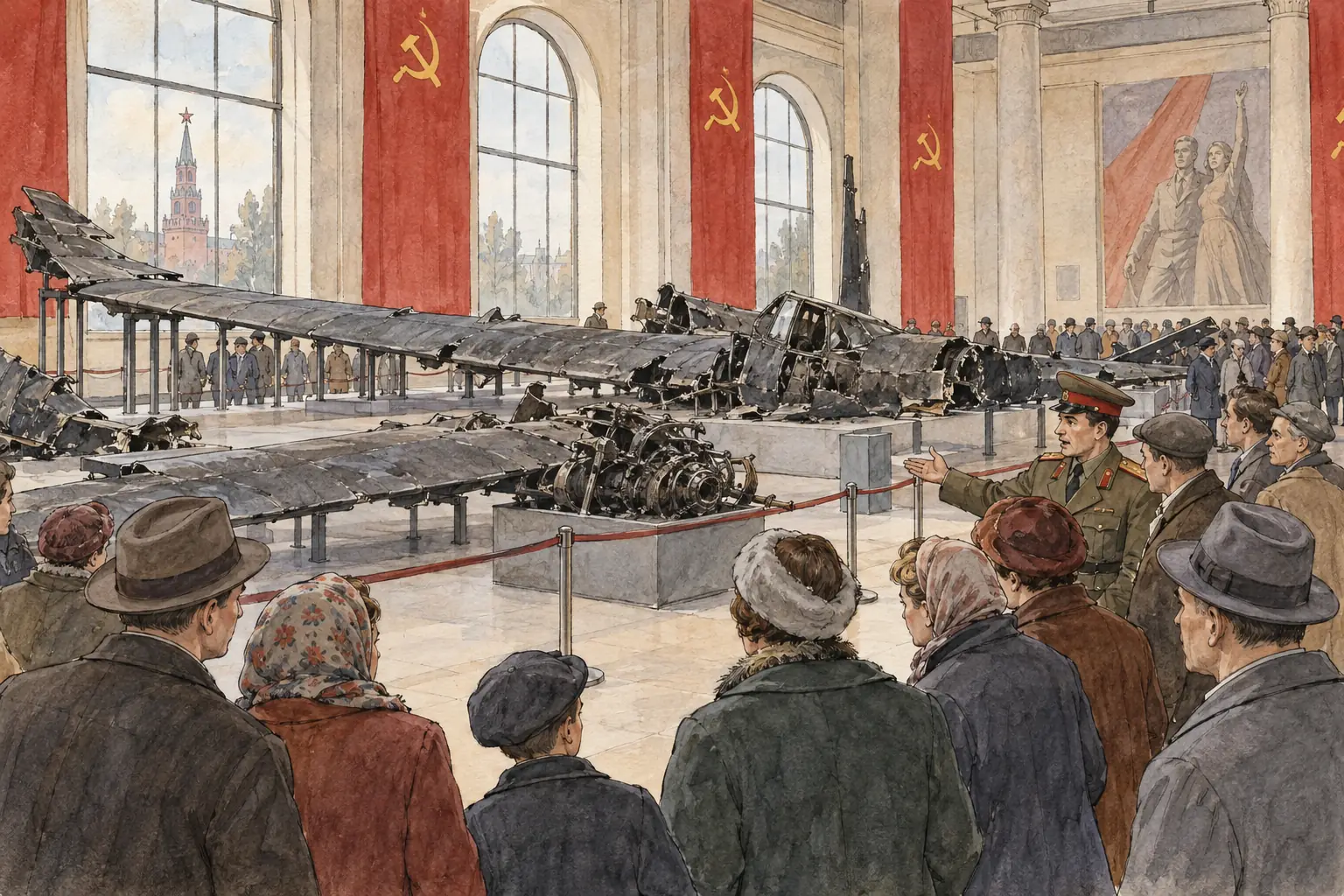
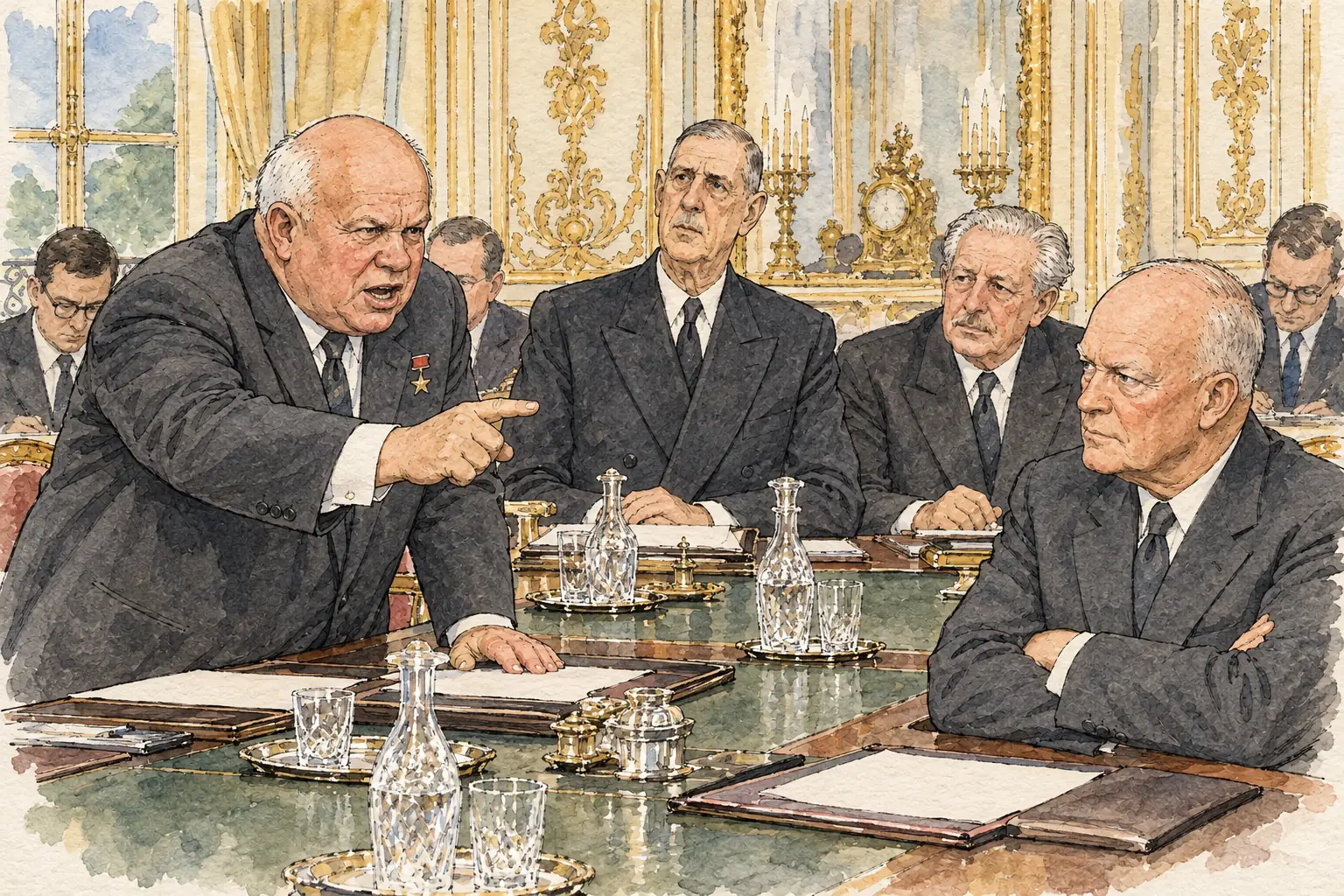
The U2 crisis in 1960 involved the downing of a U.S. spy plane over Soviet airspace, which shattered fragile trust and derailed diplomatic progress. This incident underscored the role of espionage in undermining efforts towards peaceful coexistence.
Details of the U2 incident
- The flight and capture - On 1 May 1960, American pilot Gary Powers was shot down while conducting reconnaissance over the Soviet Union in a U2 aircraft, designed for high-altitude photography of military sites.
- Initial U.S. response - The Eisenhower administration initially claimed it was a weather research mission, but evidence from the wreckage and Powers' capture forced admissions of espionage, damaging U.S. credibility.
- Collapse of the Paris Summit - Scheduled for mid-May 1960, the summit between Khrushchev, Eisenhower, and other leaders fell apart when Khrushchev demanded an apology and an end to spy flights, which Eisenhower refused, leading to Khrushchev's dramatic walkout.
- Broader implications - The crisis heightened mutual suspicions, intensified the arms race, and highlighted how intelligence operations could rapidly escalate tensions, stalling further summits.
Overall assessment of US-Soviet relations
While Khrushchev's era brought temporary warming through peaceful coexistence, relations remained brittle, prone to setbacks from ideological clashes and security concerns. A balanced view shows progress in dialogue but persistent fragility.
Balanced judgment of the 'Thaw'
- Temporary improvements - Initiatives like summits and cultural exchanges reduced immediate fears of war and allowed limited cooperation, such as in space exploration discussions.
- Underlying brittleness - Events in Hungary and the U2 crisis revealed deep mistrust, with the Soviet Union prioritising control over its sphere and the U.S. continuing surveillance, preventing lasting détente.
- Long-term legacy - The 'Thaw' set a precedent for future arms talks but demonstrated that true reconciliation required addressing core issues like nuclear parity and European divisions, which would only emerge later.