2.4 - Arms Race: A-Bombs, H-Bombs, ICBMs & MAD
Key facts and dates
The nuclear arms race between the United States and the Soviet Union intensified during the early Cold War, transforming global power dynamics through rapid advancements in weapons technology. These developments heightened tensions and shaped international strategies, leading to a precarious balance of terror.
Timeline of key events
- 1945 – United States drops atomic bombs on Hiroshima and Nagasaki, establishing initial nuclear superiority.
- 1949 – Soviet Union tests its first atomic bomb, ending the US monopoly.
- 1952 – United States detonates the first hydrogen bomb, vastly increasing destructive power.
- 1953 – Soviet Union develops its own hydrogen bomb, escalating the arms competition.
- 1957 – Soviet Union launches the first intercontinental ballistic missile (ICBM), revolutionising delivery capabilities.
- 1960 – United States deploys submarine-launched ballistic missiles (SLBMs) like Polaris, enhancing second-strike options.
- 1960s – Emergence of Mutually Assured Destruction (MAD) doctrine, emphasising deterrence through guaranteed retaliation.
End of the US nuclear monopoly

The United States held a unique advantage in nuclear weapons immediately after the Second World War, but this period of dominance was short-lived. The Soviet Union's rapid progress in atomic technology marked a turning point in the Cold War, forcing both superpowers to accelerate their military programmes.
Factors leading to the loss of US superiority
- Initial US advantage - In 1945, the United States became the world's first nuclear power by developing and using atomic bombs, which relied on nuclear fission to release immense energy.
- Soviet breakthrough in 1949 - The USSR successfully tested its own atomic device, known as RDS-1, drawing on espionage, scientific expertise, and industrial efforts to catch up quickly.
- Consequences for global tensions - This development ended the era of US exclusivity, prompting Washington to intensify research and production, while heightening fears of a surprise attack from either side.
Development of hydrogen bombs
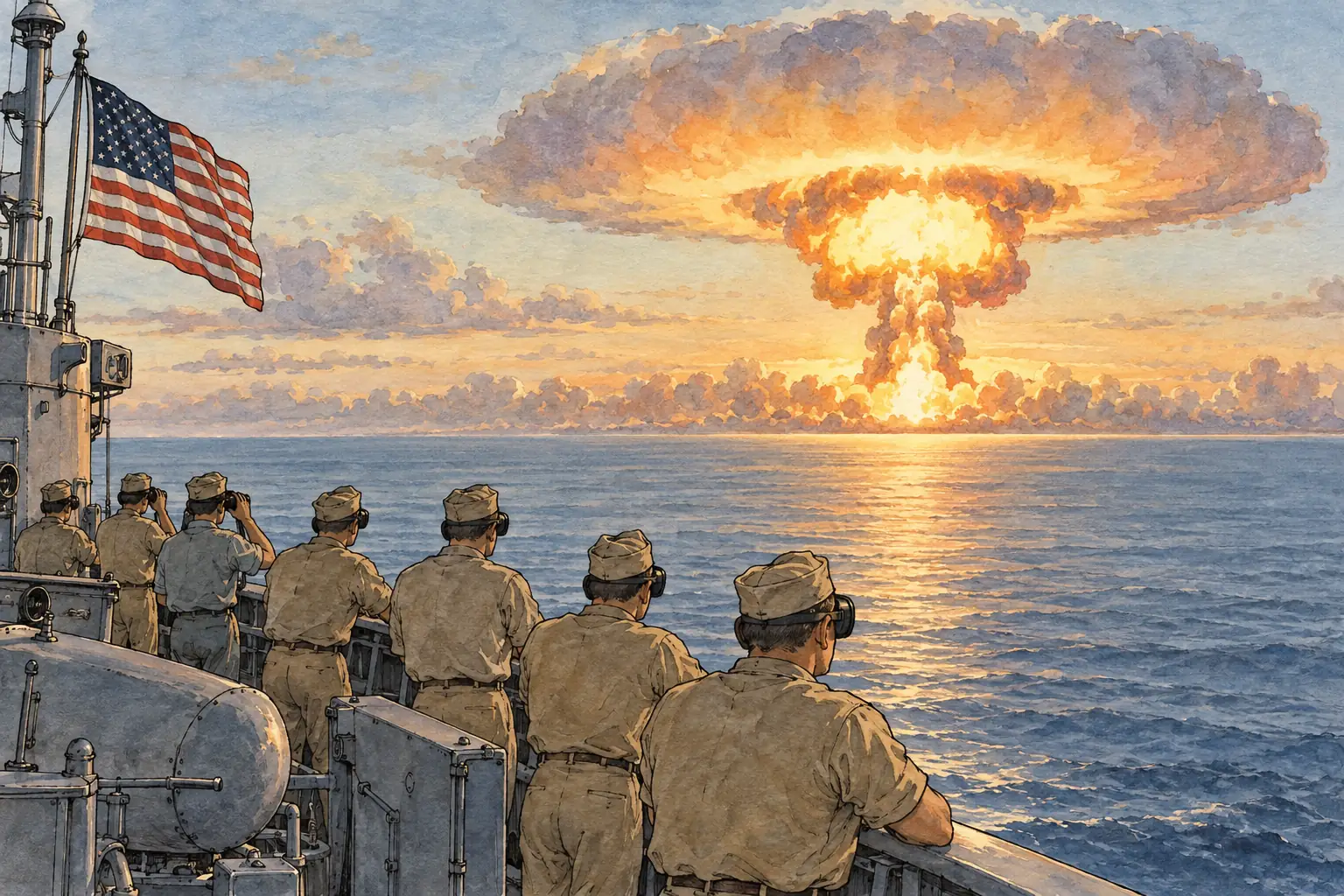
Building on atomic technology, both superpowers pursued more powerful thermonuclear weapons, known as hydrogen bombs. These devices used nuclear fusion to achieve far greater explosive yields, dramatically raising the stakes of any potential conflict.
Key milestones in hydrogen bomb creation
- US achievement in 1952 - The United States tested the first hydrogen bomb, code-named Ivy Mike, which generated energy through the fusion of hydrogen isotopes, producing blasts thousands of times more powerful than atomic bombs.
- Soviet response in 1953 - The USSR detonated its initial thermonuclear device shortly after, demonstrating comparable capabilities and narrowing the technological gap.
- Implications for warfare - These weapons shifted military planning towards massive retaliation strategies, as their destructive potential could devastate entire regions in a single strike.
Advances in delivery systems
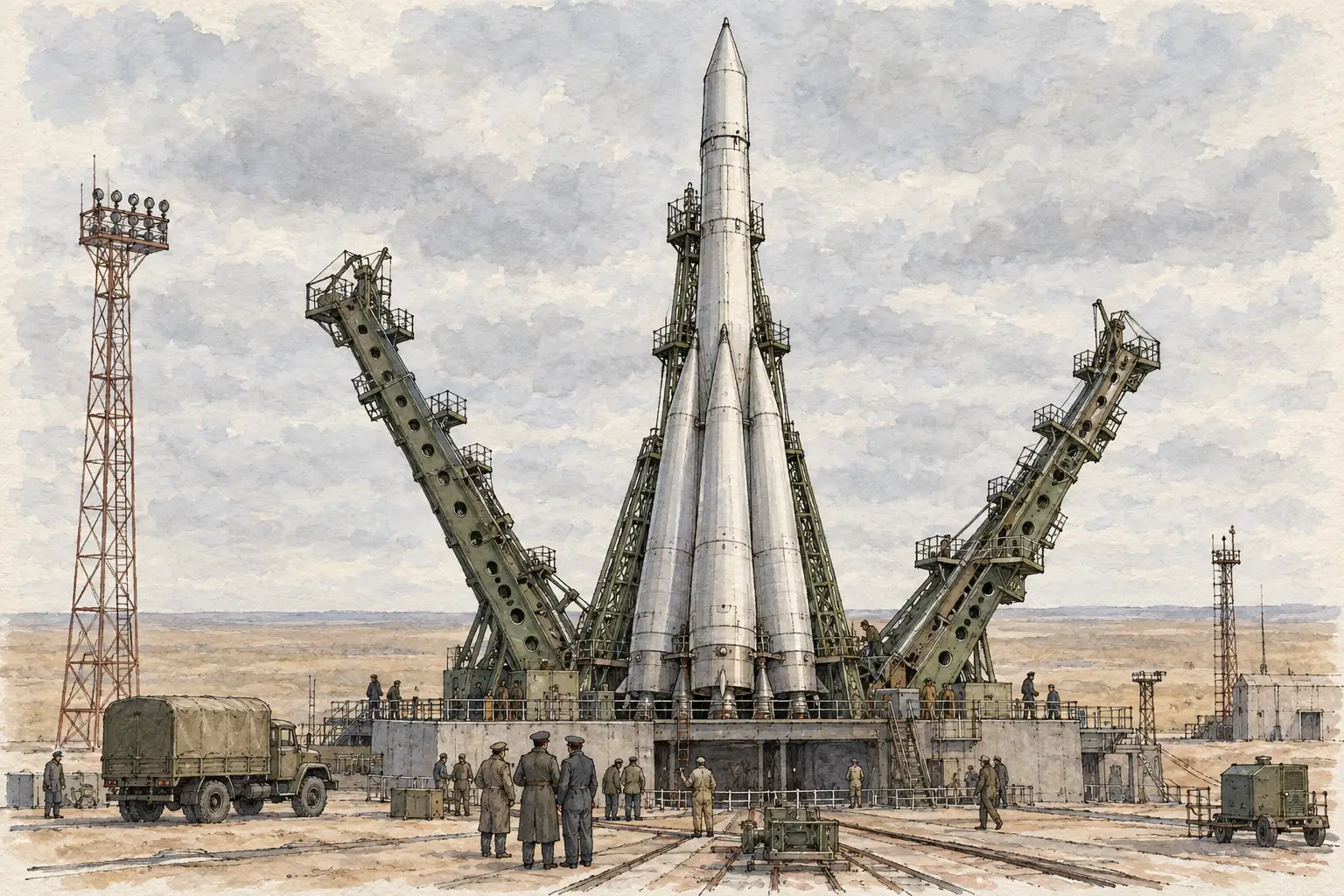
Image 1 of 2: The Soviet R-7, the first intercontinental ballistic missile, was first successfully tested in August 1957
As nuclear arsenals grew, the focus turned to reliable methods for deploying weapons over long distances. Innovations in missile technology allowed for faster, more accurate strikes, reducing warning times and complicating defence efforts.
Major developments in missile technology
- Intercontinental ballistic missiles (ICBMs) - Introduced by the Soviet Union in 1957 with the R-7 rocket, ICBMs could travel thousands of kilometres, enabling attacks on distant targets without relying on bombers.
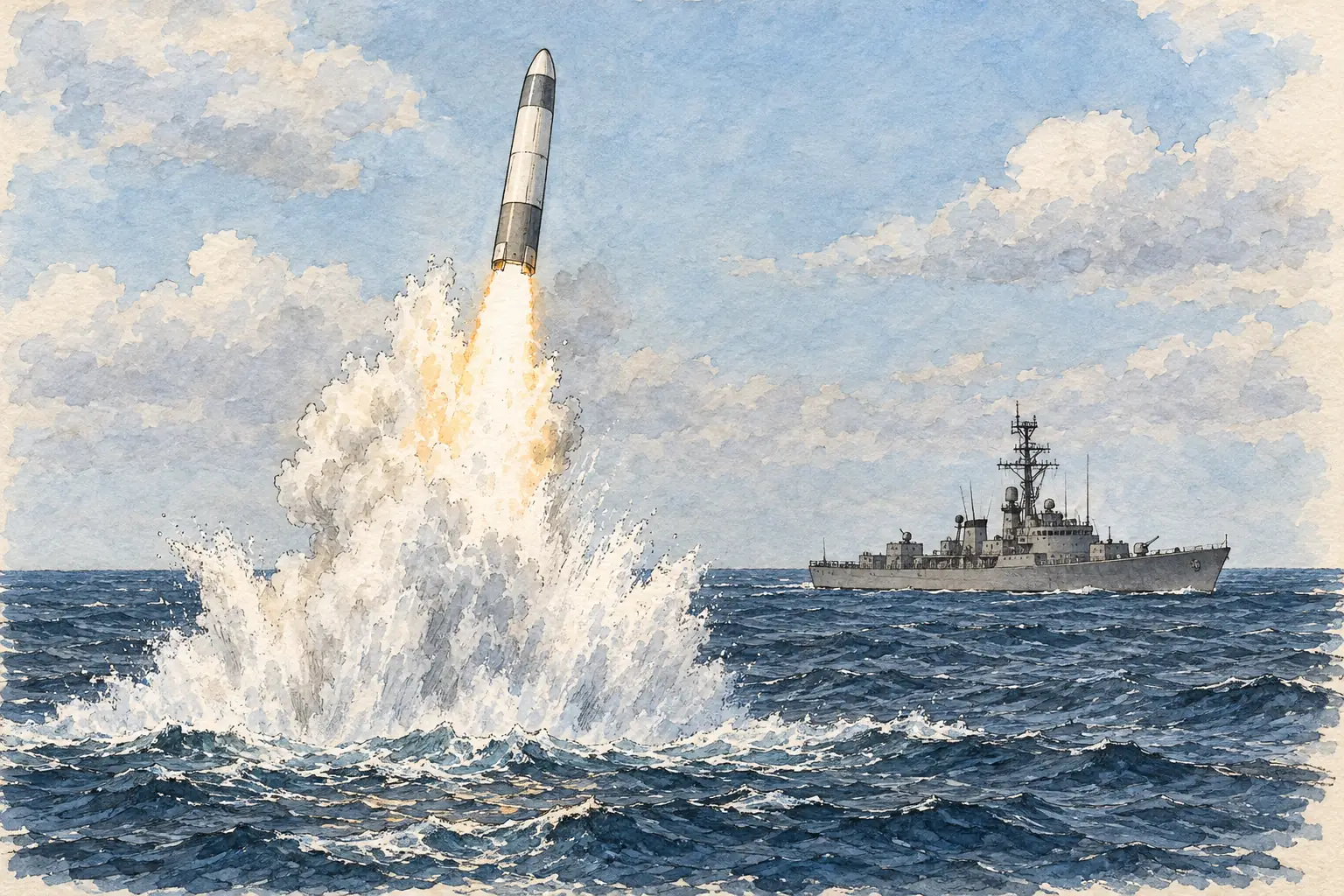
- Submarine-launched ballistic missiles (SLBMs) - The United States deployed systems like Polaris in 1960, launched from submarines, which provided mobile and hidden platforms for retaliation.
- Strategic advantages - These systems enhanced flexibility and survivability, allowing forces to strike from land, sea, or air, while making pre-emptive attacks more tempting yet riskier.
The concept of Mutually Assured Destruction (MAD)
Mutually Assured Destruction (MAD) emerged as a core principle of Cold War strategy, based on the idea that neither side would initiate a nuclear war due to the certainty of devastating counterattacks. This doctrine relied on maintaining overwhelming arsenals to ensure no victor could emerge.
Core elements of MAD
- Definition and mechanics - MAD assumes that if one superpower launched a nuclear assault, the other would respond with equal or greater force, leading to the total annihilation of both societies.
- Role of second-strike capability - The ability to absorb an initial attack and still retaliate, supported by hardened silos, mobile missiles, and submarine fleets, made aggression suicidal.
- Stabilising yet terrifying effects - While MAD deterred direct conflict by guaranteeing mutual ruin, it amplified the potential scale of any escalation, fostering a fragile peace amid constant brinkmanship.
Impact on deterrence and Cold War doctrines

Nuclear advancements profoundly influenced military doctrines and international crises, as leaders adapted strategies to the evolving balance of power. These changes often intensified confrontations, pushing the world closer to catastrophe.
Shifts in strategic thinking and crisis responses
- From massive retaliation to flexible response - Early doctrines emphasised overwhelming nuclear strikes, but later approaches incorporated limited options to manage escalations without full-scale war.
- Links to major crises - During events like the Cuban Missile Crisis in 1962, the presence of advanced weapons and MAD principles heightened risks, yet ultimately encouraged negotiation to avoid mutual destruction.
- Broader consequences - The arms race spurred proxy conflicts, arms control talks, and a focus on deterrence stability, while increasing global anxiety about accidental or miscalculated nuclear exchanges.