3.3 - Churches & Cathedrals: Style, Role & Wealth
Key facts and dates
The Norman period saw significant changes in ecclesiastical architecture and institutions, blending spiritual purposes with administrative and social roles. Wealth from various sources strengthened the Church's influence in both religious and secular spheres. These key facts highlight the essential characteristics and developments of Norman churches and cathedrals.
Key facts to remember
- Romanesque style – Characterised by rounded arches, thick walls, and decorative sculptures, reflecting Norman engineering and artistic influences.
- Church functions – Served as centres for worship, pilgrimage sites for relics, administrative hubs, and providers of hospitality.
- Anglo-Saxon vs. Norman – Anglo-Saxon structures were simpler and wooden, with basic liturgy; Norman ones were grander, stone-built, and featured more elaborate rituals.
- Tithes – A mandatory 10% tax on produce or income paid to the Church, forming a core revenue stream.
- Land holdings – The Church owned vast estates, generating income through rents and agriculture.
- Donations – Gifts from nobles and kings, often in exchange for spiritual favours or political alliances.
- Spiritual authority – Wealth funded elaborate buildings and relics, enhancing the Church's role in guiding souls and pilgrimages.
- Political authority – Resources allowed bishops to act as advisors and landowners, influencing governance and feudal systems.
Key features of Romanesque architecture
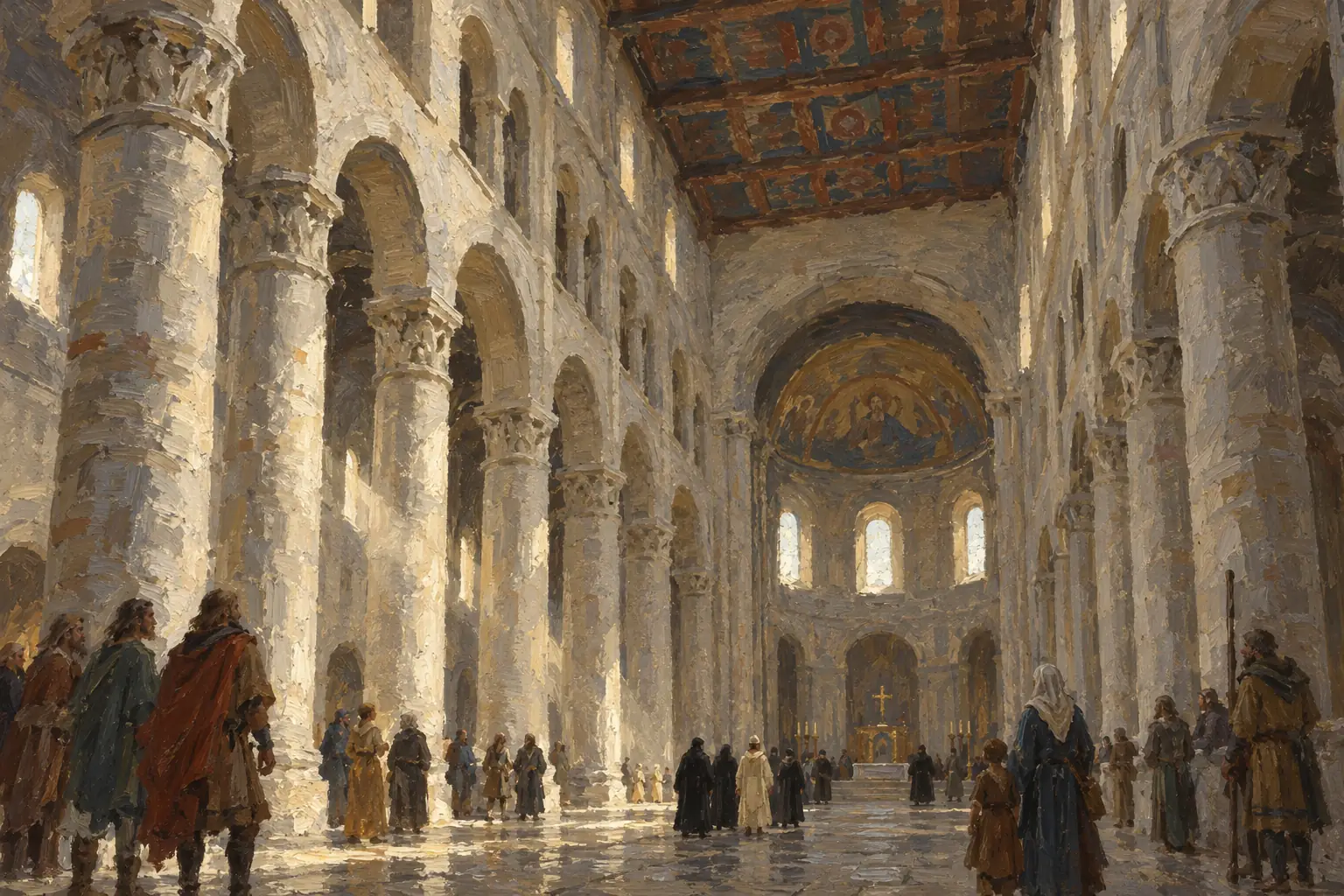
Romanesque architecture, introduced by the Normans after the Conquest, represented a shift towards more durable and imposing ecclesiastical buildings. This style drew from continental European influences, emphasising strength and decoration to inspire awe and reflect divine power.
Characteristics of Romanesque design
- Rounded arches - These semi-circular openings supported heavy structures, allowing for wider interiors and better weight distribution in doorways, windows, and arcades.
- Massive walls - Thick, solid stone walls provided stability and defence-like qualities, often featuring small windows to maintain structural integrity.
- Sculpture - Elaborate carvings adorned capitals, portals, and tympana, depicting biblical scenes, mythical creatures, or moral lessons to educate the largely illiterate population.
Functions of Norman churches and cathedrals
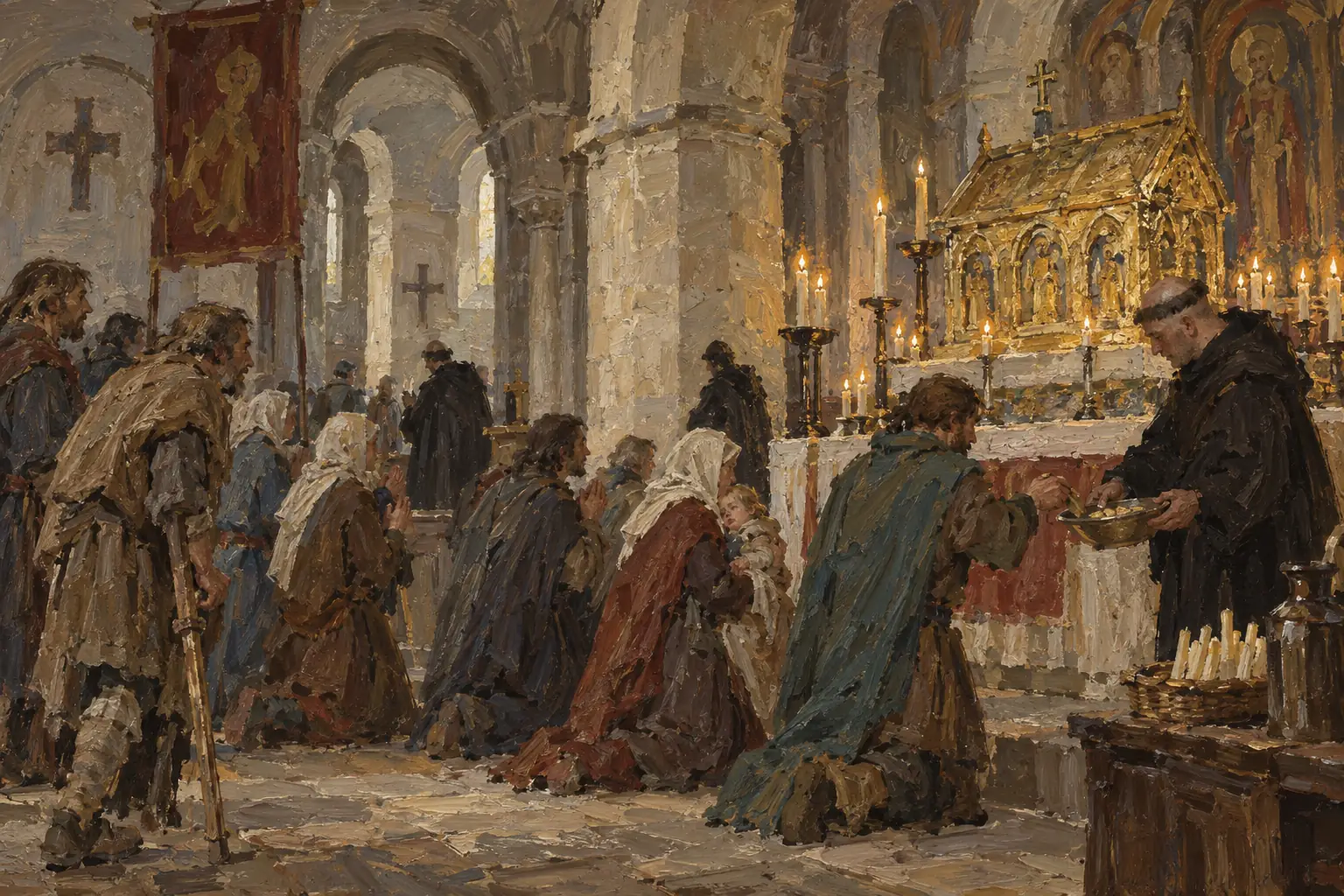
Norman churches and cathedrals served multifaceted roles beyond mere places of prayer, acting as community and administrative centres. Their design and operations supported both spiritual devotion and practical societal needs.
Primary roles in Norman society
- Worship - Central venues for daily masses, sacraments, and festivals, where elaborate liturgies reinforced religious teachings and communal bonds.
- Relics and pilgrimage - Housed sacred items like saints' bones or artefacts, attracting pilgrims seeking miracles or penance, which boosted local economies through visitor offerings.
- Administration - Acted as hubs for diocesan management, where bishops oversaw clergy, resolved disputes, and maintained records of land and tithes.
- Hospitality - Provided shelter and aid to travellers, the poor, and the sick, fulfilling Christian duties of charity while enhancing the Church's social influence.
Anglo-Saxon vs Norman buildings and liturgy
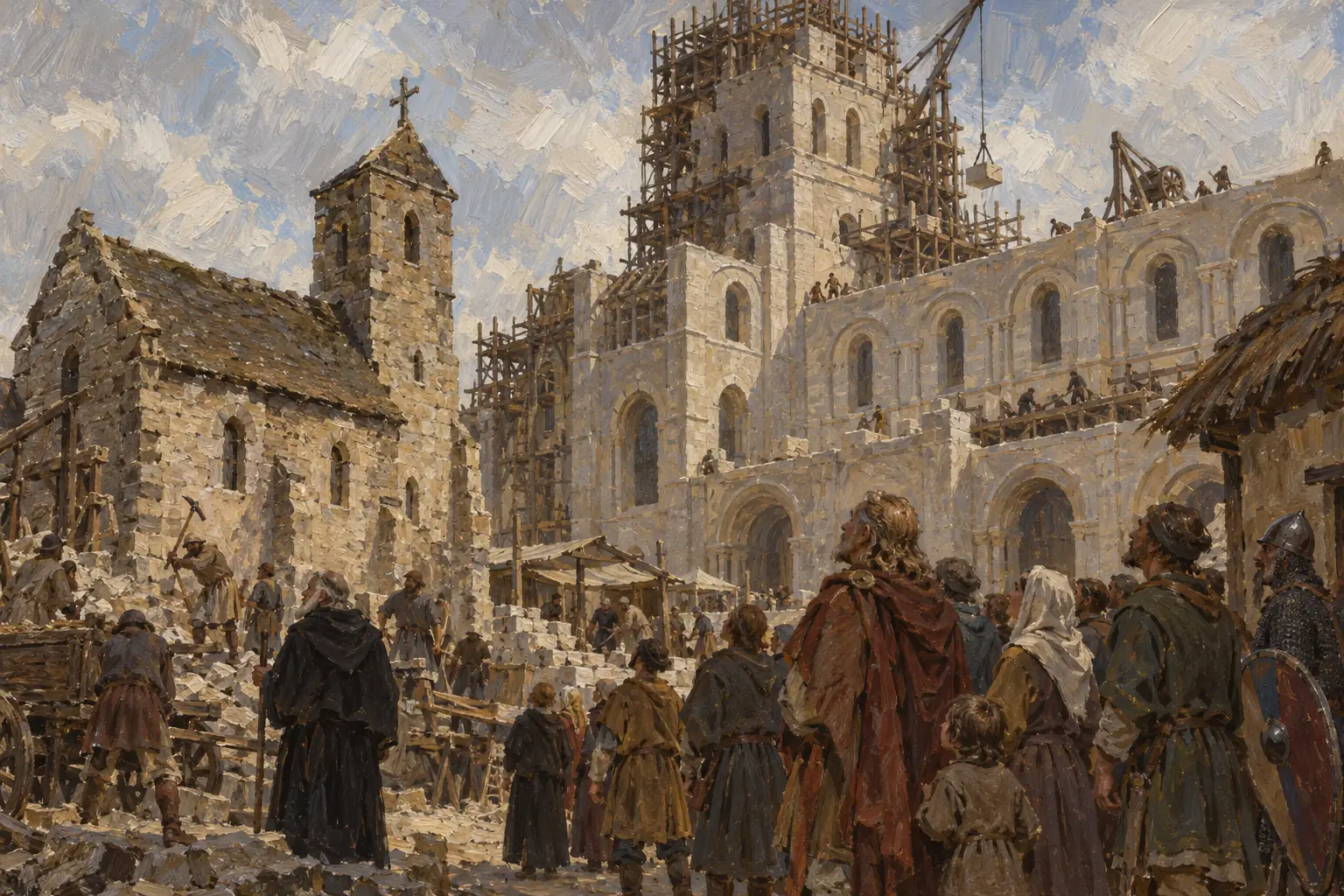
The Norman Conquest brought profound changes to ecclesiastical architecture and practices, contrasting sharply with pre-Conquest Anglo-Saxon traditions. These differences highlighted the Normans' emphasis on grandeur and centralised control.
Differences in architecture and liturgy
| Aspect | Anglo-Saxon | Norman |
|---|---|---|
| Building materials and style | Often wooden or simple stone structures with thatched roofs and minimal decoration | Grand stone constructions with vaults, towers, and intricate carvings |
| Scale and design | Small, local churches focused on basic community needs | Large cathedrals and abbeys with complex layouts, including naves and transepts |
| Liturgy | Simpler rituals in Old English, with less emphasis on ceremony | Elaborate Latin services, incorporating chants, processions, and symbolic elements |
| Purpose | Primarily local worship and burial sites | Integrated spiritual, administrative, and pilgrimage functions |
Sources of wealth for the Church
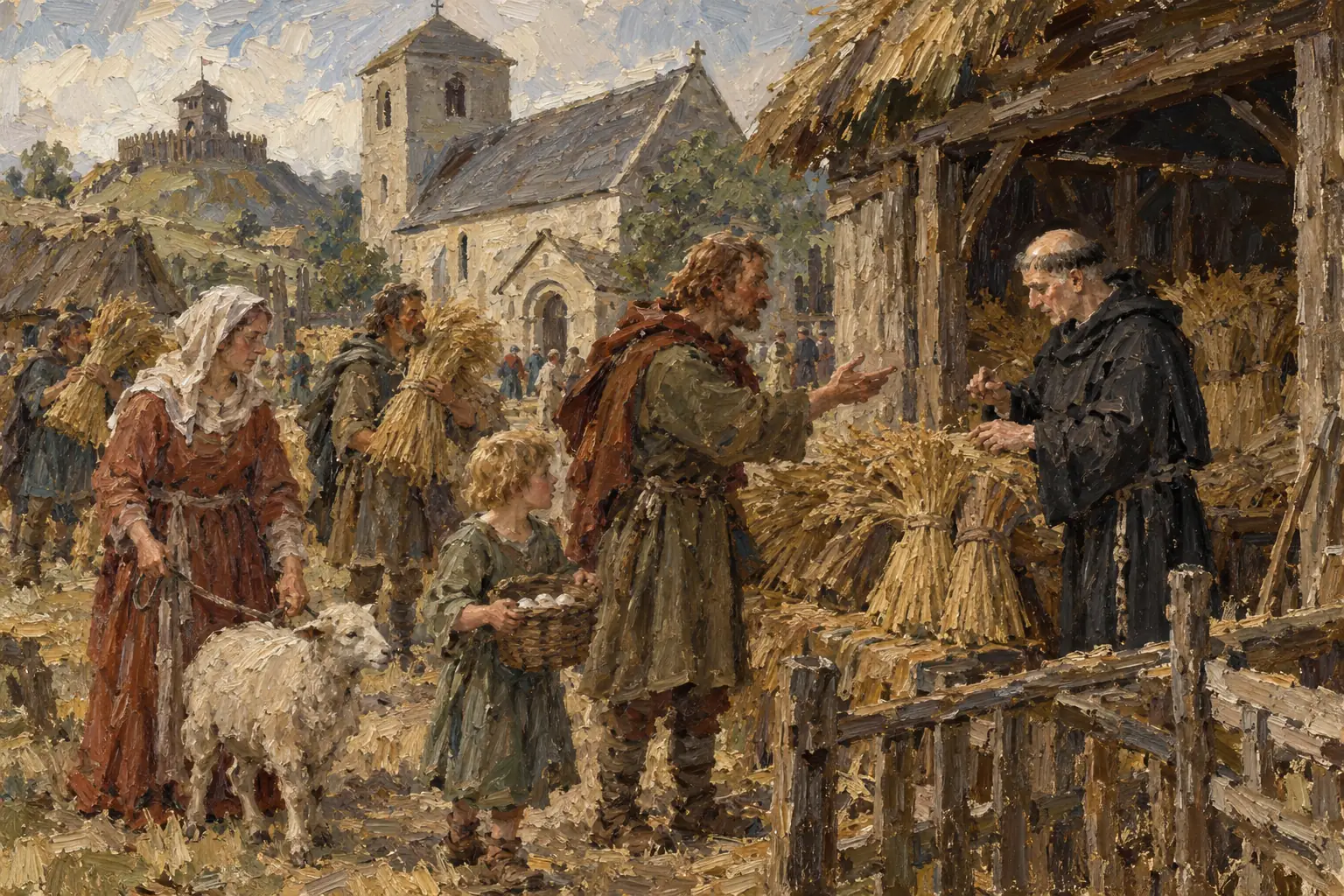
The Norman Church amassed considerable resources through structured systems and voluntary contributions, enabling it to maintain its extensive operations. These income streams were essential for building projects and daily functions.
Main sources of ecclesiastical income
- Tithes - Parishioners were required to pay one-tenth of their agricultural produce or earnings annually, ensuring a steady revenue for local churches and cathedrals.
- Lands - Vast estates granted by kings or nobles generated rents from tenants, profits from farming, and resources like timber or minerals.
- Donations - Gifts from the faithful, including bequests in wills, offerings during pilgrimages, or endowments from wealthy patrons seeking spiritual merits or favours.
How wealth supported Church authority
The Church's financial resources were pivotal in reinforcing its dual role as a spiritual guide and a political force. This wealth allowed it to influence both the faithful and secular rulers.
Ways wealth underpinned authority
- Spiritual influence - Funds supported the construction of magnificent buildings and the acquisition of relics, drawing pilgrims and reinforcing the Church's role in salvation and moral guidance.
- Political power - Bishops, as major landowners, participated in feudal systems, advising kings and holding courts, which intertwined religious and governmental affairs.
- Institutional strength - Resources enabled the maintenance of monasteries, schools, and hospitals, extending the Church's reach into education, welfare, and administration, thereby solidifying its societal dominance.