1.6 - Public Health in Medieval Towns & Monasteries
Key facts and dates
Public health in medieval England varied significantly between bustling towns and isolated monasteries, influenced by factors like population density, resources, and beliefs about disease. While towns faced widespread sanitation issues, monasteries often maintained higher standards due to their structured lifestyles.
Key facts to remember
- Open sewers and cesspits – Common in towns, leading to waste accumulation and disease spread.
- Contaminated water – Urban water sources often polluted by animal waste and human refuse.
- Crowded housing – Overcrowding in towns exacerbated hygiene problems and contagion.
- Monastic latrines – Monasteries typically featured dedicated facilities for waste disposal.
- Piped water systems – Many monasteries had access to clean, flowing water through conduits.
- Hygiene rules – Religious routines in monasteries enforced regular cleaning and bathing.
- Miasma theory – Mistaken belief in bad air causing illness shaped inadequate town responses.
- By-law enforcement – Weak local regulations in towns failed to address sanitation effectively.
Public health conditions in medieval towns
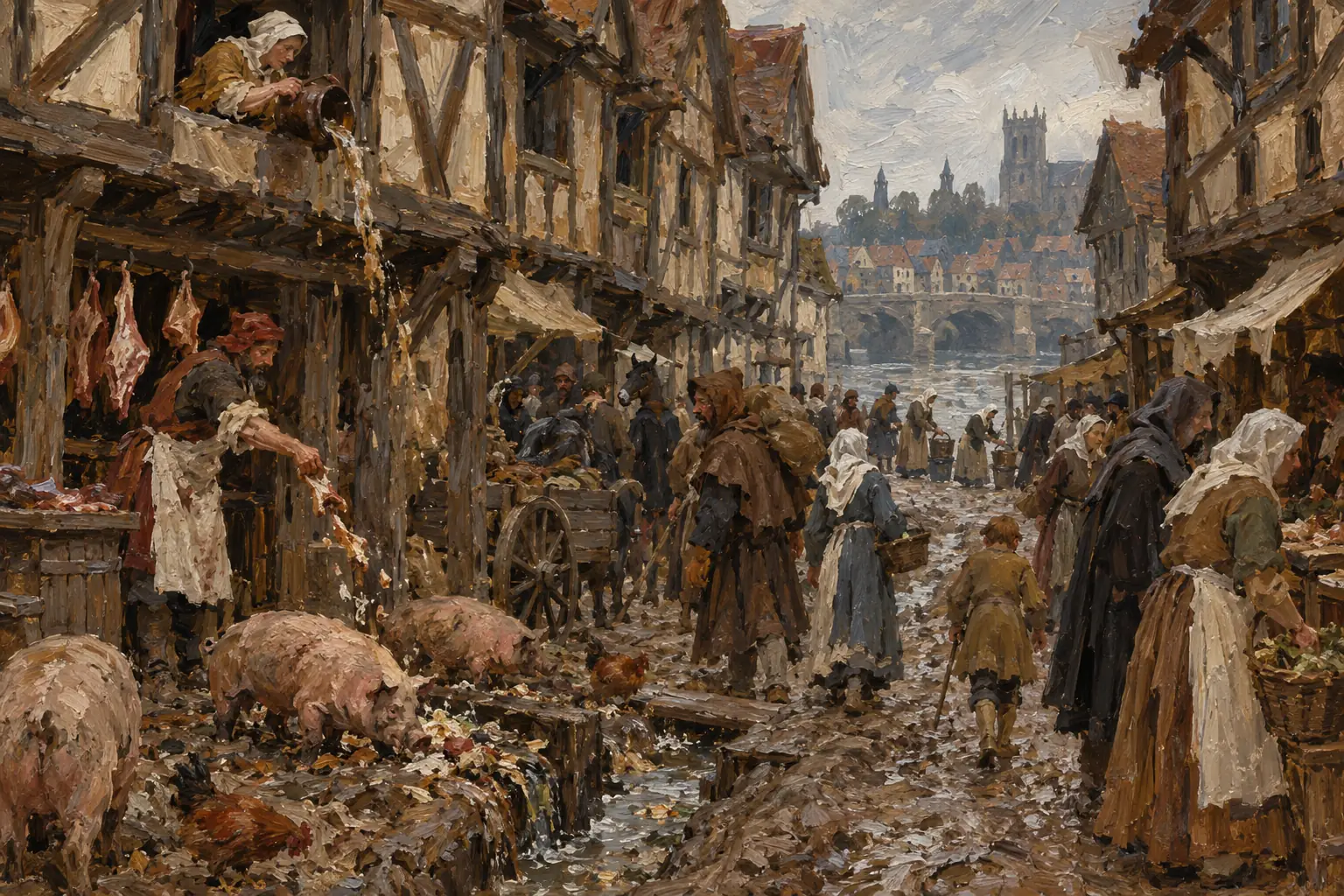
Medieval towns in England were often characterised by poor sanitation and hygiene, which contributed to frequent outbreaks of disease. The rapid growth of urban populations, combined with limited infrastructure, created environments where waste and pollution accumulated easily.
Common sanitation issues in towns
- Open sewers and cesspits - Waste from households flowed into open ditches or was collected in pits that overflowed, contaminating streets and public spaces.
- Animal waste - Livestock kept within town limits, such as pigs and horses, added to the filth, with manure piling up and attracting vermin.
- Contaminated water - Rivers and wells used for drinking were often polluted by nearby refuse, leading to waterborne illnesses.
- Crowded housing - People lived in tightly packed wooden buildings with shared facilities, increasing the risk of disease transmission through close contact.
Public health conditions in medieval monasteries
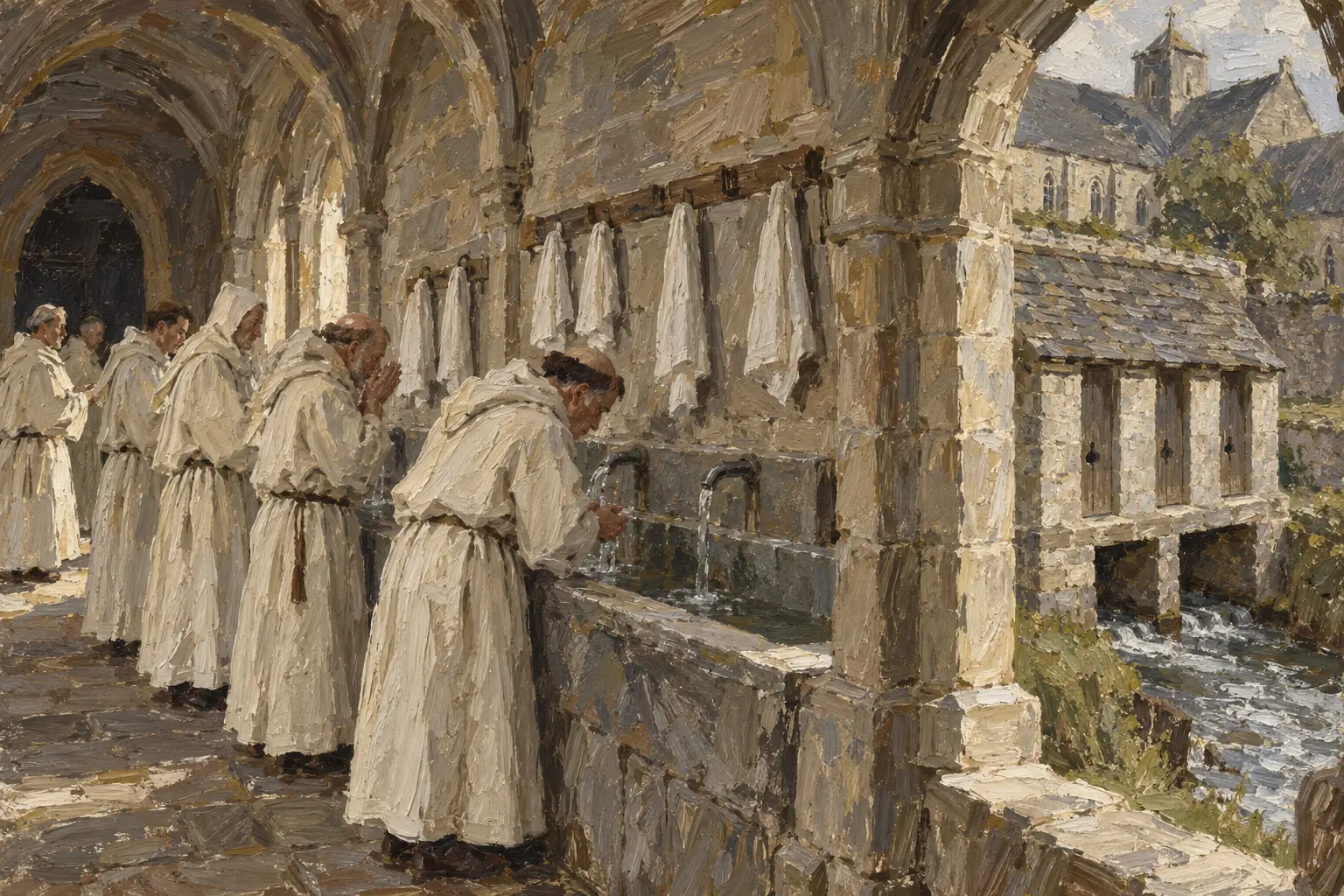
In contrast to towns, medieval monasteries generally maintained higher standards of cleanliness and health facilities. These religious communities prioritised order and routine, which extended to their approach to sanitation and medical care.
Key features of monastic hygiene
- Latrines - Many monasteries had dedicated toilet blocks, often positioned over running water to flush away waste automatically.
- Infirmaries - Special buildings were set aside for the sick, equipped with beds and basic medical supplies to isolate and treat illnesses.
- Piped water - Systems of conduits or aqueducts brought fresh water from springs or rivers directly to the monastery for drinking, washing, and cleaning.
- Hygiene rules - Monks followed strict daily routines, including regular handwashing, bathing, and cleaning of living areas, as part of their religious discipline.
Reasons for poor public health in towns
Towns in medieval England struggled to maintain public health due to a combination of practical, administrative, and ideological factors. These issues often stemmed from the demands of urban life and limited understanding of disease causes.
Factors contributing to urban health challenges
- Weak enforcement of by-laws - Local regulations aimed at controlling waste and cleanliness existed but were poorly policed, with fines rarely collected or applied consistently.
- Competing priorities of trade and markets - Towns focused on commerce, leading to cluttered streets with market stalls and animals, which took precedence over sanitation efforts.
- Mistaken beliefs shaping responses - The widespread acceptance of miasma theory, which blamed diseases on bad smells rather than germs or pollution, led to ineffective measures like scattering herbs instead of addressing root causes.
Factors enabling better public health in monasteries
Monasteries benefited from several advantages that allowed them to achieve comparatively better public health outcomes. These were rooted in their unique social and economic structures, which supported proactive hygiene practices.
Advantages supporting monastic health
- Wealth - Endowments from donors provided funds for building and maintaining facilities like water systems and infirmaries.
- Organisation - Centralised leadership and communal living enabled coordinated efforts to enforce hygiene rules and manage resources efficiently.
- Religious routines - Daily practices, influenced by monastic vows, included rituals of cleanliness that promoted regular bathing and waste disposal.
- Access to clean water - Isolated locations near natural springs or rivers allowed monasteries to secure uncontaminated water sources, unlike polluted urban supplies.
Comparisons between towns and monasteries
The differences in public health between medieval towns and monasteries highlight how environment, resources, and priorities influenced living conditions. While towns suffered from chaos and neglect, monasteries demonstrated that structured approaches could mitigate health risks.
Key differences in public health approaches
| Aspect | Towns | Monasteries |
|---|---|---|
| Waste management | Open sewers and overflowing cesspits | Dedicated latrines with flushing systems |
| Water supply | Contaminated rivers and wells | Piped clean water from springs |
| Housing and space | Crowded, shared buildings | Spacious, organised communal areas |
| Health facilities | Limited or absent | Infirmaries for isolation and treatment |
| Enforcement | Weak by-laws with poor compliance | Strict religious rules routinely followed |
| Influencing factors | Trade priorities and miasma beliefs | Wealth, organisation, and religious routines |