1.5 - Containment, Truman Doctrine & Marshall Plan
Key facts and dates
The policy of containment emerged as a cornerstone of United States foreign policy in the late 1940s, aiming to prevent the spread of communism amid growing tensions with the Soviet Union. Initiatives like the Truman Doctrine and Marshall Plan were designed to support vulnerable nations economically and politically, shaping the early Cold War landscape.
Timeline of key events
- 1946 – George Kennan sends the Long Telegram, warning of Soviet expansionist intentions.
- 1946 – Nikolai Novikov's telegram to Stalin portrays the US as preparing for war against the Soviet Union.
- 1947 – Containment becomes official US policy, focusing on resisting communist growth.
- March 1947 – Truman Doctrine announced, providing aid to Greece and Turkey to counter communist threats.
- June 1947 – Marshall Plan introduced, offering economic assistance to rebuild Europe.
- 1948–1952 – Marshall Aid distributed, aiding 16 Western European countries with over $13 billion.
Definition and origins of containment policy
Containment emerged as the central strategy in United States foreign policy from 1947 onwards, designed to halt the further spread of communism without direct confrontation. This approach shifted from earlier wartime alliances to a more defensive posture against perceived Soviet aggression.
Core elements of containment
- Resisting expansion - The policy prioritised preventing communist influence from extending into new regions, particularly in Europe and Asia, through diplomatic, economic, and military means.
- Shift in priorities - It marked a departure from isolationism, committing the US to active involvement in global affairs to safeguard democratic governments and free markets.
- Long-term strategy - Containment aimed to weaken communist regimes over time by denying them opportunities for growth, rather than seeking immediate rollback.
The Truman Doctrine and its initial applications
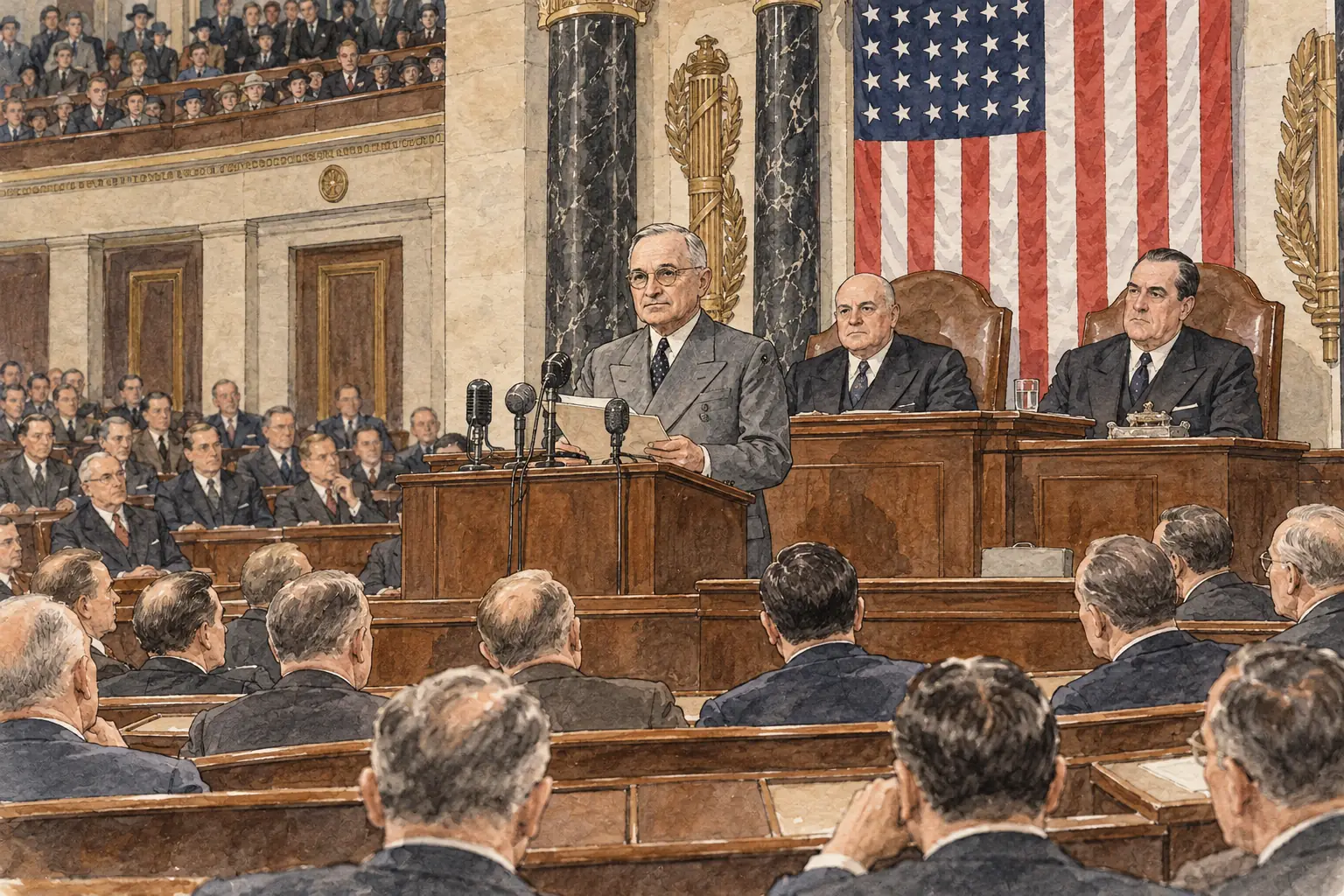
The Truman Doctrine, announced in 1947, represented a commitment by the United States to provide financial and military assistance to countries facing communist insurgencies or external pressures. This policy was first applied to support governments in Greece and Turkey, setting a precedent for broader anti-communist interventions.
Key features of the Truman Doctrine
- Support mechanisms - It involved direct aid packages, including economic funding and military supplies, to strengthen nations resisting internal or external communist threats.
- Application in Greece - The US provided aid to the Greek government amid a civil war against communist guerrillas, helping to stabilise the regime and prevent a potential domino effect in the region.
- Application in Turkey - Assistance was extended to Turkey to counter Soviet demands for territorial concessions and shared control of strategic waterways, bolstering its defences.
- Broader implications - The doctrine signalled a global pledge to defend free peoples, influencing US involvement in other areas like Korea and Vietnam in subsequent years.
The Marshall Plan and its objectives
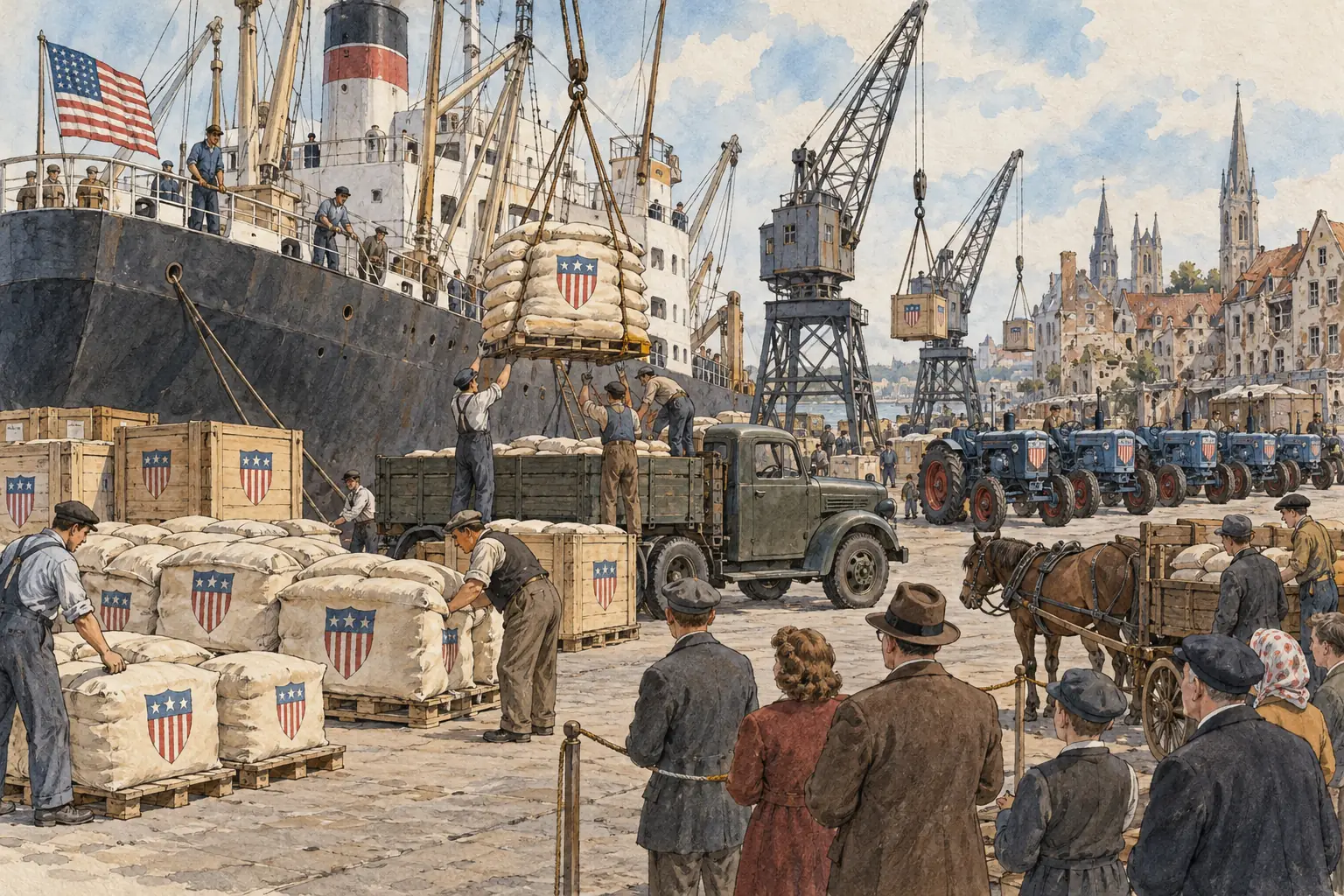
The Marshall Plan, formally known as the European Recovery Programme, was a major initiative launched in 1947 to deliver extensive economic aid to Western European nations. Its primary goals were to rebuild war-torn economies, foster stability, and reduce the appeal of communism by addressing poverty and unemployment.
Main objectives of the Marshall Plan
- Economic reconstruction - Aid focused on reviving industries, infrastructure, and agriculture, with funds used for essential imports like food, machinery, and raw materials.
- Promoting trade and stability - By encouraging economic cooperation among European countries, the plan aimed to boost trade, create jobs, and establish self-sustaining growth.
- Countering communism - The assistance sought to undermine support for communist parties by improving living standards and demonstrating the benefits of capitalist systems.
- Scale of the programme - Over four years, the US distributed billions in aid to 16 countries, requiring recipients to collaborate on recovery plans and open their markets to American goods.
Role of the Long Telegram and Novikov Telegram

The Long Telegram and Novikov Telegram, both sent in 1946, played crucial roles in heightening mutual suspicions between the United States and the Soviet Union. These diplomatic communications shaped perceptions of threats and influenced the development of containment strategies.
Influence of the telegrams on Cold War perceptions
- Long Telegram (George Kennan) - This message from the US diplomat in Moscow analysed Soviet behaviour, arguing that the USSR viewed the West as hostile and would seek to expand communism relentlessly, prompting the US to adopt a firm containment policy.
- Novikov Telegram (Nikolai Novikov) - Sent by the Soviet ambassador in Washington, it depicted the US as aggressively preparing for conflict, with military build-ups and alliances aimed at encircling the Soviet Union.
- Shaping threat perceptions - Both telegrams reinforced a cycle of distrust, with each side interpreting the other's actions as aggressive, accelerating the shift from alliance to confrontation in the early Cold War period.
Impacts of Marshall Aid and Soviet perceptions
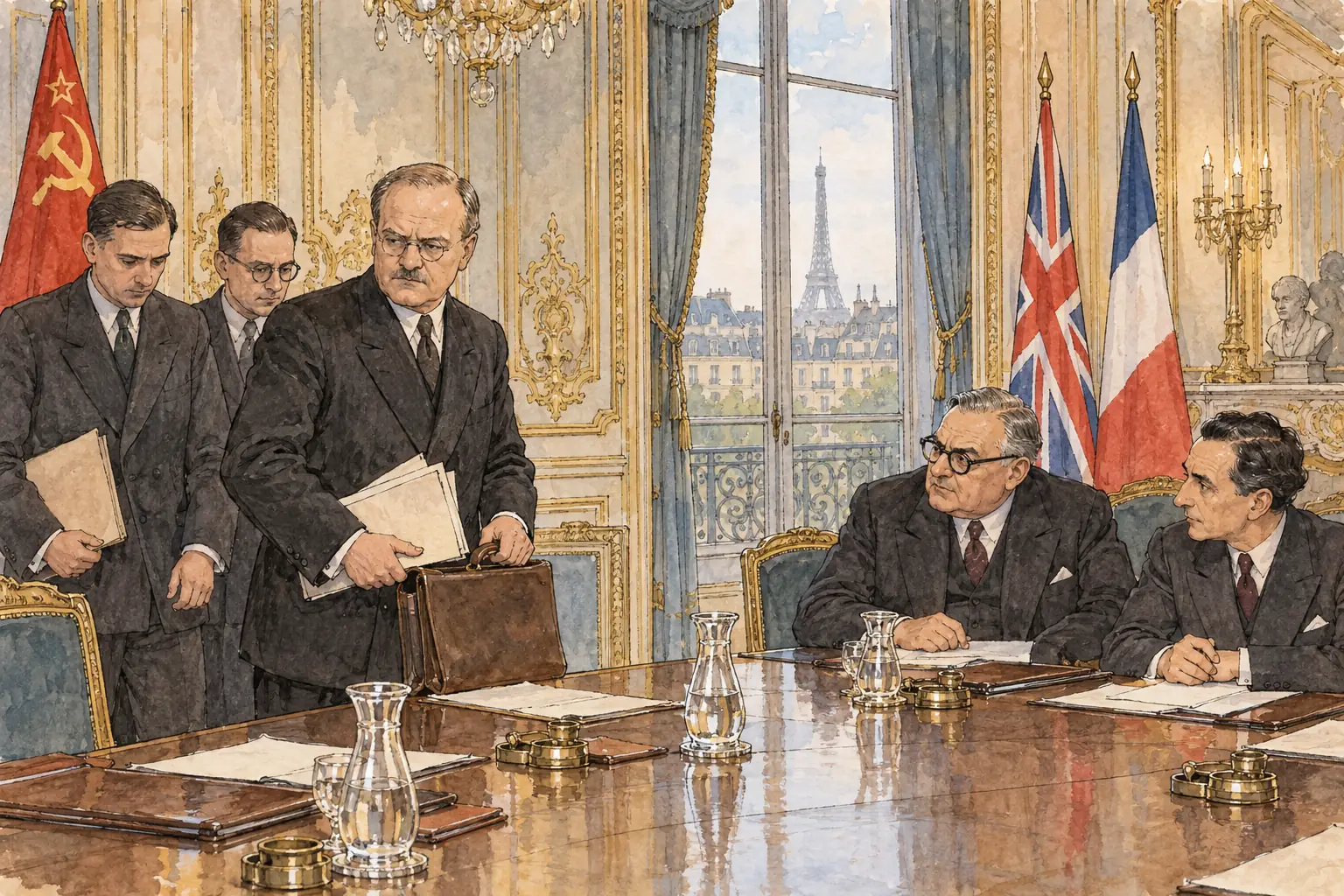
Marshall Aid had significant economic and political effects on Western Europe, accelerating recovery and integration, while the Soviet Union regarded it as a tool of American imperialism. This divergence deepened the East-West divide.
Economic and political impacts on Western Europe
- Economic recovery - The aid spurred rapid industrial growth, increased production levels, and reduced unemployment, helping countries like France and West Germany rebuild faster than anticipated.
- Political stabilisation - By improving living conditions, it weakened communist parties' electoral appeal, promoting democratic governments and fostering European economic unity through organisations like the Organisation for European Economic Co-operation.
- Long-term benefits - It enhanced trade ties with the US, modernised industries, and laid foundations for future integration, such as the European Economic Community.
Soviet views on Marshall Aid
- Perceived as economic imperialism - Stalin saw the plan as an effort to draw European states into the US sphere of influence, using aid to impose capitalist systems and isolate the Soviet bloc.
- Rejection and countermeasures - The USSR refused participation and pressured Eastern European allies to do the same, viewing it as a threat to their control; this led to alternative Soviet initiatives like the Molotov Plan.
- Heightened tensions - Stalin's response contributed to events like the Berlin Blockade, reinforcing the Iron Curtain and solidifying the division of Europe.