2.7 - American Revolution: Impact & Global Significance
Key facts and dates
The American Revolution, spanning 1775 to 1783, transformed colonial society and had far-reaching global effects, challenging imperial power and inspiring new political ideologies. Although battles were crucial, the focus here is on the revolution's consequences, including social changes and the diffusion of ideas about liberty and governance.
Timeline of key events
- 1776 – Declaration of Independence signed, proclaiming ideals of equality and self-government that influenced global republican thought.
- 1781 – Battle of Yorktown results in decisive Franco-American victory, marking the turning point that forced British negotiations.
- 1783 – Treaty of Paris ends the war, granting U.S. independence and reshaping British imperial boundaries.
- 1787 – U.S. Constitution adopted, establishing a republican framework that inspired constitutional debates worldwide.
- 1789 – French Revolution begins, partly influenced by American ideas of liberty and representation.
- 1791 – U.S. Bill of Rights ratified, embedding rights that echoed in British reform movements.
Key turning points in the American Revolution
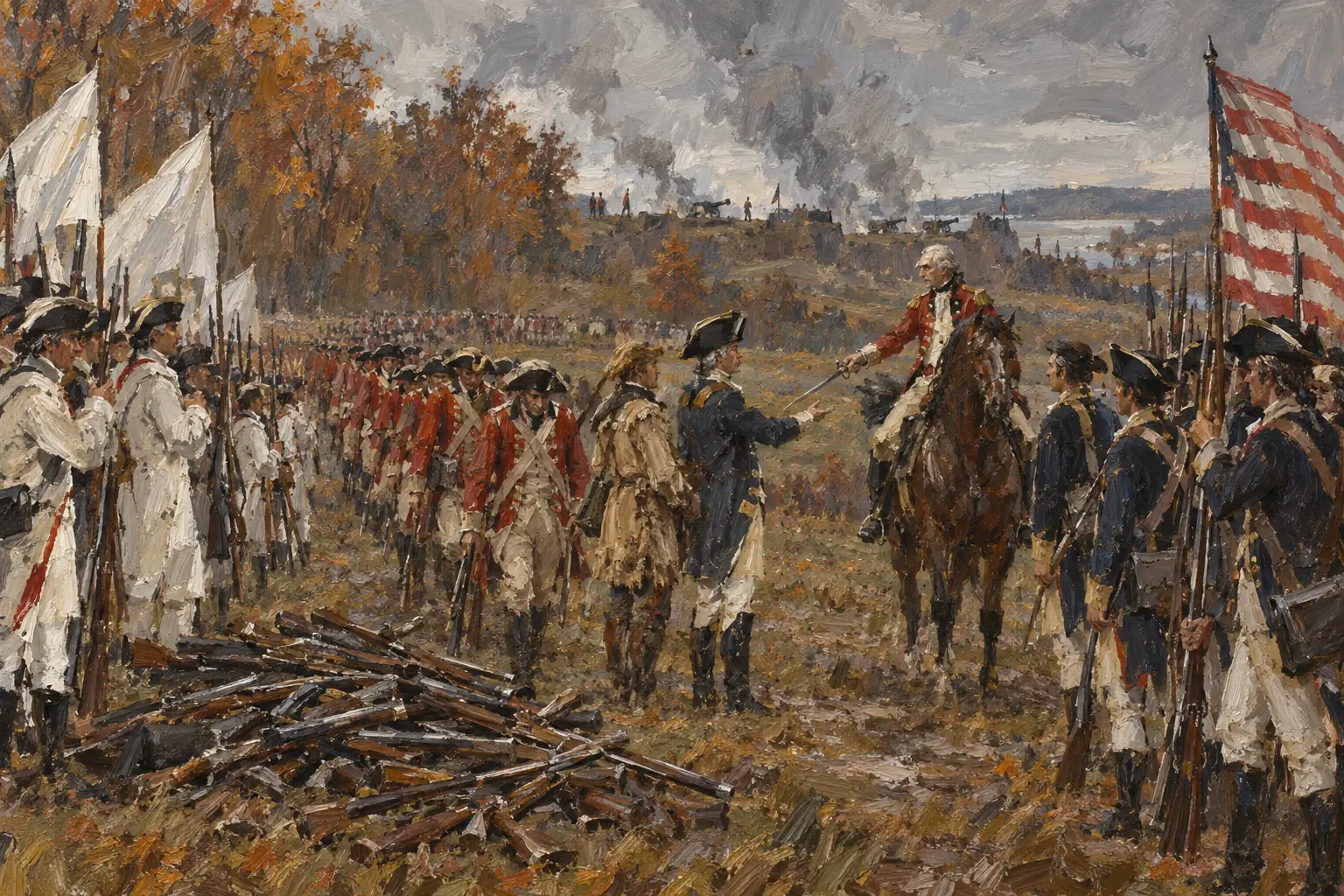
The American Revolution featured several pivotal battles, but the emphasis lies on their role in shifting momentum towards independence. The conflict highlighted factors such as military strategy, economic strain, and communication networks that spread revolutionary ideas.
The Battle of Yorktown as a decisive moment
The Battle of Yorktown in 1781 represented the revolution's military climax. American forces, allied with French troops and naval support, besieged British General Cornwallis's army in Virginia. This victory compelled Britain to seek peace, as it demonstrated the colonies' capacity for coordinated warfare and exposed the economic burdens of prolonged conflict on the British Empire.
Broader factors influencing turning points
- War and government - Colonial militias adapted guerrilla tactics, while British supply lines stretched thin, illustrating how logistics and local governance favoured the revolutionaries.
- Economics and communication - Blockades disrupted trade, straining British finances, while pamphlets and newspapers disseminated ideas of resistance, uniting disparate colonies.
Gains and losses for different social groups
Image 1 of 2: After the war tens of thousands of Loyalists left for Canada or Britain, losing their homes and property
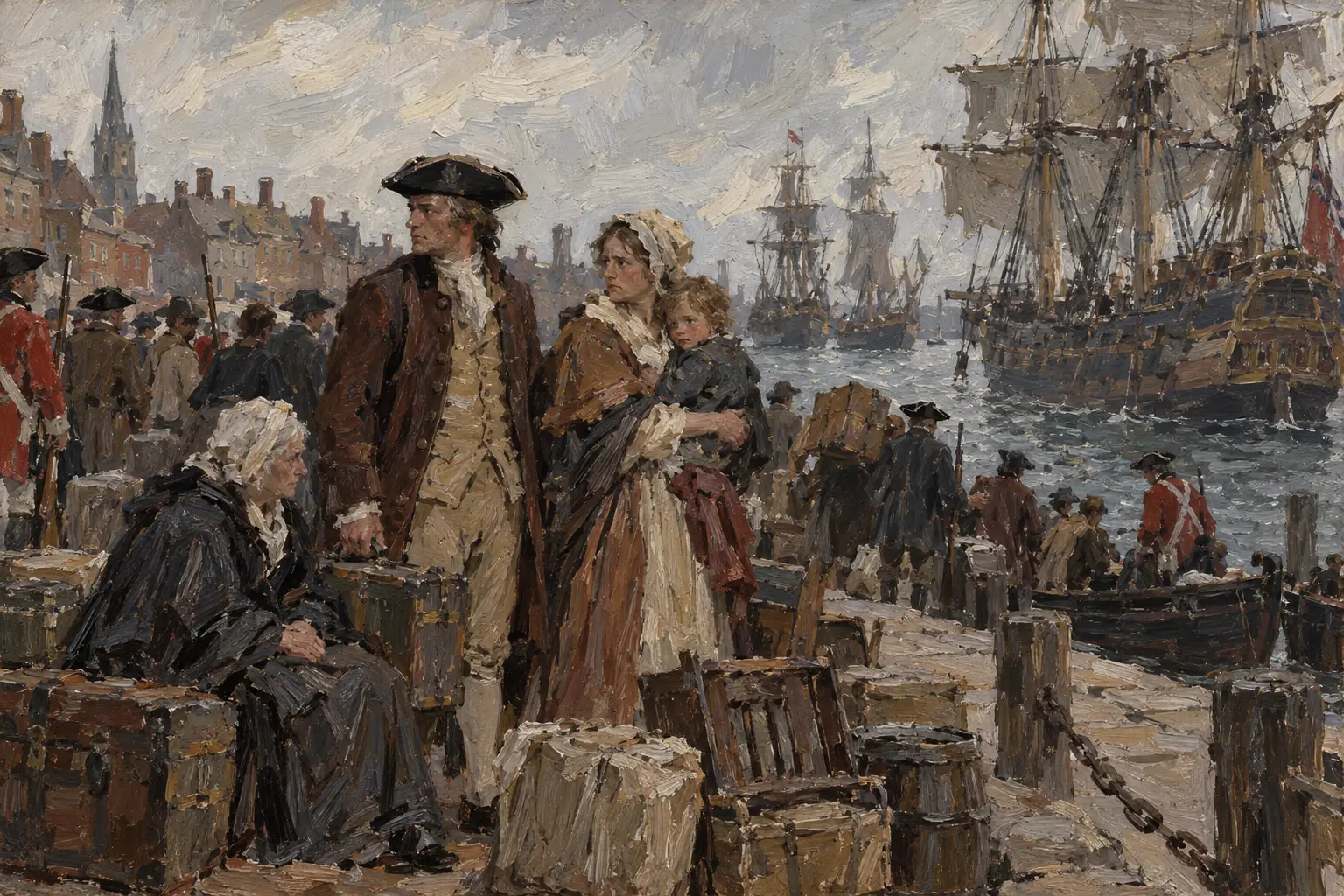
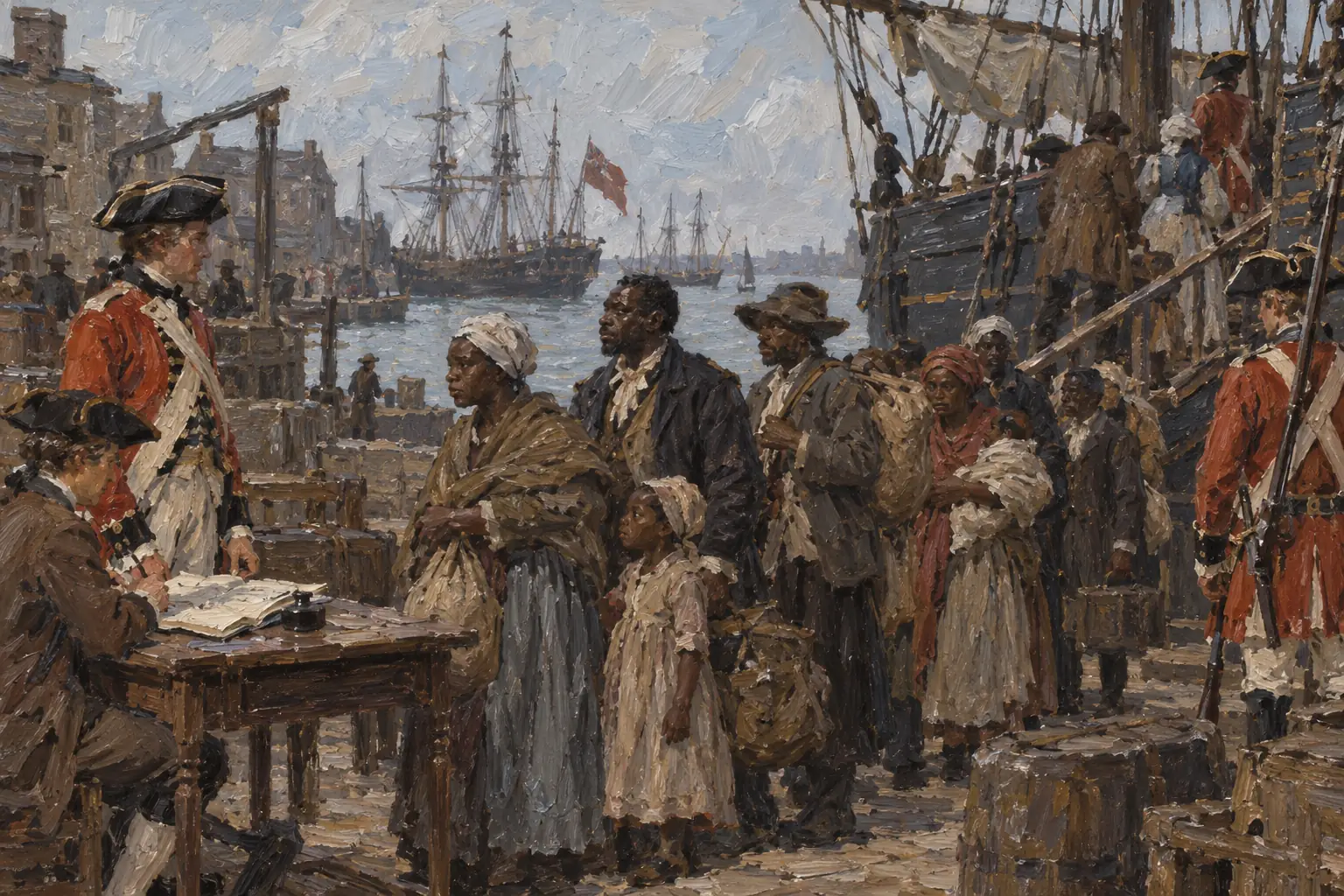
The revolution's outcomes varied widely across social groups, reflecting shifts in power, economics, and rights. While some gained new opportunities, others faced intensified hardships, influenced by ideas of liberty that were unevenly applied.
Impacts on Indigenous nations
Indigenous nations experienced significant losses as the revolution accelerated westward expansion. Many allied with Britain for protection against colonial settlers, but post-war treaties ignored their claims, leading to land dispossession and cultural disruption.
Impacts on enslaved and free Africans
Enslaved Africans saw mixed results; some gained freedom by fighting for Britain (promised emancipation) or escaping to Loyalist lines, but the revolution entrenched slavery in the new republic, with ideals of equality excluding them. Free Africans faced ongoing discrimination, though a few benefited from manumission debates sparked by republican ideas.
Impacts on Irish and Scots immigrants
Irish and Scots immigrants often gained from the revolution, as many supported independence to escape British oppression. Post-war, they accessed land and economic opportunities in the expanding U.S., though ethnic tensions persisted in diverse colonial communities.
Impacts on indentured servants
Indentured servants generally benefited, with the war disrupting servitude contracts and fostering ideas of personal liberty. Many joined revolutionary forces for promised freedom, leading to reduced reliance on indenture and greater social mobility in the post-war economy.
Impacts on colonial elites
Colonial elites, including merchants and landowners, reaped substantial gains by establishing a government that protected their economic interests. The revolution replaced British taxes with self-rule, enabling trade expansion, though some faced property losses during wartime confiscations.
Impacts on Loyalists
Loyalists, who remained faithful to Britain, suffered major losses, including property seizures and forced exile to Canada or Britain. An estimated 60,000 fled, disrupting their social and economic status, despite some compensation from the British government.
Impacts on British taxpayers
British taxpayers bore heavy economic losses from war costs, with increased taxes funding a failed campaign. This financial strain fuelled domestic unrest, highlighting government inefficiencies and contributing to calls for reform.
Reshaping the British Empire and republican ideas
The revolution fundamentally altered imperial structures and propagated republican ideals, influencing global politics through economics, government, and communication channels.
Changes to the British Empire
The loss of the American colonies forced Britain to refocus on other territories, such as India and Canada, adopting more indirect rule to avoid rebellions. Economically, it shifted trade patterns, reducing reliance on colonial resources while encouraging industrial growth at home.
Diffusion of republican concepts
Republican ideas of self-governance and natural rights spread via printed works and diplomatic channels. These concepts challenged monarchies, inspiring movements in Europe and Latin America, where leaders drew on American models for constitutional frameworks.
British debates on representation and rights
The American Revolution sparked introspection in Britain, informing discussions on political reform amid economic pressures and evolving ideas of governance.
Effects on British political discourse
Defeat prompted debates on parliamentary representation, with critics arguing that "no taxation without representation" exposed flaws in the system. This influenced the Reform Acts of the 19th century, expanding voting rights, while wartime communication failures highlighted needs for better imperial administration.