2.3 - 1932 Election: Roosevelt's Campaign & Victory
Key facts and dates
The 1932 presidential election occurred amid the Great Depression, which had caused widespread economic suffering since 1929. Franklin D. Roosevelt's victory marked a shift from Republican inaction under Herbert Hoover to Democratic promises of active government intervention, setting the stage for significant reforms.
Timeline of key events
- 1929 – Wall Street Crash triggers the Great Depression, leading to mass unemployment and bank failures.
- 1930 – Smoot-Hawley Tariff Act worsens global trade, deepening economic hardship in the United States.
- July 1932 – Democratic National Convention nominates Roosevelt, who pledges a "New Deal" for Americans.
- November 1932 – Roosevelt wins the election with 57% of the popular vote and 42 states' electoral votes.
- March 1933 – Roosevelt inaugurated; begins the "Hundred Days" with emergency banking reforms.
Roosevelt's appeal to voters
Franklin D. Roosevelt, the Democratic candidate, connected deeply with the American public during the 1932 election. His personal qualities and approach stood in stark contrast to the perceived failures of incumbent President Herbert Hoover, drawing support from those hit hardest by the Great Depression.
Key elements of Roosevelt's voter appeal
- Optimism - Roosevelt's positive outlook inspired hope among voters disillusioned by years of economic despair, as he promised proactive solutions rather than passive endurance.
- Communication skills - Known for his effective use of radio broadcasts and speeches, Roosevelt communicated directly and empathetically, making complex issues accessible and building a personal rapport with ordinary citizens.
- Charismatic leadership - His background as Governor of New York and his resilience despite personal health challenges (such as polio) portrayed him as a determined figure capable of guiding the nation through crisis.
The promise of the New Deal
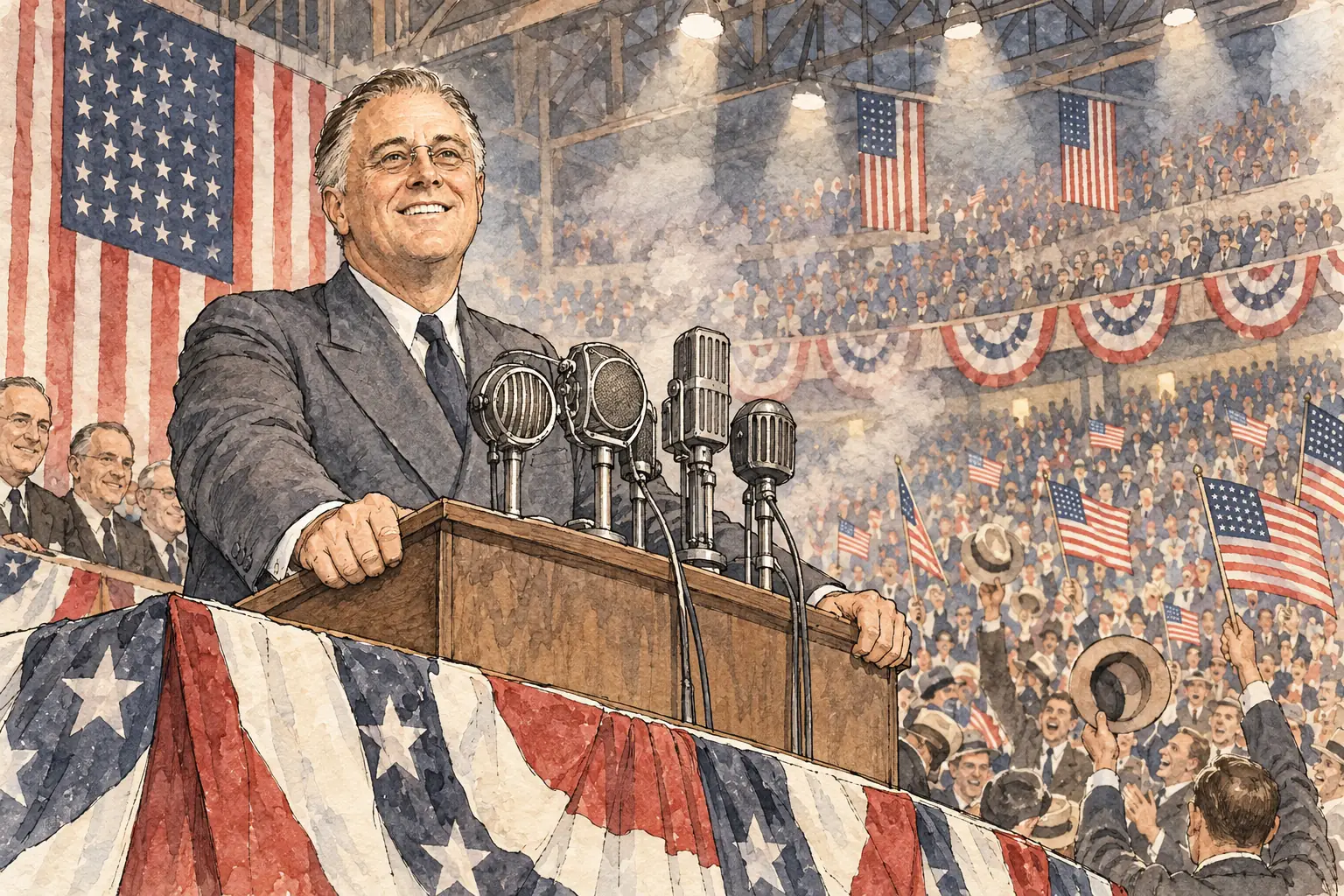
Roosevelt's campaign centred on the idea of a "New Deal" for the American people, a broad set of policies aimed at addressing the immediate and long-term effects of the Depression. This promise resonated with voters seeking change from the laissez-faire policies of the previous administration.
Core aims of the New Deal
- Relief - Immediate assistance for the unemployed and impoverished, such as emergency aid programmes to prevent starvation and homelessness.
- Recovery - Measures to stimulate economic growth, including public works projects and support for businesses to restore stability.
- Reform - Long-term changes to prevent future crises, such as regulations on banking and labour rights to protect workers and consumers.
Campaign strategy and party organisation
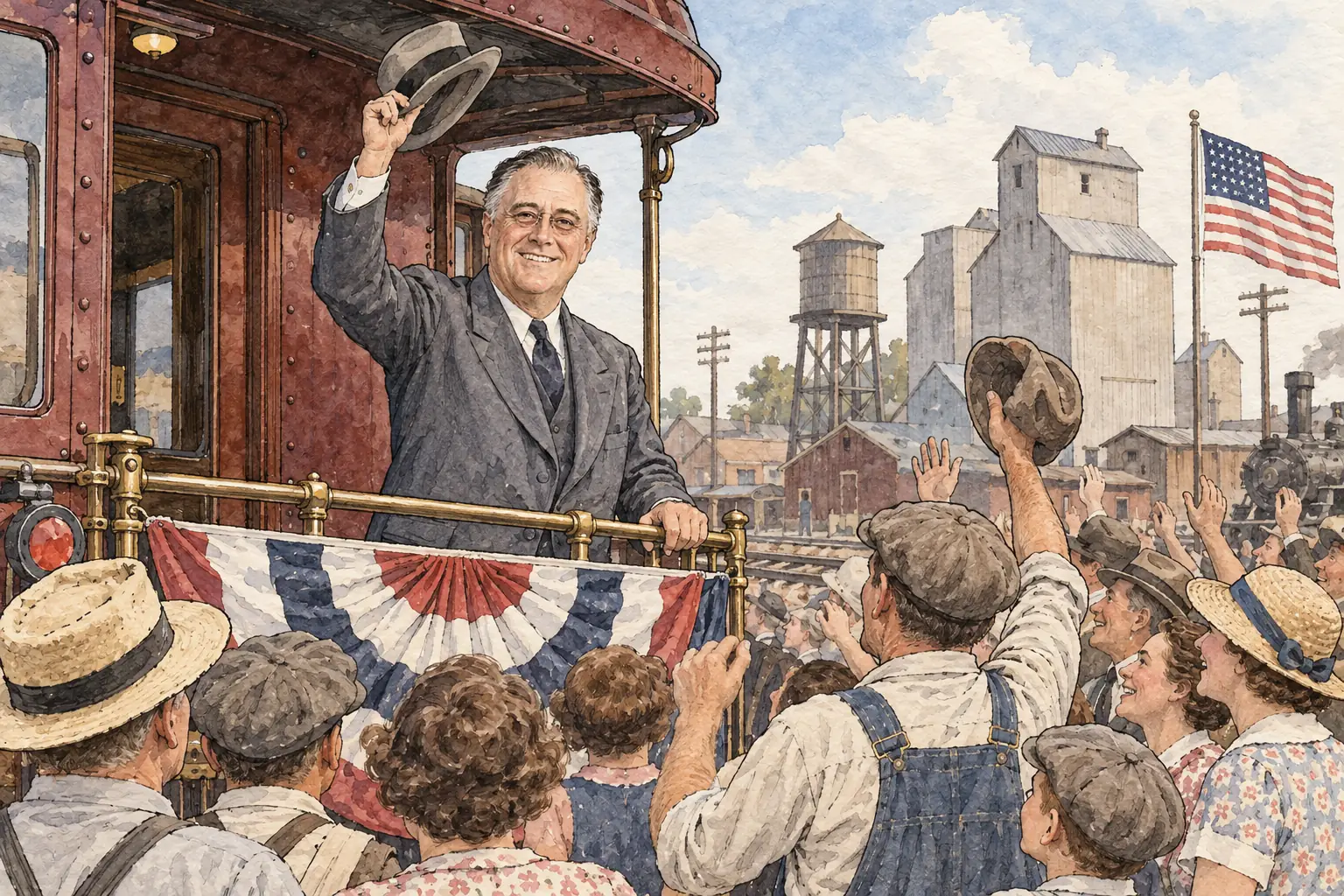
Roosevelt's campaign was well-orchestrated, leveraging the Democratic Party's structure and adapting to the national mood. It focused on widespread outreach and contrasted sharply with Hoover's more defensive approach.
Aspects of Roosevelt's campaign approach
- Nationwide tours - Roosevelt travelled extensively by train, delivering speeches in key states to directly address local concerns and mobilise voters.
- Party organisation - The Democratic Party built a strong coalition, uniting urban workers, farmers, and ethnic minorities through organised rallies and voter registration drives.
- Media utilisation - Effective use of radio and newspapers to broadcast messages of hope, criticising Republican policies while outlining Democratic alternatives.
Political climate and reasons for voter shift
By 1932, the United States was in the depths of the Great Depression, with unemployment at 25% and widespread poverty. This environment created fertile ground for a shift towards interventionist leadership, as voters rejected Hoover's limited government response.
Factors influencing the voter shift
- Economic hardship - Years of bank collapses, farm foreclosures, and job losses eroded faith in Republican laissez-faire policies, making voters receptive to government intervention.
- Desire for change - Hoover's image as out of touch, exemplified by his handling of the Bonus Army protests, contrasted with Roosevelt's promises of bold action.
- Appeal of interventionism - Voters turned to Roosevelt's vision of an active federal government to provide security, viewing it as essential for national recovery.
Impact on early presidency
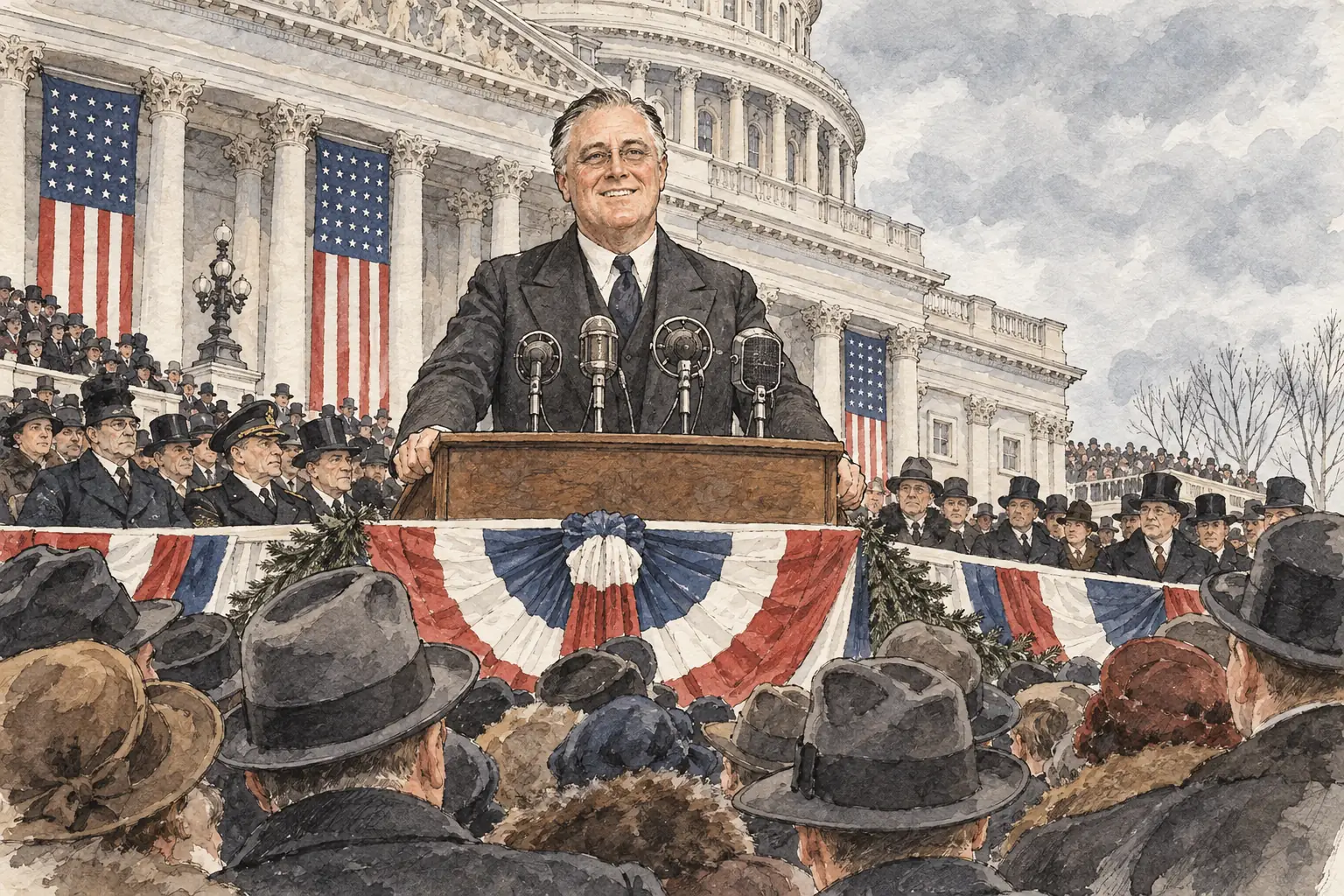
The high expectations generated by Roosevelt's campaign victory shaped his initial months in office, known as the "Hundred Days." Voters anticipated swift action, which influenced the rapid implementation of reforms.
How expectations shaped the early presidency
- Immediate reforms - Roosevelt's inauguration speech and emergency measures, like the Banking Act, met public demands for quick relief and restored confidence in the financial system.
- Legislative momentum - The mandate from the landslide victory enabled passage of numerous New Deal laws, addressing relief and recovery through agencies like the Civilian Conservation Corps.
- Public support - High expectations fostered widespread backing for experimental policies, though they also set a high bar for results, influencing ongoing political debates.