1.1 - Where Did Medieval Ideas Come From?
Key facts and dates
Medieval medicine in Europe drew heavily from ancient Greek and Roman thinkers, whose ideas were preserved and promoted by the Christian Church. This reliance on authority limited innovation, keeping medical theories largely unchanged for centuries.
Key facts to remember
- Hippocrates (c.460–370 BC) – Developed clinical observation and the theory of the Four Humours.
- Galen (c.129–216 AD) – Advanced medical knowledge through animal dissections and the Theory of Opposites.
- Monasteries and universities – Church institutions copied and taught classical texts in Latin from the early Middle Ages.
- Humoural theory – A rational but incorrect system explaining illness through bodily fluid imbalances.
- Limited dissections – Few human autopsies occurred due to religious restrictions, hindering anatomical progress.
- Stability of ideas – Medical concepts remained consistent from around 1000 to 1500 due to respect for ancient authorities.
Classical foundations from Hippocrates
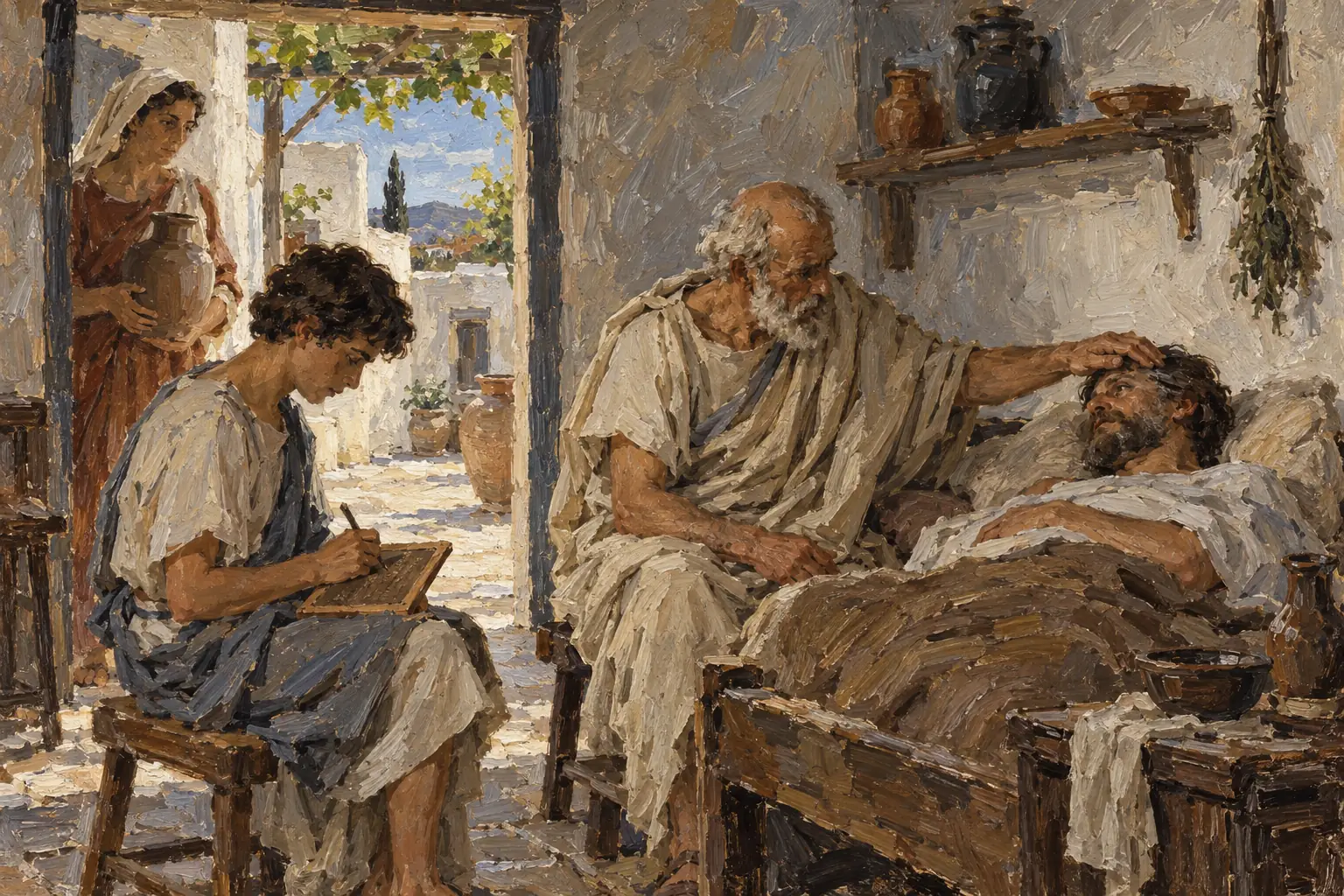
Ancient Greek physician Hippocrates laid key groundwork for medieval medicine through practical approaches to diagnosis and treatment. His methods emphasised careful study of patients and natural explanations for disease, influencing European medical thought for over a millennium.
Hippocrates' key contributions to medicine
- Clinical observation - Involved closely watching patients' symptoms and tracking how illnesses progressed, promoting a systematic way to understand health issues without relying on supernatural causes.
- Case notes - Hippocrates and his followers recorded detailed patient histories, creating a body of knowledge that could be shared and built upon by later generations.
- Theory of the Four Humours - Proposed that the body contained four essential fluids—blood, phlegm, yellow bile, and black bile—and that good health depended on their balance, while imbalances caused various diseases.
Contributions of Galen and his theories
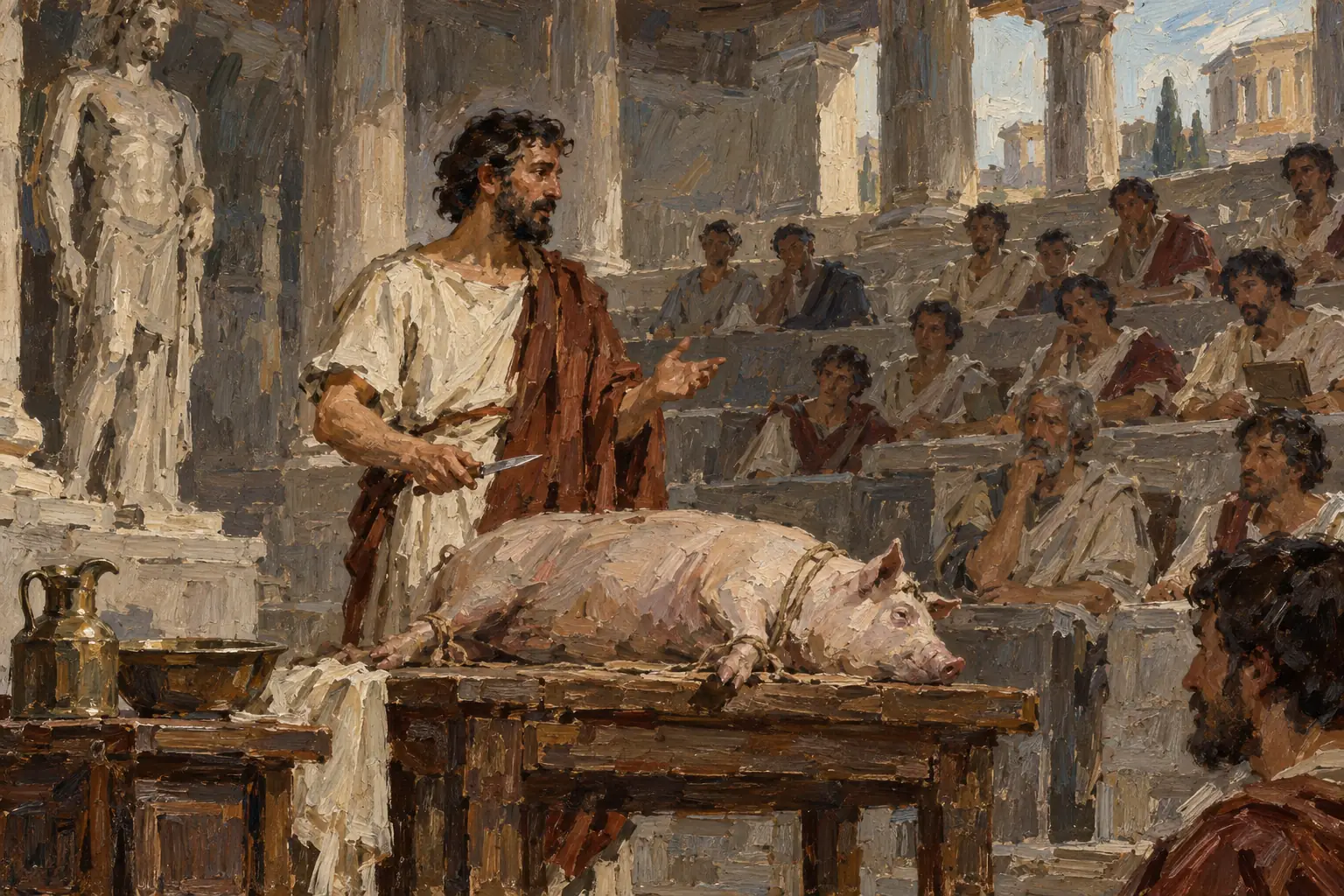
Galen, a Roman physician, expanded on Greek ideas and became a dominant figure in medieval medicine. His work combined theory with experimentation, though limited by the tools and ethics of his time, and provided treatments that aligned with humoural principles.
Galen's main advancements in medical theory
- Animal dissections - Galen performed dissections on animals like pigs and monkeys to study anatomy, applying these findings to human bodies and identifying structures such as nerves and blood vessels.
- Theory of Opposites - Suggested treating humoural imbalances by using remedies with opposing qualities, such as applying cold treatments for hot conditions or dry herbs for excess moisture, to restore equilibrium.
Role of the Church in preserving medicine
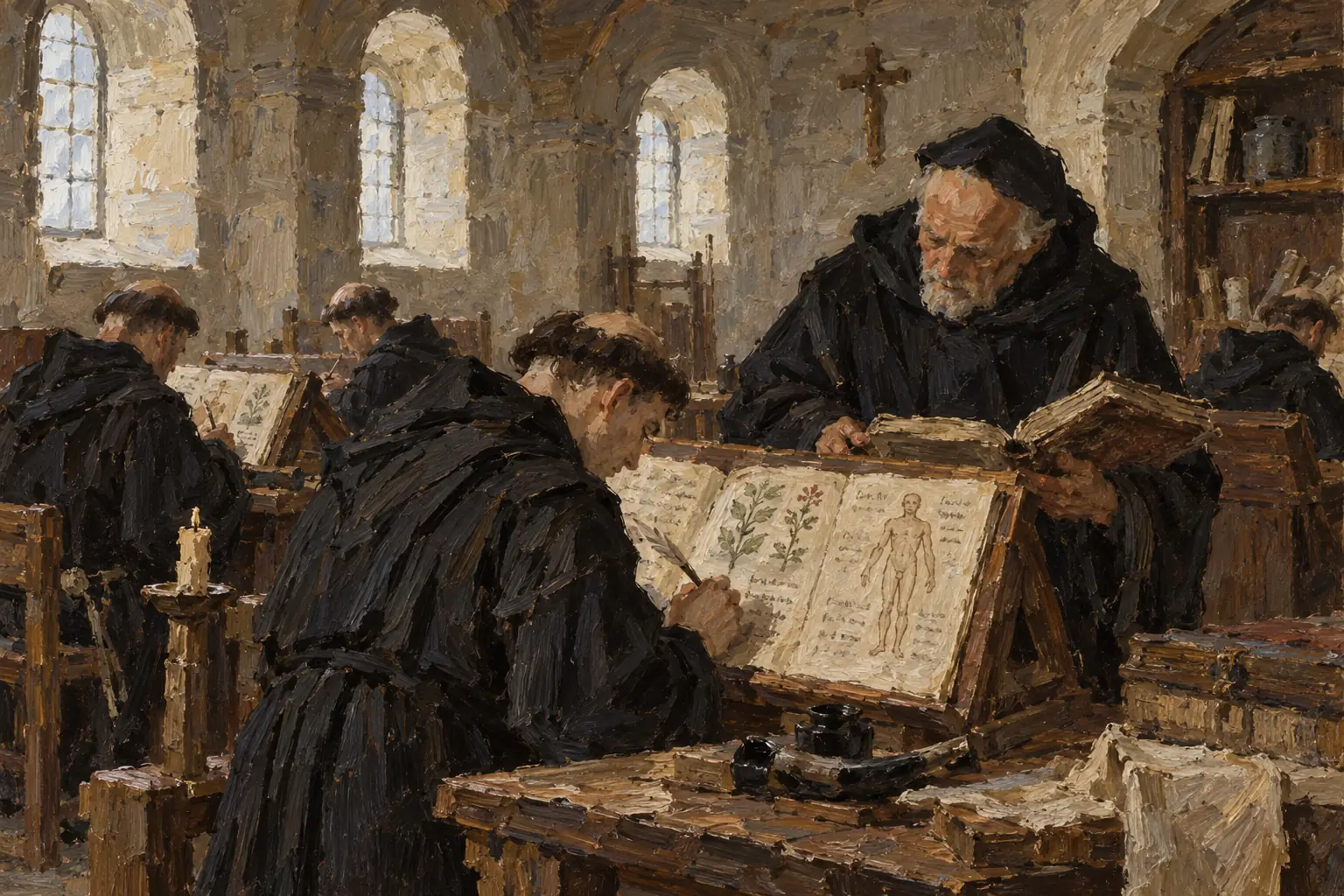
The Christian Church played a central part in maintaining classical medical texts during the Middle Ages. Through its institutions, the Church ensured these ideas remained accessible and gained official endorsement, blending them with religious teachings.
How the Church supported classical medicine
- Preservation in monasteries - Monks copied ancient Greek and Roman manuscripts, including works by Hippocrates and Galen, preserving them in Latin translations during times of social upheaval.
- Endorsement through universities - From the 12th century, Church-run universities taught Galen's texts as core curriculum, making his ideas authoritative and integrating them with Christian views on healing.
- Integration with faith - The Church viewed humoural theory as compatible with divine order, promoting it as a rational system while discouraging challenges that might conflict with religious doctrine.
Limitations and stability of medical ideas
Medieval medical theories, while logical for their era, had significant flaws that restricted progress. Deep respect for ancient authorities and practical barriers prevented new discoveries, leading to centuries of unchanging practices.
Factors limiting innovation in medieval medicine
- Rational but incorrect theories - Humoural explanations seemed sensible and non-magical, focusing on natural causes, but were fundamentally wrong as they ignored concepts like germs or accurate physiology.
- Orthodoxy constraining investigation - Strict adherence to Galen and Hippocrates discouraged questioning or new experiments, as challenging these figures was seen as disrespectful or heretical.
- Limited anatomical knowledge - Human dissections were rare due to Church prohibitions and cultural taboos, relying instead on animal-based insights that often misled understanding of the body.
- Overall stability from c.1000 to c.1500 - This combination of reverence for tradition and institutional support kept medical ideas static, with little evolution until the Renaissance sparked fresh inquiry.