1.3 - Planning the Invasion: Logistics, Support & Spies
Key facts and dates
The planning phase of William's invasion of England in 1066 involved overcoming significant logistical and political hurdles, while Harold Godwinson faced mounting difficulties in mounting an effective defence. These efforts highlighted the importance of preparation, alliances and intelligence in medieval warfare.
Key facts to remember
- Norman nobility support – Key barons provided troops and resources, motivated by promises of English lands.
- Papal approval – A banner from Pope Alexander II legitimised the invasion as a holy cause.
- Shipbuilding effort – Hundreds of vessels constructed along Normandy's coast for troop and horse transport.
- Fyrd mobilisation issues – Harold struggled to keep peasant soldiers assembled during harvest season.
- Intelligence gaps – Both sides relied on spies, but Harold's network failed to predict William's exact landing.
- Northern crisis – Harald Hardrada's invasion forced Harold to divert forces, weakening southern defences.
William's logistical preparations for the invasion
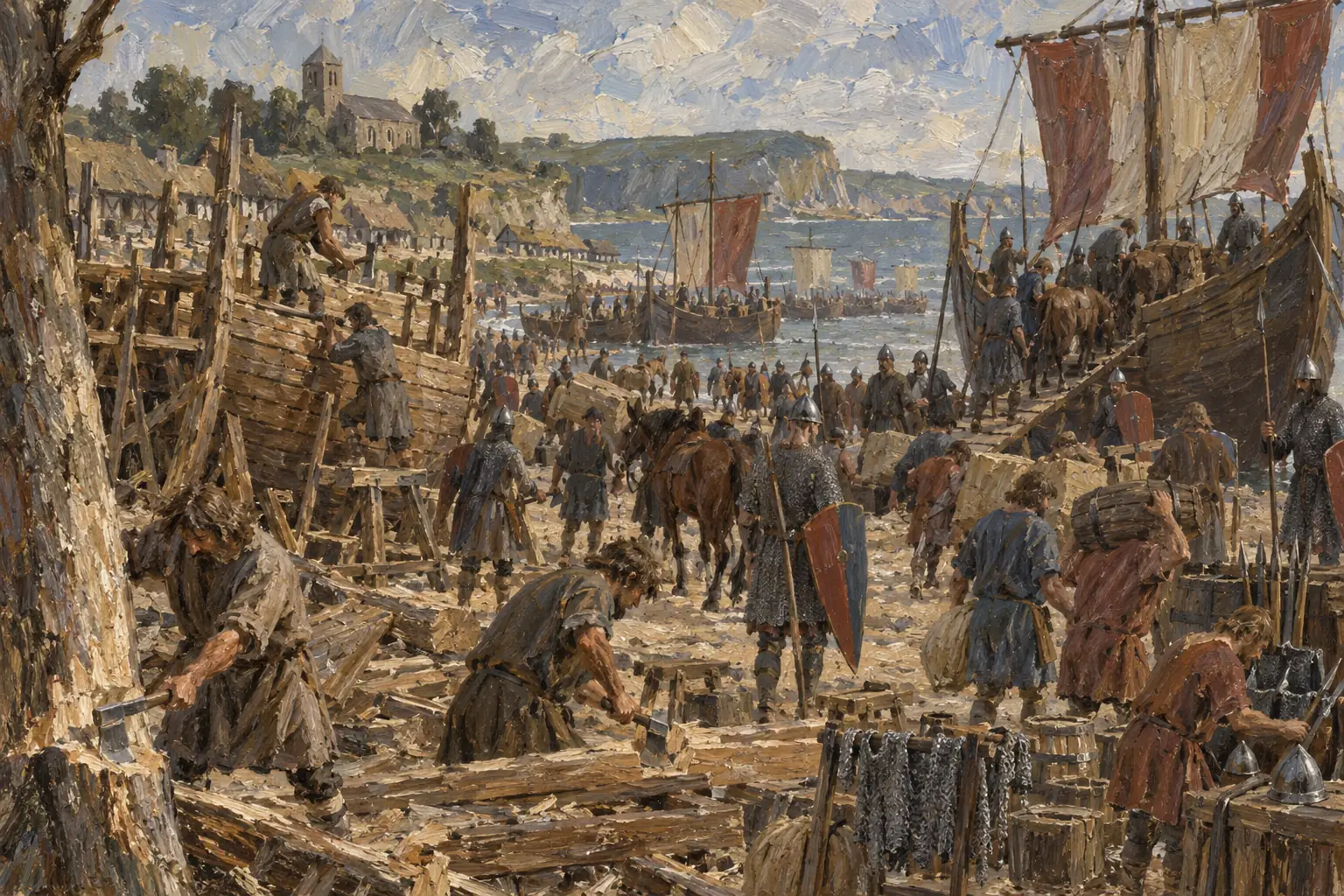
William of Normandy faced substantial challenges in assembling the resources needed for a cross-Channel invasion, requiring careful coordination of materials and personnel. This involved gathering a fleet, troops and supplies to support a large-scale military operation.
Material requirements for the Norman force
- Ships and assembly - A fleet of vessels was built and gathered at ports along the Norman coastline, designed to transport soldiers, horses and equipment across the English Channel.
- Trained troops and cavalry - Professional soldiers, including knights, were recruited and trained, with particular emphasis on mounted warriors who needed specialised transport for their horses.
- Weapons, food and fodder - Vast quantities of arms, provisions for men and feed for animals were stockpiled to sustain the army during the crossing and initial campaign.
- Favourable weather conditions - The invasion depended on calm seas and suitable winds for a safe passage, delaying the launch until conditions improved in late September 1066.
Support and approvals secured by William
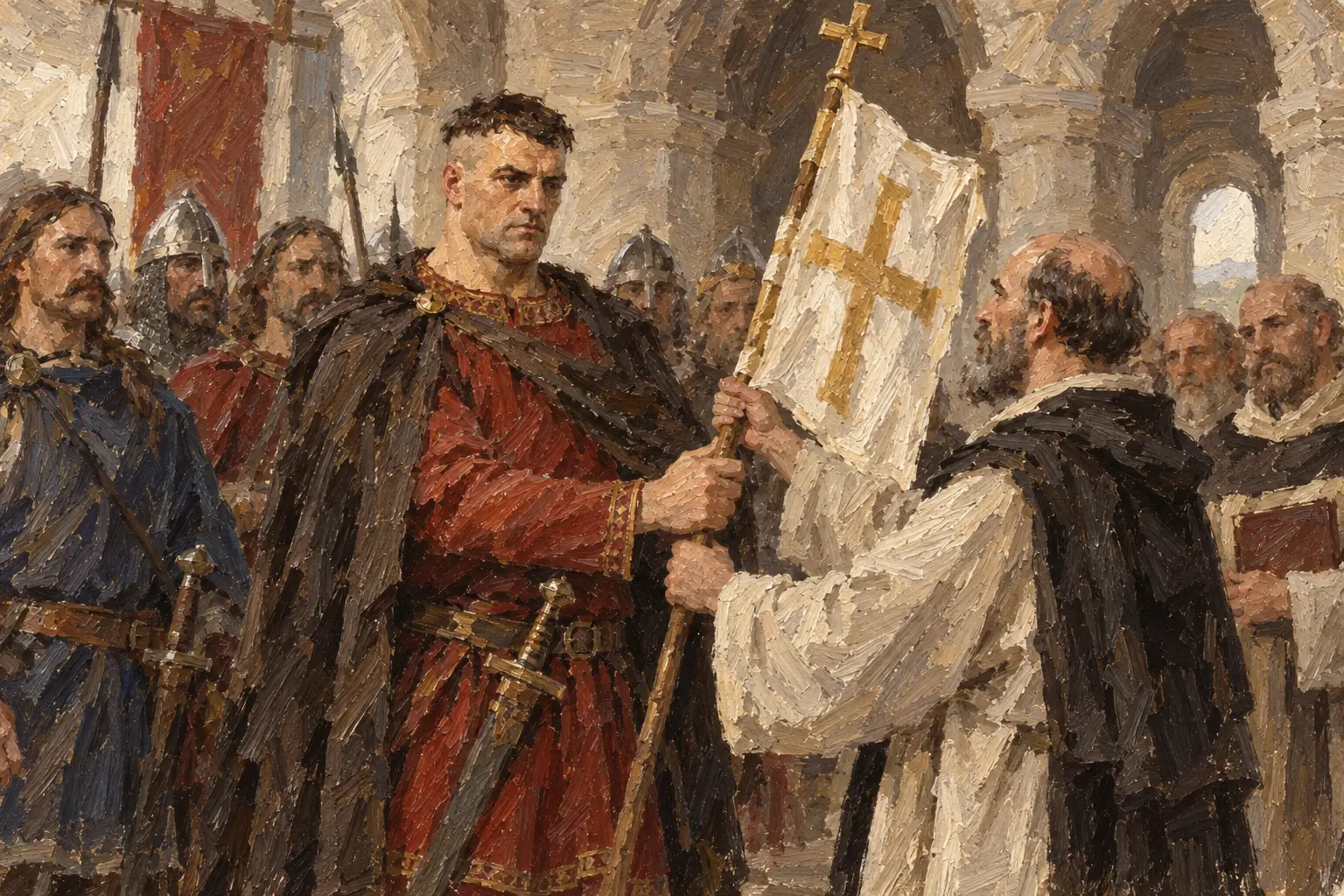
William's invasion plans were bolstered by political and religious backing, which helped rally resources and justify the conquest. This support came from within Normandy and across Europe, creating a favourable environment for his ambitions.
Sources of backing for the invasion
- Norman nobility - Leading nobles pledged loyalty, troops and funding, enticed by prospects of wealth and territory in England if the campaign succeeded.
- European politics - Alliances with neighbouring regions ensured no interference, while rivalries, such as those with France, were managed to avoid distractions.
- Papal approval - Endorsement from the Pope, including a blessed banner, framed the invasion as a righteous endeavour, boosting morale and attracting additional recruits from beyond Normandy.
Continuation of government in Normandy
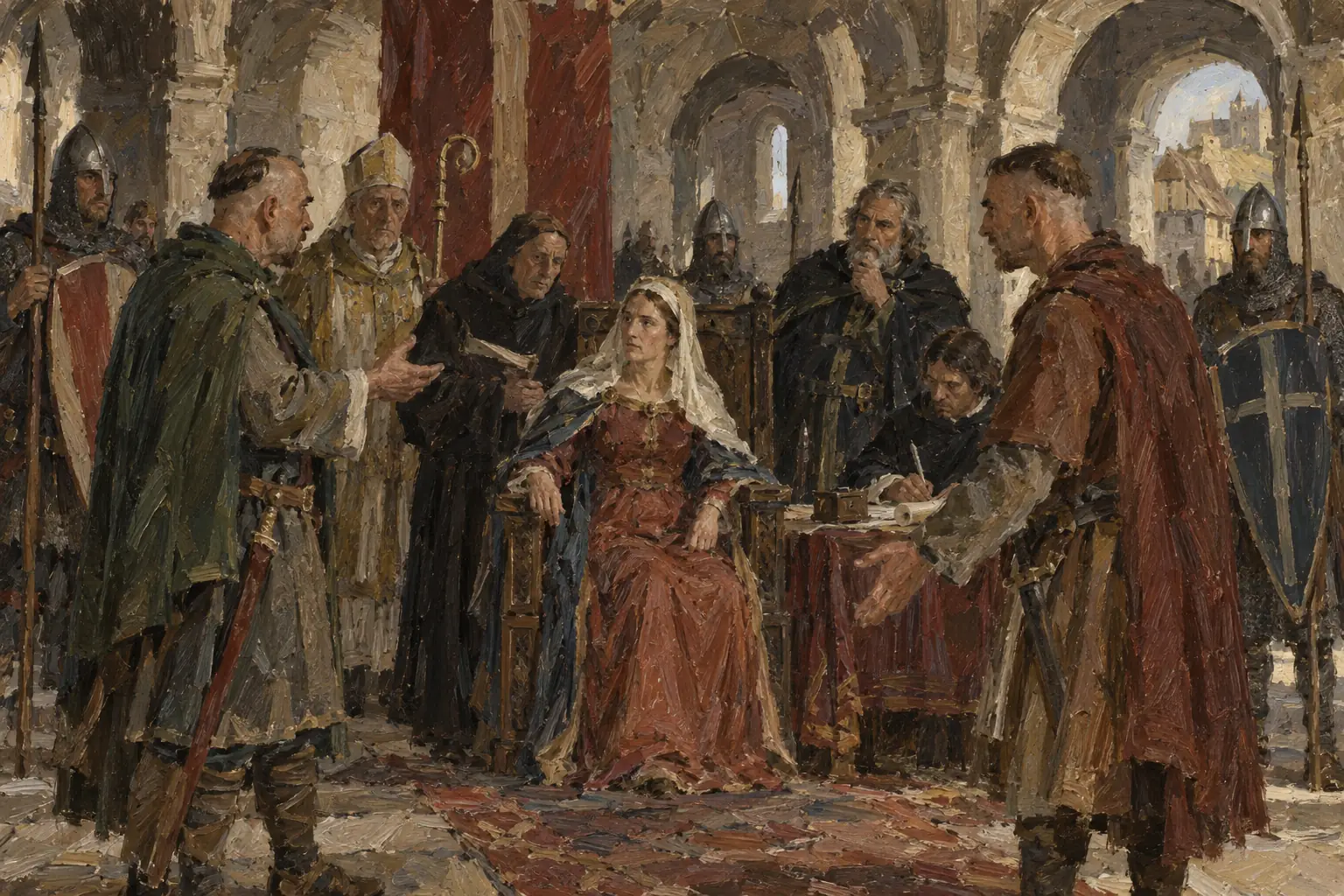
While William focused on the invasion, he ensured that Normandy remained stable and well-governed in his absence. This administrative continuity was crucial to prevent internal unrest or external threats during the extended campaign.
Measures for maintaining Norman stability
- Delegated authority - Trusted advisors and family members, such as William's wife Matilda, oversaw daily governance, handling legal matters and defence.
- Administrative systems - Established networks of officials collected taxes, maintained order and protected borders, allowing William to divert resources to England without risking collapse at home.
- Security arrangements - Fortifications were strengthened, and alliances reinforced to deter potential invasions from rivals, ensuring the duchy remained secure.
Harold's defensive challenges
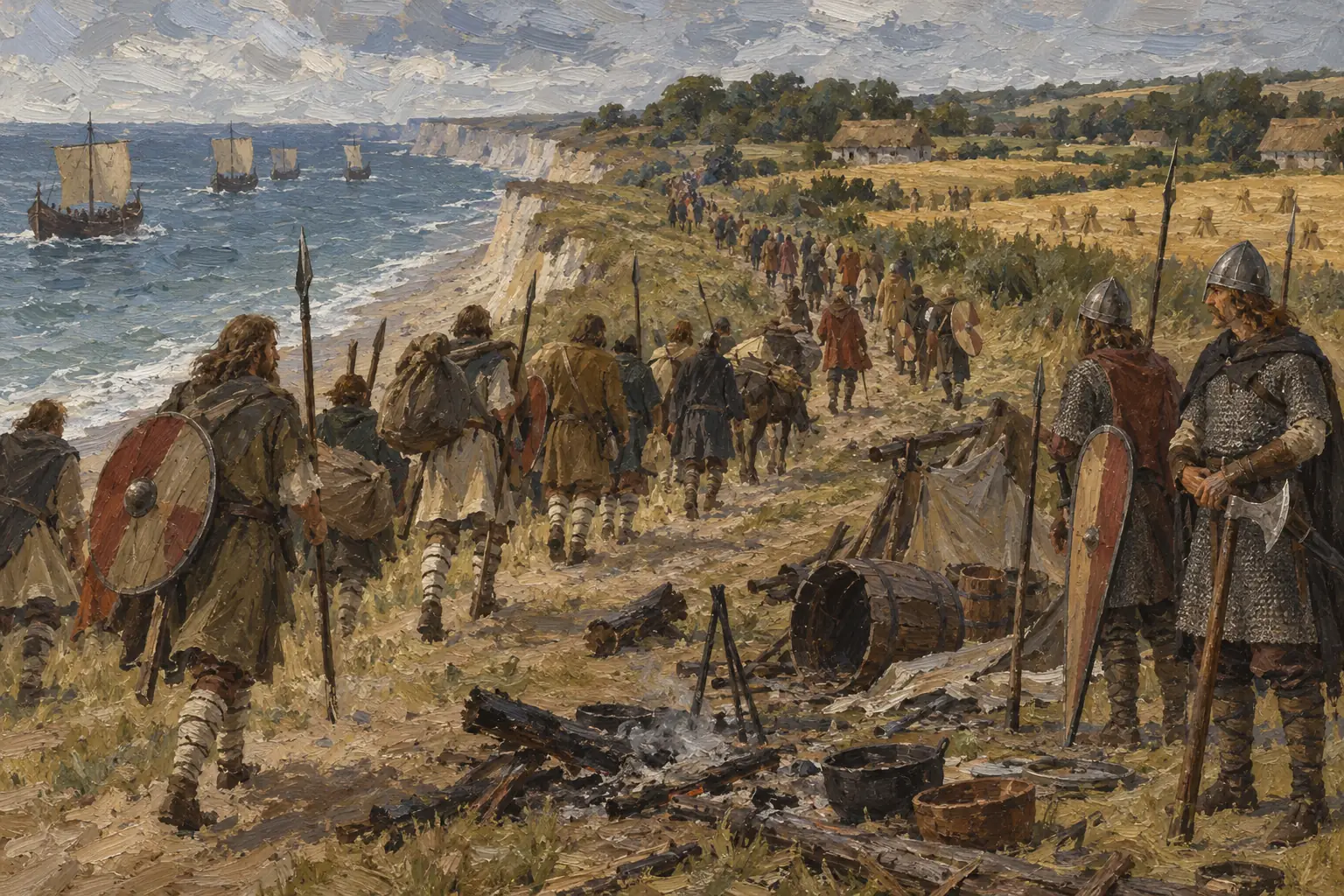
In contrast to William's preparations, Harold Godwinson encountered significant obstacles in defending England against multiple threats. These issues strained his resources and forced difficult decisions.
Problems faced by Harold's forces
- Mobilising the fyrd - Keeping a large force of peasant soldiers assembled was difficult, especially during the harvest period when many needed to return to their farms for economic survival.
- Supply and payment - Providing food, equipment and compensation for troops over extended periods drained royal coffers and logistics.
- Coastal defence - Maintaining watches along the southern shores required constant vigilance, but stretched resources thin across a wide area.
- Information gaps - Limited reliable intelligence left Harold uncertain about invasion timings and locations, complicating response plans.
- Northern threat - The unexpected invasion by Harald Hardrada in the north demanded a hasty march with elite troops, exhausting forces before confronting William.
Impact of timing, supply and reconnaissance
Both leaders' decisions were heavily influenced by the interplay of timing, available resources and intelligence gathering. These factors determined when and how each side could act effectively.
How key elements shaped strategies
| Factor | William's approach | Harold's approach |
|---|---|---|
| Timing | Delayed crossing until winds shifted, allowing full assembly but risking supply strain | Forced to disband parts of the fyrd in September due to harvest needs, leaving gaps |
| Supply | Stockpiled essentials in Normandy for a sustained campaign, ensuring army readiness | Struggled with ongoing provisioning for scattered forces, leading to fatigue |
| Reconnaissance | Used spies to monitor English defences and Hardrada's movements, informing landing site | Relied on incomplete reports, missing William's exact plans and weakening preparations |