3.4 - Rhineland, Rome-Berlin Axis & Anti-Comintern Pact
Key facts and dates
The mid-1930s saw Adolf Hitler challenge the post-First World War order through bold diplomatic and military moves, forging alliances that isolated opponents and strengthened Germany's position. These actions, including the remilitarisation of the Rhineland and key pacts, marked a turning point in European power dynamics.
Timeline of key events
- March 1936 – Germany remilitarises the Rhineland, violating the Treaty of Versailles and Locarno Pact.
- October 1936 – Italy and Germany form the Rome-Berlin Axis, formalising their alliance.
- November 1936 – Germany and Japan sign the Anti-Comintern Pact against communism.
- 1937 – Italy joins the Anti-Comintern Pact, creating a tripartite anti-communist front.
- 1938 onwards – These successes embolden Hitler to pursue Anschluss with Austria and demands on Czechoslovakia.
Remilitarisation of the Rhineland in 1936
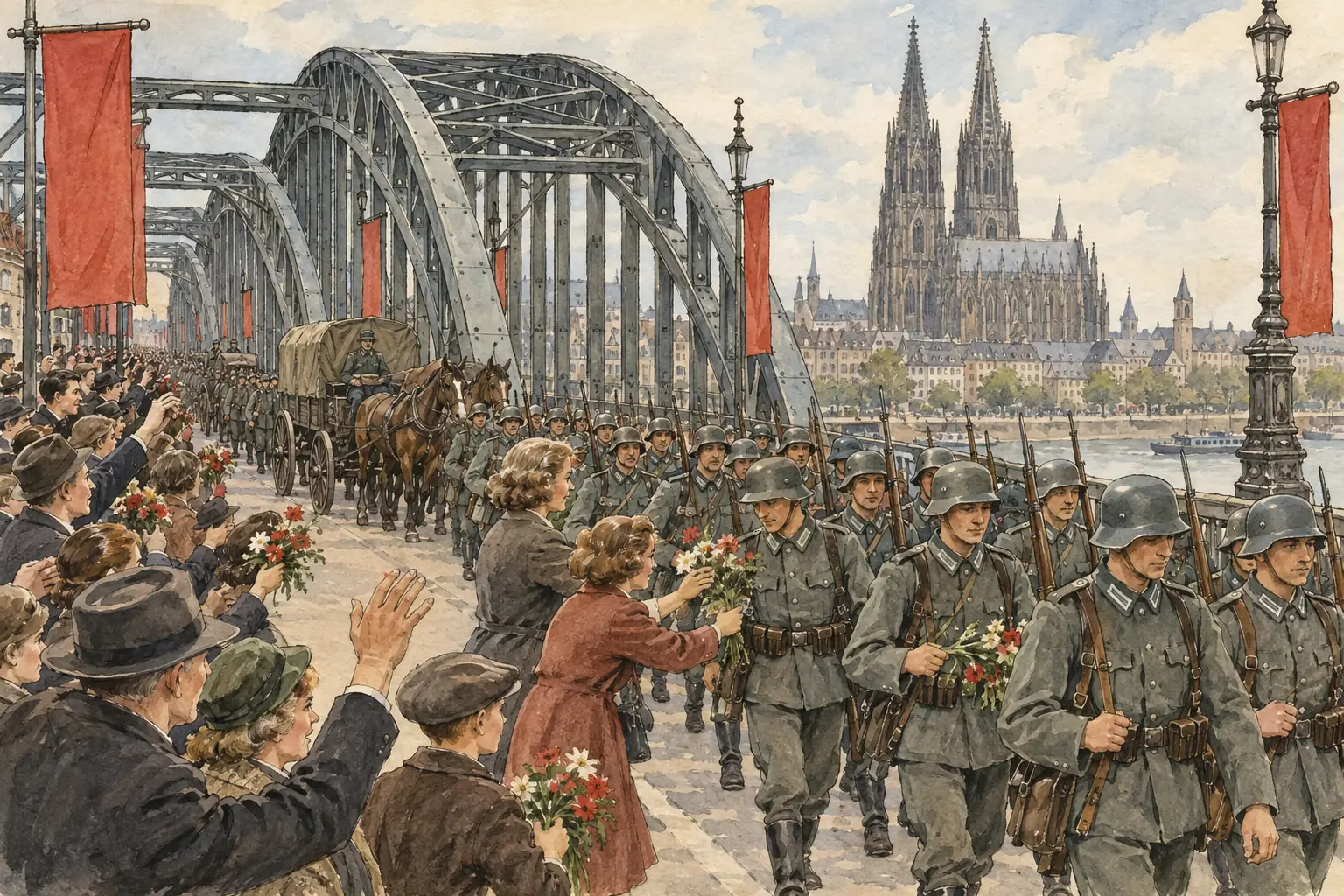
In March 1936, Hitler ordered German troops to re-enter the Rhineland, a demilitarised zone established by the Treaty of Versailles to create a buffer between Germany and France. This move directly challenged the post-war settlement and tested the resolve of Britain and France.
Reasons for the remilitarisation
- Strategic importance - The Rhineland's location made it vital for German defence and industrial strength, particularly as it included key areas like the Ruhr valley.
- Timing and pretext - Hitler justified the action by claiming the Franco-Soviet Mutual Assistance Pact of 1935 violated the Locarno Pact, using it as an excuse to act while France and Britain were distracted by domestic issues and the Abyssinian crisis.
- Risky gamble - German forces were instructed to withdraw if met with resistance, as the army was not yet strong enough for a full conflict; Hitler later admitted it was a bluff that could have failed.
Responses from Britain and France
- French caution - France, with a weakened military and political divisions, chose not to respond forcefully, fearing escalation without British support.
- British inaction - Britain viewed the move as Germany reclaiming its own territory and preferred appeasement to avoid another war, with public opinion largely supportive of non-intervention.
- Consequences - The lack of opposition boosted Hitler's confidence, weakened the League of Nations, and encouraged further revisions to the Treaty of Versailles.
Formation of the Rome-Berlin Axis

The Rome-Berlin Axis, established in October 1936, marked a significant alliance between Nazi Germany and Fascist Italy under Benito Mussolini. This pact emerged from shared interests and shifted European alliances.
Background to the alliance
- Impact of the Abyssinian crisis - Italy's invasion of Abyssinia in 1935 isolated it from Britain and France due to League sanctions, pushing Mussolini towards Hitler, who had supported the invasion.
- Shared ideologies - Both regimes opposed communism and democracy, seeking to expand their influence; Germany wanted to counter potential encirclement, while Italy sought protection against Western powers.
- Terms of the pact - It was an informal agreement for mutual support in foreign policy, including recognition of Italy's Ethiopian conquest and coordination against common enemies.
Significance of the Rome-Berlin Axis
- Diplomatic shift - The alliance ended Italy's previous alignment with Britain and France via the Stresa Front, creating a new power bloc in Europe.
- Military implications - It facilitated cooperation, such as during the Spanish Civil War, where both nations supported Franco's nationalists, testing weapons and strategies.
The Anti-Comintern Pact and its significance
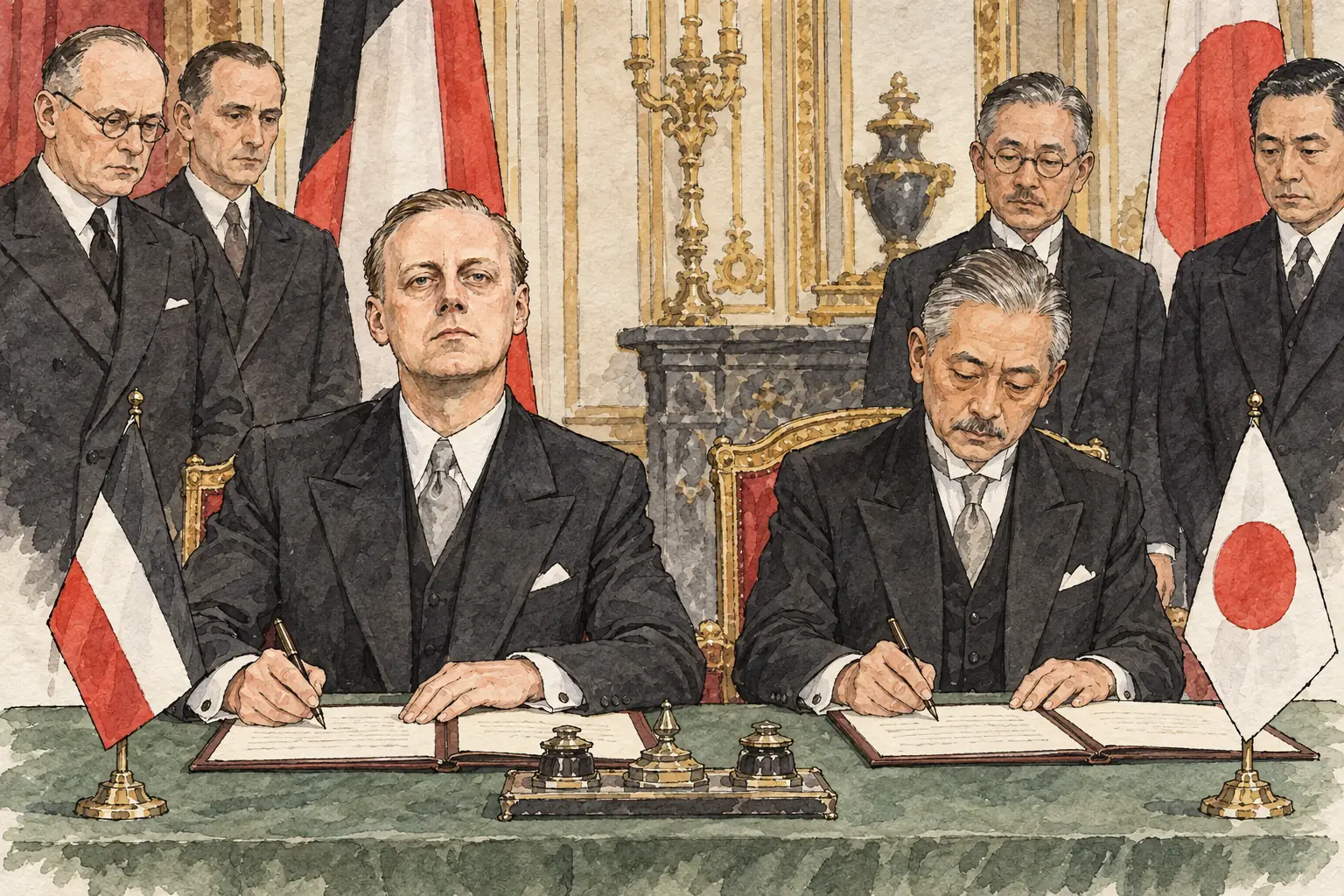
The Anti-Comintern Pact, signed in November 1936 between Germany and Japan, was ostensibly aimed at combating international communism. Italy joined in 1937, expanding its scope.
Key features of the pact
- Anti-communist focus - It committed signatories to share information and cooperate against the Comintern, the Soviet-led organisation promoting global communism.
- Broader strategic aims - For Germany, it countered the Soviet threat and isolated Britain and France; Japan sought support against Soviet influence in Asia; Italy joined to strengthen its position.
- Secret clauses - Hidden agreements included mutual non-aggression with the Soviet Union, though this was largely symbolic.
Expansion and impact
- Italy's accession in 1937 - This transformed the pact into a tripartite alliance, aligning fascist powers across continents.
- Global implications - It heightened tensions with the Soviet Union and Western democracies, signalling a growing axis of authoritarian states.
Shifting the balance of power and aggression
These developments fundamentally altered the European and global balance of power, emboldening Hitler to pursue more aggressive policies without fear of immediate repercussions.
Changes in the balance of power
- Weakening of collective security - The unopposed Rhineland remilitarisation exposed the ineffectiveness of the League of Nations and the policy of appeasement, reducing deterrents to aggression.
- Formation of an axis bloc - The Rome-Berlin Axis and Anti-Comintern Pact created a network of alliances that isolated potential opponents like France and the collective security Soviet Union, while providing Germany with diplomatic cover.
- Psychological boost - Successes convinced Hitler and his allies that Britain and France would avoid confrontation, shifting power towards revisionist states.
Encouragement of further aggression
- Emboldened policies - With no resistance, Hitler moved to Anschluss with Austria in 1938 and the Sudetenland crisis, testing limits further.
- Path to war - These steps eroded the Versailles system, increased militarisation, and set the stage for the invasion of Poland in 1939, contributing to the outbreak of the Second World War.