3.5 - Anschluss & the Road to Munich
Key facts and dates
The Anschluss of March 1938 represented a bold step in Hitler's expansionist policy, uniting Germany and Austria without significant international opposition. This event boosted Nazi momentum and directly influenced the subsequent crisis over Czechoslovakia's Sudetenland, escalating tensions towards war.
Timeline of key events
- 1934 – Failed Nazi coup in Austria, highlighting early German ambitions for unification.
- February 1938 – Hitler pressures Austrian Chancellor Kurt Schuschnigg at Berchtesgaden to appoint Nazis to key government positions.
- 9 March 1938 – Schuschnigg announces a plebiscite on Austrian independence to resist German influence.
- 11 March 1938 – Germany demands the plebiscite be cancelled; Schuschnigg resigns under threat of invasion.
- 12 March 1938 – German troops enter Austria unopposed, achieving Anschluss.
- 13 March 1938 – Hitler proclaims the union of Austria with Germany.
- 10 April 1938 – A referendum under German occupation overwhelmingly approves the Anschluss.
- September 1938 – Sudeten crisis begins, building on the success of Anschluss.
German pressure on Austria leading to Anschluss
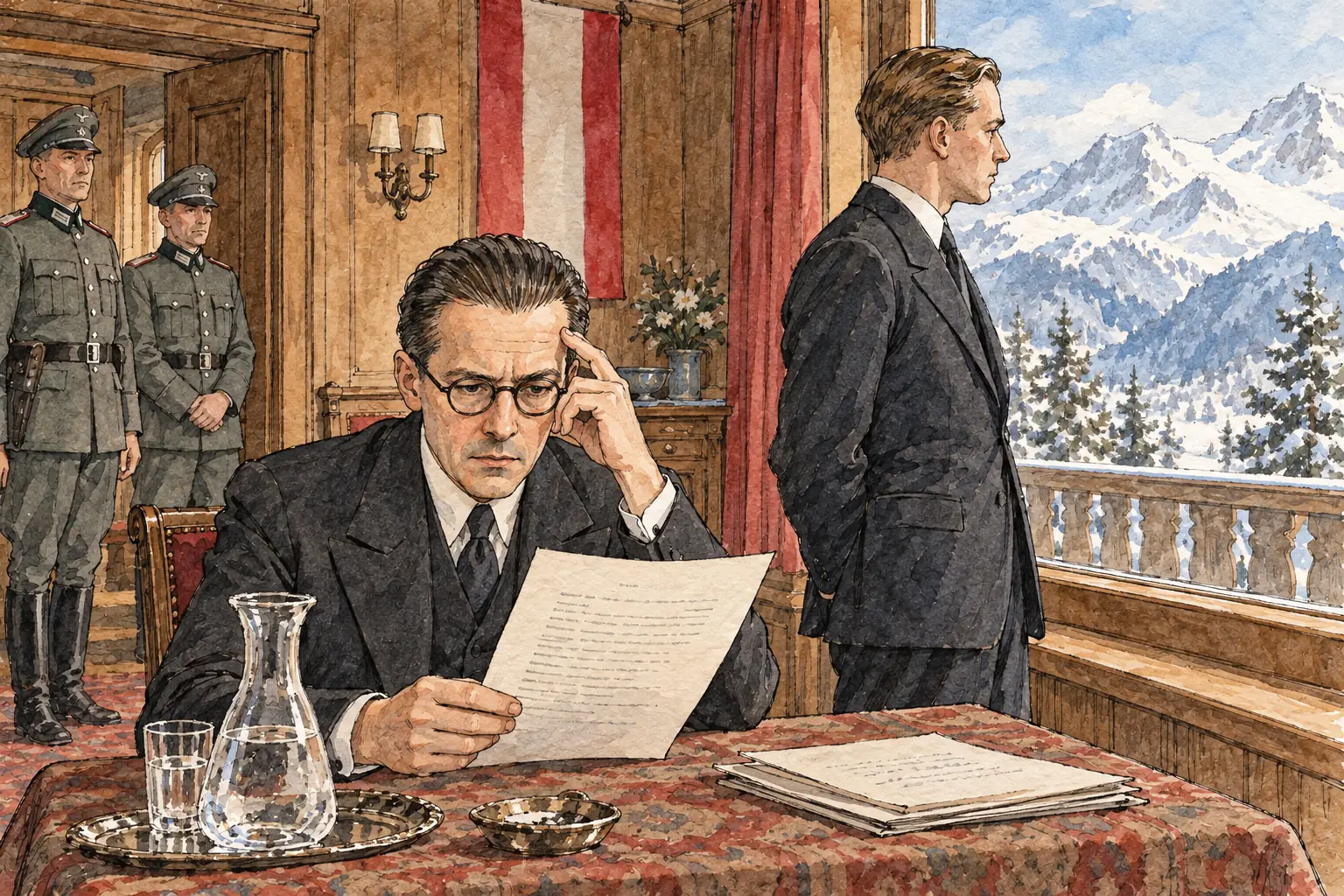
In the years leading up to 1938, Germany under Hitler pursued a policy of uniting with Austria, viewing it as a natural extension of German territory due to shared language and culture. This pressure intensified through diplomatic and covert means, aiming to incorporate Austria into the Third Reich.
Methods of German influence on Austria
- Diplomatic intimidation - Hitler summoned Austrian Chancellor Kurt Schuschnigg to a meeting at Berchtesgaden in February 1938, demanding the appointment of Nazi sympathisers to high government roles, including the interior ministry.
- Support for internal unrest - Germany encouraged Austrian Nazis to agitate for union, creating domestic instability that weakened Schuschnigg's position.
- Economic leverage - Austria's economic dependence on Germany was exploited, with threats of trade restrictions adding to the pressure for compliance.
- Threat of force - Ultimatums included warnings of military intervention if demands were not met, forcing Schuschnigg to navigate between preserving independence and avoiding conflict.
The events of the Anschluss in March 1938
Image 1 of 2: Schuschnigg announced his resignation on the radio on the evening of 11 March 1938
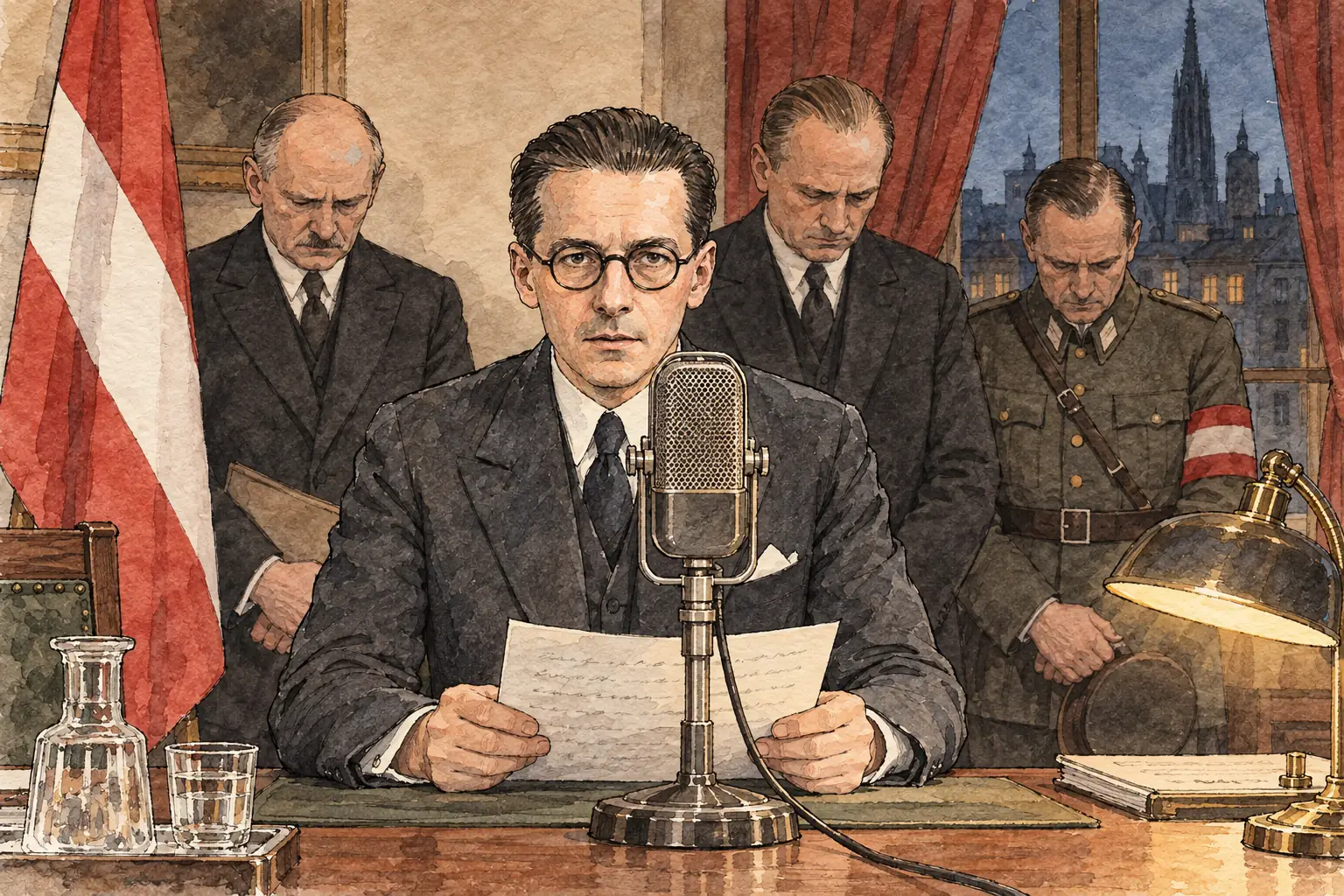
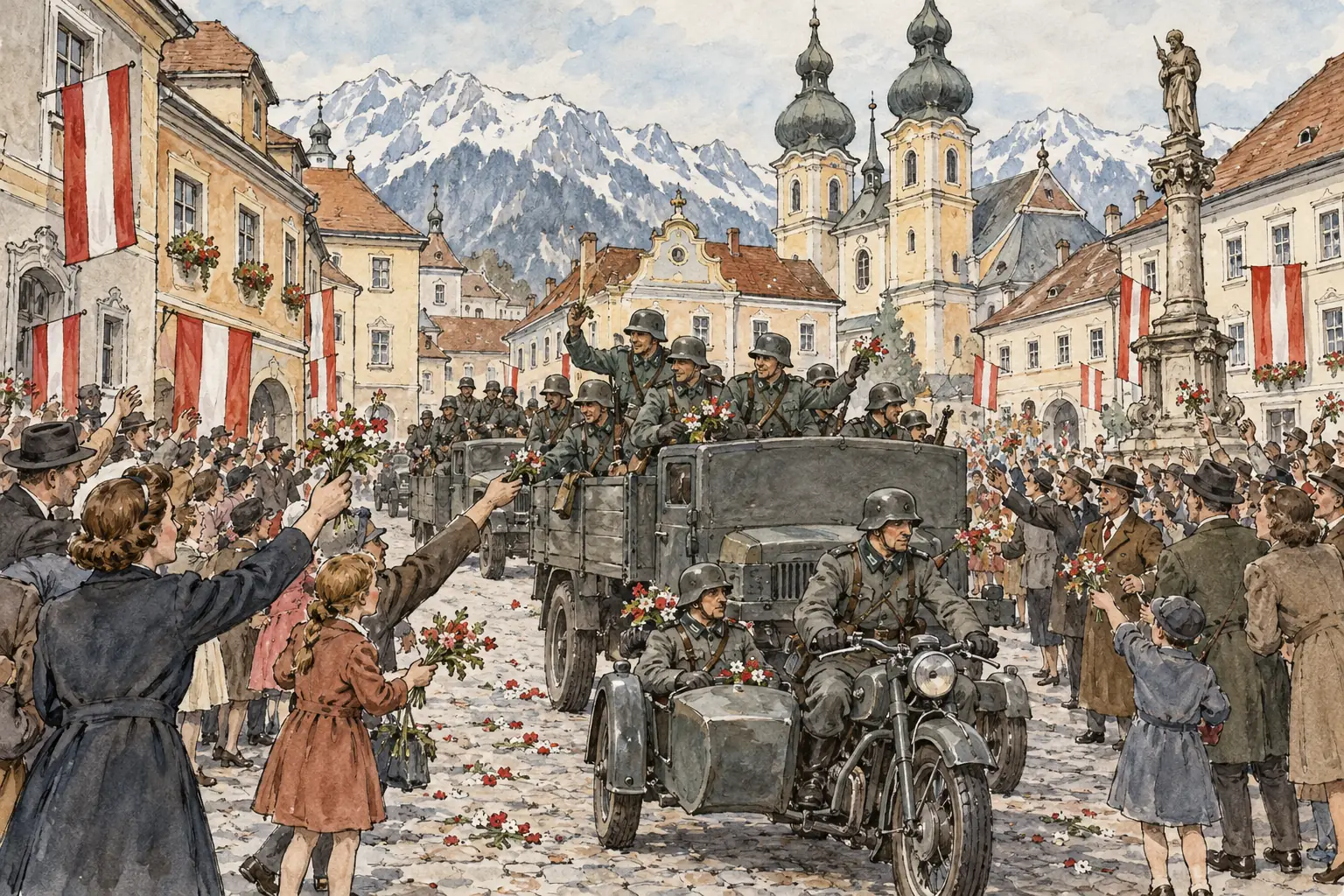
The Anschluss unfolded rapidly over a few days in March 1938, marked by Schuschnigg's attempt to resist through a public vote, followed by German intervention. This sequence demonstrated Hitler's willingness to use both coercion and swift action to achieve territorial gains.
Sequence of the Anschluss
- Announcement of plebiscite - On 9 March, Schuschnigg declared a referendum for 13 March to gauge support for Austrian independence, hoping to rally public opposition to German interference.
- German response and resignation - Hitler demanded the vote be aborted, mobilising troops at the border; Schuschnigg resigned on 11 March to avert invasion, appointing a Nazi-friendly successor.
- Military entry - German forces crossed into Austria on 12 March, meeting no resistance; Hitler followed, receiving enthusiastic welcomes in Vienna.
- Formal union and referendum - Austria was declared part of Germany on 13 March, with a subsequent plebiscite on 10 April—conducted under occupation—claiming 99% approval, though heavily manipulated.
Reactions from Britain, France, and Italy
The international response to the Anschluss was notably passive, reflecting the policy of appeasement and reluctance to confront Germany militarily. This lack of intervention emboldened Hitler for further aggressions.
Key international responses
- Britain's stance - Under Prime Minister Neville Chamberlain, Britain protested diplomatically but took no action, viewing the union as an internal German-Austrian matter and prioritising peace over confrontation.
- France's position - France, weakened by internal political divisions, issued condemnations but refrained from military involvement, aligning with Britain's non-interventionist approach.
- Italy's acceptance - Mussolini, previously protective of Austrian independence, acquiesced due to improving relations with Germany via the Rome-Berlin Axis, choosing alliance over opposition.
Strategic and psychological importance
The Anschluss provided Germany with significant advantages, enhancing its military and economic strength while boosting Hitler's confidence. These gains had far-reaching implications for European power dynamics.
Strategic benefits of Anschluss
- Resource acquisition - Austria's reserves of iron ore, timber, and foreign currency bolstered Germany's economy and war preparations.
- Geographical advantages - The union improved Germany's position by encircling Czechoslovakia and providing access to the Balkans, facilitating future expansions.
- Military enhancements - Incorporation of Austrian troops and infrastructure strengthened the German army, adding manpower and strategic depth.
Psychological impacts of Anschluss
- Momentum for expansion - The unopposed success encouraged Hitler to pursue further territorial claims, demonstrating the effectiveness of bold actions.
- Prestige and propaganda - Domestically, it elevated Hitler's status as a unifier of German peoples; internationally, it exposed the weaknesses of appeasement policies.
How Anschluss set up the Sudeten crisis
The success of the Anschluss directly paved the way for the Sudeten crisis, as it isolated Czechoslovakia and intensified German demands for ethnic German territories. This escalation tested the limits of appeasement and moved Europe closer to war.
Connections between Anschluss and the Sudeten crisis
- Increased pressure on Czechoslovakia - With Austria under German control, Czechoslovakia was surrounded on three sides, making it vulnerable to invasion.
- Emboldened German demands - Encouraged by the lack of resistance, Hitler supported Sudeten German separatists, demanding the region be ceded in September 1938.
- Path to Munich Agreement - The crisis culminated in the Munich Conference, where Britain and France conceded the Sudetenland to Germany, mirroring the passive response to Anschluss but failing to prevent further aggression.