3.1 - Economy 1933–45: Jobs, Rearmament & Autarky
Key facts and dates
The Nazi regime transformed Germany's economy between 1933 and 1945, focusing on reducing unemployment through public works and rearmament while aiming for self-sufficiency. This period saw initial recovery overshadowed by wartime hardships, including rationing and forced labour.
Timeline of key events
- 1933 – Hitler becomes Chancellor; public works programmes begin, including autobahn construction.
- 1935 – Conscription reintroduced, boosting employment in the armed forces.
- 1936 – Launch of the Four-Year Plan under Göring to achieve economic self-sufficiency.
- 1939 – Rationing introduced at the start of the Second World War.
- 1942 – Albert Speer appointed Minister of Armaments, reforming war production.
- 1943 – Goebbels declares "Total War", intensifying labour mobilisation and resource allocation.
- 1944 – Allied bombing peaks, disrupting industry and leading to widespread evacuations.
Measures to reduce unemployment and rearmament
Image 1 of 2: Public works such as motorway building created jobs for hundreds of thousands
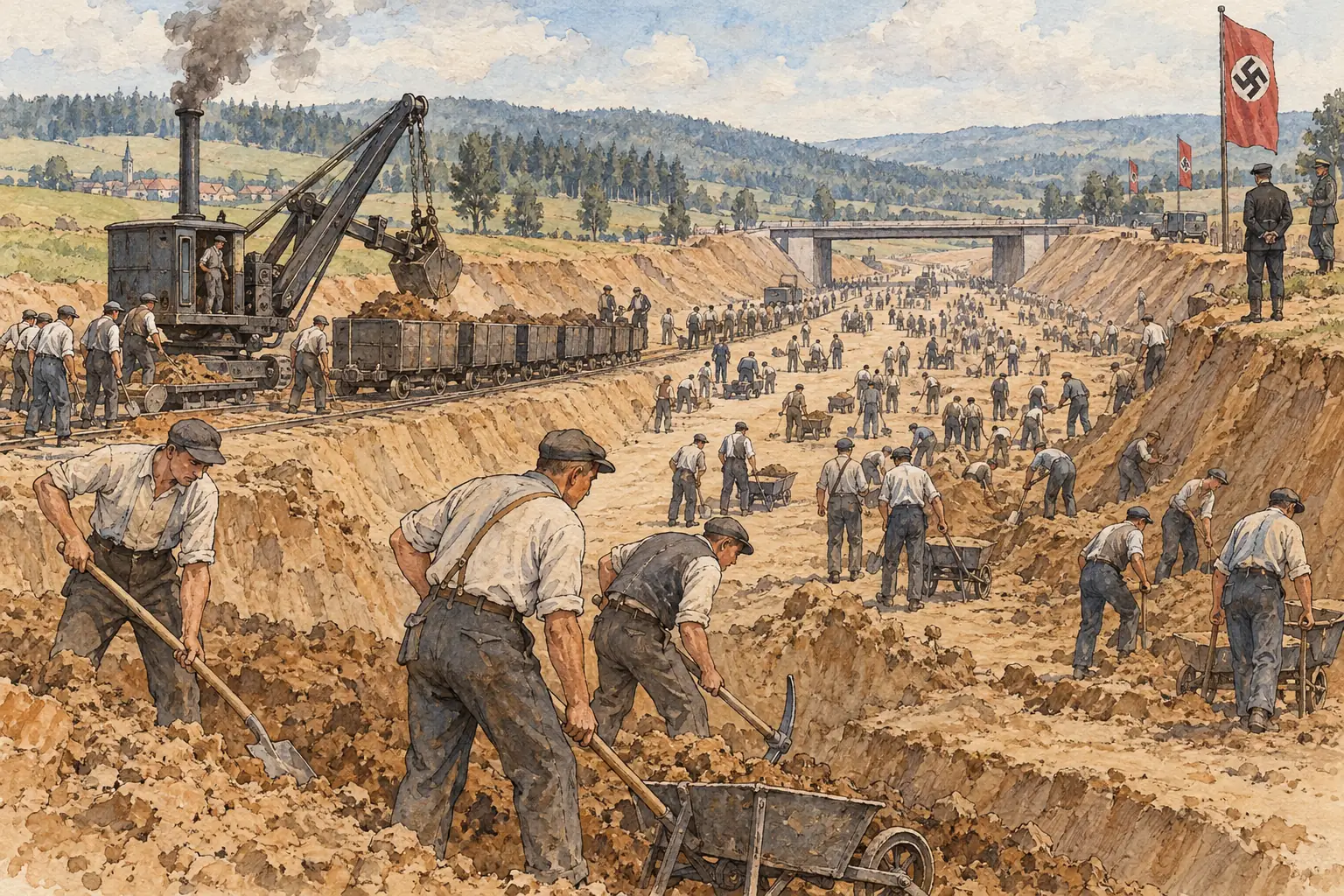
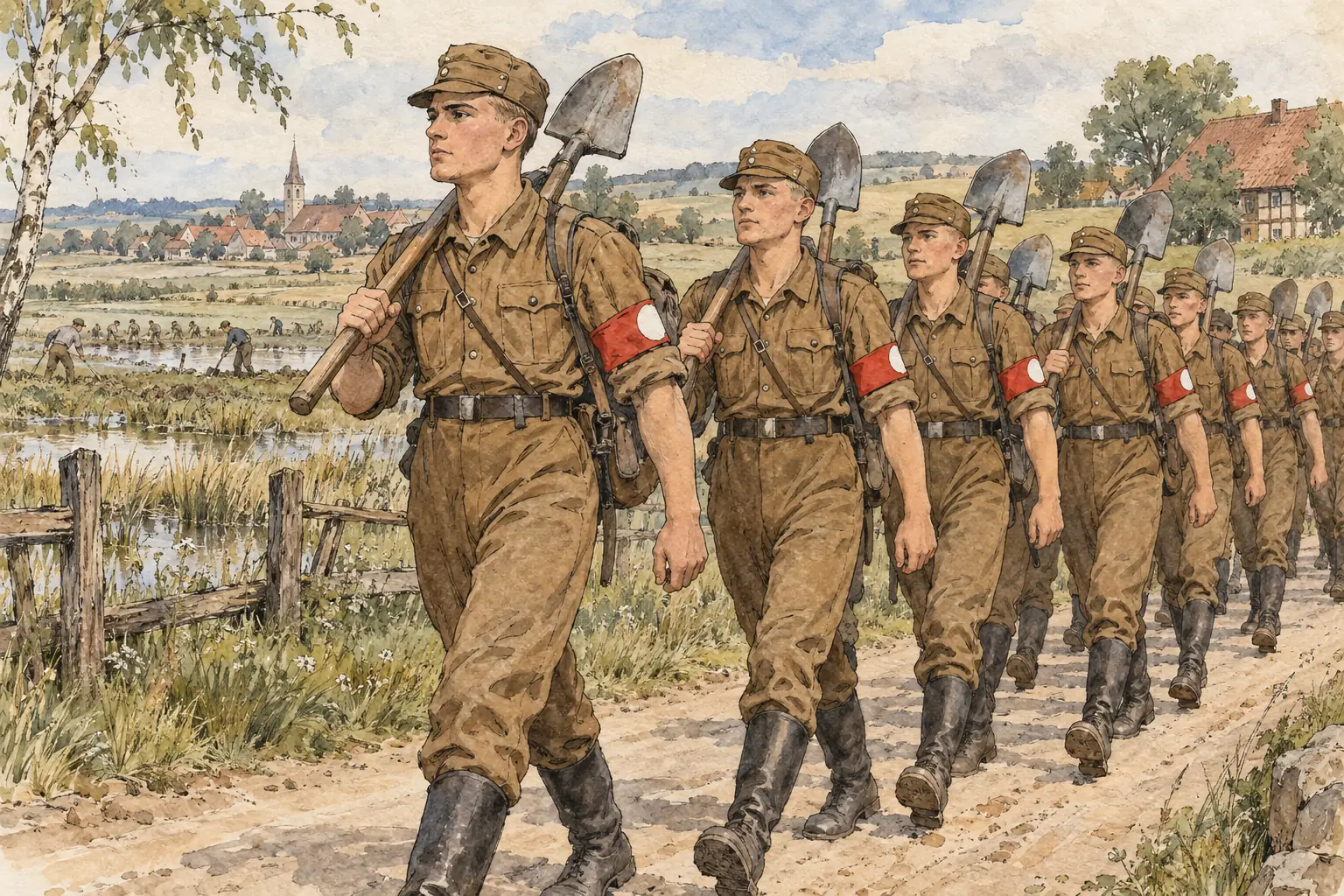
The Nazi government prioritised tackling mass unemployment, which stood at around six million in 1933, through a combination of state-led initiatives and military expansion. These efforts were managed centrally, with the state directing resources and labour to align with ideological goals.
Key measures to cut unemployment
- Public works programmes - Large-scale infrastructure projects, such as building motorways (autobahns), railways, and public buildings, created jobs for hundreds of thousands, stimulating economic activity and improving transport networks.
- Reich Labour Service (RAD) - This compulsory scheme required young men to undertake six months of manual labour on farms or construction sites, reducing official unemployment figures while instilling discipline and nationalistic values.
- Conscription and rearmament - From 1935, compulsory military service was reinstated, absorbing workers into the armed forces; factories producing weapons, vehicles, and aircraft further expanded employment, violating the Treaty of Versailles but boosting the economy.
Financing and management of economic recovery
The regime used innovative but risky methods to fund these initiatives without immediate inflation.
- Mefo bills - These were credit notes issued by a state-controlled company to pay for rearmament, allowing the government to finance military expansion without raising taxes or borrowing openly, though they contributed to long-term debt.
- State direction - The government took control of key industries, setting production targets and allocating resources to prioritise rearmament over consumer goods.
The Four-Year Plan and pursuit of autarky
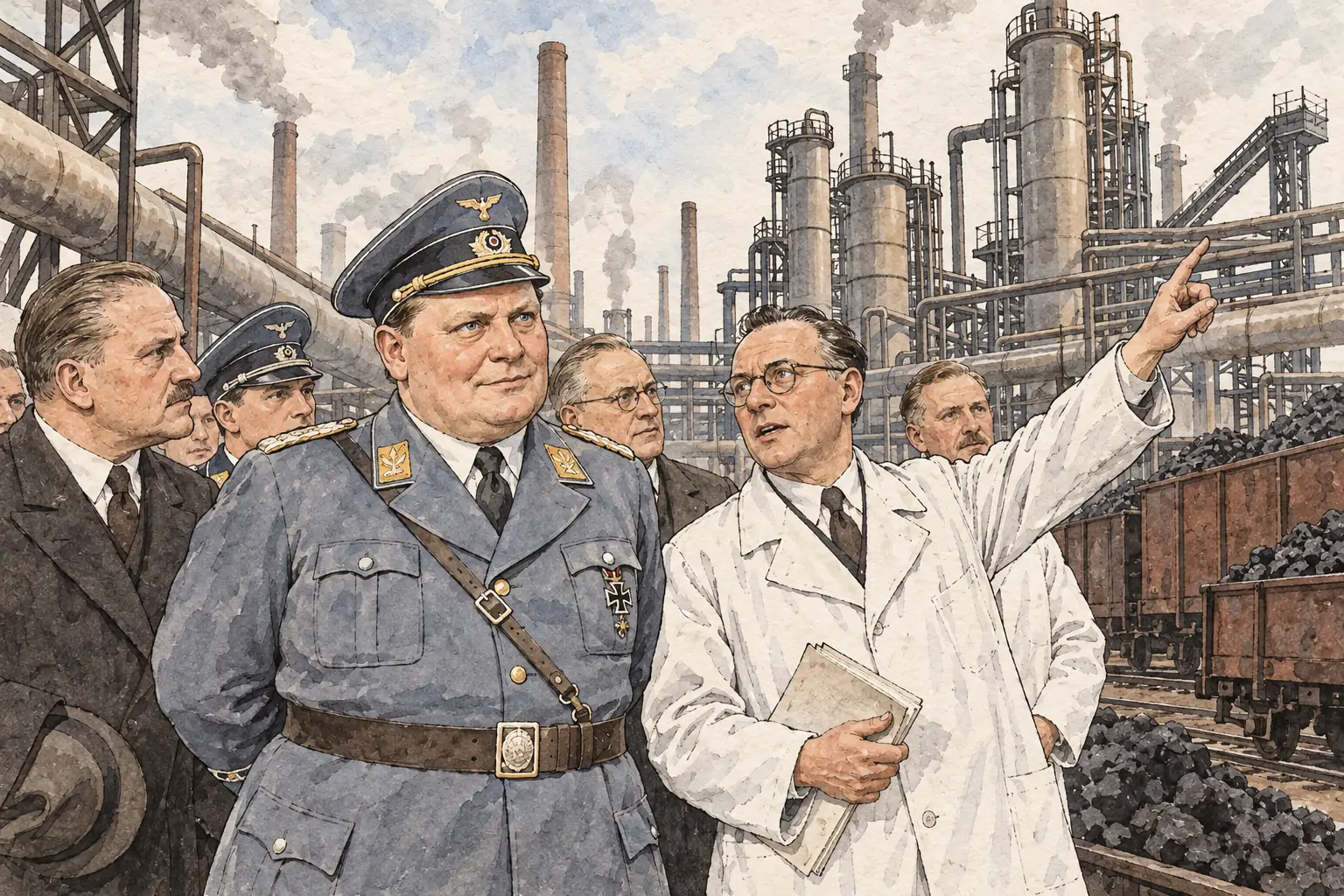
Introduced in 1936, the Four-Year Plan aimed to make Germany economically independent (autarky) to prepare for war, reducing reliance on foreign imports. Hermann Göring oversaw the plan, which focused on developing domestic alternatives to critical materials.
Objectives and methods of the Four-Year Plan
- Self-sufficiency in key resources - Efforts concentrated on producing synthetic fuels from coal and artificial rubber (buna) to replace imported oil and natural rubber, using advanced chemical processes.
- Expansion of domestic production - Mining and steel output were increased, with state subsidies encouraging industries to prioritise strategic materials over consumer needs.
- Limitations and continued import dependence - Despite investments, Germany remained reliant on foreign supplies for items like iron ore and food; trade deals with countries such as Sweden and Romania helped bridge gaps, but full autarky was never achieved.
Living standards under Nazi economic policies
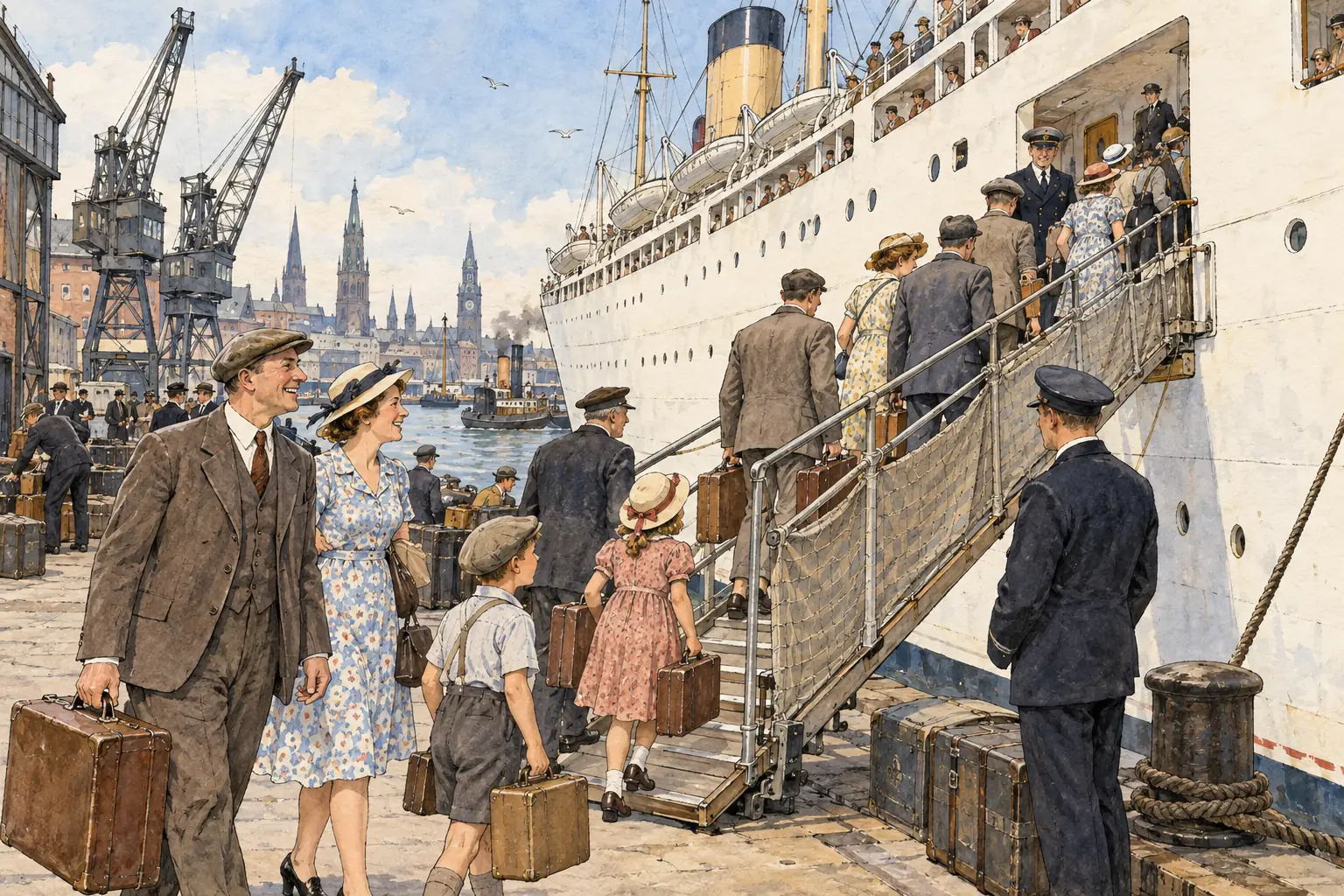
Nazi policies had mixed effects on living standards, with initial improvements giving way to constraints as rearmament took priority. Wages and prices were controlled, but shortages became common, prompting propaganda efforts to maintain morale.
Factors influencing living standards
- Wages versus prices - Real wages rose slightly for some workers due to full employment, but price controls and taxes limited gains; by the late 1930s, many faced higher living costs without corresponding pay increases.
- Shortages of consumer goods - Resources were diverted to military production, leading to scarcities in food, clothing, and household items, which eroded quality of life.
- Strength Through Joy (KdF) - This organisation provided affordable holidays, sports events, and cultural activities to boost worker satisfaction and loyalty, though access was uneven and often tied to political conformity.
- Beauty of Labour - Aimed at improving workplace conditions through better lighting, cleanliness, and facilities, this initiative sought to enhance productivity and propaganda, but it often masked underlying exploitation.
The war economy and total war
Image 1 of 3: From 1939 food, clothing and fuel were rationed and bought with coupons
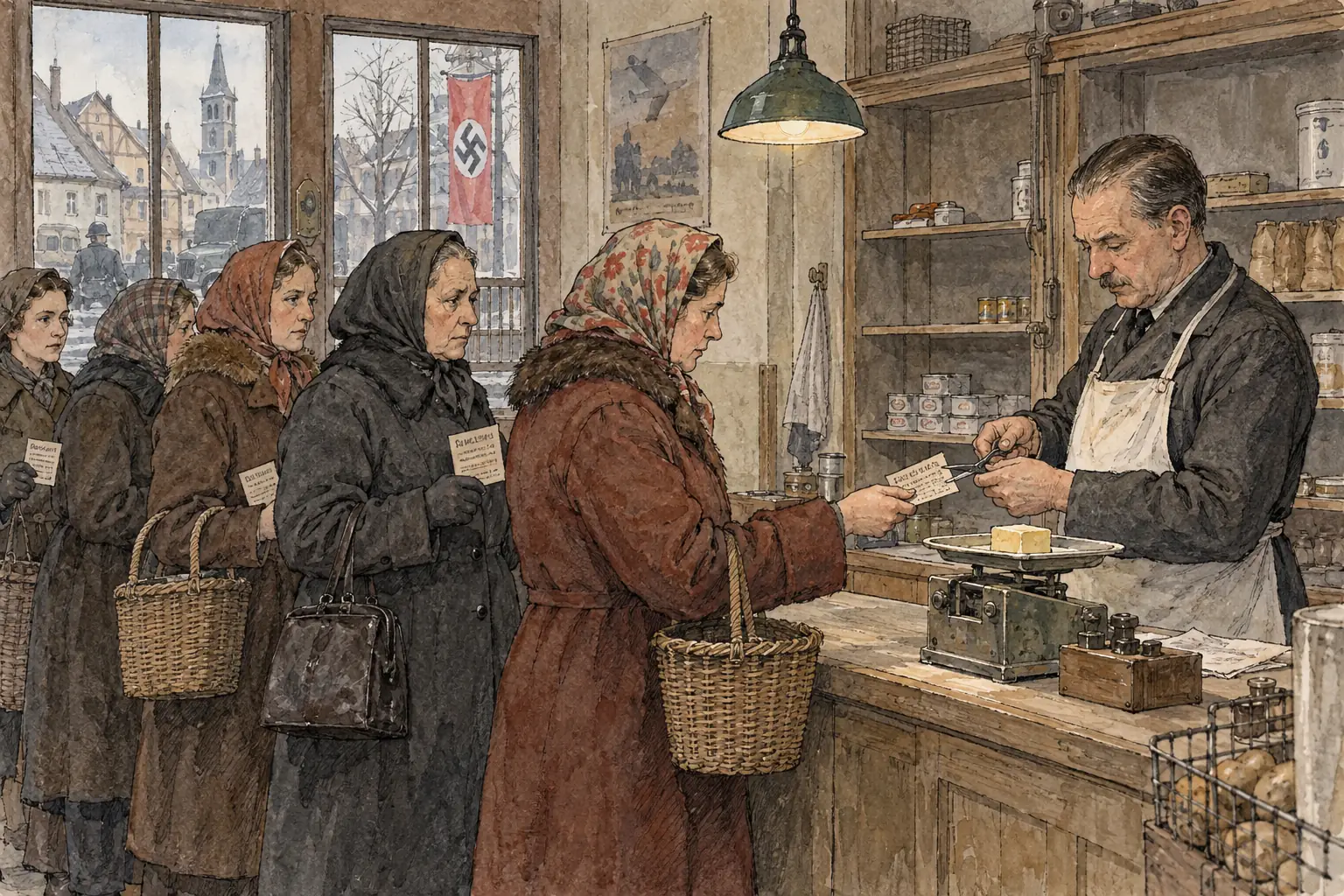
From 1939, the economy shifted to support the war effort, with increasing state control and hardship for civilians. By 1943, the declaration of "Total War" marked a desperate push for maximum efficiency amid mounting pressures.
Key features of the war economy
- Rationing from 1939 - Food, clothing, and fuel were distributed via coupons to manage shortages, with allocations prioritising soldiers and essential workers; black markets emerged as supplies dwindled.
- Mobilisation of labour - Women and older men were drafted into factories, supplemented by millions of foreign and forced labourers from occupied territories, who faced harsh conditions and exploitation.
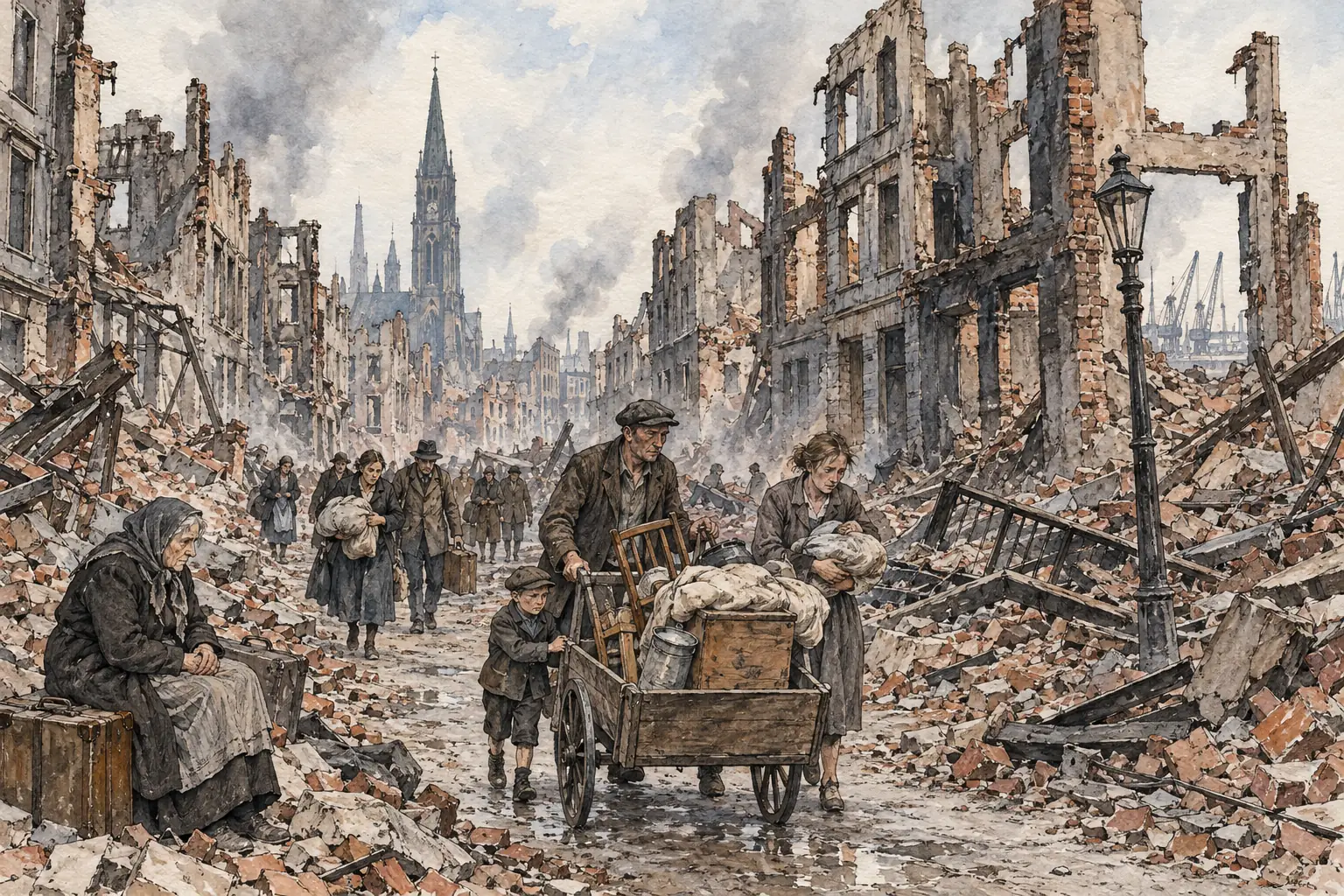
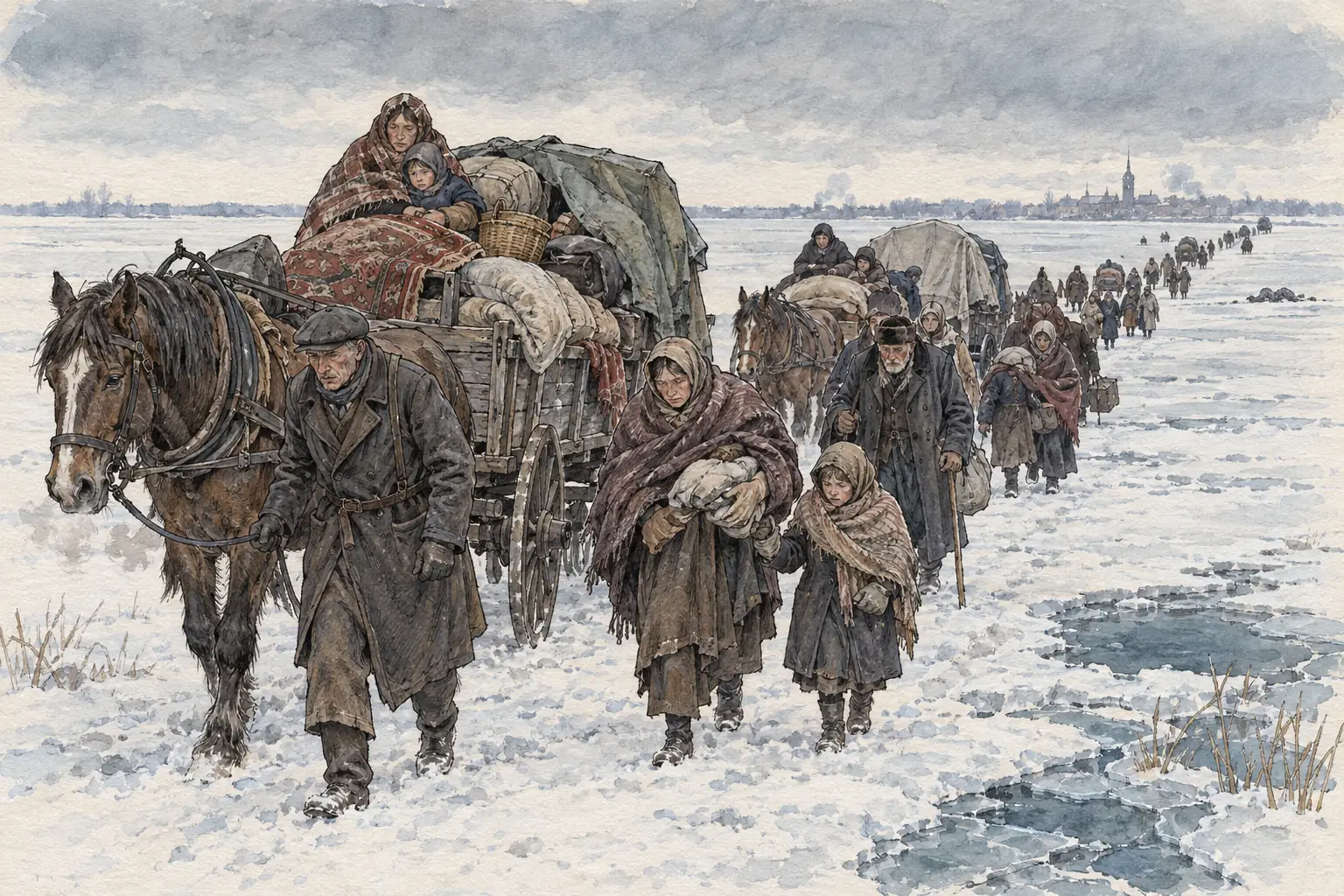
- Allied bombing and evacuation - Intensive air raids from 1942 destroyed factories and cities, prompting mass evacuations of children and families to rural areas for safety.
- Shift to Total War in 1943 - Under Joseph Goebbels, all resources were redirected to the war; Albert Speer's reforms streamlined armament production, increasing output of tanks and aircraft despite shortages.
Winners and losers in the Nazi economy
The economic policies created stark inequalities, with benefits and burdens varying by class, region, and wartime phase. Industrialists and the military often gained, while workers and rural populations suffered more.
Comparison of winners and losers
| Group | Winners' advantages | Losers' disadvantages | Influencing factors |
|---|---|---|---|
| Industrialists and business owners | Profited from rearmament contracts and state subsidies; firms like Krupp expanded rapidly | Faced increasing state interference and raw material shortages during the war | Benefited most in the pre-war phase (1933-39) but struggled under Total War |
| Urban workers | Gained from full employment and KdF perks; wages stabilised for skilled roles | Endured long hours, shortages, and forced labour; bombing disrupted lives | Initial gains reversed by wartime rationing and evacuations |
| Rural populations | Some farmers profited from food demands and autarky drives | Suffered labour shortages as workers moved to cities; regions like East Prussia faced invasion threats | Regional disparities grew during the war, with eastern areas hit hardest by evacuations |
| Foreign and forced labourers | Minimal benefits; some received basic pay | Exploited with poor conditions, low rations, and no rights; millions died from overwork | Predominantly losers throughout the war phase (1939-45) |
| Middle classes | Professionals in armaments or administration saw opportunities | Hit by consumer shortages and inflation; many lost homes to bombing | Varied by phase: stable pre-war, declining during Total War |