3.2 - Women: Roles, Incentives & Limits
Key facts and dates
Nazi policies towards women emphasised traditional domestic roles while promoting population growth, but economic pressures during the war created significant contradictions. These approaches were shaped by ideology, yet varied by social factors, with limited long-term success in altering societal norms.
Timeline of key events
| Year | Event |
|---|---|
| 1933 | Introduction of marriage loans to encourage early marriages and larger families among "Aryan" couples. |
| 1933 | Implementation of compulsory sterilisation laws under eugenics policies targeting those deemed "undesirable". |
| 1935 | Restrictions placed on women in professions like law and medicine, limiting their university access and employment. |
| 1938 | Establishment of the Mother's Cross award to honour prolific mothers, reinforcing domestic ideals. |
| 1943 | Push for total mobilisation, compelling women into factory work and auxiliary military roles amid wartime labour shortages. |
Nazi ideology on women's roles
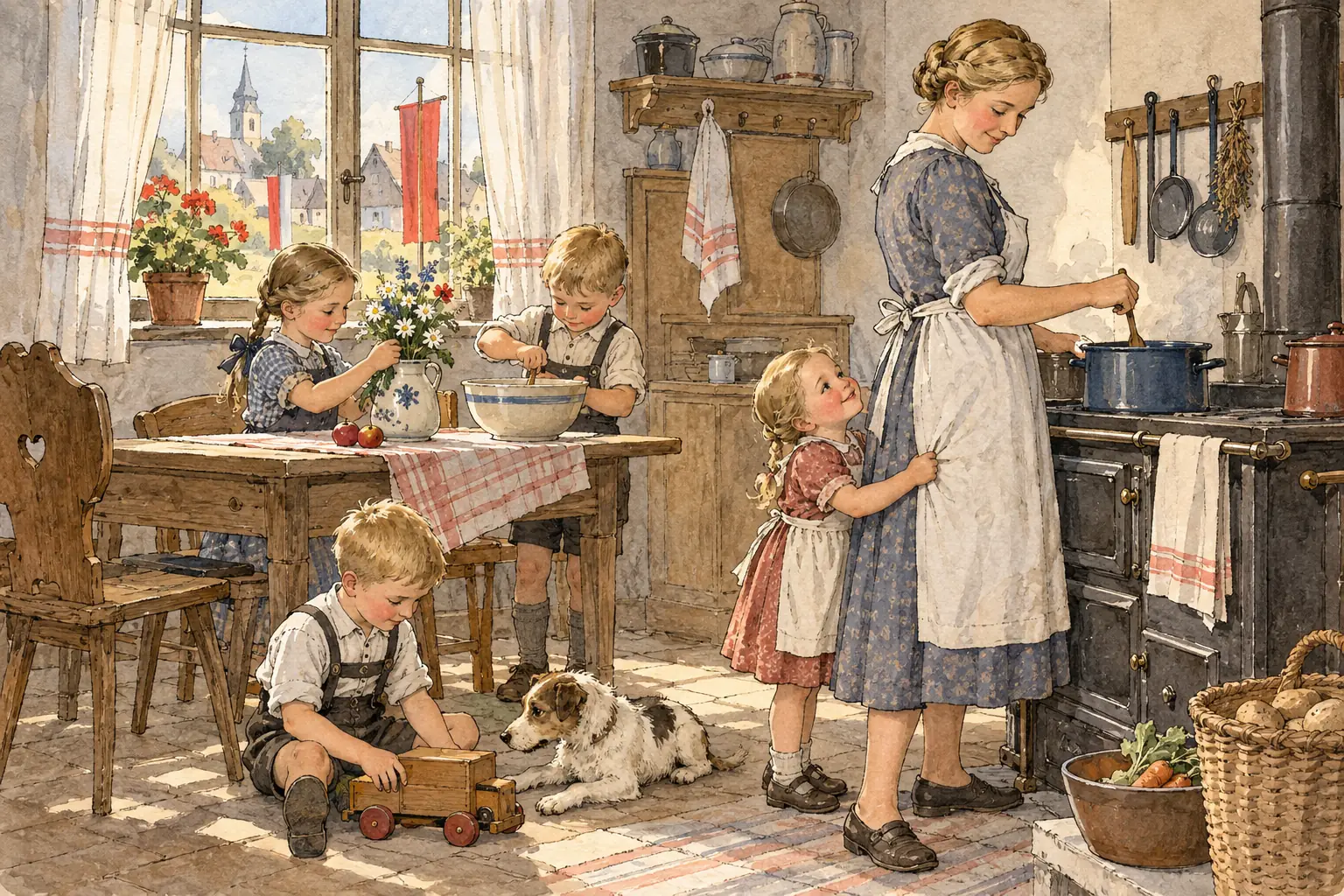
Nazi ideology positioned women primarily within the domestic sphere, promoting a vision of femininity centred on family and home life. This approach aimed to strengthen the German population and uphold racial purity, often summarised by the slogan "Kinder, Küche, Kirche" (children, kitchen, church).
Core elements of the ideology
- Focus on motherhood - Women were encouraged to prioritise bearing and raising children to build a strong, "Aryan" nation, with their value tied to reproductive contributions rather than individual achievements.
- Domestic responsibilities - Emphasis was placed on household management and supporting the family unit, portraying these duties as essential to national strength and moral order.
- Religious and traditional influences - The ideology drew on conservative Christian values to reinforce women's subordination, limiting their public roles and promoting obedience to male authority.
Policies to promote marriage and motherhood
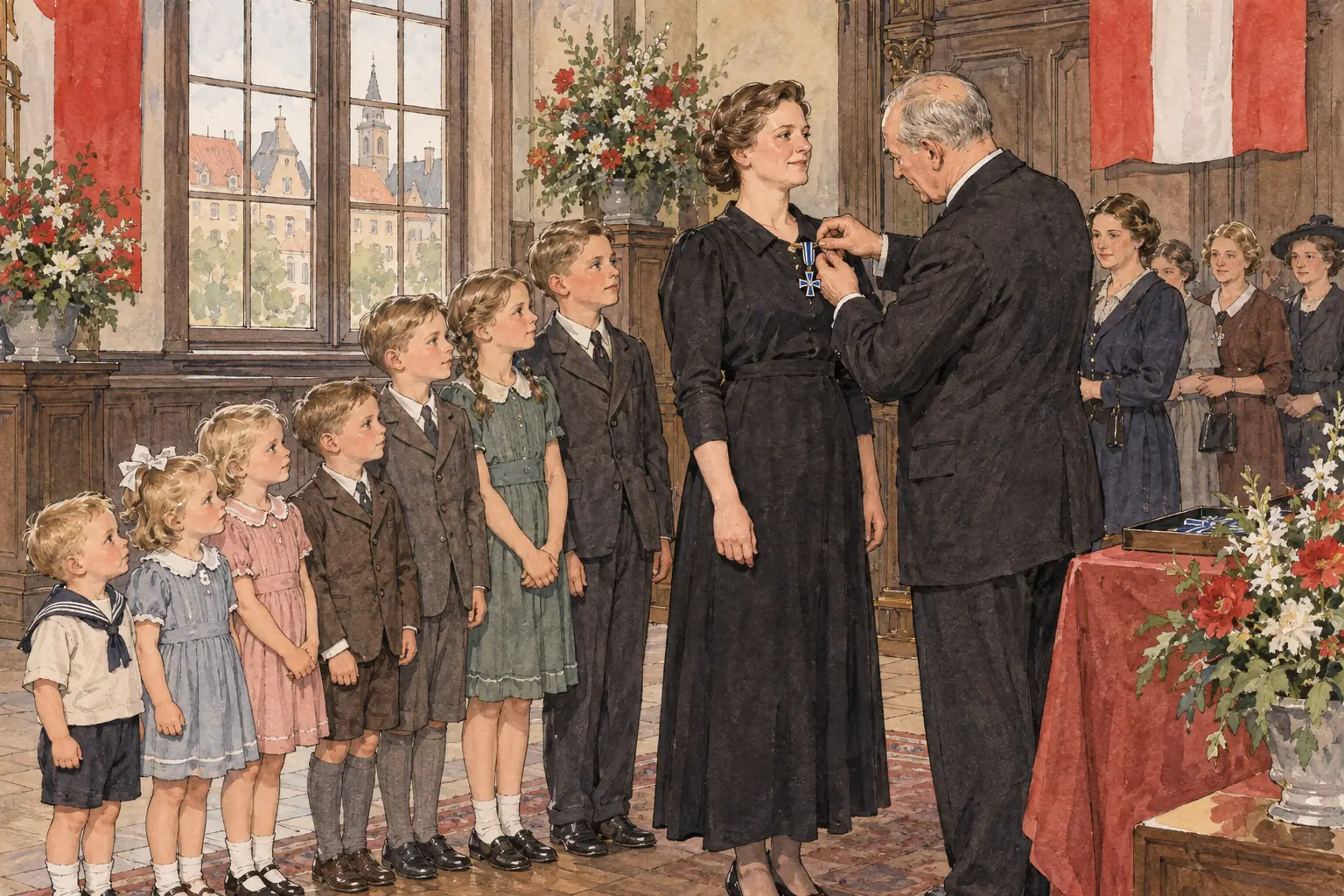
The Nazis implemented various incentives to boost marriage rates and birth figures, targeting "racially suitable" couples to expand the population. These measures combined financial rewards with public recognition to encourage family growth.
Incentives for marriage and childbirth
- Marriage loans - Newlyweds received interest-free loans, with portions forgiven for each child born, designed to enable young couples to start families without financial strain.
- Interest remissions - Loan repayments were reduced or waived based on the number of children, providing direct economic benefits for larger families.
- Mother's Cross - An award given to mothers with multiple children, akin to military honours, with gold, silver, or bronze levels depending on family size, to publicly celebrate prolific motherhood.
Restrictions on women and eugenics policies
Alongside incentives, the regime imposed limits on women's professional and personal freedoms, intertwined with eugenics programmes aimed at "improving" the population. These policies sought to control reproduction and exclude those considered unfit.
Professional and social restrictions
- Limits on professions - Women were barred or discouraged from fields like judiciary, medicine, and higher education, with quotas restricting university places to push them towards domestic life.
- Encouragement of domesticity - Propaganda and education promoted homemaking skills, portraying career ambitions as contrary to women's "natural" roles.
Eugenics and sterilisation measures
- Compulsory sterilisation - Laws targeted individuals with disabilities, mental health issues, or deemed "hereditarily inferior", forcing sterilisation to prevent "undesirable" offspring.
- Racial and health criteria - Policies focused on promoting "Aryan" births while suppressing others, including forced procedures on minority groups, as part of broader population control efforts.
Influences of class, religion and region
Women's experiences under Nazi rule were not uniform, varying significantly based on social background, faith, and location. These factors influenced how policies were applied and received, creating diverse outcomes.
Factors shaping women's experiences
- Class differences - Middle-class women often faced stricter enforcement of domestic ideals and professional bans, while working-class women were more likely to continue labouring due to economic needs.
- Religious influences - Catholic women in devout areas sometimes resisted sterilisation or family planning policies due to church teachings, leading to conflicts with state demands.
- Regional variations - Rural women in agricultural regions maintained traditional roles with less change, whereas urban women encountered greater propaganda pressure and wartime work opportunities.
Contradictions in wartime and overall impact
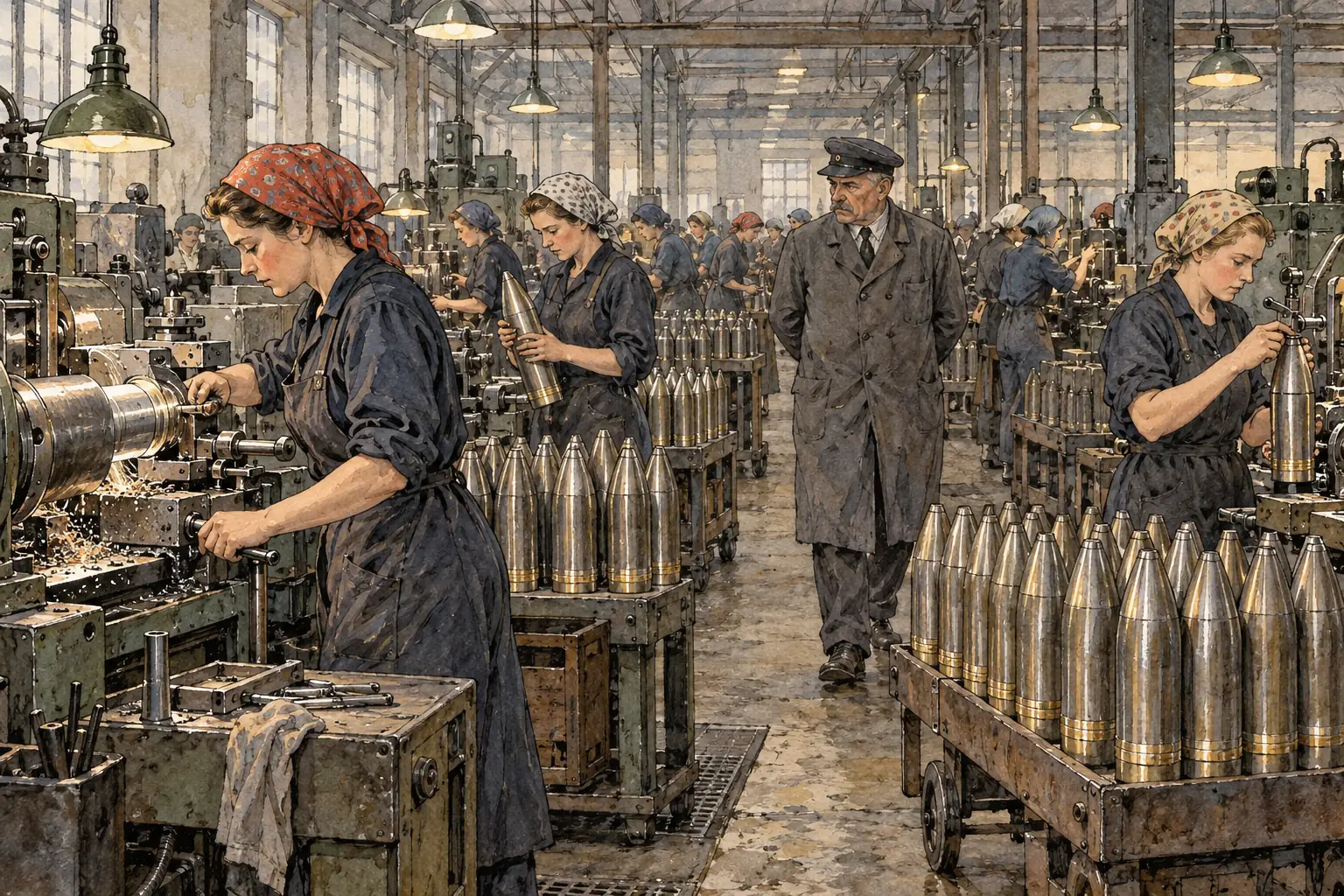
Nazi aims for women's roles conflicted with economic realities, especially during the war, leading to policy shifts that undermined the original ideology. The overall impact was mixed, with some changes reversed by practical necessities.
Wartime contradictions
- Demand for female labour - As men were conscripted, women filled factory and service roles, contradicting the domestic focus and highlighting labour shortages.
- Auxiliary military positions - Women took on support duties in the armed forces, such as nursing or administration, expanding their public involvement.
- 1943 total mobilisation - A drive to involve all able-bodied women in war production, overriding earlier restrictions to sustain the economy.
Evaluation of impact
- What changed - Birth rates initially rose due to incentives, and some women gained wartime employment, temporarily broadening their roles.
- What did not change - Deep-seated patriarchal attitudes persisted, with many policies failing to fully transform societal norms or achieve long-term population goals.
- Clash with economic necessity - Ideological goals of domesticity were often sacrificed for war needs, revealing the regime's pragmatic adjustments and limiting the ideology's effectiveness.