3.3 - Youth & Education: Hitler Youth, BDM & Curriculum
Key facts and dates
The Nazi regime sought to reshape education and youth organisations to indoctrinate young people with its ideology, preparing them for roles in a militarised society. This involved curriculum changes, compulsory youth groups, and efforts to align teachers and materials with Nazi principles, though not without resistance.
Timeline of key events
- 1933 – Hitler Youth becomes the official youth organisation of the Nazi Party, absorbing other groups.
- 1933 – Nazi control over education begins, with new curriculum emphasising racial theory and physical fitness.
- 1935 – League of German Girls (BDM) membership expands significantly for girls aged 14-18.
- 1936 – Membership in Hitler Youth made compulsory for boys aged 10-18.
- 1939 – Youth service becomes mandatory for all eligible young Germans, enforcing participation amid wartime demands.
Nazi restructuring of the school curriculum
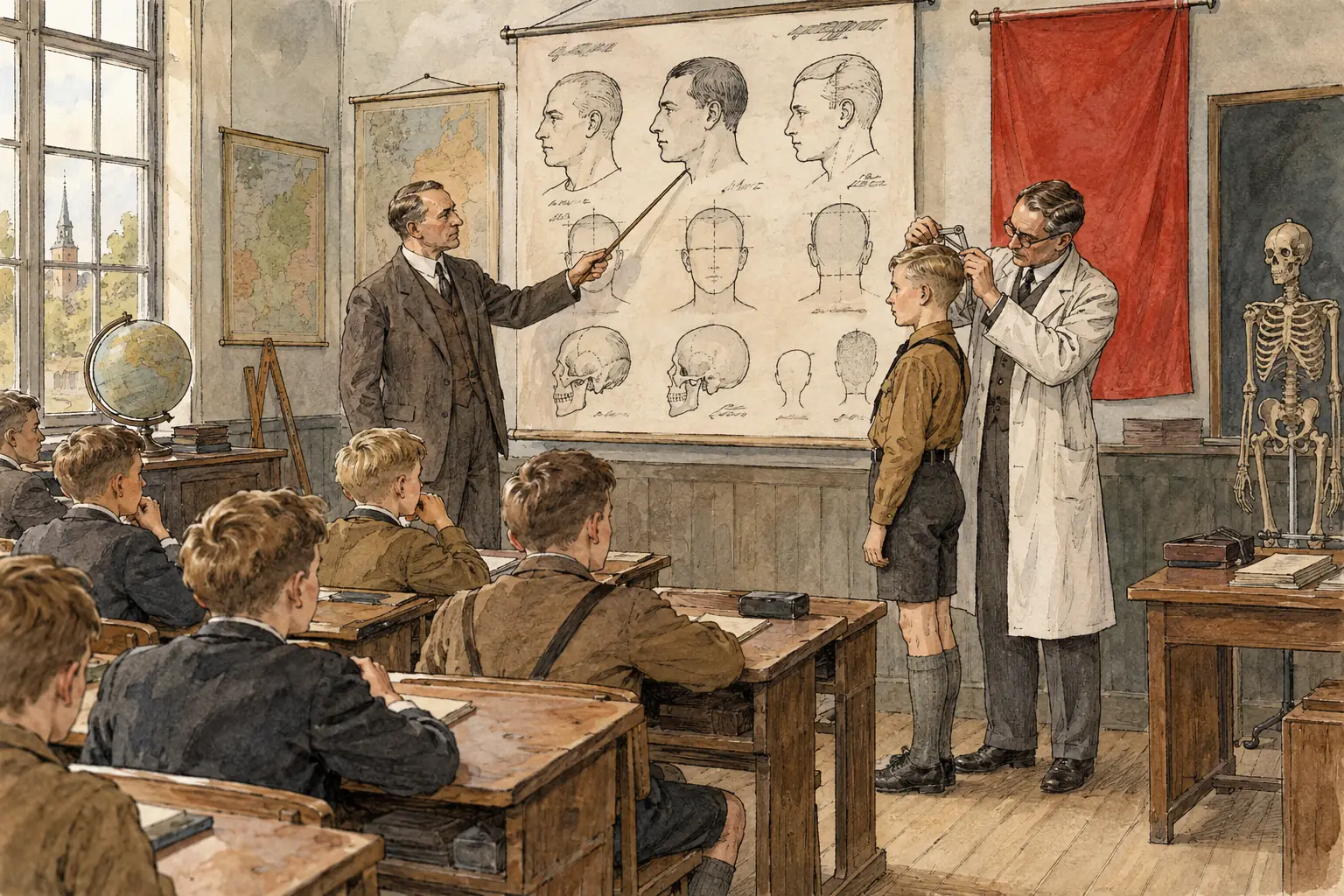
The Nazi regime fundamentally altered the German education system to promote its ideological goals, shifting focus towards subjects that reinforced racial superiority, physical strength, and loyalty to the state. This restructuring aimed to mould young minds from an early age, prioritising propaganda over traditional academic learning.
Key changes to the school curriculum
- Introduction of race studies - Lessons emphasised Aryan superiority and anti-Semitic theories, teaching children to view certain groups as inferior and justifying Nazi racial policies.
- Increased emphasis on physical education (PE) - PE classes were expanded to occupy up to 15% of school time, focusing on fitness, discipline, and preparation for military service or motherhood.
- Rewriting of history - History teaching glorified Germany's past, portraying the Nazi rise as a heroic revival while vilifying the Treaty of Versailles and the Weimar Republic.
- Alterations to biology - Biology lessons incorporated eugenics and racial hygiene, promoting ideas of selective breeding and the supposed biological superiority of the German people.
Control over textbooks and teacher alignment
To ensure uniformity in education, the Nazis exerted strict control over teaching materials and personnel. This involved purging non-conforming elements and aligning all aspects of schooling with party doctrine.
Measures for textbook control and teacher alignment
- Textbook revisions - All textbooks were reviewed and rewritten to include Nazi propaganda, removing any content that contradicted party views on race, history, or politics.
- Teacher indoctrination - Educators were required to join the National Socialist Teachers' League, undergo ideological training, and swear loyalty to Hitler; those who refused faced dismissal or worse.
- Monitoring and censorship - School inspectors enforced compliance, while Jewish teachers and those with opposing views were systematically removed from their positions.
Hitler Youth and BDM structure and activities
Image 1 of 2: Hitler Youth boys camping and drilling to build endurance for military service
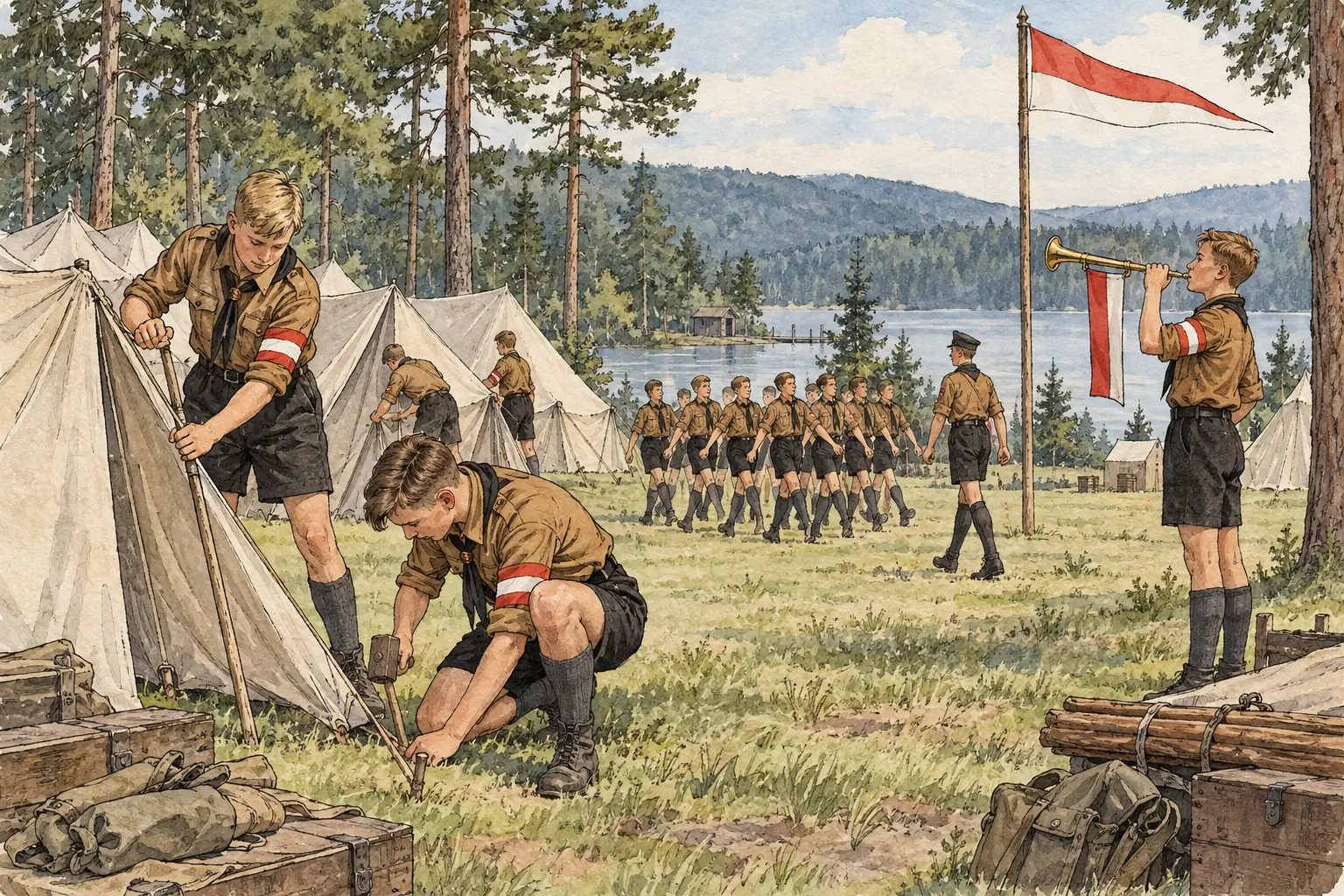
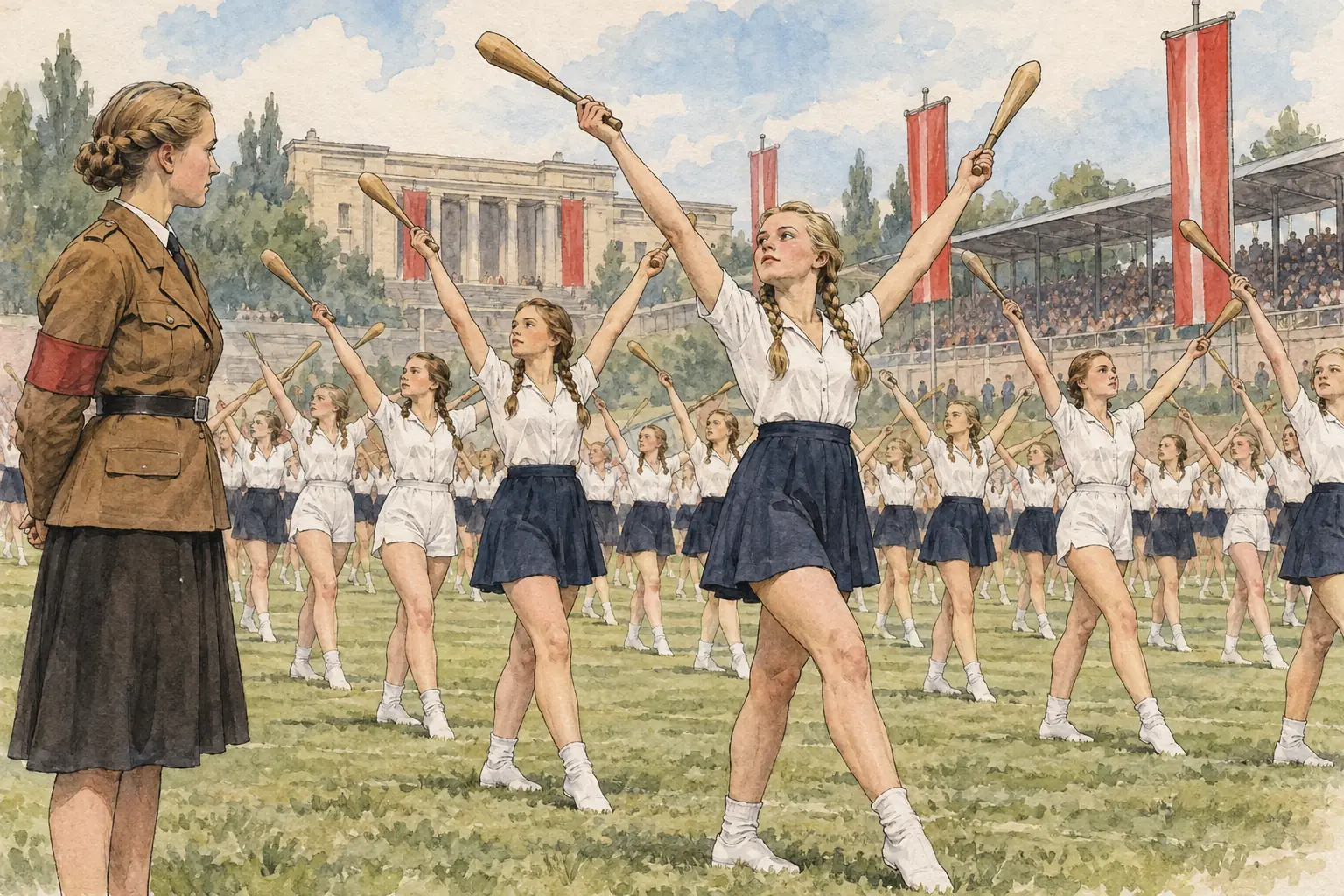
The Nazis established youth organisations to extend indoctrination beyond schools, creating structured groups for boys and girls. These bodies fostered a sense of community and loyalty through organised activities.
Structure of the Hitler Youth
- Age groups and progression - Boys aged 10-14 joined the Deutsches Jungvolk for basic training, advancing to the Hitler Youth proper from 14-18, where activities intensified.
- Activities for boys - Focused on outdoor pursuits like camping, hiking, and sports, alongside military-style drills to build physical endurance and team spirit.
Structure of the League of German Girls (BDM)
- Age groups and progression - Girls aged 10-14 participated in the Jungmädelbund, moving to the BDM from 14-18 for more advanced involvement.
- Activities for girls - Emphasised domestic skills such as sewing and cooking, combined with physical fitness to prepare for roles as wives and mothers in the Nazi state.
Indoctrination and discipline of youth groups
Youth organisations served as tools for ideological conditioning, enforcing strict rules while achieving high participation rates. These groups instilled Nazi values through a mix of fun and regimentation.
Methods of indoctrination and discipline
- Ideological training - Sessions promoted Nazi beliefs, including anti-Semitism and Führer worship, often through songs, oaths, and lectures.
- Disciplinary measures - Strict hierarchies and punishments ensured obedience, with leaders monitoring behaviour and reporting disloyalty.
- Successes in enrolment and enthusiasm - By the late 1930s, millions had joined, with visible excitement at rallies and parades demonstrating widespread engagement.
Limitations and long-term aims of youth policies
Despite apparent successes, Nazi efforts to control youth faced challenges, including disinterest and rebellion. These policies were designed to create a generation aligned with the regime's vision.
Challenges and non-conformity
- Boredom and disengagement - Many teenagers found the repetitive activities tedious, leading to absenteeism or superficial participation.
- Rise of non-conformist groups - Some youths formed alternative cliques, like the Edelweiss Pirates, engaging in forbidden music or minor sabotage as acts of resistance.
Long-term aims of youth policies
- Creating loyal citizens - The overarching goal was to produce dedicated Germans ready for military service or supporting roles in the regime.
- Preparation for gender-specific roles - Boys were groomed for warfare, while girls were trained for motherhood to ensure the growth of the Aryan population.