1.2 - Magna Carta: Terms, Reissues & Long-Term Impact
Key facts and dates
Magna Carta, sealed in 1215, represented a pivotal challenge to royal authority in medieval England, primarily protecting baronial rights while introducing broader principles of governance. Its reissues and later interpretations transformed it into a enduring symbol of limited monarchy and legal rights. The following timeline captures the essential events and developments.
Timeline of key events
- 1215 – King John seals Magna Carta at Runnymede, addressing baronial grievances over arbitrary rule.
- 1215-1217 – Barons' War erupts after John rejects the Charter; French Prince Louis invades to support rebels.
- 1216 – First reissue of Magna Carta under Henry III, omitting controversial clauses to secure loyalty.
- 1217 – Second reissue includes the Charter of the Forest, separating woodland rights from main document.
- 1225 – Third reissue confirms the Charter in exchange for taxation consent, establishing it as law.
- 1265 – Simon de Montfort's parliament draws on Magna Carta's ideas for broader representation.
- 1297 – Edward I confirms the Charter, embedding it in statute law.
- 17th century – Referenced in English Civil War debates and colonial charters in the Americas.
Key clauses of Magna Carta limiting royal power
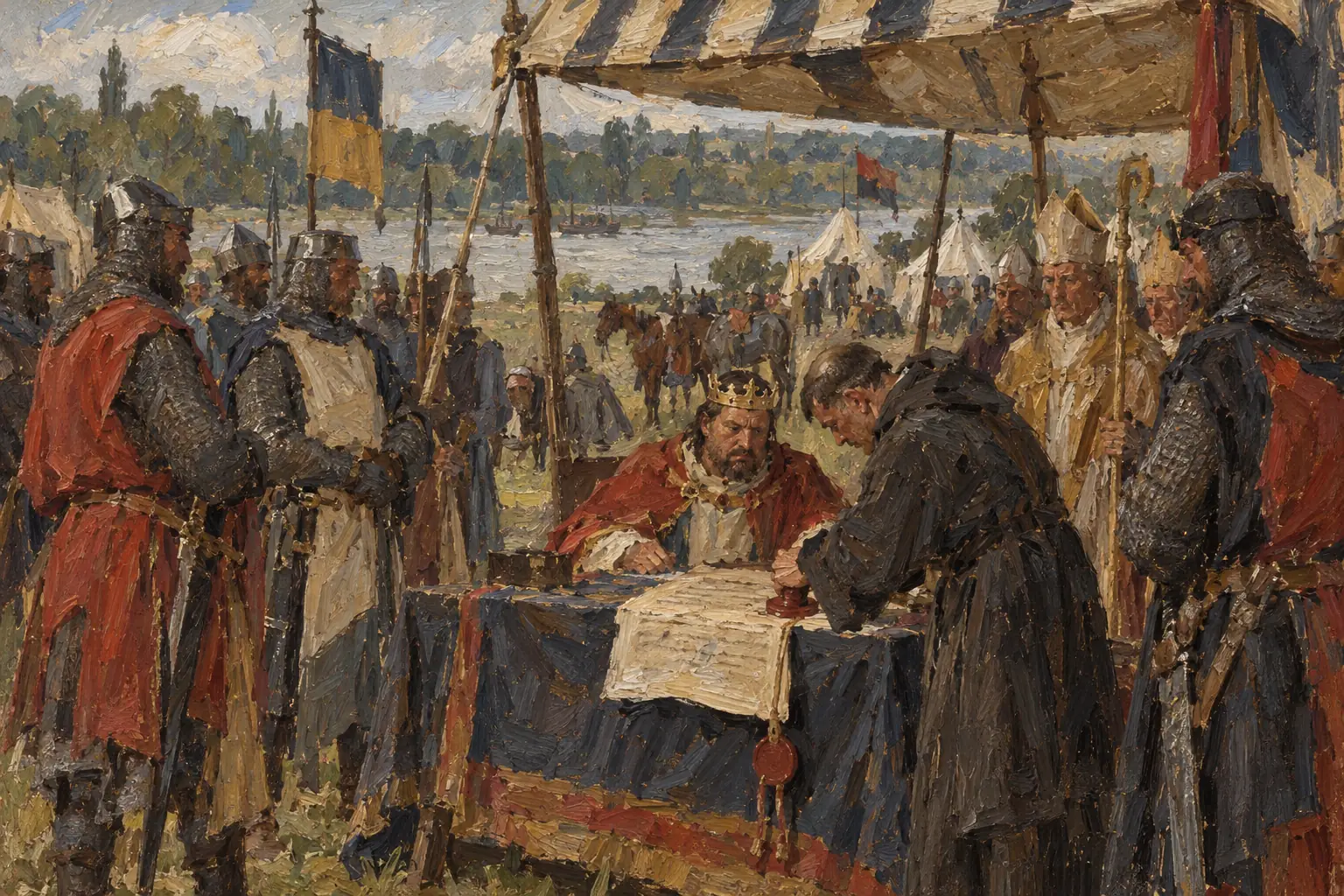
Magna Carta, sealed by King John in 1215, contained 63 clauses aimed at curbing the monarch's unchecked authority. While many provisions protected the interests of the barons and elite landowners, several introduced principles that influenced wider governance, such as restrictions on arbitrary actions and requirements for consent in key decisions.
Clauses limiting arbitrary royal power
- Due process (clauses 39-40) - No free man could be imprisoned, exiled, or deprived of property without lawful judgement by peers or the law of the land, establishing early notions of fair trials and habeas corpus.
- Taxation by consent (clauses 12 and 14) - The king could not impose taxes without the agreement of a council of barons, archbishops, and bishops, preventing unilateral financial demands.
- Protection of Church rights (clause 1) - The English Church was granted freedom from royal interference, safeguarding its independence.
Focus on elite interests
Most clauses prioritised the barons' privileges, such as regulating feudal payments, inheritance laws, and debts to the Crown, reflecting the document's origins as a baronial rebellion against John's exploitative rule rather than a universal charter of rights.
The Barons' War and French intervention
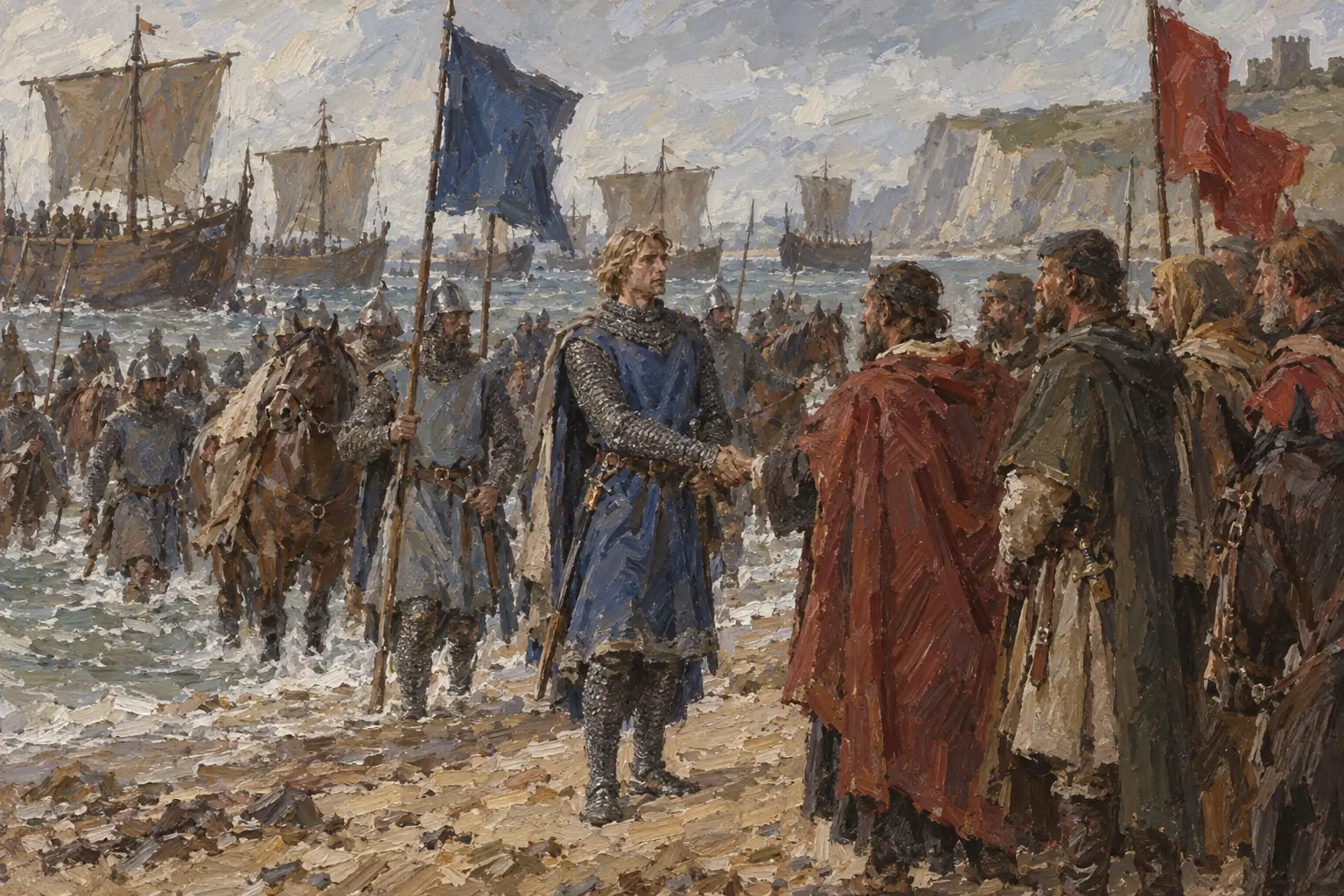
The sealing of Magna Carta in 1215 did not end tensions between King John and the barons. John's swift rejection of the document sparked a civil conflict known as the Barons' War, which drew in foreign forces and highlighted the fragility of royal authority.
Causes and course of the Barons' War (1215-1217)
- John's repudiation - Shortly after sealing the Charter, John obtained papal support to annul it, claiming it was coerced, which reignited baronial discontent over issues like excessive taxation and arbitrary justice.
- Baronial rebellion - Led by figures like Robert Fitzwalter, the barons captured London and other strongholds, forcing John to negotiate while they sought alliances to strengthen their position.
- French intervention under Prince Louis - In 1216, the barons invited Louis, son of the French king, to invade England and claim the throne; he landed with an army, capturing much of the southeast and besieging key castles.
The war ended with John's death in 1216, allowing his young son Henry III to ascend under a regency that used reissues of Magna Carta to rally support and expel Louis by 1217.
Reissues of the Charter and reasons behind them
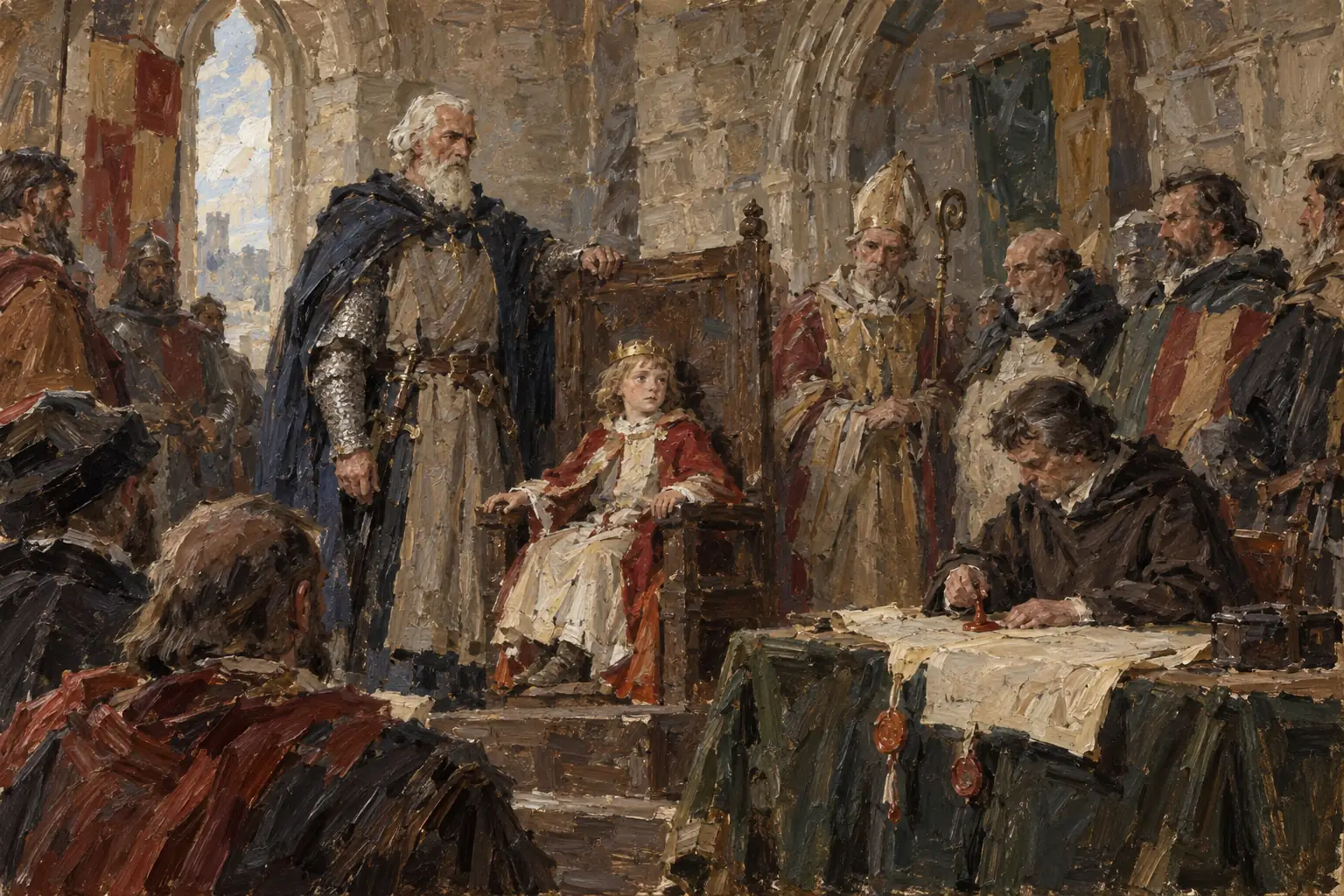
Magna Carta was not a one-time document; it was reissued multiple times to adapt to political needs, secure loyalty, and gain concessions. These versions refined the original text, removing contentious elements and adding new provisions, ultimately embedding it in English law.
Reasons for and details of the reissues
- 1216 reissue - Issued under the regency of Henry III to win back baronial support during the ongoing war; it omitted clauses on taxation and security to make it more palatable, helping to isolate Prince Louis.
- 1217 reissue - Accompanied by the separate Charter of the Forest, which addressed grievances over royal forest laws and access to woodlands; this split aimed to resolve specific disputes while maintaining core principles.
- 1225 reissue - Confirmed by Henry III in exchange for parliamentary consent to a tax; this version became the definitive text, establishing Magna Carta as a binding legal framework.
- 1297 confirmation - Edward I re-affirmed the Charter during a financial crisis, incorporating it into statute law to appease barons and secure funding, reinforcing its status as a check on royal power.
These reissues were driven by the need to stabilise the monarchy, respond to baronial pressure, and use the document as a tool for negotiation.
Long-term significance and role as a symbol
Over centuries, Magna Carta evolved from a baronial agreement into a powerful symbol of limited government, individual rights, and legal precedent. Its principles influenced political thought, assemblies, and colonial governance, emphasising ideas of consent, justice, and communication between rulers and subjects.
Evolving significance as a legal and symbolic reference
- Link to de Montfort's assemblies (1265) - Simon de Montfort's parliament, which included commoners alongside barons, drew on Magna Carta's ideas of representation and consent, expanding its application beyond the elite.
- Role in Civil War debates (17th century) - During the English Civil War, parliamentarians like Oliver Cromwell cited Magna Carta to argue against Charles I's absolute rule, framing it as a defence of liberties against tyranny.
- Influence on colonial charters in the Americas - English settlers referenced Magna Carta in documents like the Virginia Charter (1606) and later American colonial laws, inspiring concepts of due process and self-governance that fed into the U.S. Constitution.
This transformation highlighted the Charter's adaptability, with key individuals like de Montfort and Edward I shaping its legacy through government reforms and communication of its ideals.