2.1 - Formation, Covenant & Organisation of the League
Key facts and dates
The League of Nations emerged from the aftermath of the First World War as an attempt to prevent future conflicts through international cooperation. Although ambitious in design, its formation and structure revealed both innovative ideas and inherent limitations that affected its effectiveness.
Timeline of key events
- 1918 – End of the First World War prompts calls for a new international body to maintain peace.
- January 1919 – Paris Peace Conference begins, incorporating plans for the League into the Treaty of Versailles.
- June 1919 – Covenant of the League is signed as part of the Treaty of Versailles, outlining its aims and structure.
- January 1920 – The League officially comes into existence with its first Council meeting in Paris.
- November 1920 – First Assembly meeting held in Geneva, marking the start of regular operations.
- 1921 – Permanent Court of International Justice is established as a key linked body.
Reasons for the creation of the League in 1919-20
The League of Nations was established in the wake of the devastating First World War, which had caused immense loss of life and economic ruin across Europe and beyond. Leaders sought a new international framework to address the failures of pre-war diplomacy and prevent similar catastrophes.
Factors driving the League's formation
- Response to wartime devastation - The war's scale, with millions dead and widespread destruction, highlighted the need for a body to promote global peace and cooperation.
- Influence of key figures - US President Woodrow Wilson championed the idea as part of his Fourteen Points, envisioning a forum for nations to resolve conflicts peacefully.
- Integration with peace treaties - The League was embedded in the Treaty of Versailles and other post-war settlements, aiming to enforce their terms and foster stability.
- Desire for collective action - Nations recognised that individual alliances had failed, leading to a push for a unified organisation to handle disputes and security.
Aims of the Covenant
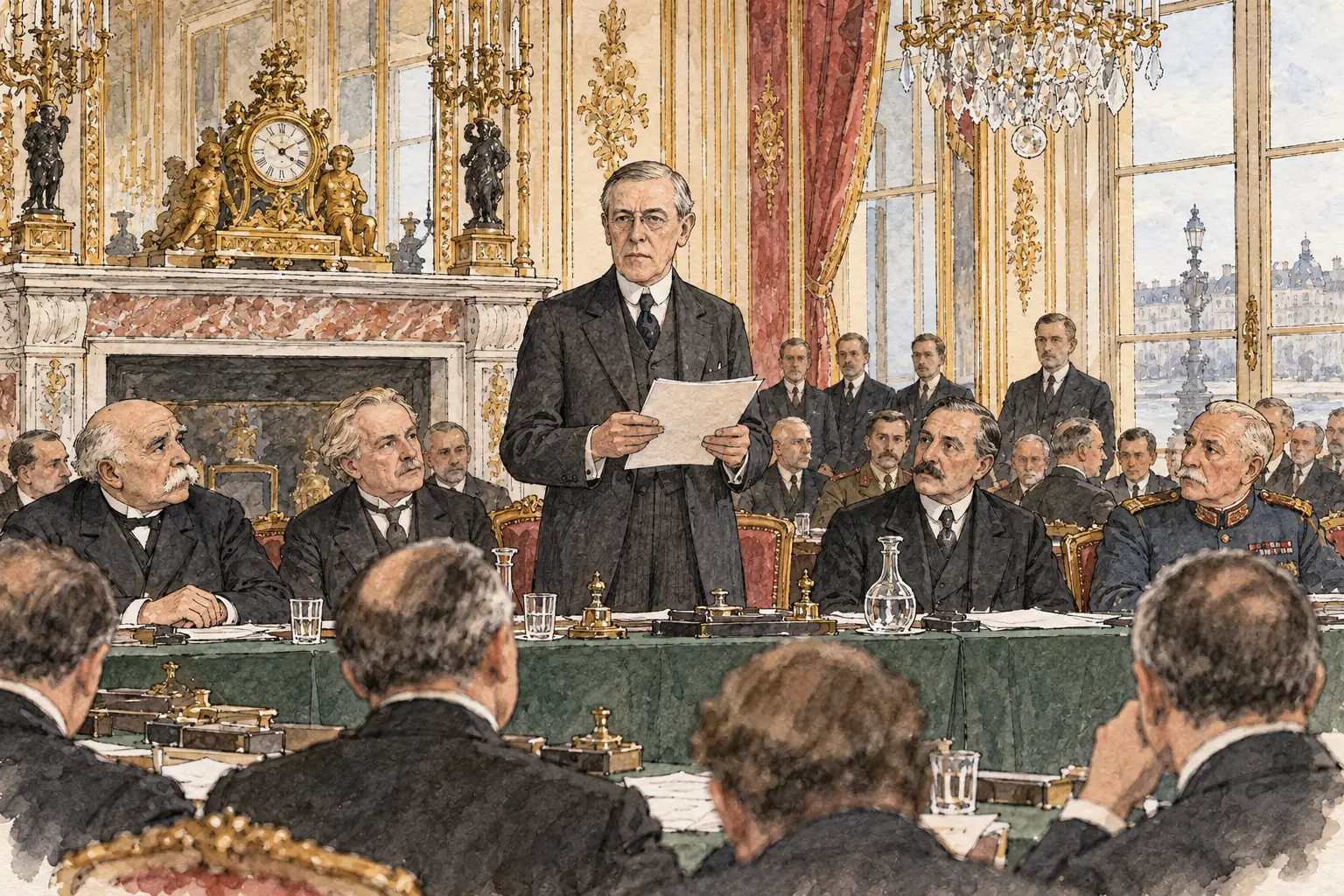
The Covenant served as the League's founding document, setting out its core objectives to build a safer world. It emphasised cooperation among member states to tackle global challenges.
Primary objectives outlined in the Covenant
- Preventing war through collective security - Member nations pledged to protect each other from aggression, using joint action to deter or respond to threats.
- Encouraging disarmament - The Covenant promoted reductions in military forces to reduce the risk of arms races and future conflicts.
- Resolving disputes via arbitration - It encouraged peaceful settlement of international disagreements through negotiation, mediation, or legal processes rather than violence.
League structure: Assembly, Council, Secretariat
Image 1 of 2: The first Assembly met in Geneva on 15 November 1920, with delegates from 41 countries
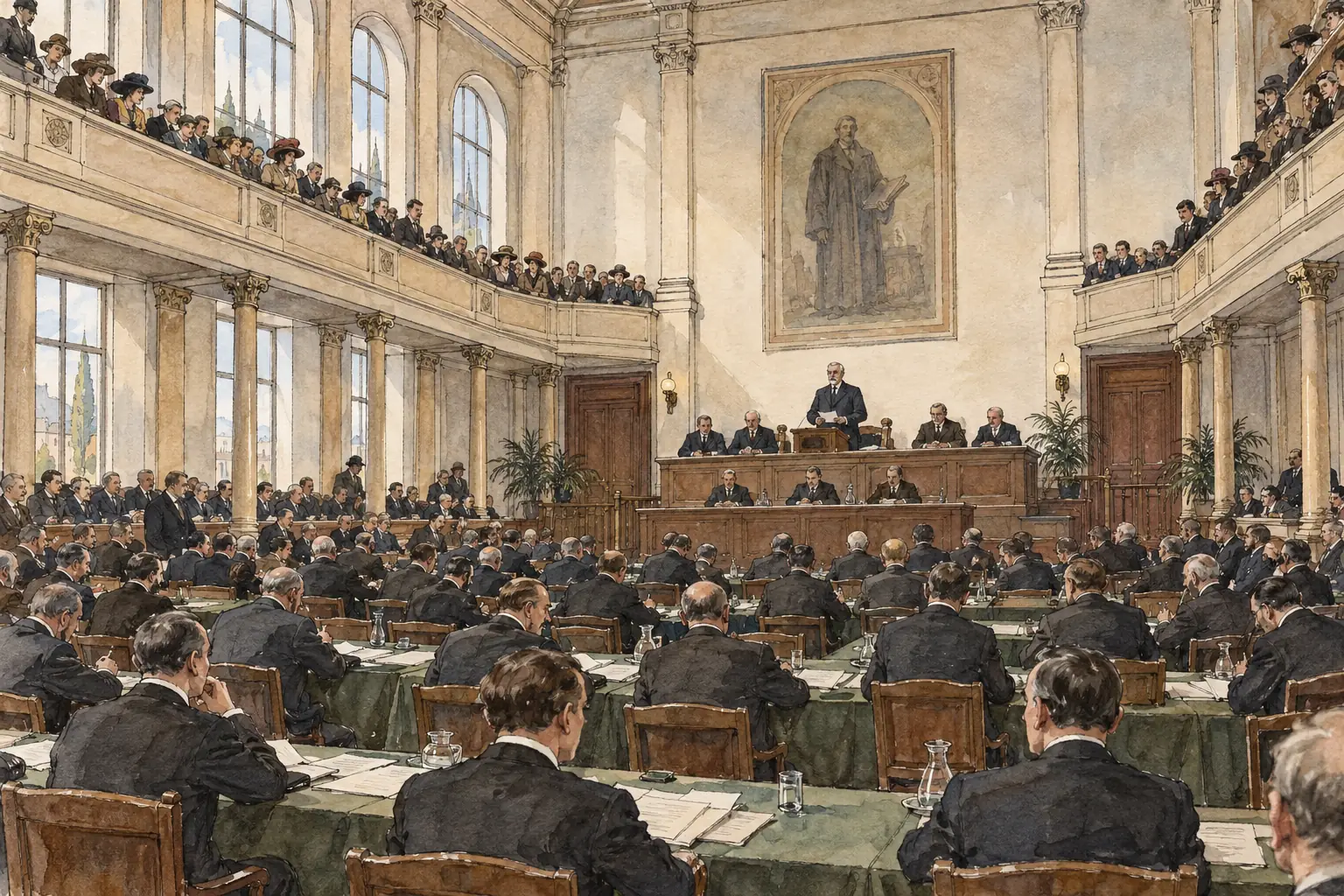
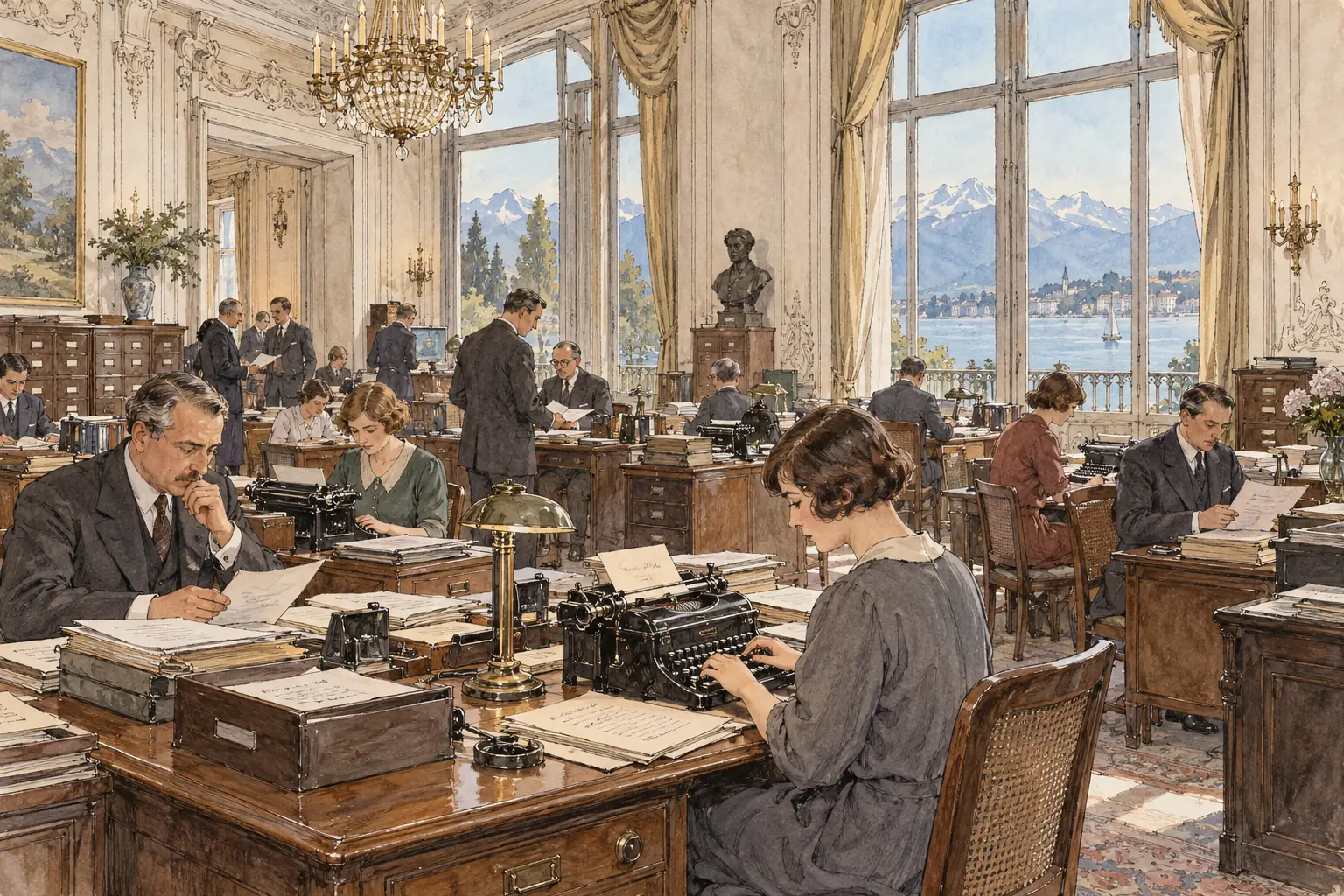
The League's organisation was designed to facilitate decision-making and administration on an international scale. It featured democratic elements alongside mechanisms for efficient governance.
Main components of the League's structure
- Assembly - Comprising representatives from all member states, it met annually to discuss global issues, admit new members, and set budgets; each nation had one vote, promoting equality.
- Council - A smaller body with permanent seats for major powers (like Britain, France, Italy, and Japan) and rotating seats for others; it handled urgent matters, such as crises, and met several times a year.
- Secretariat - The administrative arm based in Geneva, responsible for day-to-day operations, record-keeping, and supporting the Assembly and Council with research and coordination.
Linked bodies: Permanent Court of Justice
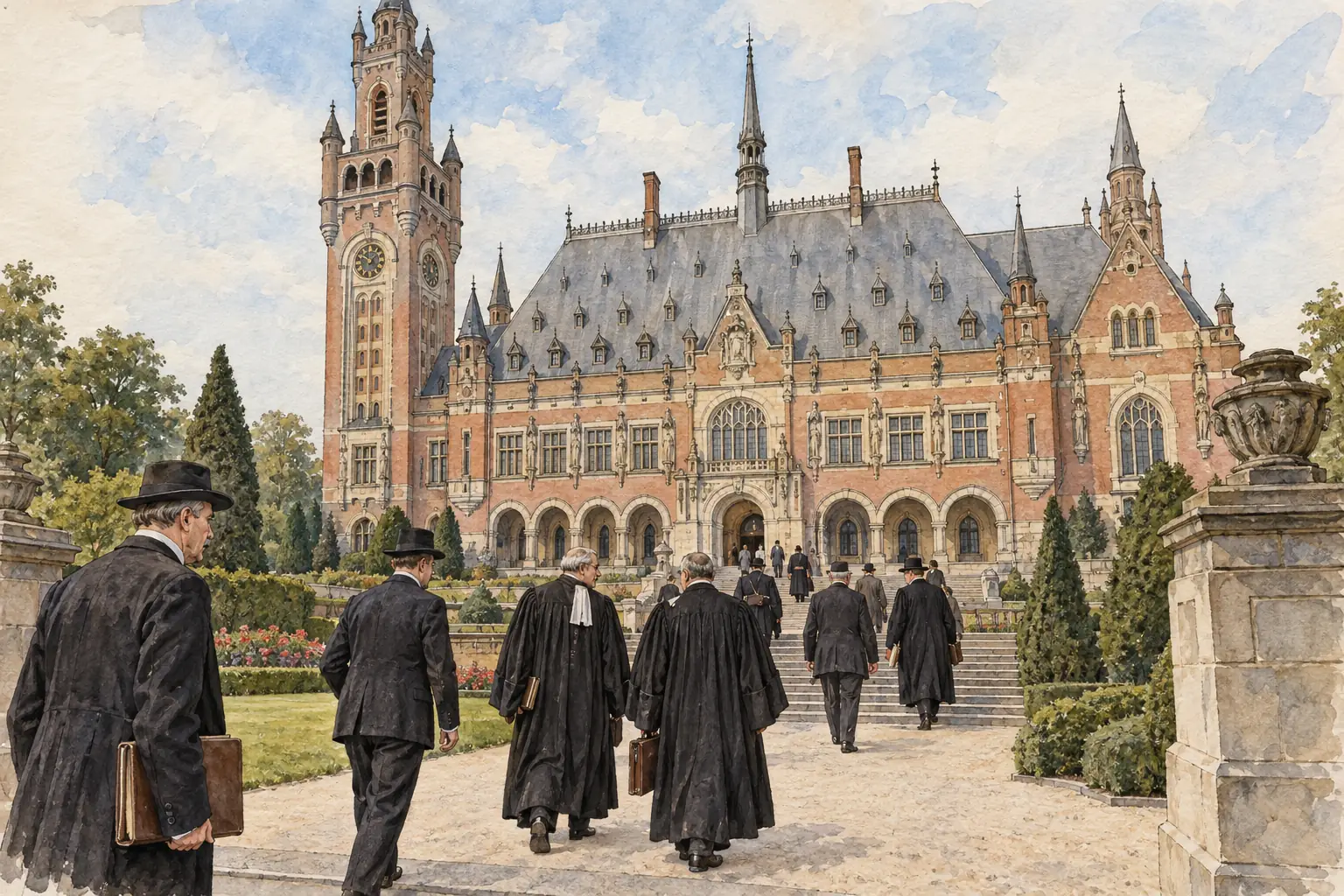
Beyond its core structure, the League incorporated specialised agencies to address specific aspects of international relations. These bodies enhanced its capacity to enforce decisions and promote justice.
Key linked organisations
- Permanent Court of International Justice - Established in The Hague, this court provided a legal forum for resolving disputes between nations through impartial judgments, though its rulings were not always binding.
- Other agencies - Included groups like the International Labour Organisation, focused on workers' rights, and committees dealing with refugees, health, and economic issues, extending the League's reach beyond security.
Strengths and practical constraints of the League
On paper, the League's design appeared robust, with mechanisms for broad participation and conflict resolution. However, real-world limitations often undermined its effectiveness.
Analysis of organisational strengths and weaknesses
| Aspect | Strengths on paper | Practical constraints |
|---|---|---|
| Collective security | All members committed to mutual defence, creating a united front against aggression | Major powers could ignore obligations; absence of key nations like the USA weakened enforcement |
| Decision-making bodies | Assembly ensured inclusive representation; Council allowed quick responses | Unanimous voting requirements often led to deadlocks and delays in action |
| Administrative support | Secretariat provided efficient bureaucracy for global coordination | Limited funding and staff resources hampered operations, especially in crises |
| Linked bodies | Courts and agencies offered specialised expertise for disputes and social issues | Lack of enforcement powers meant decisions relied on voluntary compliance from members |