1.4 - The Versailles Settlement: Terms & 'Diktat'
Key facts and dates
The Versailles settlement emerged from the Paris Peace Conference following the First World War, aiming to reshape Europe and prevent future conflicts while punishing the defeated powers. This timeline captures the main events surrounding the conference and the treaty's creation, highlighting the imposed nature of the agreement on Germany.
Timeline of key events
- January 1919 – Paris Peace Conference opens with representatives from over 30 Allied nations, led by the 'Big Four' (Britain, France, Italy, and the USA).
- May 1919 – Draft of the Treaty of Versailles presented to German delegates, who are excluded from negotiations.
- 28 June 1919 – Treaty of Versailles signed in the Hall of Mirrors at Versailles, exactly five years after the assassination that sparked the war.
- 10 September 1919 – Treaty of Saint-Germain signed with Austria, dissolving the Austro-Hungarian Empire.
- 27 November 1919 – Treaty of Neuilly signed with Bulgaria, imposing territorial and military restrictions.
- 4 June 1920 – Treaty of Trianon signed with Hungary, significantly reducing its territory.
- 10 August 1920 – Treaty of Sèvres signed with the Ottoman Empire, later revised by the Treaty of Lausanne in 1923.
The Paris Peace Conference process
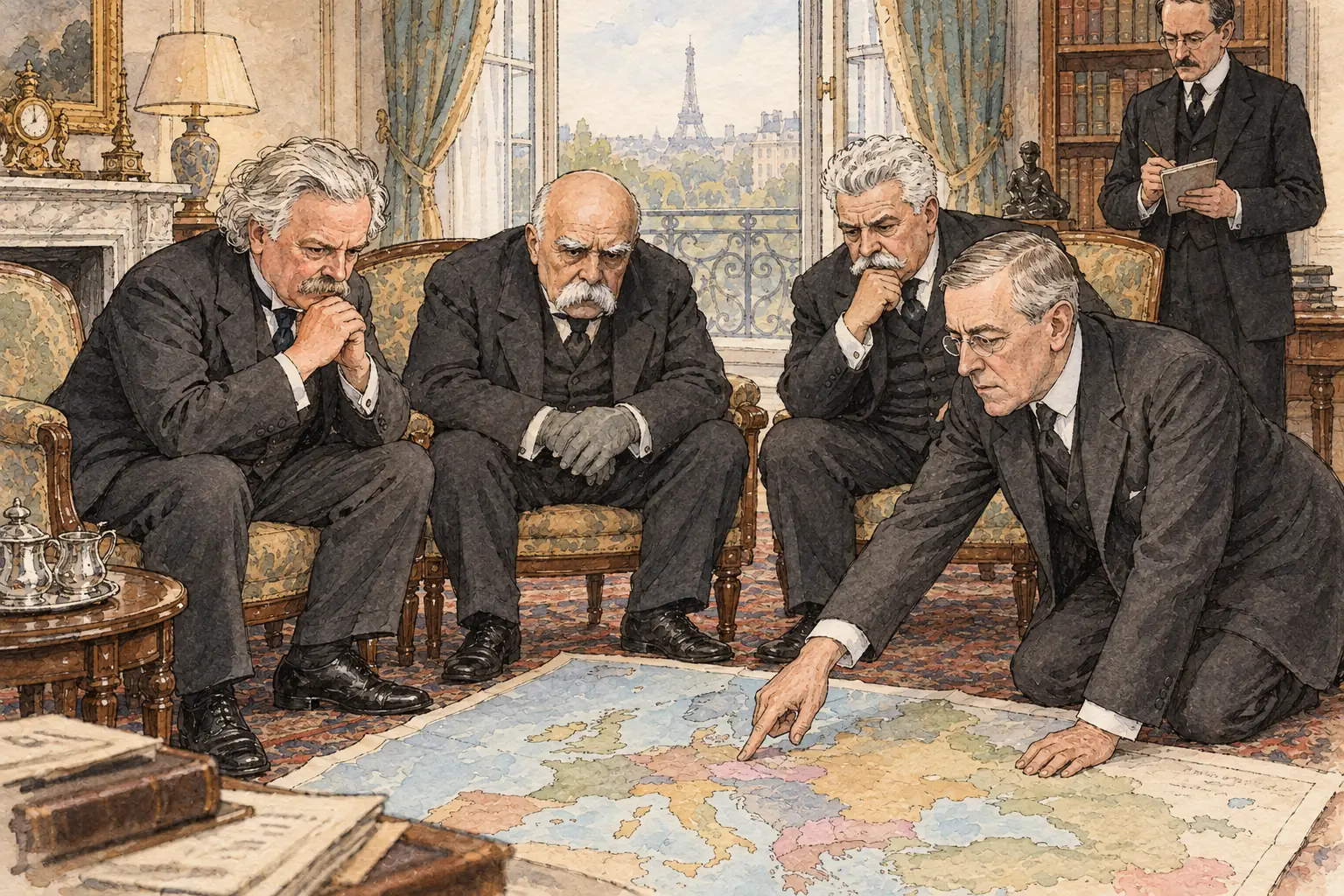
The Paris Peace Conference convened in early 1919 to determine the post-war settlement after the defeat of the Central Powers in the First World War. Attended by representatives from more than 30 Allied and associated nations, the conference aimed to redraw maps, assign penalties, and establish mechanisms for lasting peace.
Key aspects of the conference organisation
- Leadership by the 'Big Four' - Decision-making was dominated by the leaders of Britain (David Lloyd George), France (Georges Clemenceau), Italy (Vittorio Orlando), and the USA (Woodrow Wilson), who met in private sessions to shape the outcomes.
- Exclusion of defeated powers - Germany and other Central Powers were not invited to participate in discussions, only summoned to receive the final terms, which intensified feelings of injustice.
- Influence of differing national aims - France sought harsh penalties to weaken Germany permanently, Britain focused on naval security and colonial gains, Italy pursued territorial promises, and the USA promoted Wilson's Fourteen Points for a fairer peace.
- Challenges in negotiations - Disputes arose over issues like reparations and territorial adjustments, with compromises often favouring punitive measures over idealistic goals.
Why Germany viewed the treaty as a 'diktat'
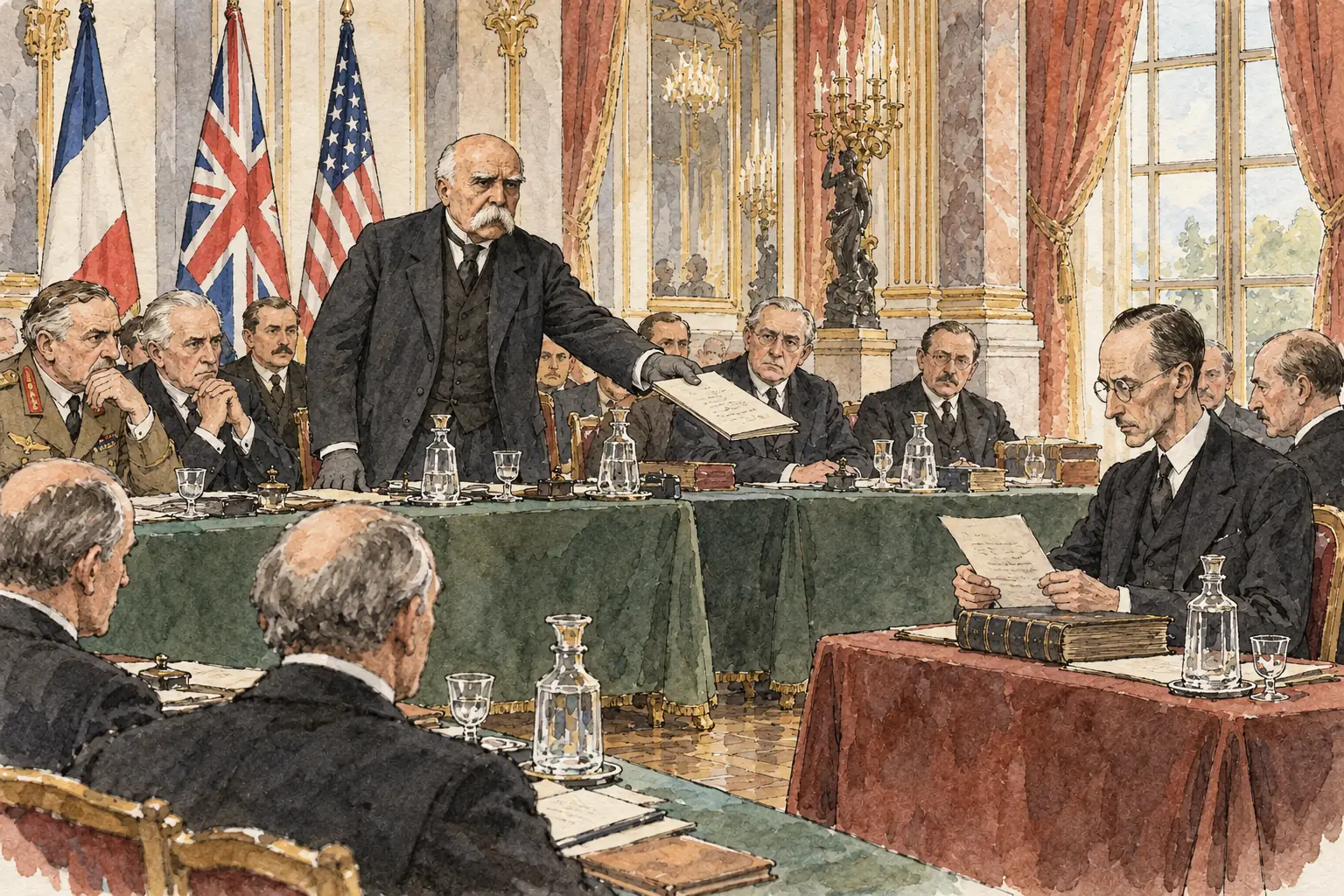
Germany perceived the Treaty of Versailles as a 'diktat' – an imposed dictate without genuine negotiation – due to the manner in which it was created and enforced. This view stemmed from the Allies' approach, which left Germany with little choice but to accept harsh terms under threat of renewed hostilities.
Reasons for German resentment of the treaty process
- Lack of participation - German representatives were barred from the conference deliberations and only allowed to submit written objections after the draft was presented, making the process feel like an ultimatum rather than a dialogue.
- Threat of force - With Allied armies still mobilised, Germany faced the prospect of invasion if it refused to sign, compelling acceptance despite widespread domestic opposition.
- Contrast with armistice expectations - The 1918 armistice was based on Wilson's Fourteen Points, which promised a just peace, but the final treaty deviated significantly, leading to accusations of betrayal.
- Public and political backlash in Germany - The treaty's imposition fuelled nationalist sentiments, with many Germans labelling it the 'Versailles Diktat' and blaming it for national humiliation.
Core features of the Treaty of Versailles
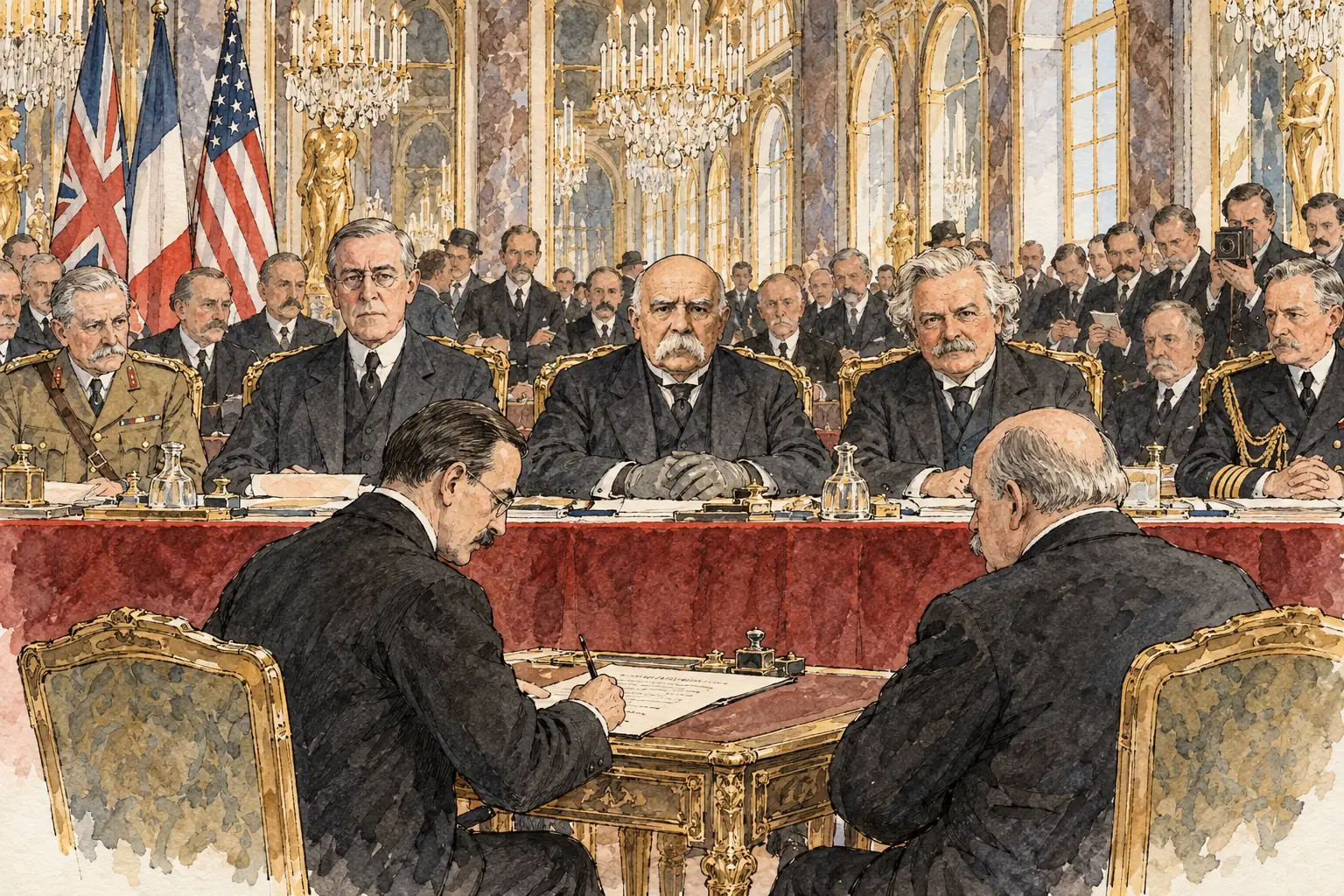
The Treaty of Versailles, signed in June 1919, imposed comprehensive restrictions on Germany to diminish its power and prevent future aggression. It addressed territorial, military, and economic aspects, while also establishing new international structures.
Territorial adjustments under the treaty
- Loss of land - Germany ceded Alsace-Lorraine to France, Eupen-Malmédy to Belgium, and parts of Schleswig to Denmark; it also lost all colonies, which became League of Nations mandates administered by Allied powers.
- Creation of new states - Poland gained independence with access to the sea via the Polish Corridor, separating East Prussia from the rest of Germany; other regions contributed to the formation of Czechoslovakia and Yugoslavia.
- Demilitarised zones - The Rhineland was demilitarised, with Allied occupation for 15 years to ensure French security.
Military restrictions imposed on Germany
- Army limitations - The German army was capped at 100,000 volunteers, with no conscription, tanks, or heavy artillery permitted.
- Naval and air force curbs - The navy was reduced to six battleships and no submarines; an air force was entirely prohibited.
Economic and reparations clauses
- Reparations payments - Germany was required to pay substantial reparations for war damages, initially set at £6,600 million in 1921, to be paid over decades.
- War guilt clause - Article 231 assigned full blame for the war to Germany and its allies, justifying the financial penalties.
Establishment of the League of Nations
- International organisation - The treaty created the League of Nations to promote peace and cooperation, with Germany initially excluded from membership.
Collective security and punitive elements
The Treaty of Versailles balanced punitive measures against Germany with forward-looking principles like collective security, intended to foster global stability. However, the emphasis on punishment often overshadowed these idealistic elements.
Integration of collective security in the treaty
- League of Nations framework - The League embodied collective security, where member states pledged to protect one another from aggression through diplomacy, sanctions, or joint military action.
- Promotion of disarmament and arbitration - The treaty encouraged general disarmament and the resolution of disputes through the League's council or assembly, aiming to prevent future wars.
Punitive aspects of the settlement
- Weakening Germany's power - Territorial losses, military caps, and reparations were designed to cripple Germany's ability to wage war, reflecting French demands for security.
- Tension between ideals and reality - While Wilson's vision emphasised self-determination and fairness, the final terms prioritised Allied interests, creating a settlement seen as vengeful rather than reconciliatory.
Versailles as part of wider treaties
The Treaty of Versailles was one component of a broader series of agreements that restructured Europe and addressed the defeat of all Central Powers. These treaties collectively aimed to dismantle empires and establish new borders.
Other major treaties in the Paris settlements
- Treaty of Saint-Germain (1919) - Dissolved the Austro-Hungarian Empire, creating Austria as a small republic and recognising new states like Czechoslovakia and Yugoslavia; Austria faced military restrictions and reparations.
- Treaty of Trianon (1920) - Severely reduced Hungary's territory, assigning lands to Romania, Czechoslovakia, and Yugoslavia, and limiting its armed forces.
- Treaty of Neuilly (1919) - Imposed on Bulgaria, involving territorial cessions to Greece and Yugoslavia, along with reparations and military curbs.
- Treaty of Sèvres (1920) - Initially partitioned the Ottoman Empire, though later replaced by the Treaty of Lausanne (1923), which recognised modern Turkey and adjusted Middle Eastern borders.
- Overall impact - These treaties redrew the map of Europe, promoting national self-determination for some groups while leaving ethnic minorities in new states, setting the stage for future tensions.