1.2 - Industrialisation, Social Reform & Socialism
Key facts and dates
Germany's rapid industrialisation in the late 19th and early 20th centuries transformed its economy and society, leading to urban expansion, class shifts, and growing political tensions. This period saw the rise of socialism and demands for reform, challenging the established order.
Timeline of key events
- 1871 – Unification of Germany creates a unified market, accelerating industrial growth in sectors like coal and steel.
- 1880s – Introduction of early social insurance laws, including health insurance in 1883 and accident insurance in 1884.
- 1890 – Lifting of anti-socialist laws allows legal trade union activity and SPD expansion.
- 1891 – Formation of the General Commission of German Trade Unions, strengthening organised labour.
- 1900 – Urban population surges, with cities like Berlin doubling in size due to migration from rural areas.
- 1912 – SPD becomes the largest party in the Reichstag, reflecting widespread working-class support.
Germany's industrial surge and urban growth
Image 1 of 2: Coal mines and steelworks in the Ruhr, the heart of German industry
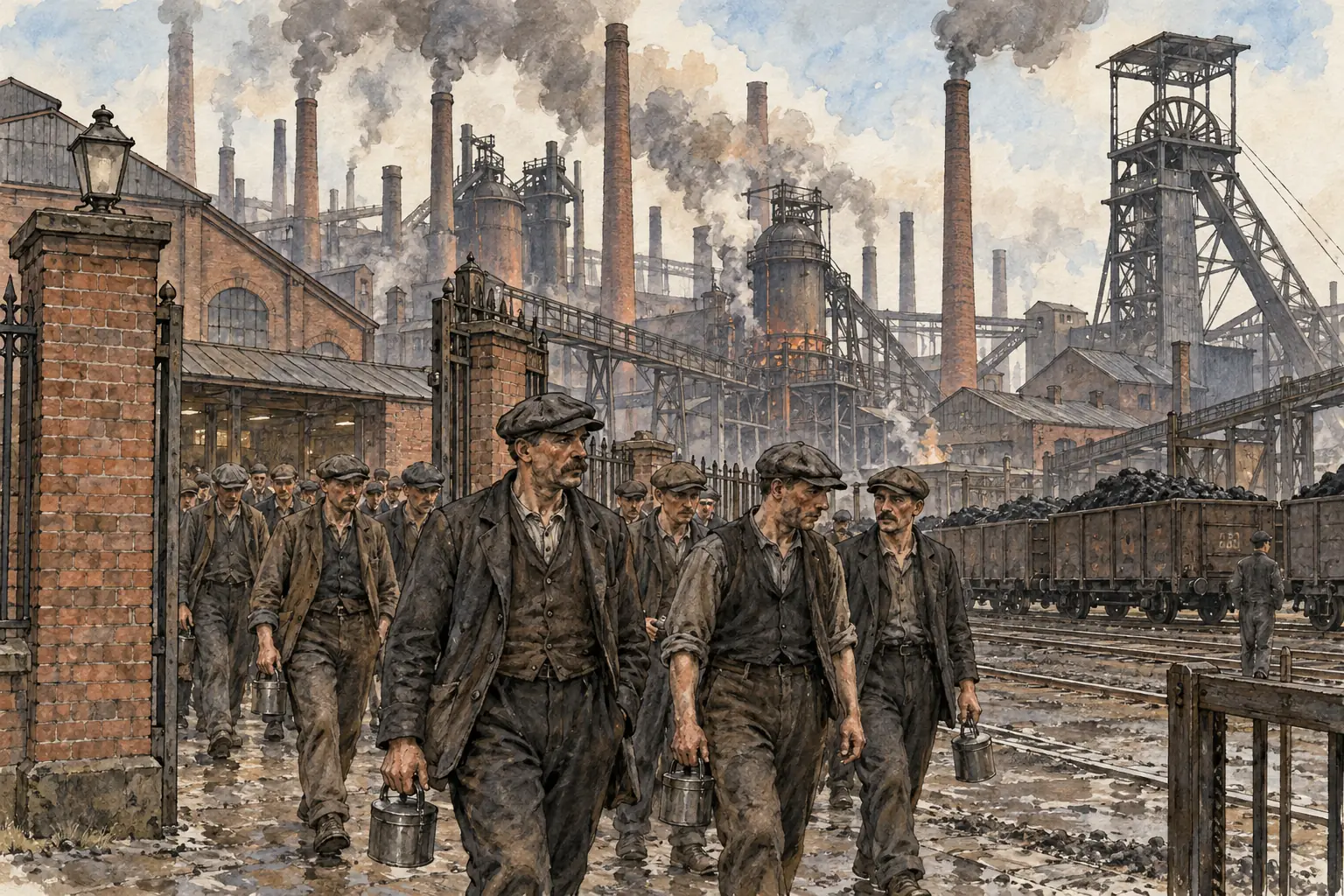
Germany experienced a dramatic economic transformation in the late 19th and early 20th centuries, shifting from an agrarian society to an industrial powerhouse. This surge was fuelled by advancements in key sectors and led to significant population movements and societal changes.
Key sectors driving industrial growth
- Coal and steel - Massive expansion in mining and heavy industry, particularly in the Ruhr region, provided raw materials for manufacturing and infrastructure.
- Chemicals and electrics - Innovations in synthetic dyes, pharmaceuticals, and electrical engineering positioned Germany as a global leader in these fields.
- Overall economic impact - By 1913, Germany overtook Britain in steel production and became Europe's largest industrial economy, with rapid factory expansion and technological progress.
Consequences of urban growth and class change
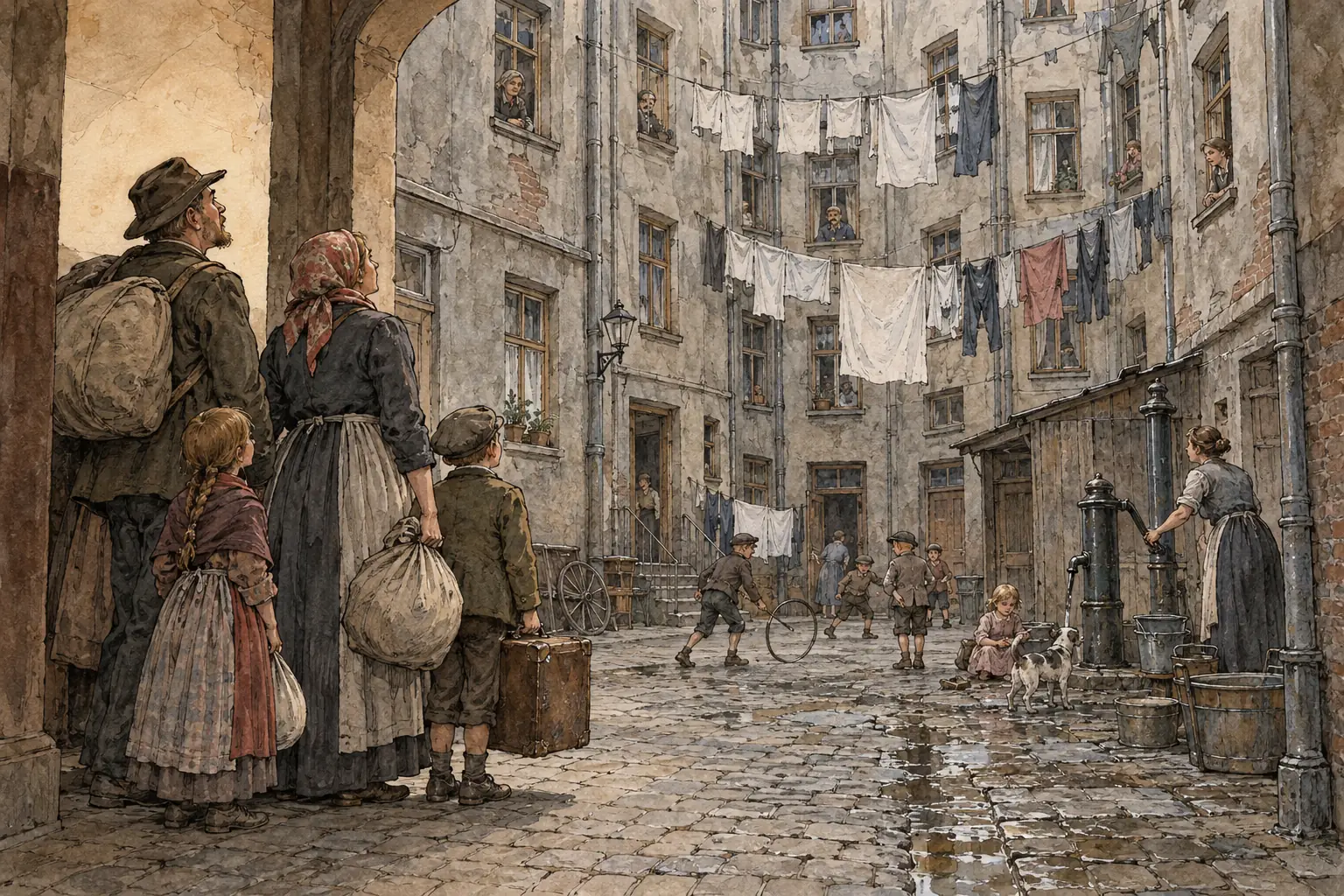
Rapid industrialisation drew millions from rural areas to cities, causing explosive urban expansion. For example, Berlin's population grew from about 800,000 in 1871 to over 2 million by 1910. This migration created new social classes, including a burgeoning urban working class and an expanding middle class of professionals, while traditional elites like landowners faced declining influence.
Rise of working-class discontent and the SPD
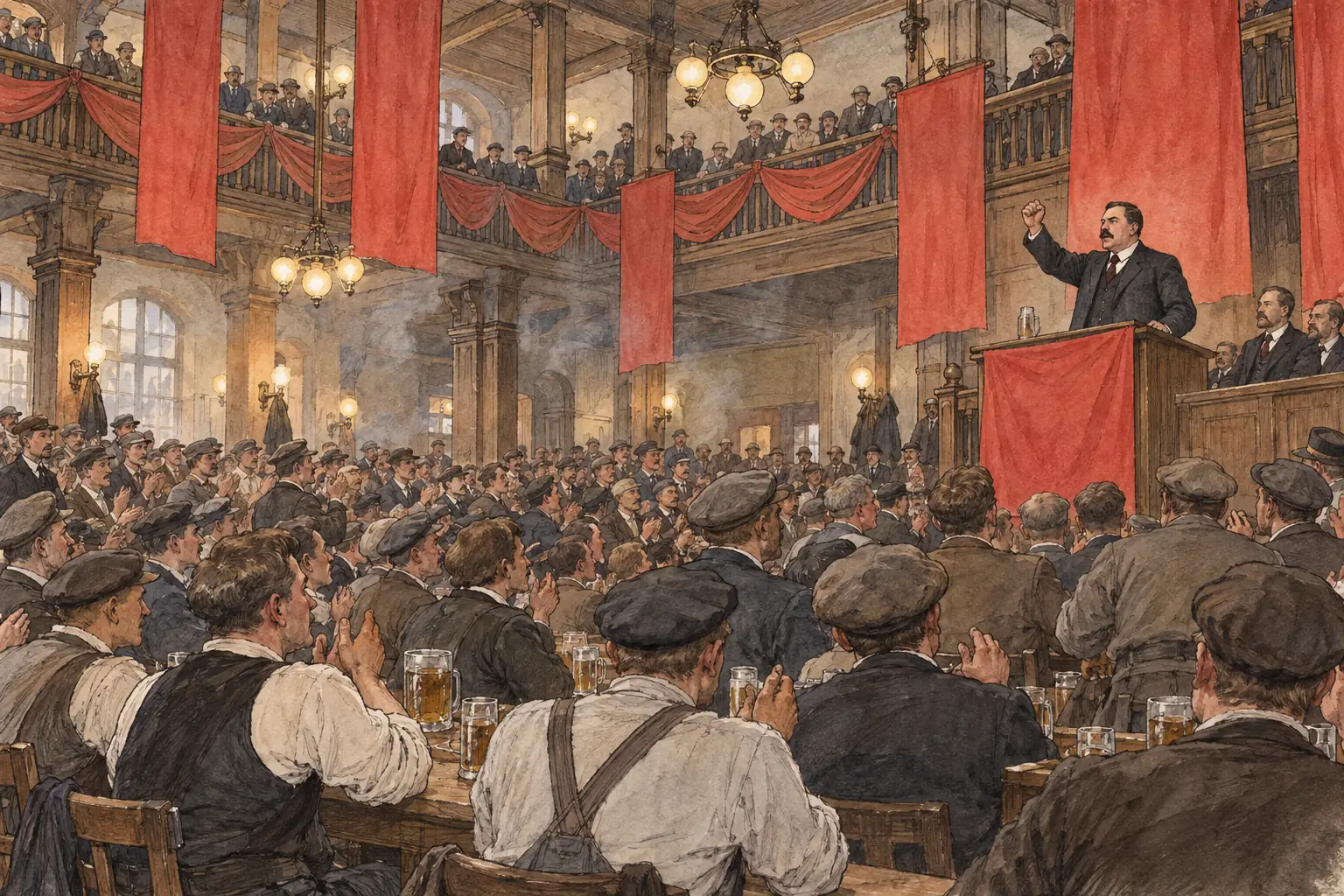
The swift pace of industrial change generated widespread dissatisfaction among workers, who faced harsh conditions and economic insecurity. This discontent fuelled the growth of organised labour and socialist politics, culminating in the prominence of the Social Democratic Party (SPD).
Factors contributing to working-class discontent
- Harsh working conditions - Long hours in factories, low wages, and dangerous environments led to exploitation and health issues.
- Economic instability - Rapid urbanisation caused overcrowding, poor housing, and unemployment during economic downturns.
- Lack of political voice - Workers felt excluded from the authoritarian political system, which favoured elites.
Development of trade unionism and the SPD
Trade unions emerged to advocate for better pay and conditions, gaining momentum after the 1890 repeal of anti-socialist laws. By 1914, union membership exceeded 2 million. The SPD, founded in 1875, channelled this unrest into political action, promoting socialist ideals like workers' rights and equality. Its vote share rose steadily, making it the Reichstag's largest party by 1912 with over 4 million votes.
Early social reforms and ongoing demands
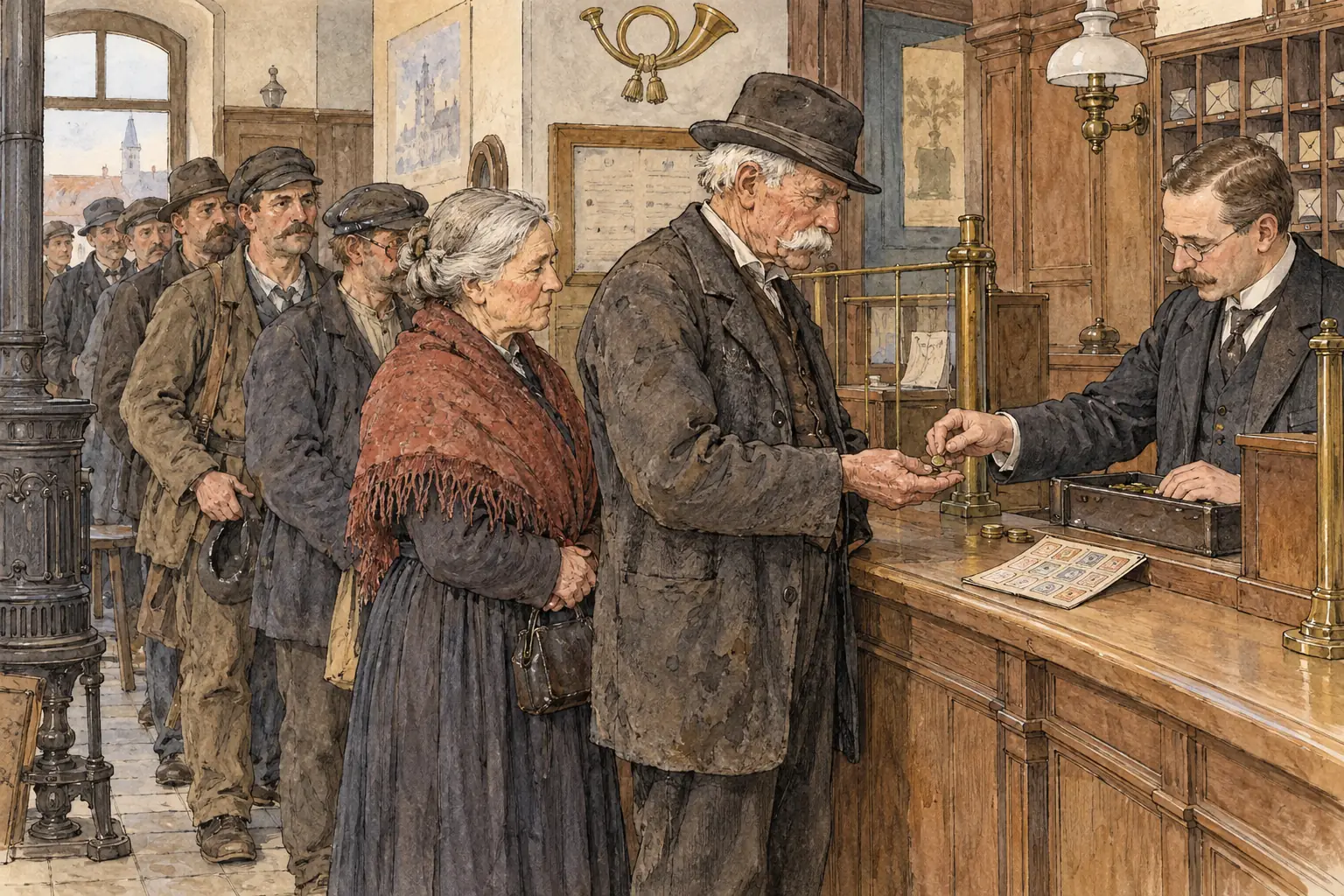
In response to growing unrest, the German government introduced pioneering social measures, but these fell short of addressing all grievances. Workers and reformers continued to push for broader improvements in living and working standards.
Introduction of social insurance measures
- Health and accident insurance - Laws in the 1880s provided mandatory coverage for workers, funded by contributions from employers and employees, to mitigate illness and workplace injuries.
- Pension schemes - Old-age and disability pensions were established in 1889, offering basic security for the elderly and infirm.
Persistent demands for further reform
Despite these steps, demands persisted for reduced working hours (e.g., an eight-hour day), improved housing to combat slums, and expanded welfare provisions like unemployment support. Trade unions and the SPD led campaigns, highlighting inequalities and calling for democratic changes to empower workers.
Experiences of different social groups
Industrialisation affected various social groups differently, creating both opportunities and tensions. While some prospered, others faced marginalisation, leading to conflicts over resources, status, and rights.
Comparative experiences across groups
- Junkers (landed aristocracy) - Traditional rural elites saw their influence wane as industry grew, though many adapted by investing in agriculture or politics to preserve privileges.
- Industrialists - Business owners amassed wealth through factories and trade, often aligning with the government for protectionist policies, but faced labour disputes.
- Middle-class professionals - Doctors, lawyers, and managers benefited from urban expansion, gaining social mobility, yet competed with rising working-class demands.
- Factory workers - Endured low wages and poor conditions, but gained collective power through unions; many supported socialism for better prospects.
- Women - Increasingly entered the workforce in textiles and services, facing discrimination and lower pay, while pushing for rights amid changing family roles.
- Jewish communities - Experienced economic success in business and professions, but encountered antisemitism and exclusion, especially during economic slumps.
These groups often had overlapping interests, such as industrialists and Junkers supporting conservative policies, but conflicts arose over issues like labour reforms and urban resources.
Political challenges from industrialisation
The economic upheavals of industrialisation posed significant threats to Germany's authoritarian regime, exacerbating divisions and demanding adaptations that tested its stability.
How industrialisation sharpened regime challenges
- Growth of opposition - The rise of the SPD and unions created a powerful counterforce, challenging the monarchy's control and pushing for parliamentary democracy.
- Social tensions - Class conflicts and urban poverty fuelled strikes and protests, forcing the government to balance repression with concessions like social insurance.
- Broader political pressures - Industrialists demanded economic policies, while workers sought representation, highlighting the regime's inability to fully accommodate diverse interests without reform. By 1914, these strains contributed to internal divisions that weakened Germany on the eve of war.