2.6 - American Revolution: Causes & Colonial Relations
Key facts and dates
The lead-up to the American Revolution involved growing tensions between Britain and its North American colonies, driven by economic policies, taxation disputes, and ideological differences over rights and governance. These factors culminated in widespread unrest and calls for independence.
Timeline of key events
- 1651 – Navigation Acts introduced, regulating colonial trade to benefit Britain.
- 1765 – Stamp Act imposes direct taxes on colonial legal documents and newspapers.
- 1770 – Boston Massacre occurs, where British troops kill five colonists during a confrontation.
- 1773 – Boston Tea Party sees colonists destroy tea shipments in protest against taxation.
- 1774 – First Continental Congress meets to coordinate colonial resistance.
Economic and constitutional strains
Tensions between Britain and its North American colonies arose from a mix of economic policies and constitutional disagreements. Britain sought to exert greater control over colonial affairs to recover costs from wars and maintain imperial authority, while colonists increasingly viewed these measures as infringements on their rights.
Sources of economic and constitutional friction
- Post-war financial burdens - After the Seven Years' War (1756–1763), Britain faced significant debt and began imposing taxes on colonies to share the load, viewing them as beneficiaries of British protection.
- Constitutional disputes - Colonists argued that Britain's Parliament lacked authority to tax them directly, as they had no elected representatives there, clashing with Britain's view of virtual representation through shared interests.
- Enforcement of imperial control - Britain tightened regulations on colonial governance, including restrictions on westward expansion via the Proclamation of 1763, which limited settlement beyond the Appalachian Mountains to avoid conflicts with Native Americans.
Trade regulation and taxation policies
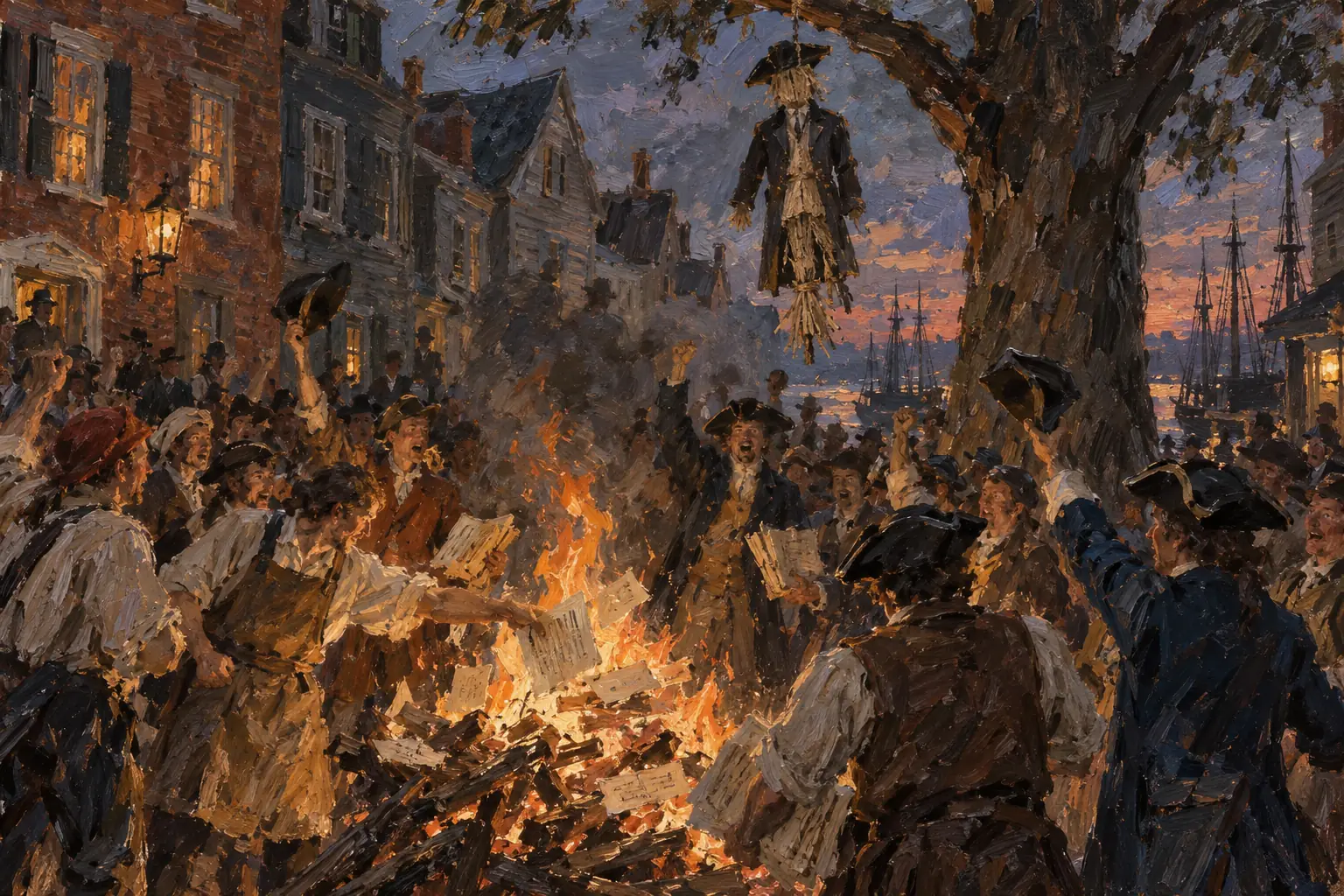
Britain implemented a series of trade regulations and taxes to control colonial commerce and generate revenue. These measures prioritised British economic interests but sparked resentment among colonists who felt unfairly burdened.
Key trade and taxation measures
- Navigation Acts (from 1651) - These laws required colonial goods to be shipped only on British vessels and through British ports, limiting trade with other nations and ensuring profits flowed to Britain.
- Stamp Act (1765) - This imposed a direct tax on printed materials like newspapers, legal documents, and playing cards, requiring an official stamp; it was seen as an internal tax without colonial consent.
- Other taxation efforts - Following the Stamp Act's repeal due to protests, Britain introduced the Townshend Acts (1767), taxing imports such as tea, glass, and paper, further straining relations by funding colonial governors independently of local assemblies.
Flashpoints in colonial resistance
Image 1 of 2: In March 1770 British soldiers in Boston fired into a crowd that was taunting them, killing five people

Several high-profile incidents escalated tensions, turning economic grievances into acts of open defiance. These events highlighted colonial unity against perceived British oppression and involved both peaceful protests and violent clashes.
Major incidents of colonial unrest
- Boston Massacre (1770) - A confrontation between colonists and British soldiers in Boston resulted in troops firing on a crowd, killing five people; propaganda portrayed it as a deliberate attack, fuelling anti-British sentiment.
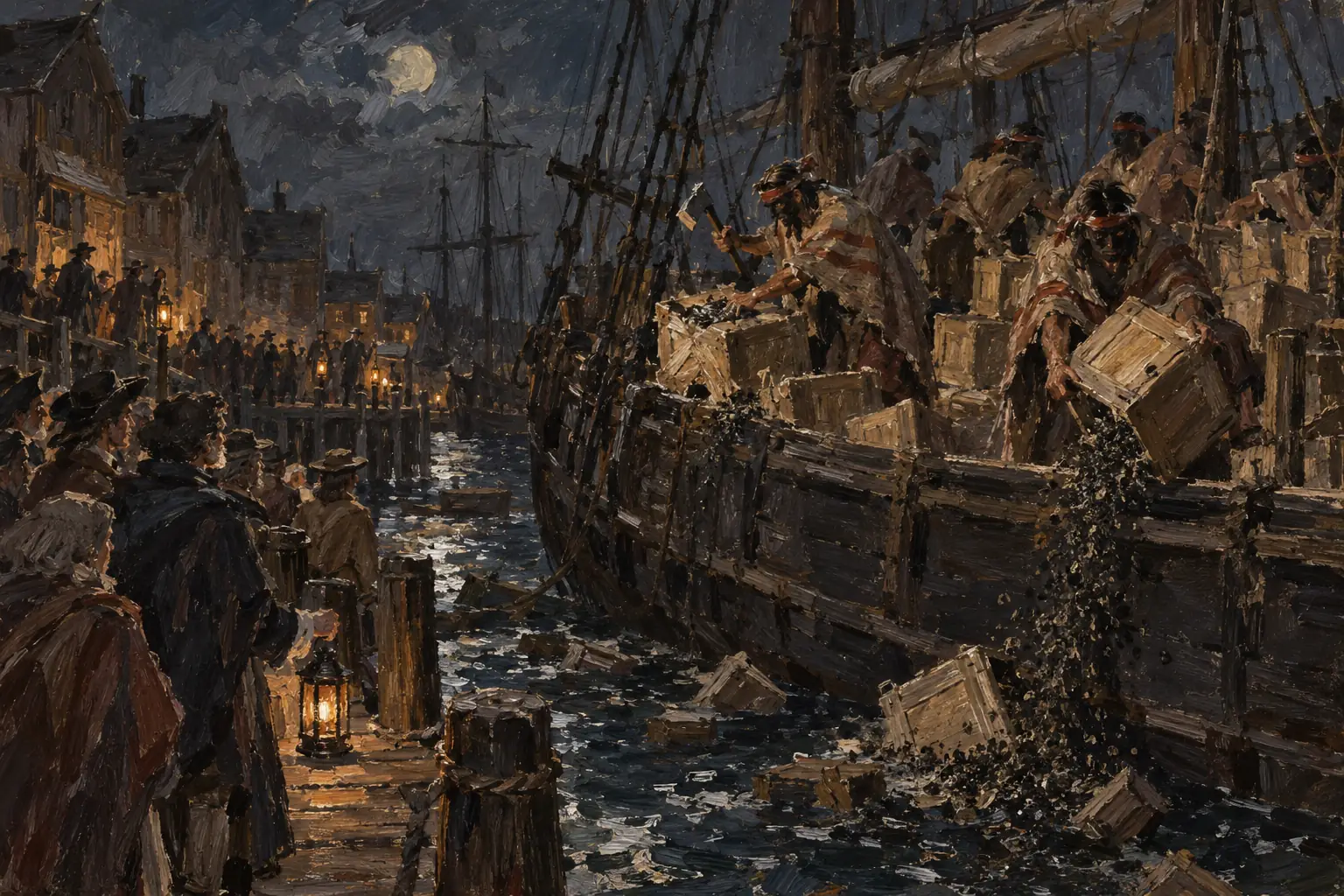
- Boston Tea Party (1773) - In response to the Tea Act, which granted a monopoly to the British East India Company, colonists disguised as Native Americans boarded ships and dumped 342 chests of tea into Boston Harbour as a protest against taxation.
- Coercive Acts (1774) - Britain's punitive response to the Tea Party, including closing Boston's port and altering Massachusetts' charter, united colonies in opposition and led to the formation of the Continental Congress.
'No taxation without representation'

The phrase 'no taxation without representation' became a rallying cry for colonists, encapsulating their demand for political rights. It argued that taxes imposed by Britain's Parliament were illegitimate because colonists had no voice in that body.
Meaning and implications of the slogan
- Core argument - Colonists believed only their own elected assemblies could rightfully tax them, drawing on English traditions of consent and representation dating back to the Magna Carta.
- Ideological foundation - The slogan linked economic issues to broader principles of liberty and self-governance, inspiring pamphlets, speeches, and boycotts that spread revolutionary ideas.
- British counter-view - Britain maintained that colonists were virtually represented in Parliament, as its members acted for the entire empire, dismissing the need for direct colonial input.
Different interests and political ideas
Colonial society was diverse, with varying interests influencing responses to British policies. Economic controls intertwined with political ideas, creating a crisis that was both financial and ideological, involving factors like economics, government, ideas, and communication.
Interests and divisions in colonial society
- Merchants and traders - Often opposed trade restrictions like the Navigation Acts, as they limited profits and access to foreign markets, pushing for greater economic freedom.
- Farmers and smallholders - Resented taxes that increased costs without benefits, viewing them as threats to their livelihoods and local autonomy.
- Loyalists vs. Patriots - Not all colonists supported rebellion; Loyalists, often wealthier and tied to Britain, favoured maintaining ties, while Patriots advocated independence based on Enlightenment ideas of rights and representation.
Intertwining of economic control and political ideas
- Economic-ideological overlap - Policies like taxation were seen not just as financial burdens but as violations of natural rights, influenced by thinkers like John Locke, who emphasised government by consent.
- Role of communication - Pamphlets, newspapers, and committees of correspondence spread ideas rapidly, uniting diverse colonial interests against British authority.
- Overall crisis dynamics - The blend of economic grievances with ideological demands for representation transformed isolated disputes into a broader revolutionary movement.