1.4 - WWI: Defeat, Revolution & 1918–19 Chaos
Key facts and dates
The final years of the First World War brought immense hardship to Germany, culminating in military collapse, revolution, and the birth of a fragile republic. These events created deep social divisions and myths that influenced the early Weimar period, blending elements of continuity with significant political change.
Timeline of key events
- 1914–1918 – First World War causes widespread casualties, with over two million German soldiers killed.
- 1916–1917 – British naval blockade leads to severe food shortages, exemplified by the "Turnip Winter" where turnips become a staple due to potato crop failure.
- October 1918 – Kiel naval mutiny sparks nationwide unrest and workers' councils.
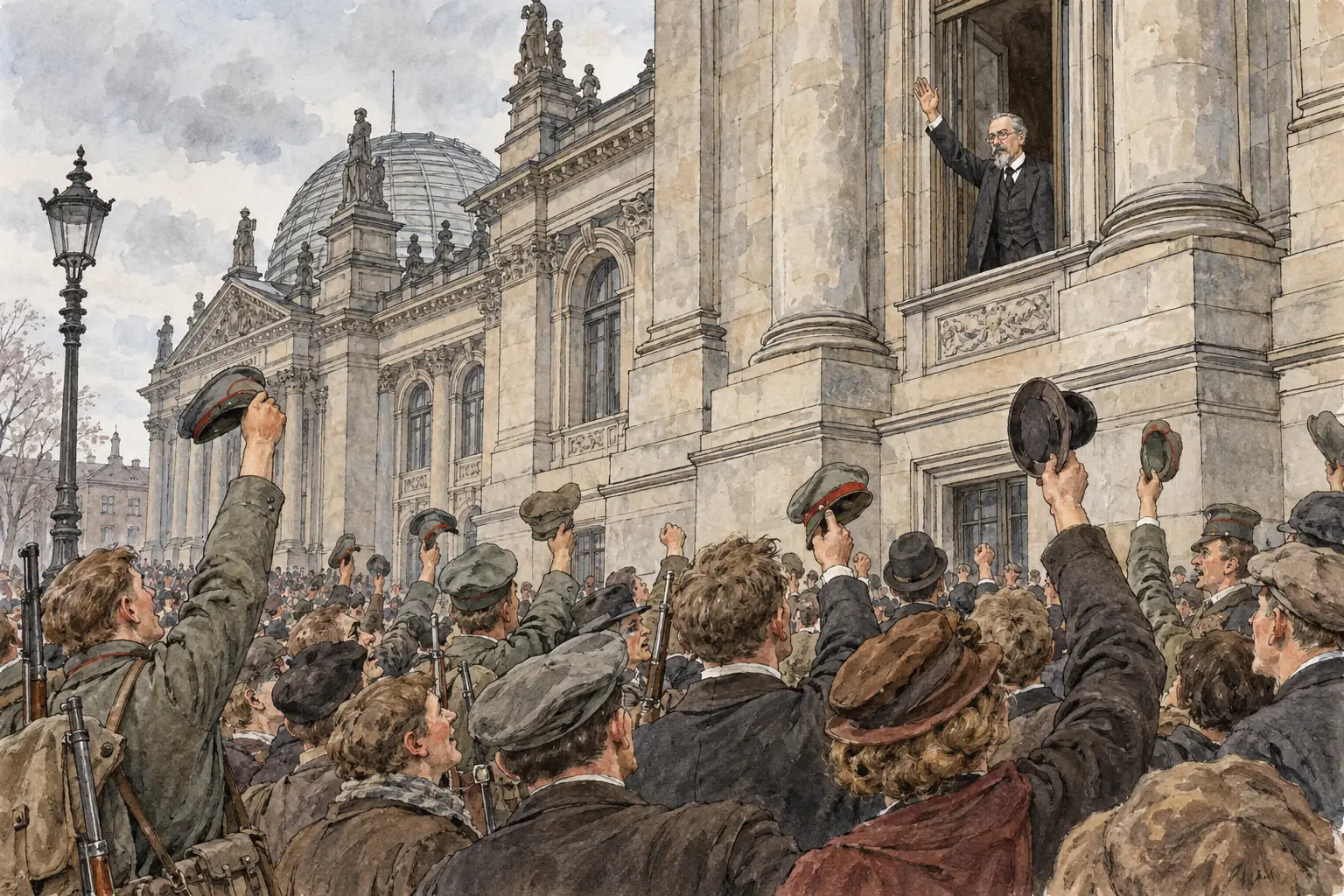
- November 1918 – Abdication of Kaiser Wilhelm II; Philipp Scheidemann proclaims the republic.
- 11 November 1918 – Armistice signed, ending the war amid shock and the rise of the "stab-in-the-back" legend.
- 1918–1919 – New government faces street violence, demobilisation issues, and harsh armistice terms.
The impact of the war on everyday life
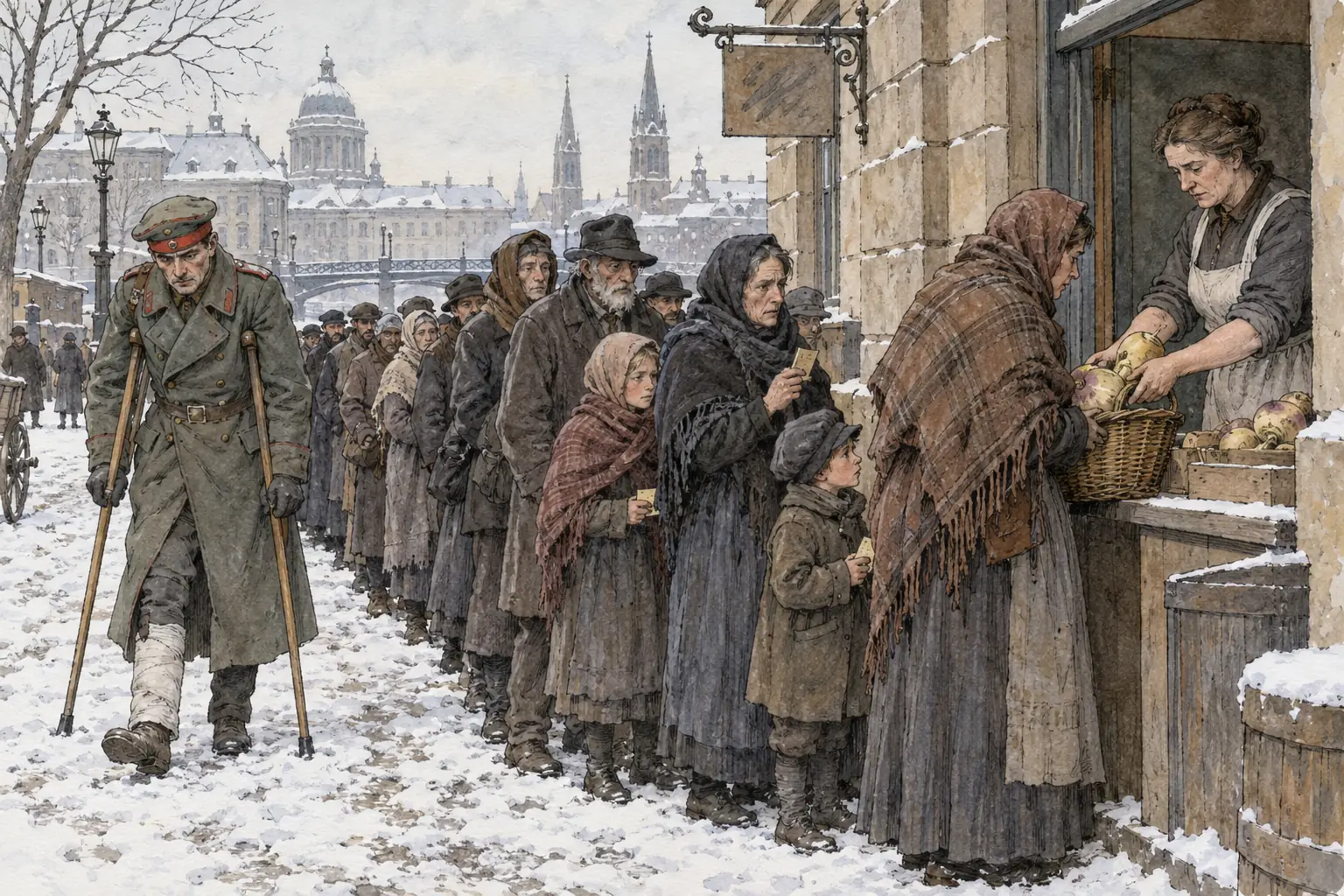
The First World War profoundly disrupted daily existence in Germany, as resources were diverted to the military effort and external pressures intensified. Civilians endured escalating hardships that eroded morale and contributed to widespread war weariness.
Effects of shortages and the blockade
- British naval blockade - From 1914, this restricted imports, causing acute shortages of food, fuel, and raw materials, which weakened the home front and led to malnutrition.
- Turnip Winter (1916–1917) - A severe potato crop failure forced reliance on turnips as a primary food source, resulting in widespread hunger and an estimated 750,000 civilian deaths from starvation-related causes.
- Casualties and social strain - Over two million soldiers died, leaving families bereaved and communities depleted; the wounded returned in large numbers, straining healthcare and welfare systems.
- War weariness - Prolonged conflict bred disillusionment, with strikes and protests increasing as people grew tired of rationing, inflation, and the endless demands of total war.
Defeat and the November Revolution in 1918
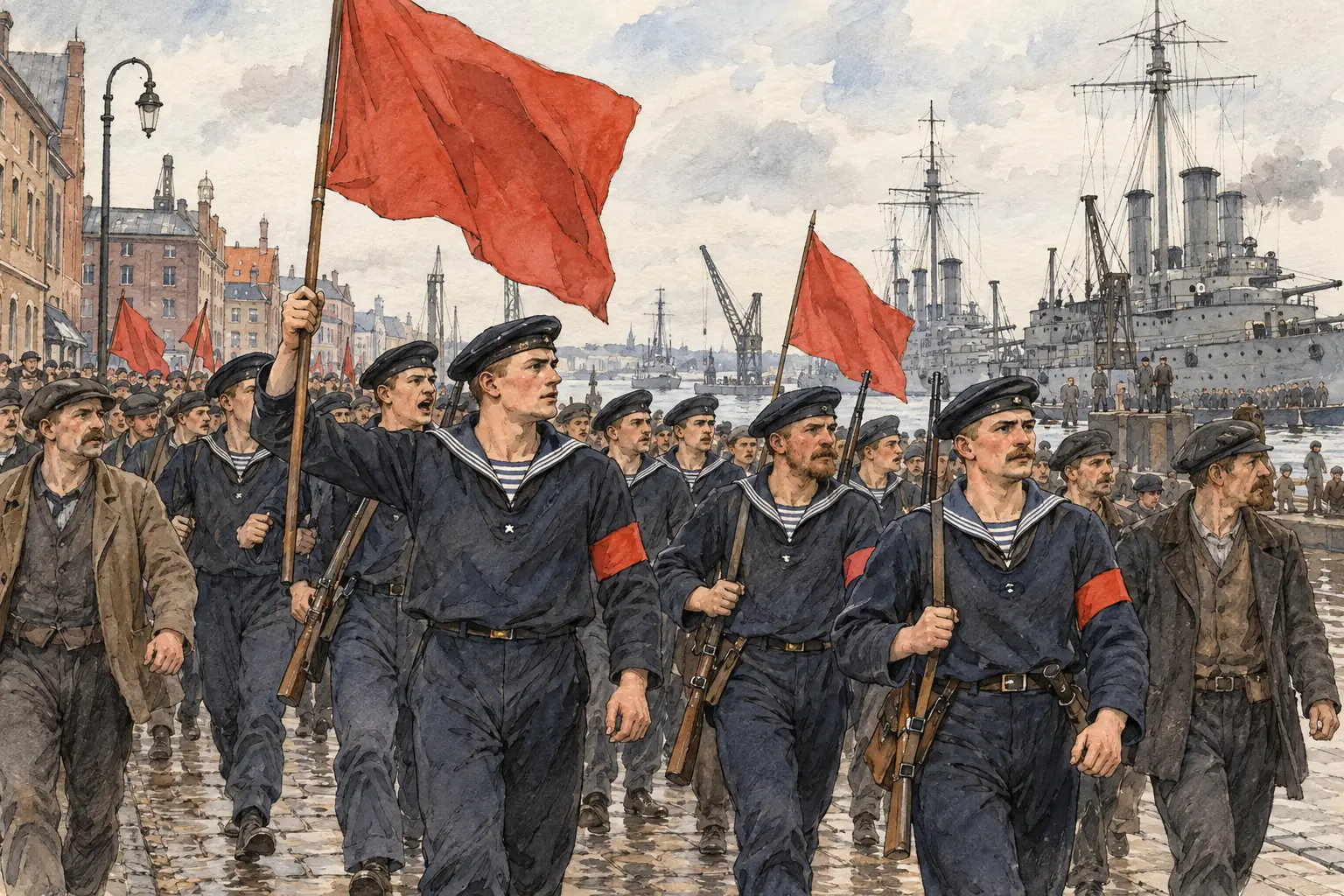
Germany's unexpected defeat in 1918 came as a profound shock, following years of propaganda about imminent victory. This triggered a wave of unrest that escalated into revolution, challenging the imperial order.
Events leading to the revolution
- Military collapse - By autumn 1918, Allied advances overwhelmed German forces, with exhausted troops and supply lines failing; military leaders urged an armistice to avoid total invasion.
- Kiel mutiny - In late October, sailors at the Kiel naval base refused orders for a suicidal final battle, sparking mutinies that spread to other ports and inspired workers' and soldiers' councils across cities.
- November Revolution - The mutiny ignited nationwide protests, strikes, and uprisings, with revolutionaries demanding peace, democracy, and an end to the monarchy; this grassroots movement pressured the government for radical change.
Abdication of the Kaiser and the new republic
Image 1 of 2: Philipp Scheidemann proclaims a republic from the Reichstag on 9 November 1918
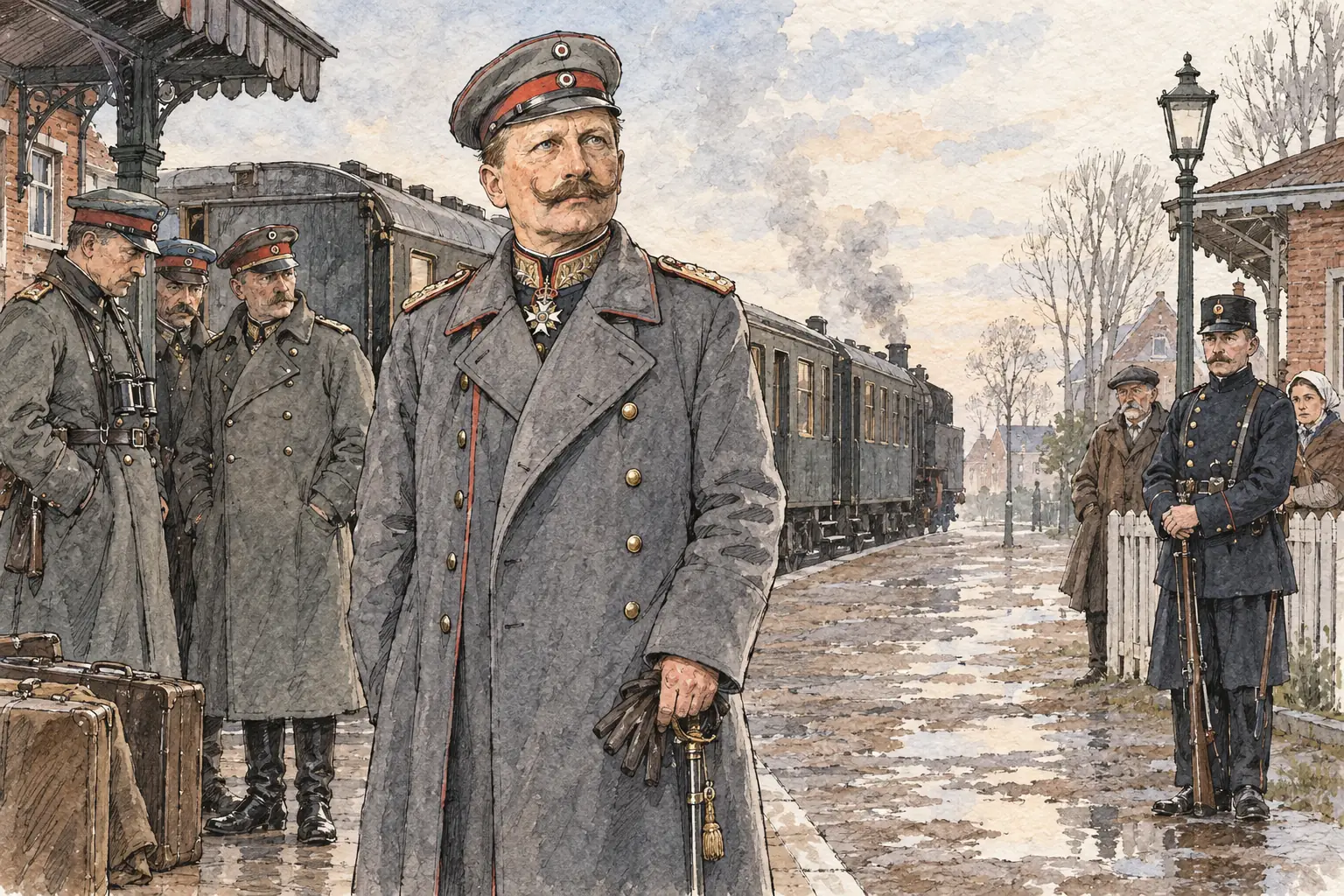
The revolutionary fervour in November 1918 forced the end of the German Empire. Kaiser Wilhelm II, symbol of the old regime, was compelled to step down amid chaos, paving the way for a new political system.
Transition from empire to republic
- Abdication of Kaiser Wilhelm II - On 9 November, facing loss of military support and widespread demands for his removal, the Kaiser abdicated and fled to exile in the Netherlands.
- Proclamation of the republic - Social Democrat leader Philipp Scheidemann declared Germany a republic from the Reichstag balcony to forestall more radical socialist takeovers, marking the formal shift to republican governance.
- Interim leadership - Friedrich Ebert, another Social Democrat, formed a provisional government to manage the transition, focusing on negotiating peace and restoring order.
Myths and divisions following the defeat
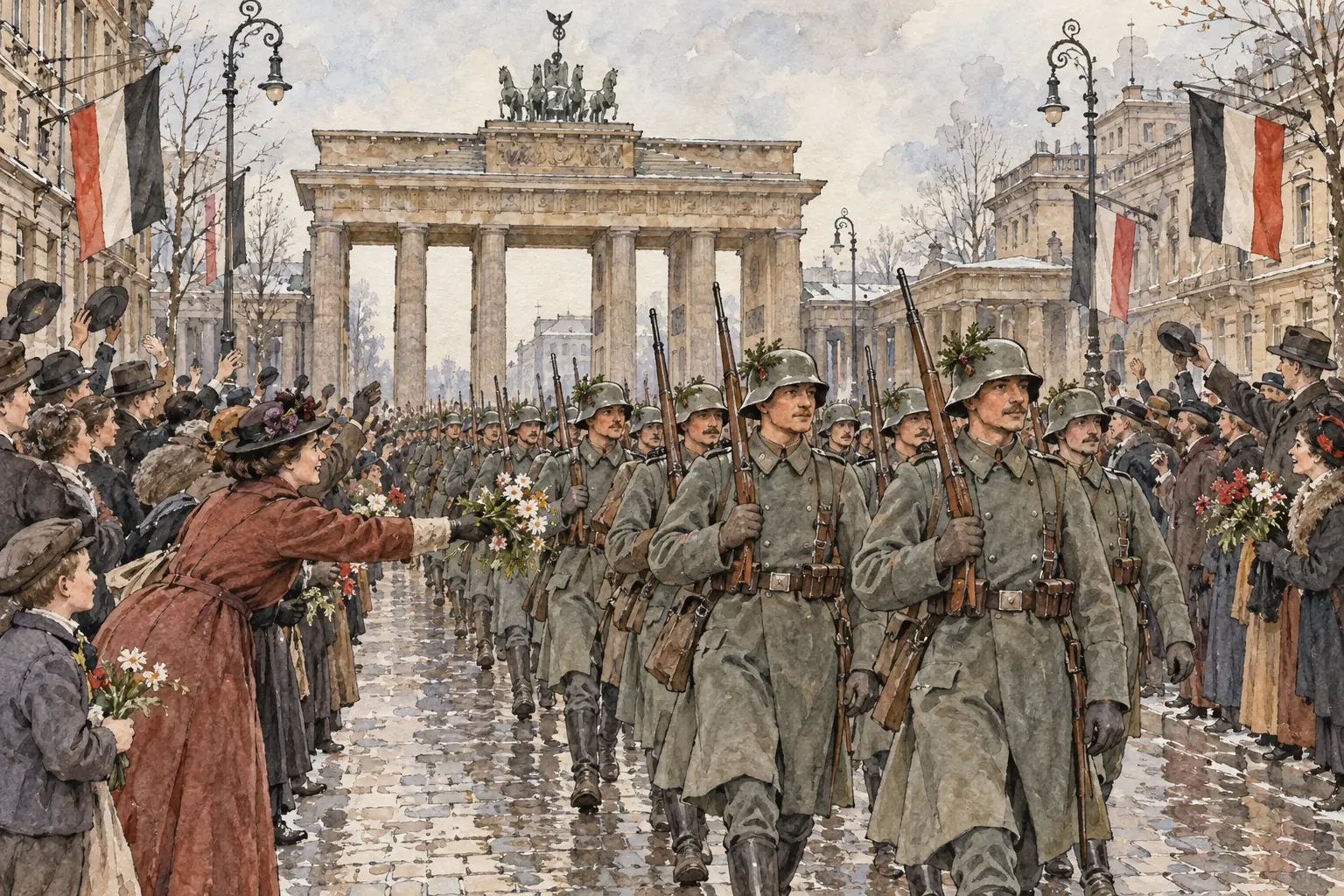
The sudden end of the war fostered myths and societal rifts that undermined the new republic. These narratives, often propagated by conservative and military figures, sowed seeds of resentment and instability.
Key myths and their divisive impact
- Stab-in-the-back legend - This myth claimed that Germany was not defeated militarily but betrayed by civilians, socialists, and Jews on the home front, diverting blame from army leaders and fuelling right-wing extremism.
- Social and political divisions - The defeat exacerbated tensions between left-wing revolutionaries seeking soviet-style councils and moderates favouring parliamentary democracy, leading to fragmented loyalties.
- Legacy of bitterness - These myths created a polarised society, with veterans and nationalists viewing the republic as illegitimate, which hindered national unity in the post-war years.
Challenges, continuity and change
The fledgling republican government faced immediate hurdles in stabilising the country, while navigating a mix of enduring imperial elements and transformative shifts. This period highlighted the difficulties of building democracy amid crisis.
Major challenges confronting the new government
- Armistice terms - The 11 November agreement required Germany to withdraw troops, surrender weapons, and accept Allied occupation of the Rhineland, imposing humiliating conditions that inflamed public anger.
- Street violence - Ongoing clashes between left-wing groups like the Spartacists and right-wing Freikorps militias led to urban fighting and assassinations, threatening civil order.
- Demobilisation issues - Returning millions of soldiers faced unemployment and reintegration difficulties, exacerbating economic chaos and social unrest.
Aspects of continuity and change
- Continuity from imperial Germany - Many civil servants, judges, and military structures remained intact, preserving conservative influences within the new system.
- Changes in governance - The shift to a republic introduced democratic elections, universal suffrage, and a constitution, breaking from monarchical rule and aiming for greater representation.
- Overall tension - While political structures changed dramatically, underlying social hierarchies and economic problems persisted, creating a fragile foundation for the Weimar Republic.