1.5 - 1919–23: Reparations, Ruhr & Hyperinflation
Key facts and dates
The period from 1919 to 1923 was marked by severe economic challenges for the Weimar Republic, stemming from the Treaty of Versailles and escalating into occupation, resistance, and financial collapse. These events deepened political divisions and undermined confidence in the new democratic government.
Timeline of key events
- June 1919 – Germany signs the Treaty of Versailles, accepting blame for the war and agreeing to pay reparations.
- January 1921 – Reparations fixed at 132 billion gold marks, straining the German economy.
- January 1923 – French and Belgian troops occupy the Ruhr after Germany defaults on payments.
- March 1923 – German government adopts passive resistance, halting industrial output in the Ruhr.
- August 1923 – Hyperinflation peaks, with prices spiralling out of control.
- November 1923 – Introduction of the Rentenmark stabilises the currency.
- 1924 – Rentenmark replaced by the Reichsmark, restoring some economic confidence.
Treaty of Versailles and the reparations burden
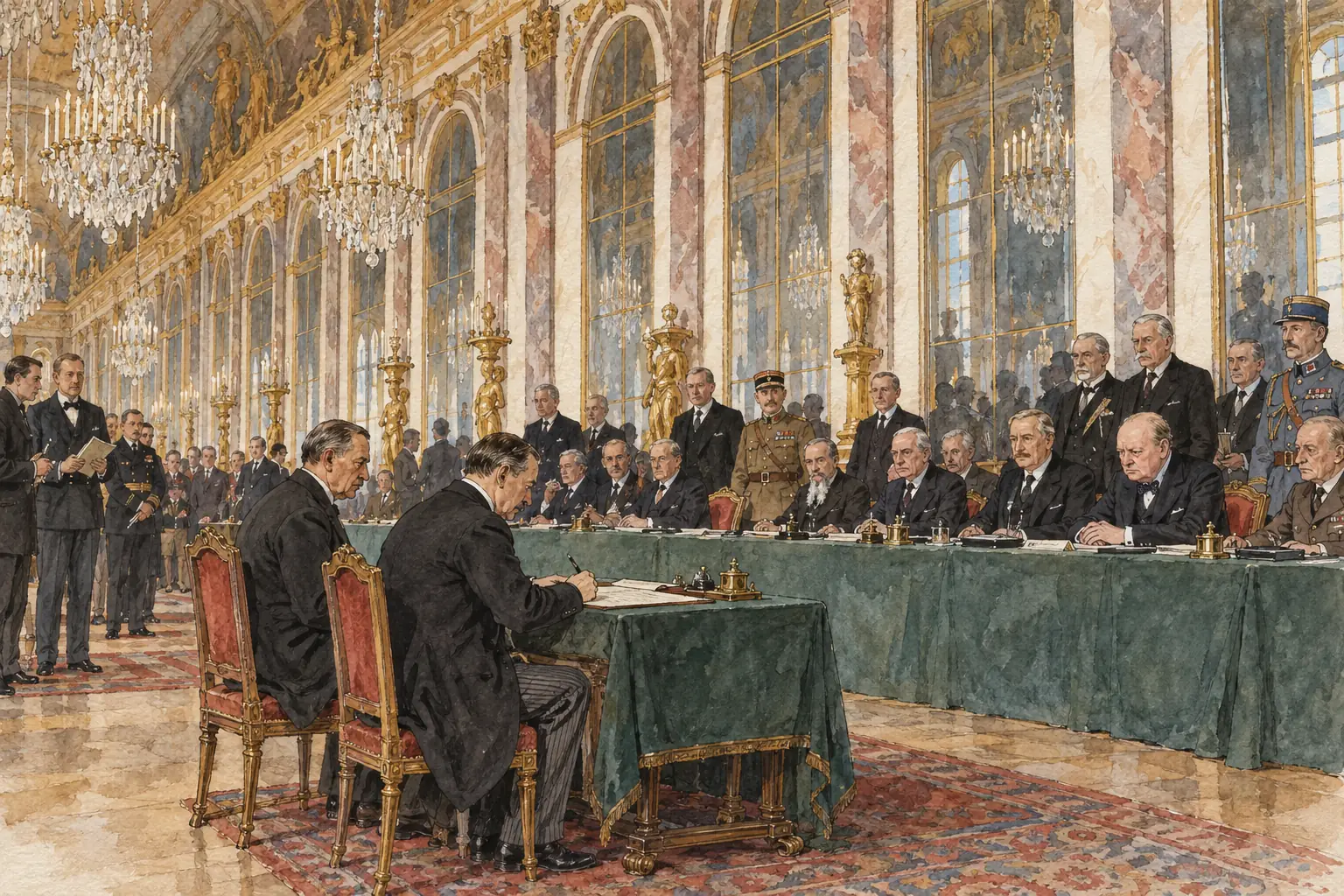
The Treaty of Versailles, signed in 1919, imposed harsh terms on Germany following its defeat in the First World War. These included territorial losses, military restrictions, and significant financial penalties, which placed a heavy economic load on the fledgling Weimar Republic.
Key aspects of the treaty's impact
- War guilt clause - Germany was forced to accept full responsibility for starting the war, justifying the Allies' demands for compensation.
- Reparations payments - Initially set at 132 billion gold marks in 1921, these were intended to cover war damages, payable in annual instalments of cash, coal, and other resources.
- Economic strain - The burden weakened Germany's finances, as the government resorted to printing money to meet obligations, exacerbating existing debts from wartime borrowing.
The 1923 Ruhr occupation and passive resistance
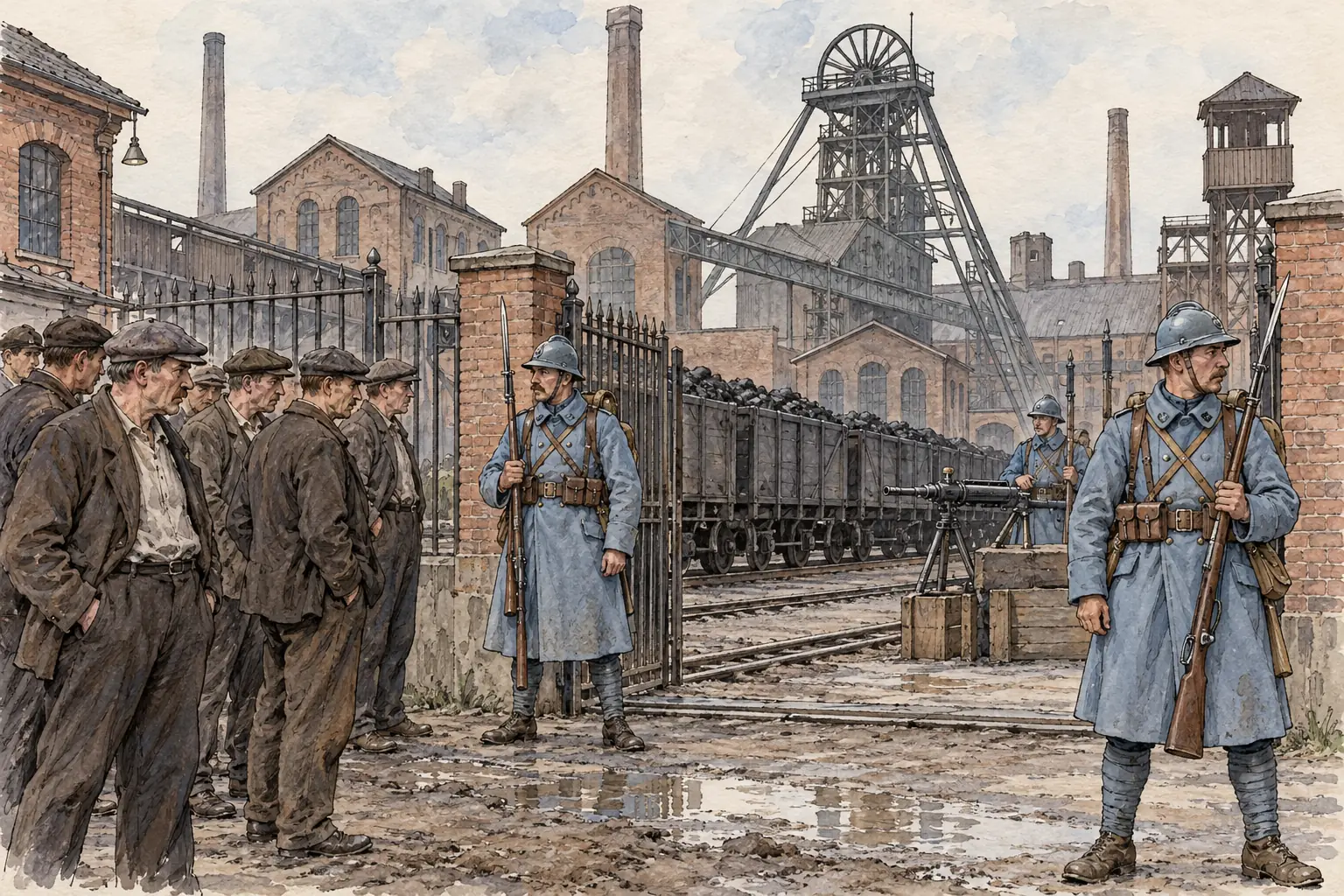
When Germany fell behind on reparations deliveries in late 1922, France and Belgium responded with military action. This invasion targeted the industrial heartland, aiming to seize resources directly and enforce compliance.
Events of the Ruhr crisis
- Occupation in January 1923 - French and Belgian forces entered the Ruhr region, taking control of mines, factories, and railways to extract coal and steel as payment.
- Policy of passive resistance - The German government encouraged workers to refuse cooperation, including strikes and non-violent sabotage, while continuing to pay their wages.
- Immediate effects - Production in the Ruhr halted, leading to shortages of essential goods and further economic disruption across Germany.
Causes of the hyperinflation crisis
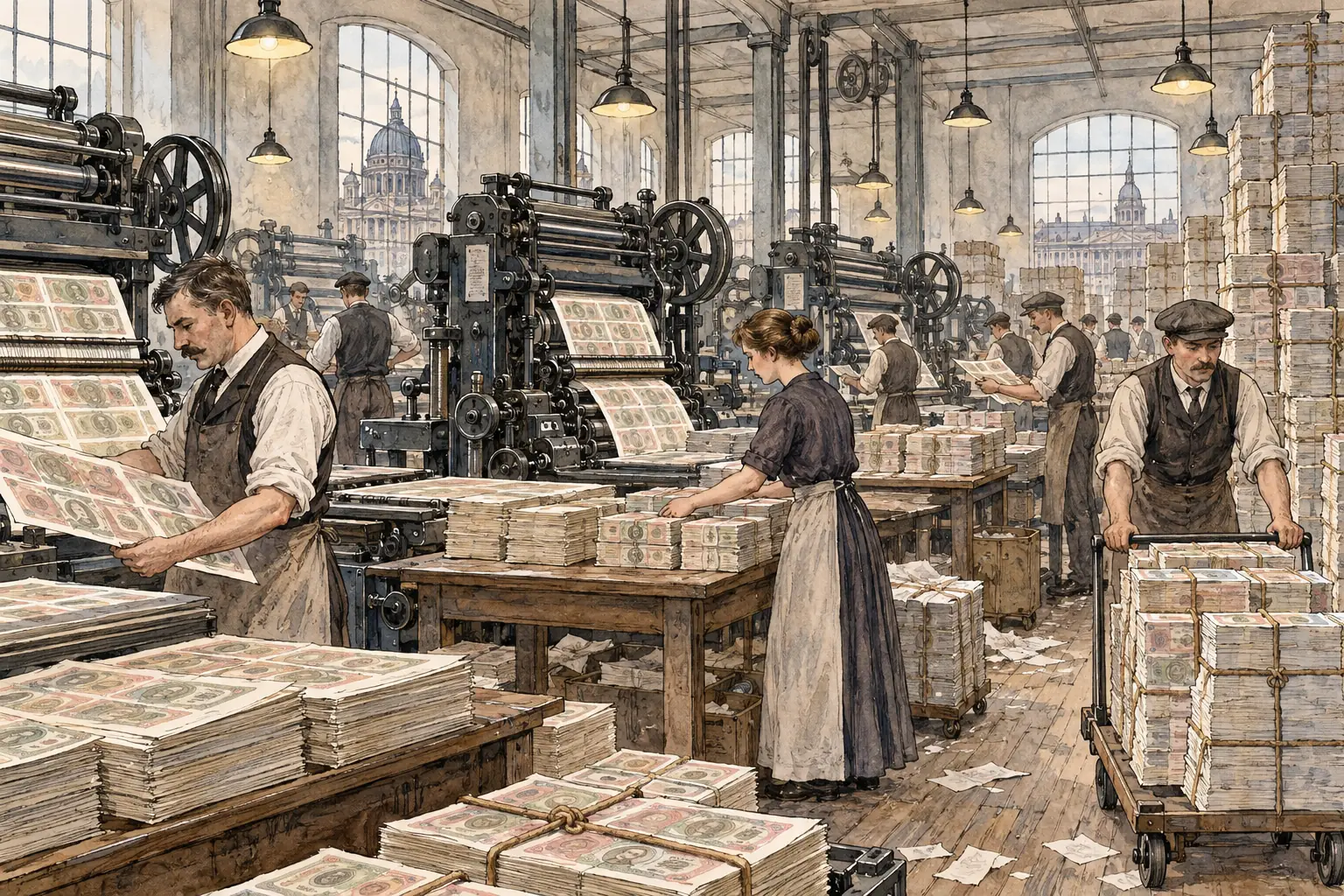
Hyperinflation gripped Germany in 1923, where the value of the mark plummeted dramatically, leading to skyrocketing prices. This was not a sudden event but the result of accumulated pressures building since the war.
Factors leading to hyperinflation
- War finance legacy - During the First World War, Germany funded its efforts through loans and money printing rather than taxes, creating a massive national debt.
- Political instability - Frequent government changes and uprisings weakened economic management, eroding investor confidence.
- Ruhr crisis escalation - The occupation and passive resistance cut off vital industrial revenue, forcing the government to print even more money to cover costs like worker wages.
Social consequences of hyperinflation
Image 1 of 3: Workers were paid twice a day and rushed to spend their wages before prices rose again

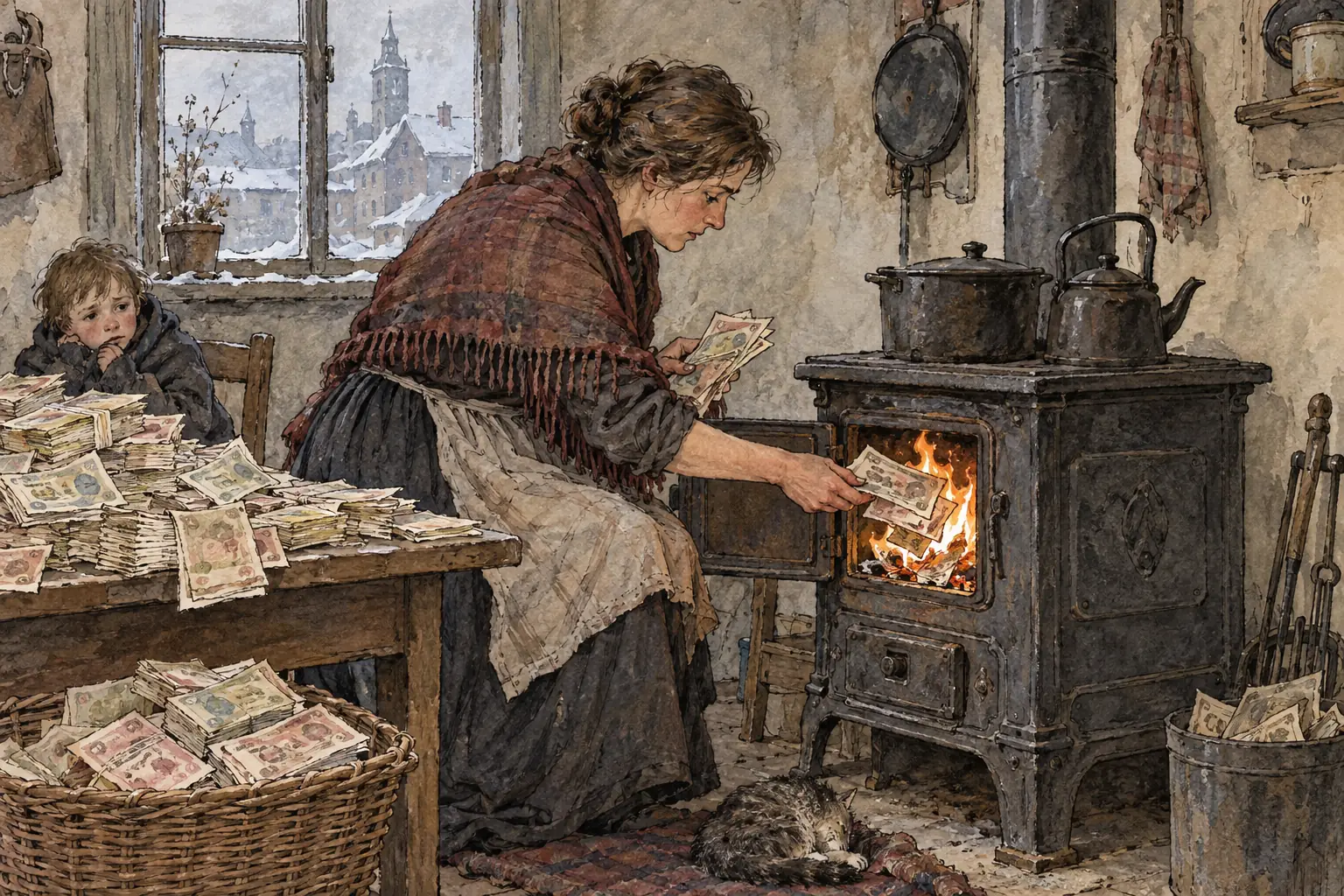
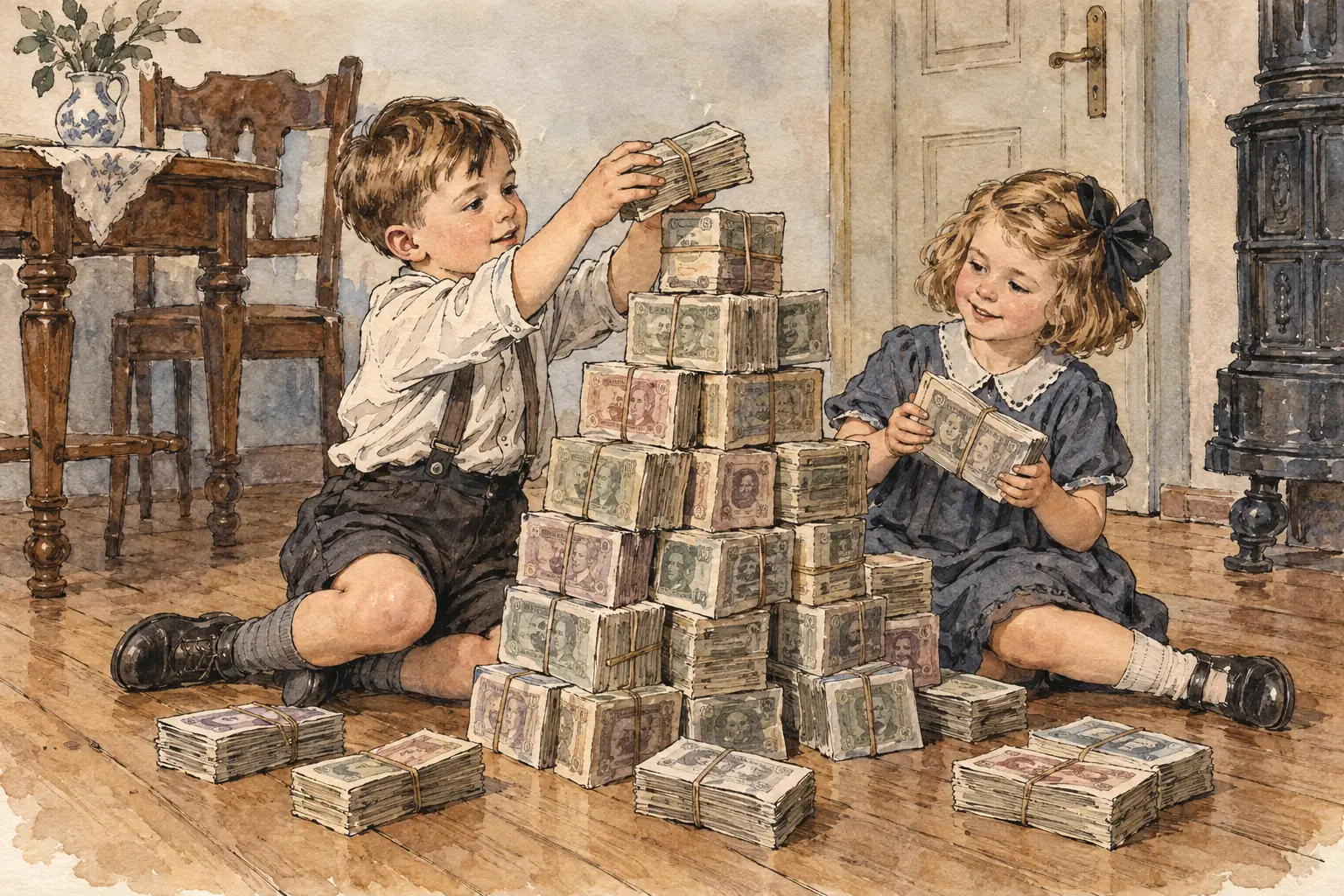
Hyperinflation had uneven impacts across German society, wiping out savings for some while benefiting others who could exploit the chaos. Prices rose so rapidly that wages could not keep pace, leading to widespread hardship.
Effects on various groups
| Social group | Negative consequences | Positive consequences |
|---|---|---|
| Middle-class savers | Life savings became worthless as the mark's value collapsed, eroding financial security and leading to poverty. | None significant, as fixed incomes and bank deposits lost all value. |
| Mortgage-holders | Debts were effectively erased by inflation, allowing easy repayment with devalued currency. | Benefited greatly, as loans could be cleared with minimal real cost. |
| Speculators | Risked losses if investments failed amid volatility. | Profited from buying assets cheaply and selling at inflated prices. |
| Farmers | Faced unpredictable markets and supply chain disruptions. | Gained from rising food prices, often bartering produce for goods. |
| Workers | Wages lagged behind price increases, causing real-term pay cuts and food shortages. | Some unions negotiated frequent pay adjustments, offering temporary relief. |
Currency stabilisation and its political impact
By late 1923, the government introduced measures to halt hyperinflation and restore economic order. While these steps brought financial relief, they deepened resentment towards the Weimar Republic.
Steps towards recovery
- Introduction of the Rentenmark - In November 1923, a new temporary currency backed by land and industrial assets was issued, limited in supply to rebuild trust.
- Transition to the Reichsmark - The Rentenmark was replaced in 1924 by the permanent Reichsmark, stabilising prices and encouraging foreign investment.
- Political repercussions - The crisis fuelled perceptions of Weimar weakness, boosting extremist parties and contributing to ongoing instability, as many blamed the government for the economic suffering.