3.2 - Cuba: Revolution & Bay of Pigs
Key facts and dates
The Cuban Revolution of 1959 marked a turning point in Latin American history, overthrowing a US-backed regime and leading to heightened Cold War tensions. The subsequent Bay of Pigs invasion in 1961 highlighted American efforts to counter communism in the region, but its failure deepened Cuba's alliance with the Soviet Union and influenced the lead-up to the 1962 missile crisis.
Timeline of key events
- 1953 – Fidel Castro leads an unsuccessful attack on the Moncada Barracks, marking the start of revolutionary efforts.
- 1959 – Castro's forces overthrow dictator Fulgencio Batista, establishing a revolutionary government.
- 1960 – Cuba begins nationalising American-owned businesses, straining relations with the USA.
- January 1961 – USA severs diplomatic ties with Cuba amid escalating hostilities.
- April 1961 – CIA-backed invasion at the Bay of Pigs fails, resulting in the capture or death of most invaders.
- 1961–1962 – Cuba strengthens ties with the USSR, setting the stage for Soviet missile deployments.
Castro's 1959 revolution and rise to power
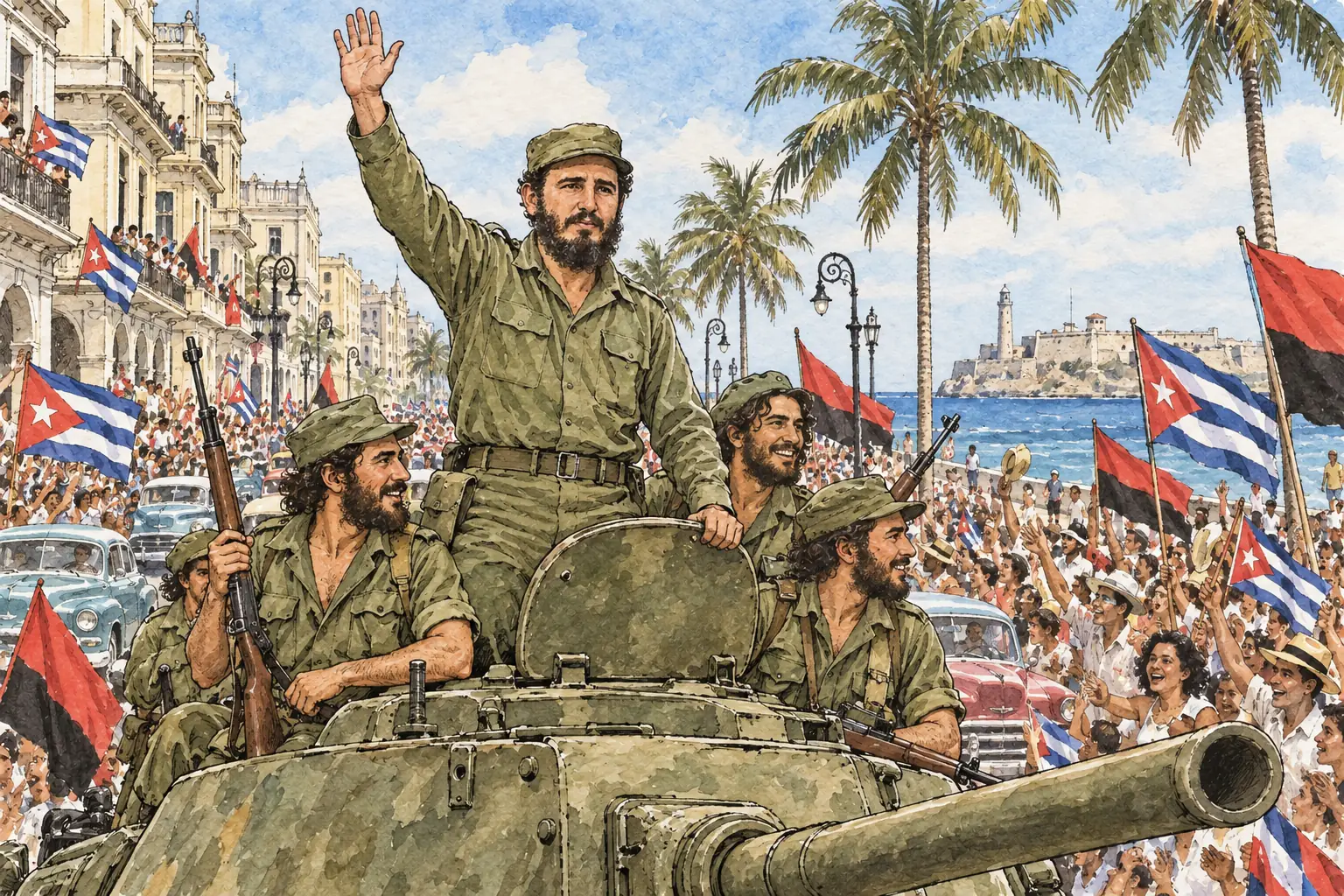
The Cuban Revolution culminated in 1959 when Fidel Castro's guerrilla forces successfully toppled the regime of Fulgencio Batista, a dictator who had ruled since 1952 with significant American support. This event transformed Cuba's political landscape and introduced socialist reforms.
Key aspects of the revolution
- Background to the uprising - Batista's government was marked by corruption, inequality, and close ties to US businesses, which controlled much of Cuba's economy, including sugar plantations and casinos. Widespread poverty and repression fuelled public discontent.
- Castro's campaign - Beginning with the failed 1953 Moncada Barracks attack, Castro built a rebel army in the Sierra Maestra mountains. Supported by figures like Che Guevara, his forces used guerrilla tactics to gain popular backing and weaken Batista's military.
- Overthrow and immediate changes - On 1 January 1959, Batista fled into exile as Castro's troops entered Havana. The new government promised land reforms, improved education, and healthcare, appealing to the poor and gaining broad initial support.
Nationalisation and US-Cuban relations
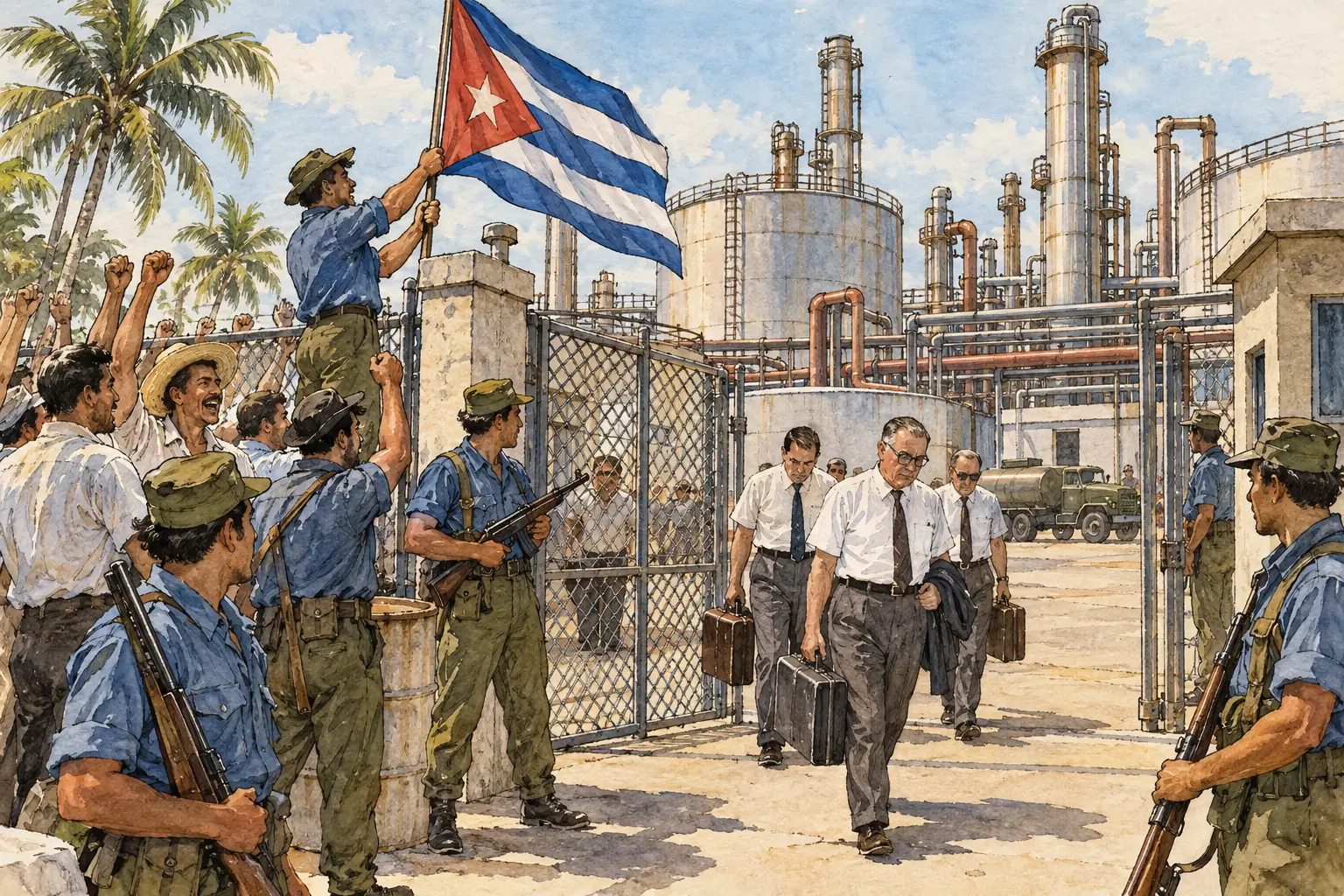
Following the revolution, Castro implemented sweeping economic reforms, including the nationalisation of key industries. These policies directly challenged American interests in Cuba, leading to a rapid breakdown in relations between the two nations.
Main features of nationalisation
- Economic reforms - Starting in 1960, the government seized foreign-owned assets, such as oil refineries, sugar mills, and banks, many of which were US-controlled. This aimed to redistribute wealth and reduce foreign dominance.
- US response - The Eisenhower administration viewed these actions as a threat, imposing trade embargoes and cutting off purchases of Cuban sugar. Diplomatic ties were severed in January 1961, isolating Cuba economically.
- Ideological shift - Castro's regime increasingly adopted socialist principles, aligning with communist ideology, which heightened US fears of Soviet influence spreading in the Western Hemisphere.
The CIA-backed Bay of Pigs invasion
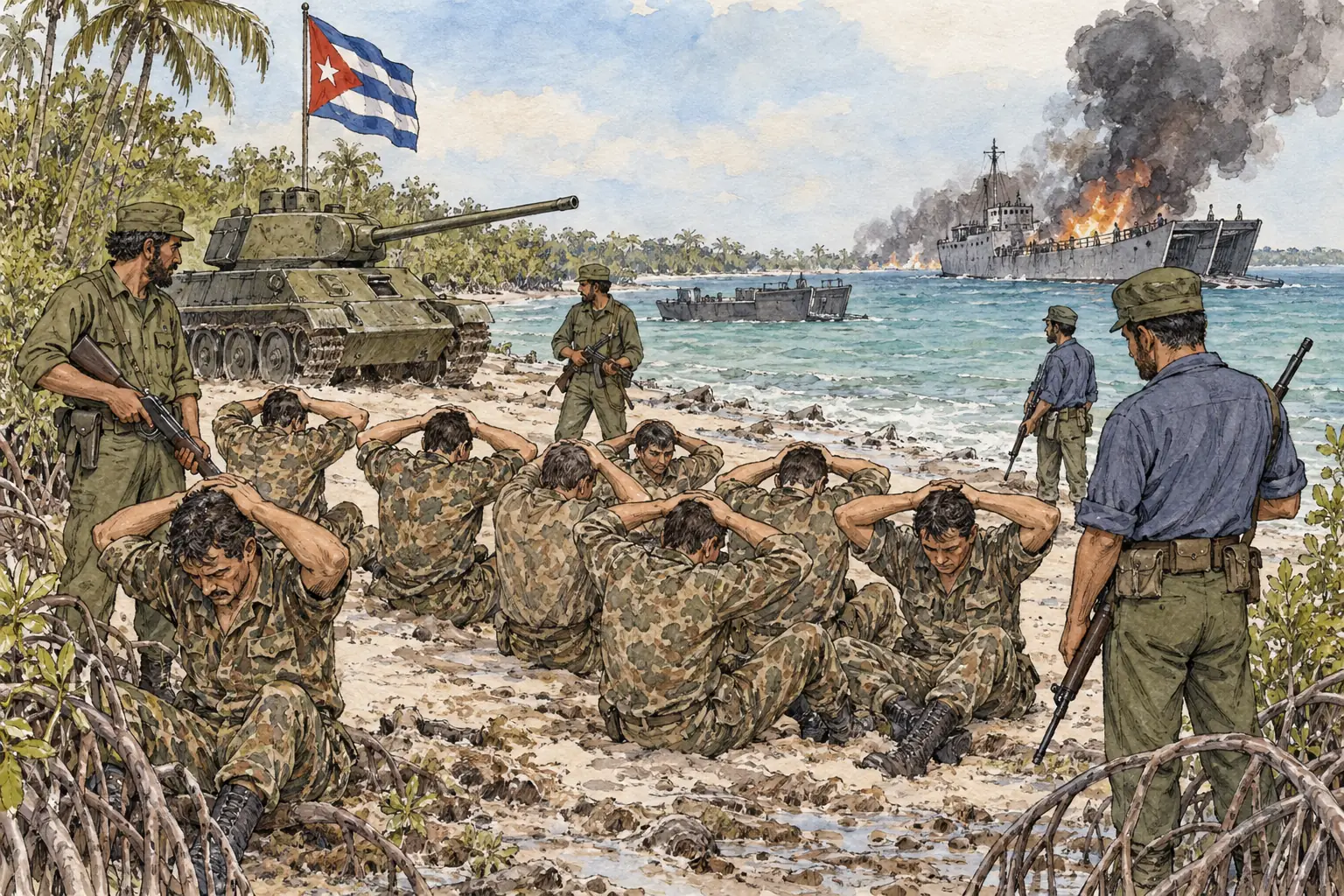
In April 1961, the US Central Intelligence Agency (CIA) orchestrated an invasion at the Bay of Pigs to overthrow Castro's government. The operation involved Cuban exiles trained by the CIA, but it ended in disaster due to multiple strategic and operational flaws.
Reasons for the invasion's failure
- Poor planning and execution - The invaders, numbering around 1,400, landed on a swampy beach with limited escape routes. They lacked sufficient air support after President Kennedy cancelled additional airstrikes to maintain plausible deniability.
- Underestimation of Cuban forces - Castro's military, alerted to the plan, mobilised quickly with tanks and aircraft, overwhelming the exiles. Over 100 invaders were killed, and more than 1,100 were captured.
- Lack of local support - The CIA anticipated a popular uprising against Castro, but this did not materialise, as the regime had consolidated power and enjoyed significant public backing.
Consequences for Cuban-Soviet relations
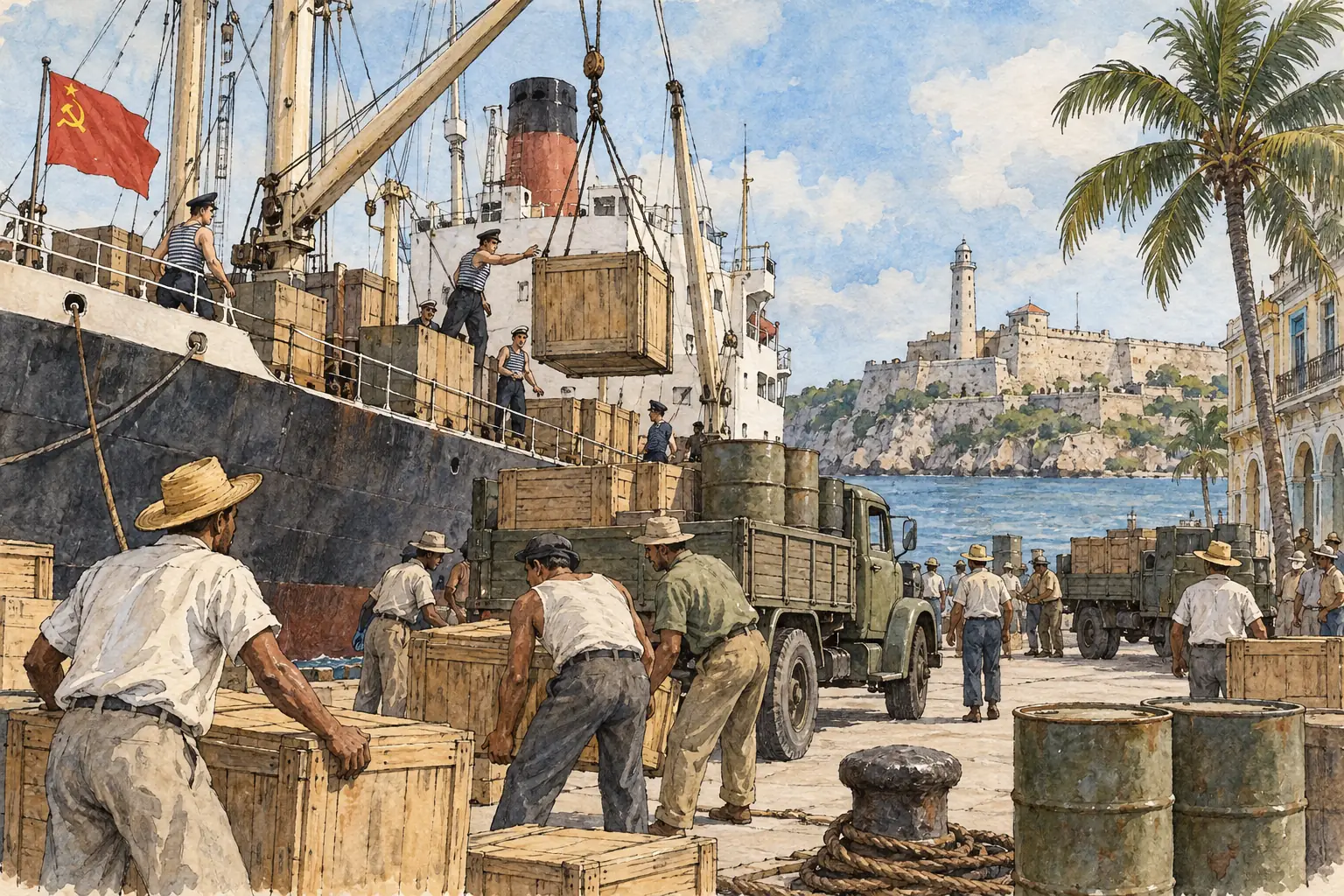
The failed Bay of Pigs invasion humiliated the USA and strengthened Castro's position domestically. It also accelerated Cuba's alignment with the Soviet Union, as Castro sought protection against further American aggression.
Strengthening of Cuban-Soviet ties
- Increased Soviet aid - The USSR provided economic support, including oil and machinery, to offset the US embargo. Military assistance also grew, with arms shipments bolstering Cuba's defences.
- Formal alliance - Castro openly declared Cuba a socialist state shortly after the invasion, formalising ties with the Soviet bloc and joining organisations like the Council for Mutual Economic Assistance.
- Strategic partnership - The fiasco convinced Castro that closer cooperation with Moscow was essential for survival, paving the way for deeper military collaboration.
Impact on strategies before the missile crisis
The Bay of Pigs debacle influenced both Soviet and Cuban decision-making, heightening perceptions of US threats and encouraging bolder actions that culminated in the 1962 Cuban Missile Crisis.
Shaping of strategies
- Soviet calculations - Leader Nikita Khrushchev saw the invasion as evidence of US willingness to invade Cuba, prompting him to deploy nuclear missiles to deter future attacks and balance American missiles in Turkey.
- Cuban perspectives - Castro welcomed Soviet missiles as a guarantee against invasion, viewing them as a necessary shield. This emboldened Cuba to accept the deployments despite the risks.
- Escalation of tensions - The incident eroded trust between superpowers, making the placement of missiles a calculated risk to protect Cuba and test US resolve, nearly leading to nuclear confrontation.