3.9 - Consequences of the Armada's Defeat
Key facts and dates
The defeat of the Spanish Armada in 1588 had profound immediate and lasting impacts on England, Spain, and broader European relations. It marked a turning point in the Anglo-Spanish War, enhancing England's reputation while exposing Spanish vulnerabilities, though the conflict persisted beyond Elizabeth I's lifetime.
Timeline of key events
- 1588 – Spanish Armada defeated, seen as a divine victory for Protestant England due to storms dubbed the 'Protestant Wind'.
- 1589 – English counter-Armada fails to exploit the victory, highlighting ongoing naval challenges.
- 1590s – War continues with raids and expeditions, draining English resources and causing economic strain.
- 1603 – Death of Elizabeth I, with the war still unresolved.
- 1604 – Treaty of London ends the Anglo-Spanish War under James I, establishing peace terms.
Short-term effects of the Armada's defeat
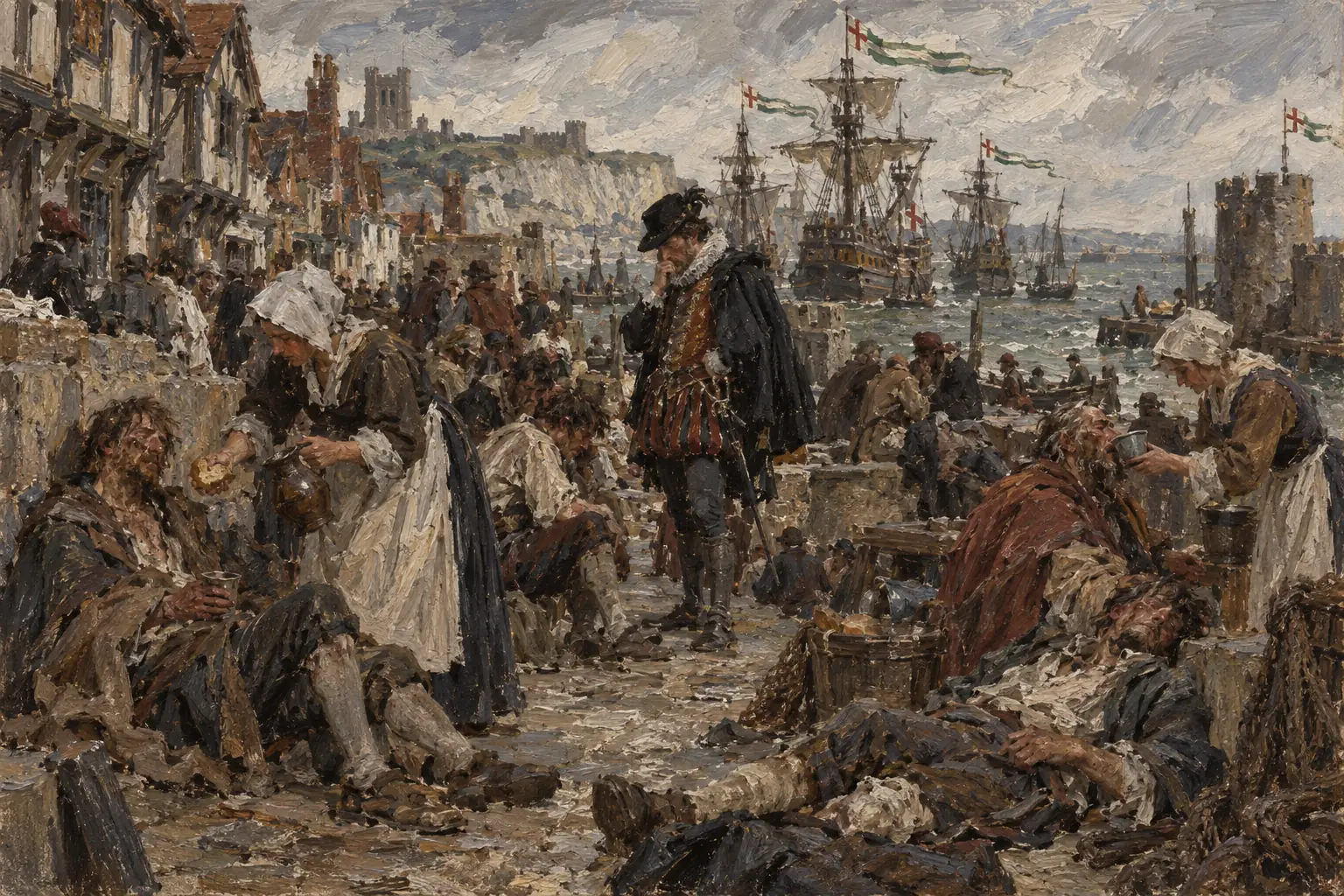
The immediate aftermath of the 1588 Armada defeat brought both triumphs and challenges for England. While it prevented a Spanish invasion, it did not deliver a decisive end to the conflict, leaving the nation to deal with logistical and financial pressures.
Immediate impacts on England
- Military reprieve - The scattering of the Spanish fleet averted an invasion, allowing England to regroup and fortify defences along the coast.
- Economic and human costs - English sailors suffered from disease and poor conditions post-battle, while the crown faced debts from funding the defence effort.
- Failed counter-offensives - Attempts to press the advantage, such as the 1589 expedition to Portugal, ended in disaster due to poor planning and losses, underscoring the limits of English naval power.
Long-term consequences and the continuation of war
The Armada's failure extended the Anglo-Spanish War well into the next decade, imposing sustained burdens on England. Peace was only achieved after Elizabeth's death, reflecting the protracted nature of the conflict.
Ongoing effects of the prolonged conflict
- Financial strain - Continuous warfare through the 1590s required heavy taxation and loans, contributing to inflation and hardship for ordinary people.
- Military engagements - Raids on Spanish ports and colonies persisted, but with mixed success, as Spain rebuilt its navy and maintained pressure on English forces.
- Eventual resolution - The war concluded with the 1604 Treaty of London under James I, which recognised English independence and trade rights, but highlighted that Elizabeth's reign ended without a formal peace.
Propaganda triumph and boost to Elizabeth's image
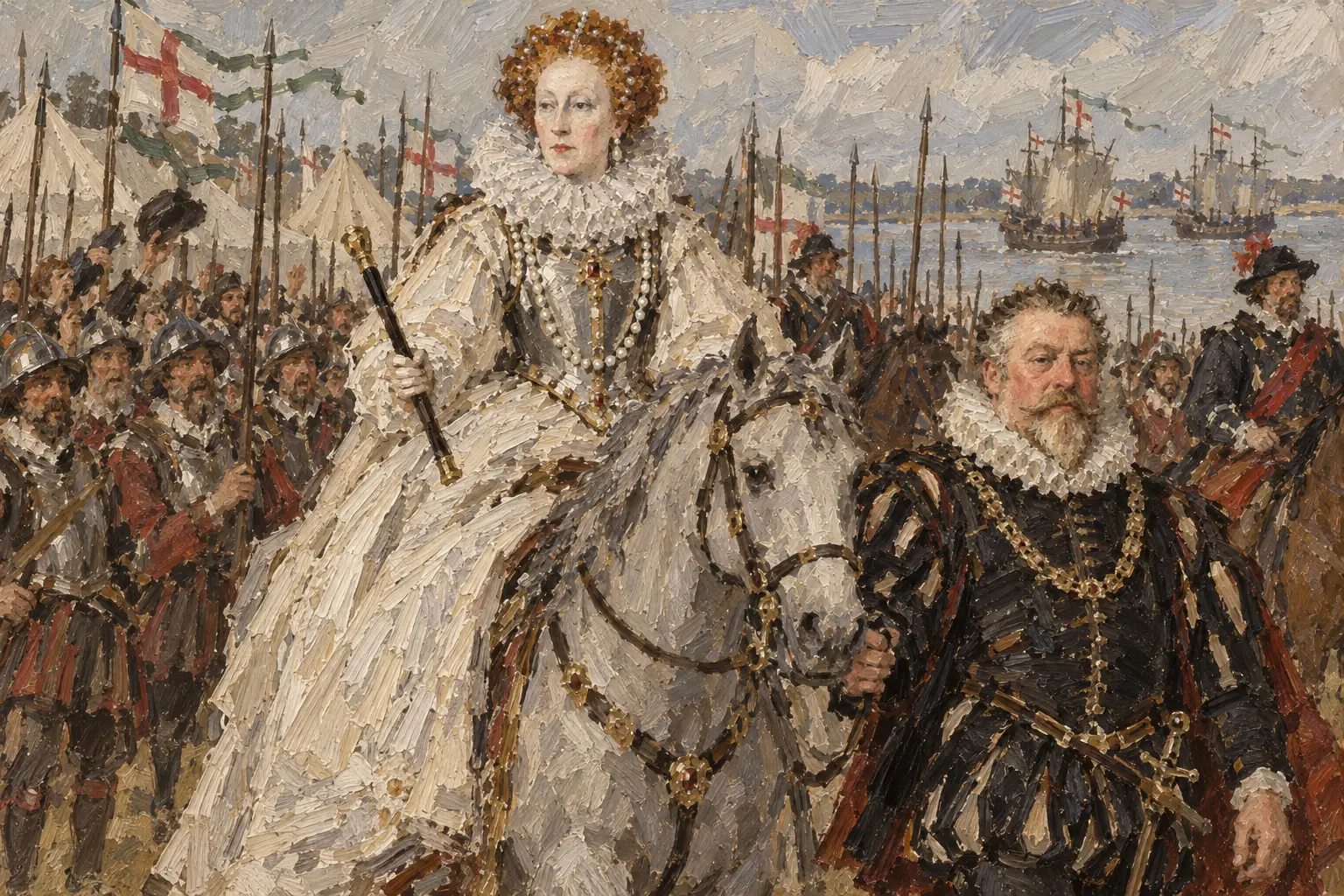
The defeat was portrayed as a miraculous victory, enhancing national unity and Elizabeth's status as a Protestant icon. This narrative helped solidify support for her rule amid ongoing threats.
Elements of the propaganda victory
- 'Protestant Wind' narrative - Storms that wrecked much of the Armada were depicted as divine intervention favouring Protestant England over Catholic Spain, fostering a sense of chosen destiny.
- National identity - Celebrations and medals commemorating the event promoted patriotism, uniting diverse groups under a shared English identity.
- Elizabeth's glorification - Portraits and speeches, such as her Tilbury address, elevated her image as a warrior queen, strengthening loyalty and morale during the war's later years.
Shifting European power dynamics
Although the Armada's defeat damaged Spain's prestige, it did not dismantle its empire. Instead, it signalled a gradual reconfiguration of influence among European powers, with England emerging stronger.
Changes in the balance of power
- Spain's enduring strength - Despite losses, Spain retained control over vast territories and wealth from the Americas, continuing to pose a threat through rebuilt fleets and alliances.
- England's rising status - The victory boosted England's naval reputation, encouraging exploration and trade expansion, which laid foundations for future colonial growth.
- Broader European implications - The event weakened Spanish dominance, aiding Protestant causes in the Netherlands and France, while prompting other nations to challenge Catholic hegemony.
Balanced judgement on causes of Spanish failure
Evaluating the Armada's defeat requires considering multiple factors, including human decisions and natural elements. This balanced view avoids overemphasising any single cause.
Factors contributing to the defeat
- English naval tactics - Superior ship design and tactics, such as fireships at Gravelines, disrupted Spanish formations and exploited their slower vessels.
- Spanish miscalculations - Poor planning, including reliance on an uncoordinated invasion force and underestimation of English defences, weakened the campaign from the outset.
- Role of weather - Storms played a crucial part in scattering the fleet, but were not the sole reason; they compounded existing strategic errors.
- Overall assessment - While English skill and preparation were vital, Spanish overconfidence and adverse conditions shared responsibility, illustrating that victory resulted from a combination of elements rather than luck alone.