7.3 - How the Biosphere Supports Life
The biosphere as a life support system
The biosphere is the world's life support system and has several important functions.
How the biosphere regulates atmospheric gases
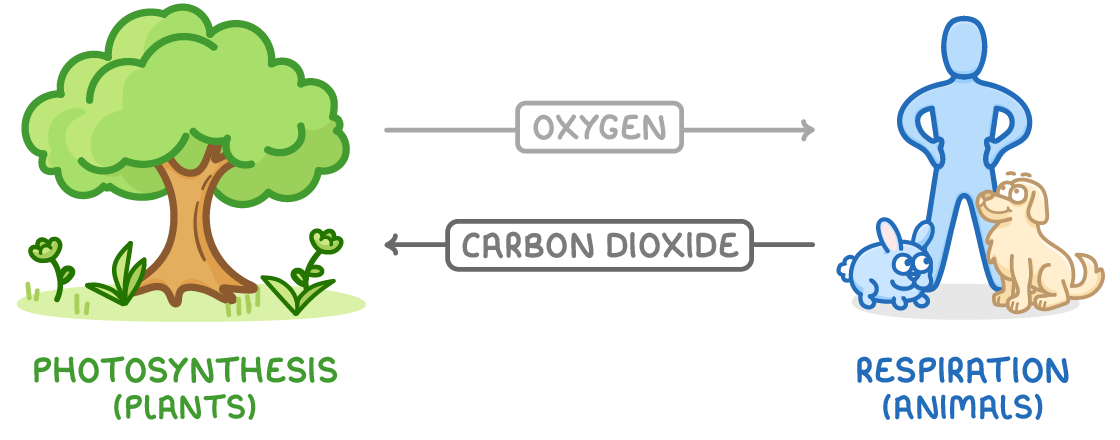
The biosphere significantly influences the balance of gases in the Earth's atmosphere, which is vital for the survival of most living organisms. Through natural processes, it helps control the levels of key gases like oxygen and carbon dioxide (CO2), ensuring a stable environment.
Processes that maintain atmospheric balance
- Photosynthesis by plants - Plants absorb CO2 from the air and release oxygen as a by-product.
- Respiration by animals - Animals take in oxygen and exhale CO2.
- Impact of gas imbalances - Maintaining the right proportion of gases is crucial because:
- Oxygen is essential for the survival of most organisms.
- Excess CO2 contributes to global warming.
- High CO2 levels can acidify oceans, harming marine life.
- A certain amount of CO2 is necessary to keep the planet warm enough for life.
- Role of extensive forests - Vast areas of coniferous forests are particularly important, as they absorb large quantities of CO2 and release significant amounts of oxygen.
How the biosphere maintains soil health
The biosphere is fundamental in preserving the quality and structure of soil, which directly affects plant growth and ecosystem productivity.
Mechanisms for soil health maintenance
- Nutrient distribution by organisms - Plant roots and burrowing animals spread nutrients throughout the soil, enhancing its fertility and structure for plant growth.
- Soil stability through vegetation - Plant roots anchor the soil, preventing erosion caused by wind and rain.
- Prevention of nutrient loss - Vegetation intercepts rainfall, reducing the impact on the soil surface and preventing leaching, where nutrients are washed deep into the ground beyond the reach of plant roots.
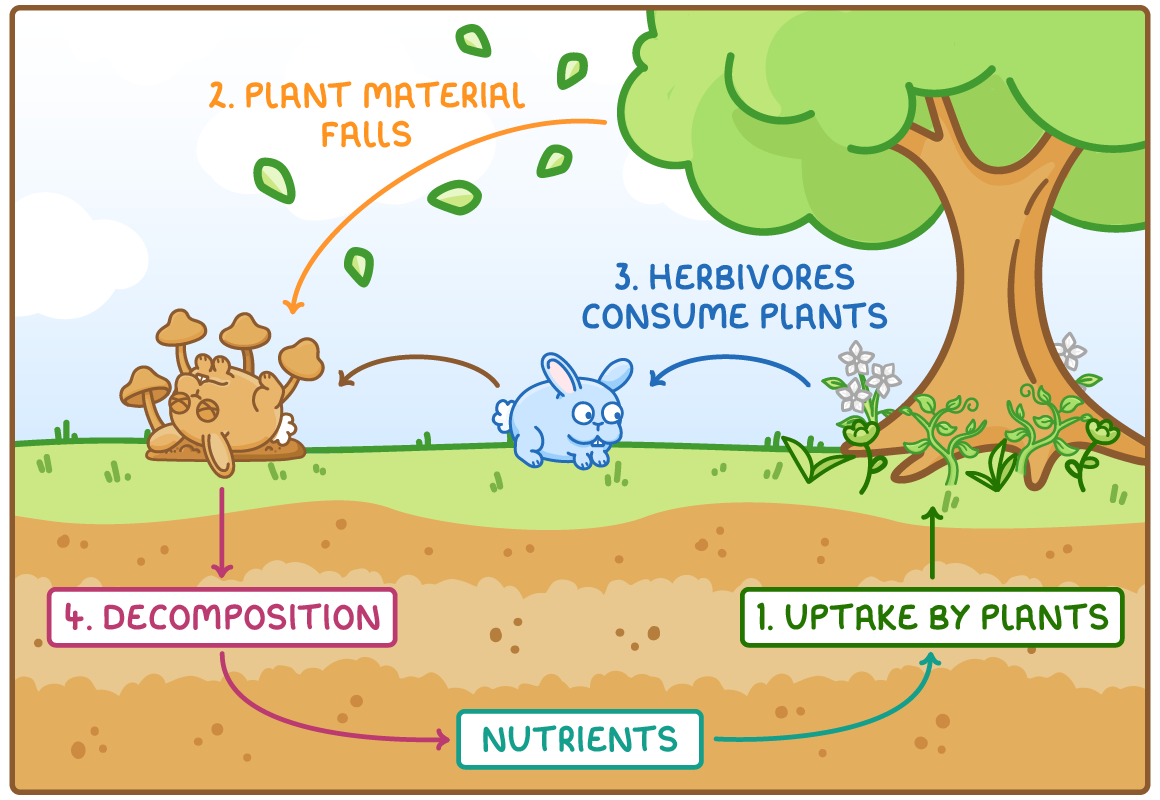
- The nutrient cycle - This cycle illustrates how nutrients are recycled within an ecosystem:
- Plants take up nutrients from the soil to support their growth.
- Leaves and other plant material fall to the ground.
- Herbivores consume plants, absorbing the nutrients within them.
- Upon death, plants and animals decompose, releasing nutrients back into the soil for reuse.
The influence of the biosphere on the water cycle
The biosphere exerts a significant control over the water cycle, also known as the hydrological cycle, which describes the continuous movement of water between the land, water bodies, and the atmosphere.
Contributions to water cycle regulation
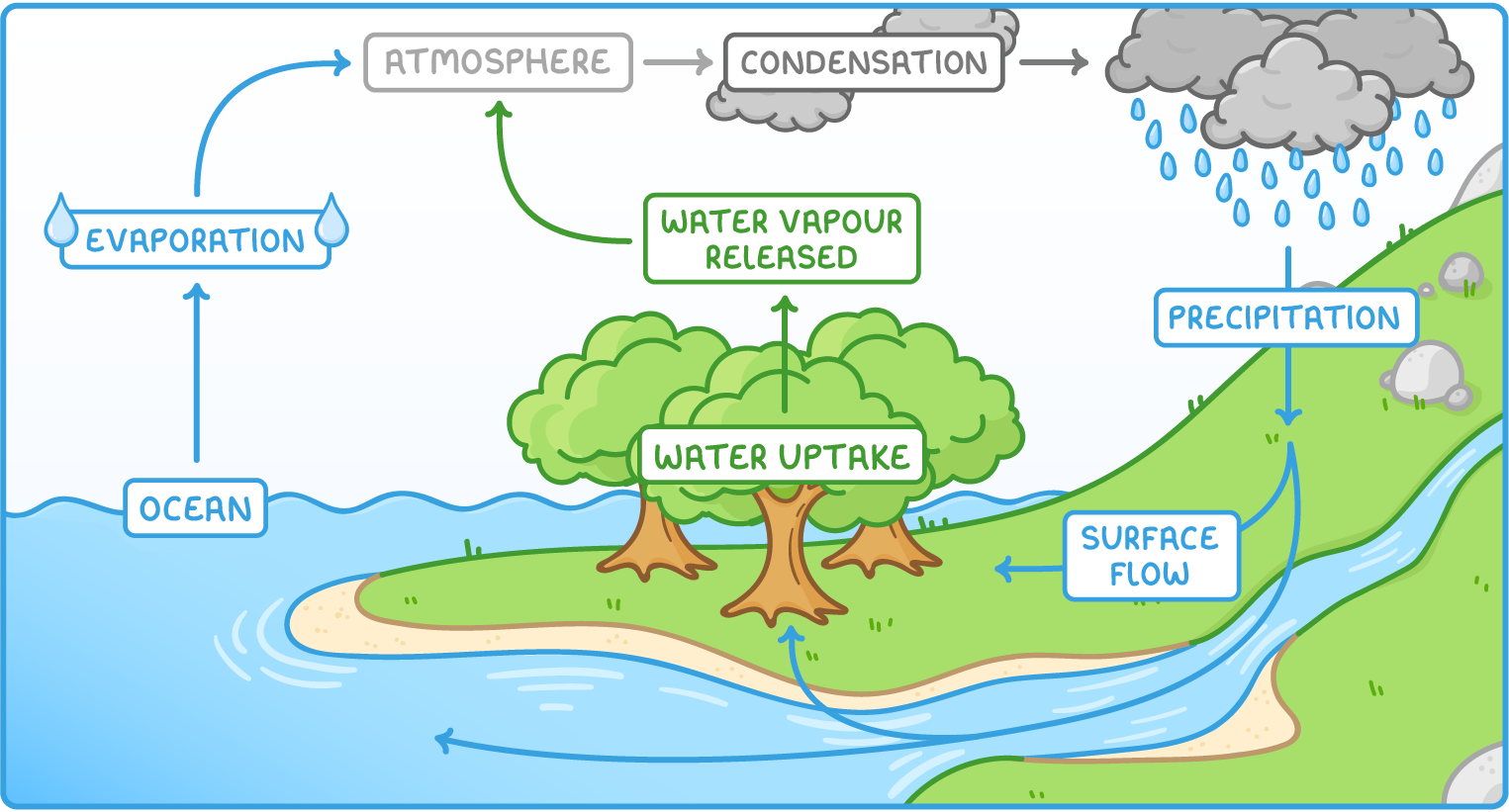
- Water uptake by plants - Plants absorb water from the soil, reducing the amount that flows directly into rivers and helping to prevent flooding and soil erosion.
- Slow release into the atmosphere - Vegetation stores water and gradually releases it as vapour into the air, aiding in the regulation of the global water cycle.
- Impact of large woodlands - Expansive temperate woodlands can influence weather patterns over long distances, reducing the likelihood of droughts and flooding in remote regions.
- Stages of the water cycle - The cycle operates through key stages:
- Clouds form as water vapour condenses in the atmosphere.
- Precipitation occurs as rain, snow, or other forms.
- Water flows over land into streams, rivers, and oceans.
- Water evaporates from surfaces back into the atmosphere, restarting the cycle.
TermDefinition
BiosphereThe parts of the Earth and its atmosphere where living organisms exist.
LeachingThe process where water washes soluble nutrients deep into the ground, beyond the reach of plant roots.
Nutrient cycleThe continuous movement and recycling of nutrients between living organisms and the environment.
Hydrological cycleThe continuous movement of water between the land, water bodies, and the atmosphere.
Global warmingThe long-term heating of Earth's climate system, driven largely by excess greenhouse gases.