1.8 - Earth’s Internal Structure
The layered structure of the Earth
The Earth is composed of distinct layers, each with unique properties and roles in shaping the planet's surface and internal dynamics. These layers include the core, mantle, and crust, forming a structured system that influences geological processes.
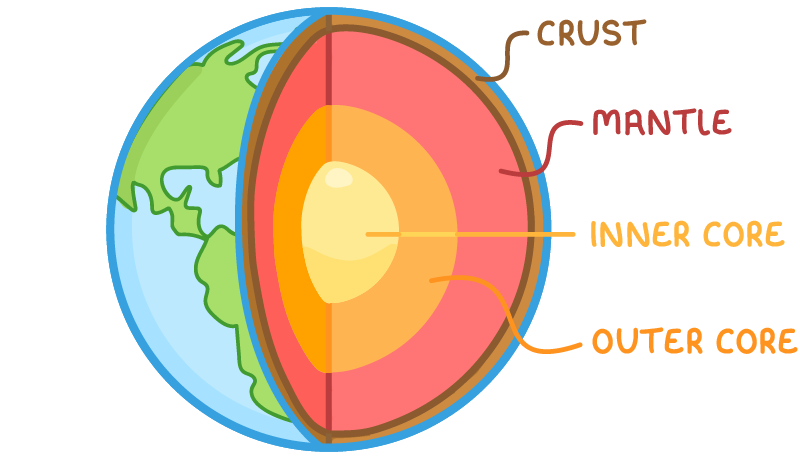
Main layers of the Earth
- Core - The innermost layer, consisting of a solid inner part and a liquid outer part, made primarily of iron and nickel.
- Mantle - A thick middle layer of silicon-based rocks, which varies in rigidity and temperature, playing a key role in tectonic activity.
- Crust - The thin, solid outer layer, also composed of silicon-based rocks, forming the surface on which we live and divided into tectonic plates.
Characteristics of the core, mantle, and crust
Each layer of the Earth has specific physical and chemical traits that define its behaviour and interaction with other layers.
Properties of the core
- Composition - Made of iron and nickel, with a solid inner core and a liquid outer core.
- Density - Extremely dense at the centre, decreasing towards the outer edges of the core.
- Temperature - Ranges from approximately 4,400°C to 6,000°C.
Properties of the mantle
- Composition - Composed of silicon-based rocks, forming a thick layer between the core and crust.
- Structure and state - Includes a rigid lower section near the core, a semi-molten asthenosphere that can flow, and a rigid uppermost part.
- Temperature - Varies between 1,000°C near the crust to about 3,700°C closer to the core, with heat increasing with depth.
Properties of the crust
- Composition - Made of silicon-based rocks, similar to the mantle, but much thinner.
- Types of crust:
- Continental crust - Thicker and less dense, forming the landmasses.
- Oceanic crust - Thinner and more dense, underlying the ocean basins.
- Structure - Divided into large slabs known as tectonic plates, which float on the mantle below.
Plate movement and convection currents
Tectonic plates, which make up the Earth's crust, are not stationary but move slowly over time. This movement is driven by processes within the mantle.
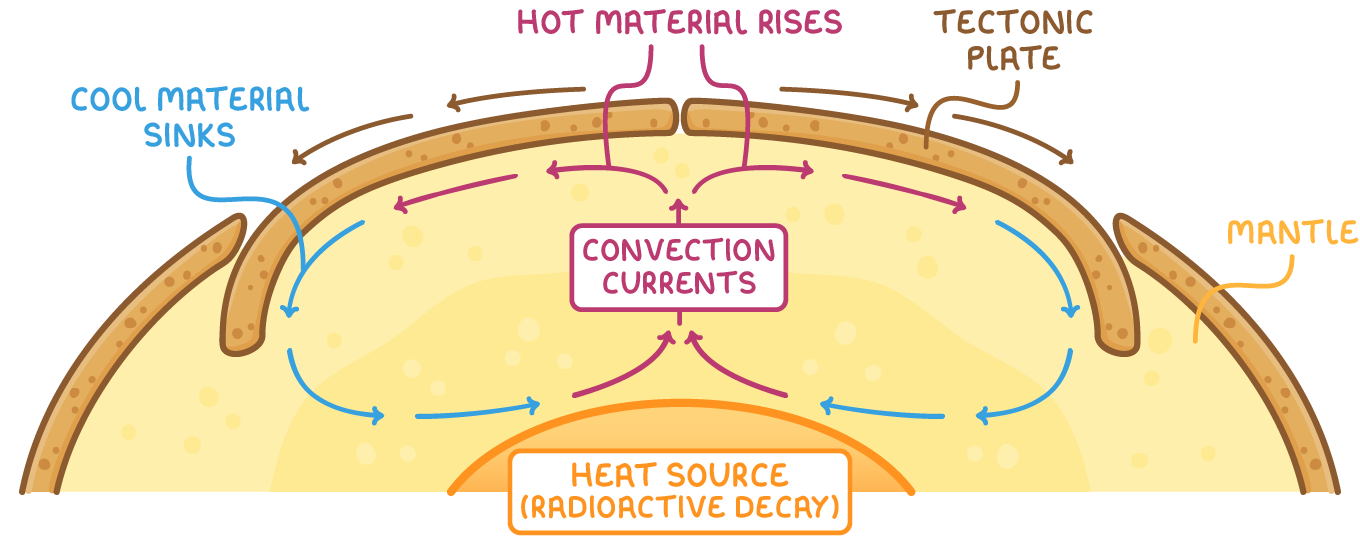
Causes of tectonic plate movement
- Floating plates - Tectonic plates rest on the semi-molten asthenosphere of the mantle, allowing them to shift.
- Heat generation - Radioactive decay of elements like uranium within the mantle and core produces heat, warming the asthenosphere.
- Rising and sinking motion - Heated, less dense material in the lower asthenosphere rises, while cooler, denser material near the top sinks, creating circular flows.
- Convection currents - These circular movements of semi-molten rock are known as convection currents, which exert drag on the base of tectonic plates, causing them to move.
Plate tectonics and natural hazards
Plate tectonics examines how tectonic plates interact and move, shaping the Earth's landscape.
Impacts of plate tectonics
The movement and interaction of plates are directly linked to hazardous events.
These hazardous events include:
- Earthquakes - Caused by friction and stress at plate boundaries where plates grind past or collide with each other.
- Volcanoes - Formed when plates move apart or collide, allowing magma to rise to the surface through weaknesses in the crust.
TermDefinition
CoreThe dense, innermost layer of the Earth, made primarily of iron and nickel.
MantleThe thick middle layer of the Earth, composed of silicon-based rocks that vary in rigidity and temperature.
CrustThe thin, solid outer layer of the Earth, forming the surface on which we live.
Continental crustThe thicker, less dense type of crust that forms the landmasses.
Oceanic crustThe thinner, more dense type of crust that underlies the ocean basins.
AsthenosphereThe semi-molten layer of the mantle on which the tectonic plates float.
Convection currentsCircular movements of semi-molten rock in the mantle, driven by heat from the core.
Tectonic plateA large, rigid slab of the Earth's crust and uppermost mantle.